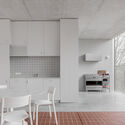
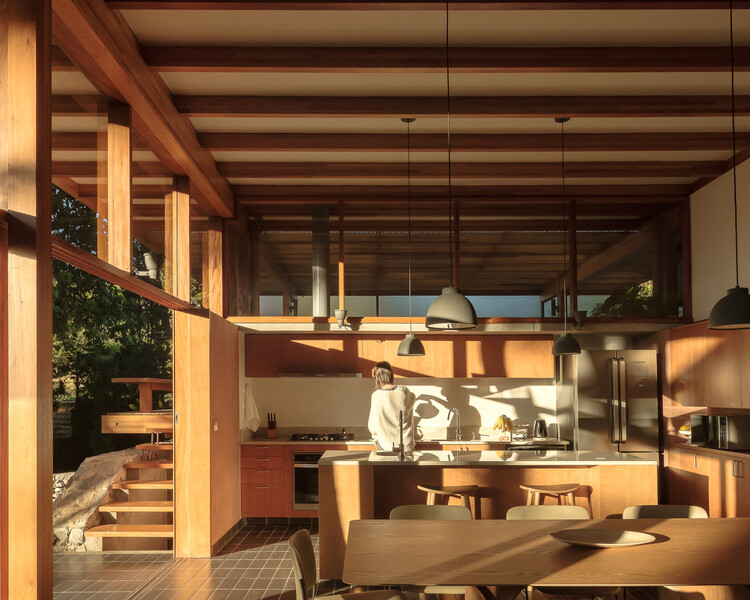
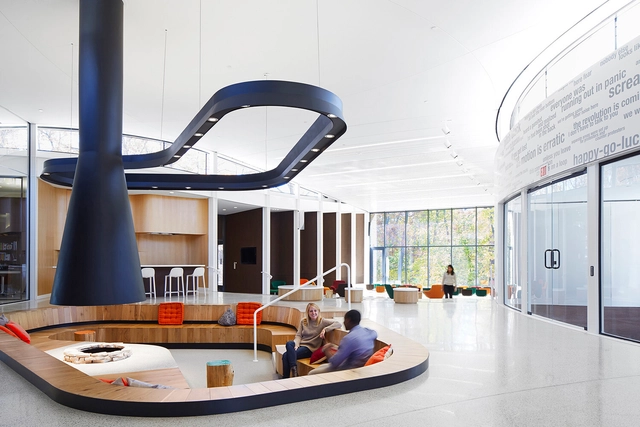
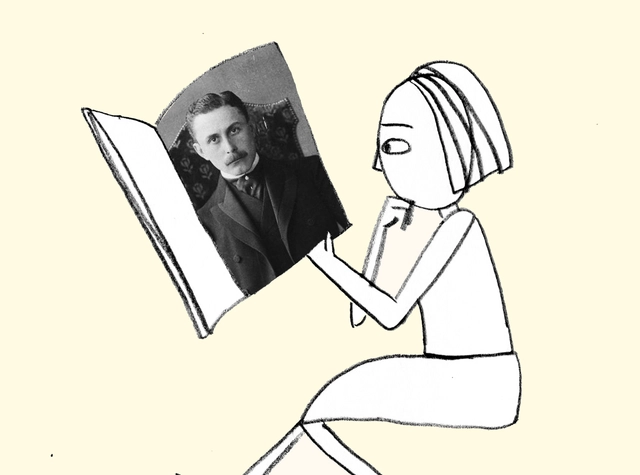
For decades, heritage has been easiest to recognize from the street. We protect facades, skylines, and monuments because they are visible, stable, and legible as cultural assets. Yet most of what we remember about living is how we eat together, withdraw, argue, care, and rest, which happen far from view. It happens inside rooms. As open plans quietly give way to thresholds, corridors, and enclosures, a deeper question emerges: what if cultural memory survives not in what architecture shows, but in how it is lived?
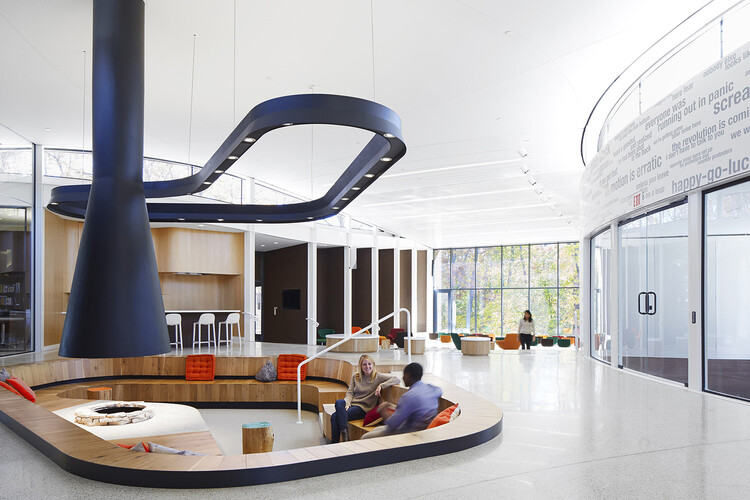
Fireplaces have profoundly shaped architectural design, influencing how spaces are organized, experienced, and perceived. More than merely functional elements, they represent symbols of power, community, comfort, and culture, tracing humanity's evolving relationship with the built environment. From the primitive hearths that characterized early human settlements to the sophisticated ecological designs of contemporary architecture, fireplaces have reflected broader cultural, social, and technological changes, serving as enduring focal points in the spatial narrative of architecture. Scholars have frequently explored the intimate relationship between architecture and fire. Luis Fernández-Galiano, in his seminal work "Fire and Memory: On Architecture and Energy" argues that architecture fundamentally mediates the relationship between humanity and energy. By understanding how these structures have shaped spaces, symbolized cultural values, and driven technological innovation, we gain deeper insight into architecture's complex interplay between form, function, and meaning.
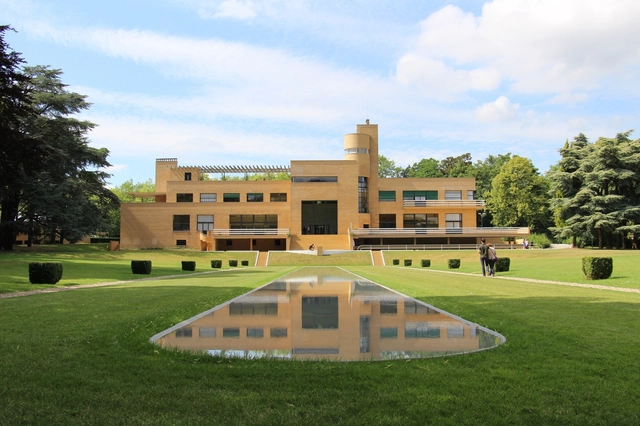
The Villa Cavrois stands as a powerful testament to early modernist architecture and the vision of architect Robert Mallet-Stevens. Built between 1929 and 1932 in Croix, France, this landmark residence was commissioned by Paul Cavrois, a prominent textile industrialist, to embody modern values and house his growing family. Mallet-Stevens' design merges Modernist ideals with a luxurious, functional aesthetic that breaks sharply from traditional styles, creating a space defined by clean lines, balanced proportions, and innovative materials.
More than just a family home, Villa Cavrois was designed as an architectural manifesto, presenting bold new ideas in residential design that would inspire generations. Its meticulously crafted layout, advanced technological features, and harmonious connection to the surrounding landscape positioned it as a symbol of modern living.
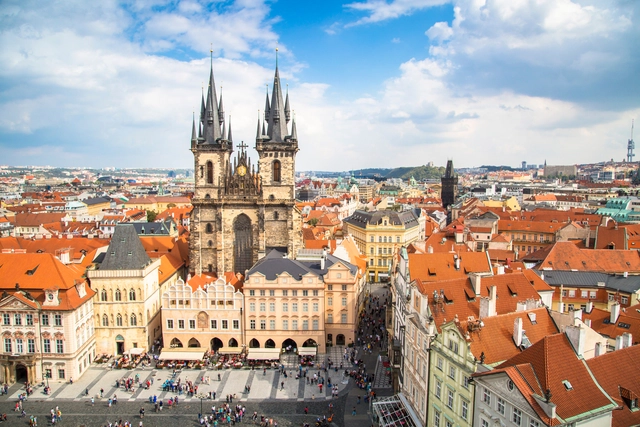
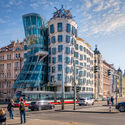
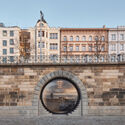
Prague, the capital of the Czech Republic, is one of Europe's best-preserved cities, having miraculously survived the widespread bombings of World War II. As the capital of the Czech Republic, Prague is home to over 1.3 million people and features an architectural heritage spanning centuries, covering a variety of architectural styles from Romanesque, Gothic, Renaissance, Baroque, and Rococo, to Modernist, Deconstructivism, and contemporary tendencies. The Old Town Square, where various architectural styles coexist, is a testament to this diversity. Known as the "Mother of all Cities," “the Golden City and “The City of a Hundred Spires,” Prague blends history and contemporary culture seamlessly. Its origins, steeped in legend, add to the city's charm.
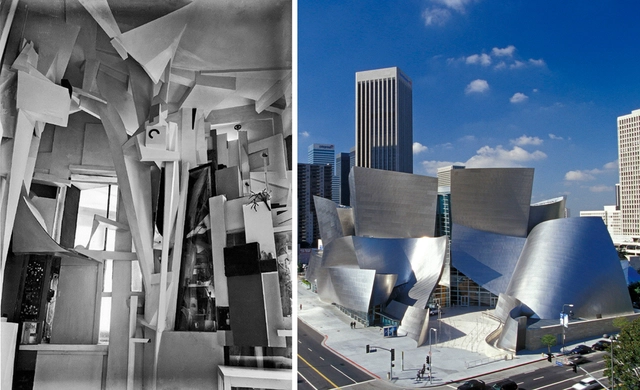
As far as history goes back, art and architecture have always been interrelated disciplines. From the elaboration of the Baroque movement to the geometric framework of modernism, architects found inspiration from stylistic approaches, techniques, and concepts of historic art movements, and translated them into large-scale habitable structures. In this article, we explore 5 of many art movements that paved the way for modern-day architecture, looking into how architects borrowed from their characteristics and approaches to design to create their very own architectural compositions.
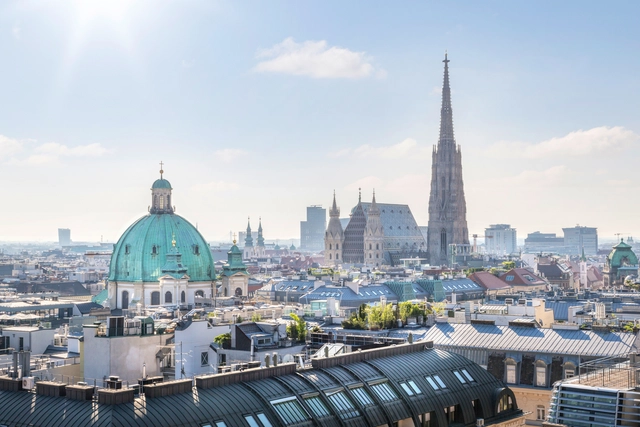
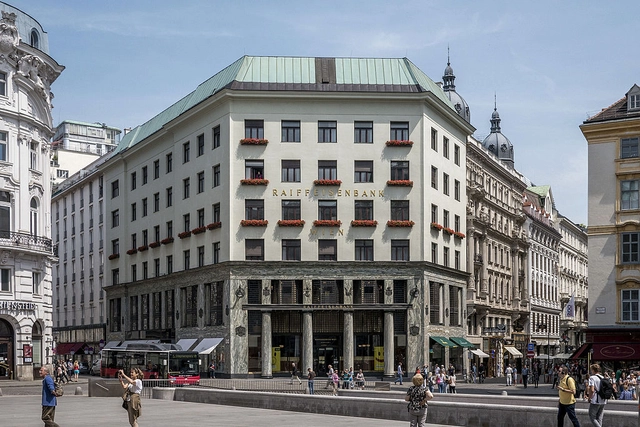
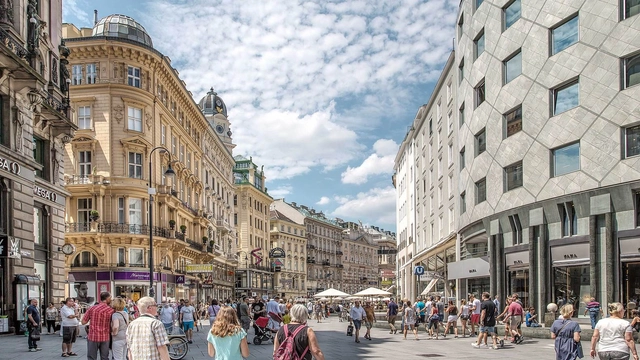
Often referred to as the “City of Music,” Vienna stands as a living testament to architectural evolution across centuries. Bring together an array of styles, ranging from the grandeur of Baroque palaces to the innovative Art Nouveau designs and the Vienna Secession movement, visitors are drawn to the city for its architectural marvels. Vienna's eventful past is reflected in its architectural landscape, which has withstood wars, imperial expansions, and the changes of numerous artistic trends while managing to maintain its unique identity as a symbol of resilience and reinvention.
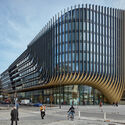
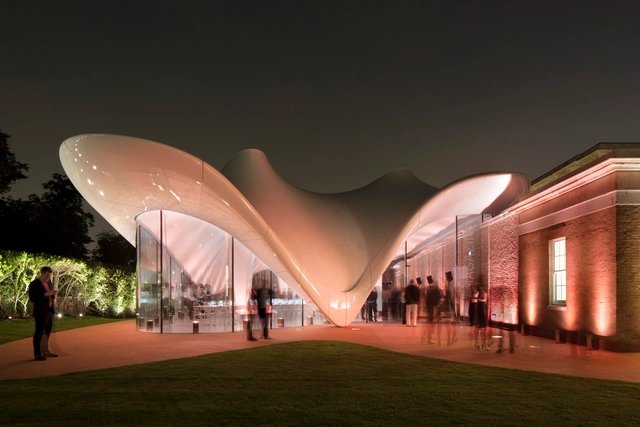
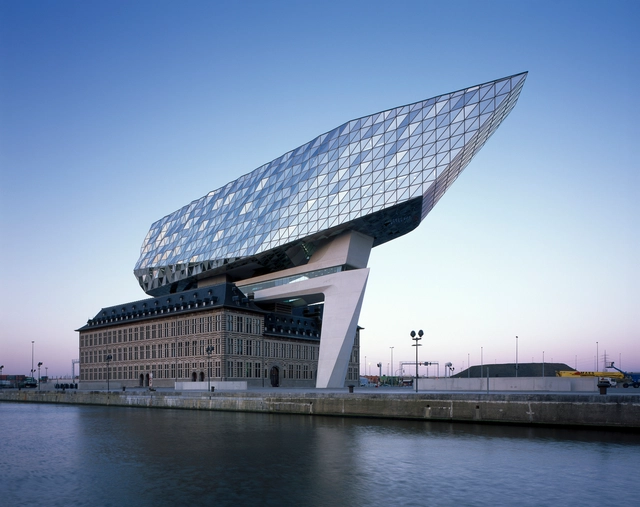
From Adolf Loos, whose radical ideas challenged the trends of his time, to Otto Wagner, a pioneer of Viennese Modernism, Vienna's architectural legacy continued to evolve. Fast-forwarding to contemporary times, Vienna's skyline bears the mark of internationally renowned architects like Zaha Hadid, whose fluid and futuristic designs push the boundaries of architecture. Hadid's work, including the Library and Learning Center at the University of Economics and Business, offers a dynamic contrast to the city's historic landscape. Moreover, firms like CRAB Studio, founded by Sir Peter Cook and Gavin Robotham, bring experimentalism to Vienna's architecture, infusing contemporary concepts into the urban fabric. These architects and firms contribute to Vienna's architectural richness, adding new chapters to its storied history while honoring its innovation and artistic legacy.
If Nature had been comfortable, mankind would never have invented architecture. - Oscar Wilde
Architecture is human. Despite their exquisite beauty, burrows, hives, nests and anthills are creations of instinct. Design by humans considers options, means and methods of creation, solving problems of desire, beyond functional accommodations.
Throughout history, architectural styles, have experienced numerous movements throughout time, giving us various expressions of interior and exterior spaces. These movements are often created out of dissatisfaction with the status quo, shifts in religious ideologies, or the emergence of new building technology. Perhaps one of the most famous instances in history was the precedent set by Adolf Loos and his desire to break away from Viennese tradition with his strong dissent of ornament in architecture in favor of simplicity, and his literary discourse that lay the cornerstone for the modernist movement in architecture.
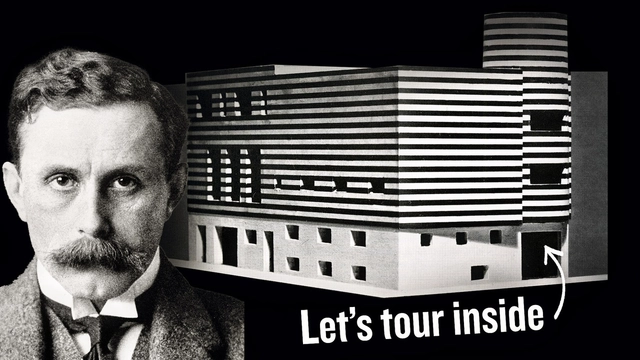
The unbuilt design of a home for Josephine Baker by the architect Adolf Loos is perhaps one of the most analyzed unbuilt homes of Modernism. Its design and history touch on a number of complex social and political issues during the early 20th century. The design comes when Josephine Baker, an African American entertainer is beginning her rise to superstardom and represents a thoroughly modern and fresh artistic voice. Meanwhile, Adolf Loos was a physically ailing man on a steep moral and social decline. The house itself was never truly commissioned by Baker, rather it lives mostly as a fantasy concocted by the architect. This video presents the house through a 3D model and narrated walkthrough to discuss how and why the house was designed and allow you to explore this unique house for yourself.
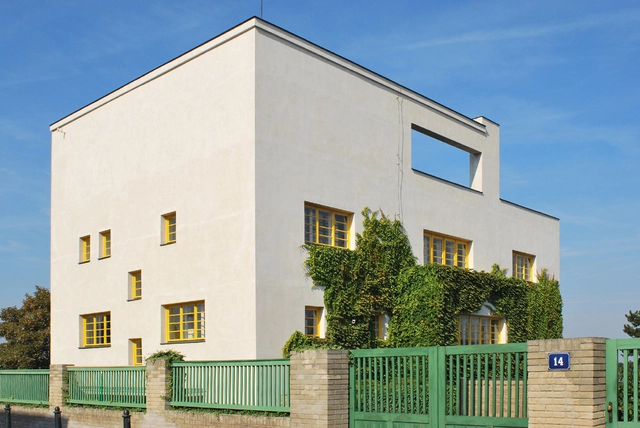
Adolf Loos (December 10, 1870 – August 23, 1933) was one of the most influential European architects of the late 19th century and is often noted for his literary discourse that foreshadowed the foundations of the entire modernist movement. As an architect, his influence is primarily limited to major works in what is now Austria and the Czech Republic, but as a writer he had a major impact on the development of 20th century architecture, producing a series of controversial essays that elaborated on his own architectural style by decrying ornament and a range of social ills. Adolf Loos’s minimalist attitudes are reflected in the works of Le Corbusier, Mies van der Rohe, and many other modernists and led to a fundamental shift in the way architects perceived ornamentation.
When you think of your favorite spot to grab a beer, what architectural features come to mind? Is it the swanky furniture, themed artwork, or the heavily designed cocktail menu? Today, the aesthetics of bars are now as much a draw as the drinks themselves. From movie set inspired spaces to rooftops that offer spectacular city views, we’ve compiled a list of nine bars and beer gardens that every architect needs to cross off their list.
From the Fundación Arquia Blog, architect José Ramón Hernandez brings us an article that reflects on projects that can only be appreciated because of who they were created by. If it weren't for the fact that they bear the signature of their illustrious creator, they most likely would have gone completely unnoticed or even despised.
Brimming with architectural innovation, Vienna stands at the crossroads of Europe. Its location between north and south, east and west has always made it open to new ideas, even as the city carefully groomed its signature refinement and grace.
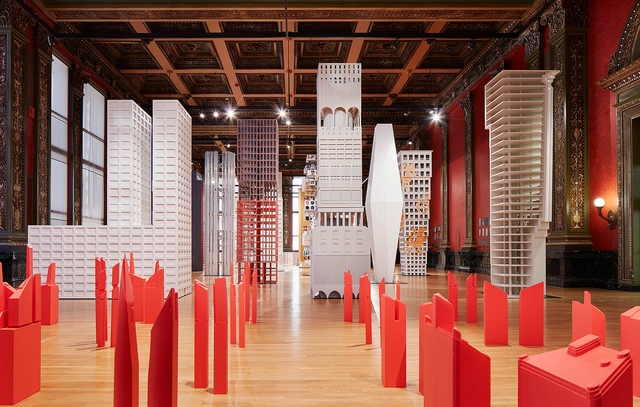
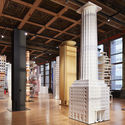
This article was originally published on the blog of the Chicago Architecture Biennial, the largest platform for contemporary architecture in North America. The 2017 Biennial, entitled Make New History, will be free and open to the public between September 16, 2017 and January 6, 2018.
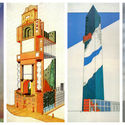
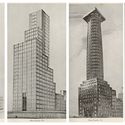
The Tribune Tower has stood at the heart of Chicago’s cultural heritage for almost a hundred years. Like the spire of a secular cathedral, it still symbolizes the rise of the “city of big shoulders” and its defining role in the American Century. But the building is more than a Chicago icon. The story of its origin has proved to be one of the most enduringly influential narratives in 20th Century architecture, key to understanding the skylines of cities all over the world.
There’s no doubt that one of the best things about architecture is its universality. Wherever you come from, whatever you do, however you speak, architecture has somehow touched your life. However, when one unexpectedly has to pronounce a foreign architect’s name... things can get a little tricky. This is especially the case when mispronunciation could end up making you look less knowledgeable than you really are. (If you're really unlucky, it could end up making you look stupid in front of your children and the whole world.)
To help you out, we’ve compiled a list of 22 architects with names that are a little difficult to pronounce, and paired them with a recording in which their names are said impeccably. Listen and repeat as many times as it takes to get it right, and you’ll be prepared for any intellectual architectural conversation that comes your way.
The world of architecture can be a serious place. Though the rest of the world holds quite a few stereotypes about architects, unfortunately none of them include us having a sense of humor—and perhaps that seriousness explains why one of the most popular memes involving architects isn't exactly favorable to the profession. Here at ArchDaily we thought we'd do just a little to correct that with some memes riffing on some of the profession's most beloved names—as our gift to the entire architectural profession. Read on to see what we've come up with, and don't forget to get involved with your own architecture funnies.
https://www.archdaily.com/802255/a-selection-of-name-based-architecture-memesAD Editorial Team
Update: We've added links to help you find these books for purchase and, in 5 of 8 cases, tracked down a way you can read them online for free!
Quality over quantity, so the saying goes. With so many concepts floating around the architectural profession, it can be difficult to keep up with all the ideas which you're expected to know. But in architecture and elsewhere, the most memorable ideas are often the ones that can be condensed textually: “form follows function,” “less is more,” “less is a bore.” Though slightly longer than three words, the following lists a selection of texts that don’t take too long to read, but impart long-lasting lessons, offering you the opportunity to fill gaps in your knowledge quickly and efficiently. Covering everything from loos to Adolf Loos, the public to the domestic, and color to phenomenology, read on for eight texts to place on your reading list: