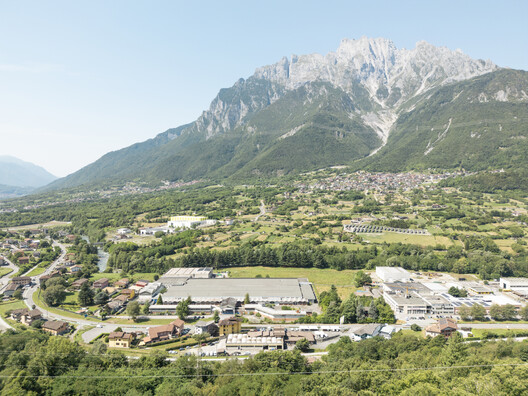
A team led by Politecnica Building for Humans, with Park Associati and AMDL CIRCLE as architectural co-leads and Studio Mattioli responsible for geology and archaeology, has won the competition for a new cultural hub in Ceto, Italy. The project will transform the former Società Filati Niggeler & Kupfer textile mill into a facility comprising exhibition spaces, research facilities, an auditorium, and visitor services. Located in Valle Camonica, an area known for its prehistoric rock engravings, the proposal approaches the site through the relationship between industrial heritage, archaeology, and the surrounding landscape.
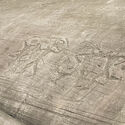
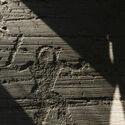
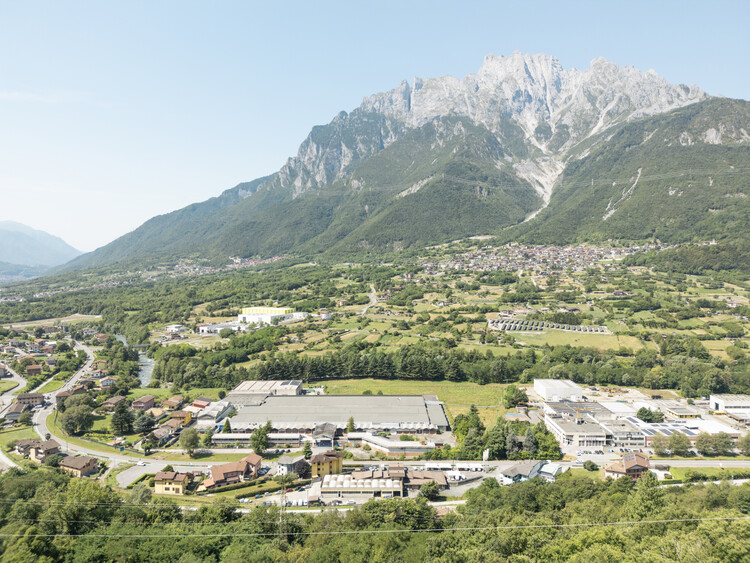
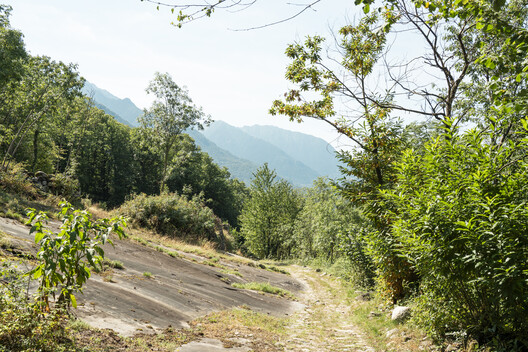
Ceto is located at the southern entrance to Valle Camonica, in the province of Brescia, near Monte Concarena and Pizzo Badile Camuno. The valley is home to the Rock Drawings in Valle Camonica, which became Italy's first UNESCO World Heritage Site in 1979. Known as the Pitoti, the prehistoric engravings form an extensive record of early human expression, while the wider area has been part of the UNESCO Man and the Biosphere Reserve "Valle Camonica – Alto Sebino" since 2018.
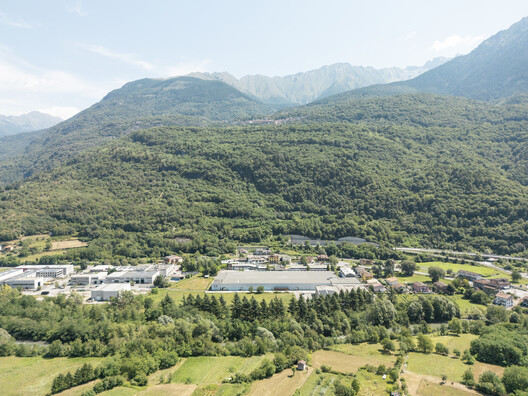
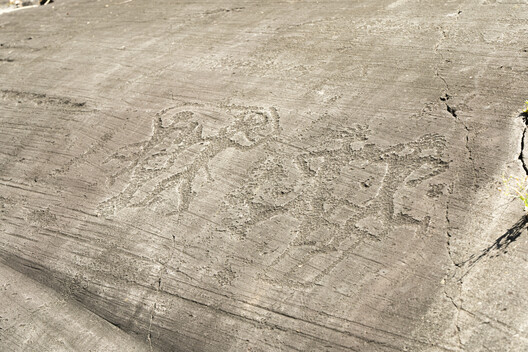
The winning proposal places the landscape at the center of the site's development, identifying the relationship between cultural heritage, the natural environment, and the local community as a guiding principle. The traces carved into the rock inform an approach that considers the territory's material characteristics, geological conditions, and morphology. The project is also conceived as an open infrastructure intended to serve as a starting point for a network of routes connecting archaeological sites with the natural environment.
Related Article
From Aalto Works to Tashkent Modernism: Discover the 19 New Cultural Sites Added to the UNESCO World Heritage List in 2026The project is part of broader cultural initiatives in Valle Camonica, which has launched its candidacy for Italian Capital of Culture 2029. The year will mark the 50th anniversary of the Rock Drawings in Valle Camonica's inscription on the UNESCO World Heritage List. The cultural hub is intended to contribute to the region's cultural infrastructure by bringing together archaeological heritage, landscape, and community-oriented facilities.
The competition was launched by the Municipality of Ceto, with the Comunità Montana di Valle Camonica as a contracting authority and Imago, led by Luca Molinari, providing scientific coordination. Politecnica Building for Humans is responsible for project coordination, structural and building services engineering, sustainability, fire safety, acoustics, health and safety, and mobility. Park Associati and AMDL CIRCLE lead the architectural design, while Studio Mattioli oversees geology and archaeology. The project is listed as ongoing, with 2026 as its starting year.
In other heritage news, Design Museum Gent in Belgium reopened on October 3, 2026, after four years of renovation and expansion that combined historic building restoration with a new wing designed by Carmody Groarke and ATAMA, along with restoration work by RE-ST architectenvennootschap. In Lima, Peru, the Red Lima Milenaria campaign is seeking public support for a future UNESCO World Heritage nomination of selected pre-colonial archaeological sites, with more than 600 sites remaining across the city. Meanwhile, the UNESCO World Heritage Committee added 25 sites to the World Heritage List during its 48th session, including 19 cultural properties, five natural sites, and one mixed property.