After a seven-year pause, Amman Design Week returned to Jordan with a premise that feels closely tied to the city itself: that nothing is ever entirely new. Under the theme "Accumulations," the fourth edition of the biennial event brought together more than 220 designers, makers, architects, and collectives across exhibitions, public interventions, talks, workshops, and performances from October 2 to 17. The premise was particularly relevant to Amman, a city whose architecture has been shaped by waves of construction, migration, adaptation, and reuse, where accumulation is not simply a metaphor.
Founded by Queen Rania Al Abdullah in 2016, Amman Design Week has developed into a platform connecting design practice with the wider cultural and urban life of Jordan. Its return comes under a new leadership structure, with architects Sarah Hejazin and Bisher Tabbaa, co-founders of the Jordanian architecture and design practice FADAA, serving as directors. Their appointment is significant not simply because it places architects at the center of the event's direction, but because FADAA's own practice is grounded in research into Jordan's cultural and material landscape.
The edition brought together an exhibition program curated by Faysal Tabbarah and a public program curated by Khaled Al-Bashir. Tabbarah, an architect, educator, and co-founder of Architecture + Other Things (A+OT), brings a research-driven interest in regional environments and place-based building practices. Al-Bashir, an architect, curator, researcher, and Arts and Culture Director at Darat al Funun, approaches the event through spatial, cultural, and political questions. The word "accumulations" is deliberately expansive. It refers to the way materials gather, but also to knowledge, labor, memory, social relationships, construction techniques, and everyday rituals. The exhibition framework asks how shared daily practices, material environments, and cultural memories accumulate to influence what people make, value, and live with.
Related Article
Amman Design Week 2026 Returns with "Accumulations," Exploring the Layers of Place, Material, and Memory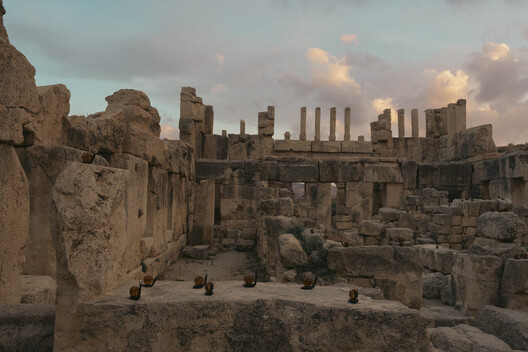
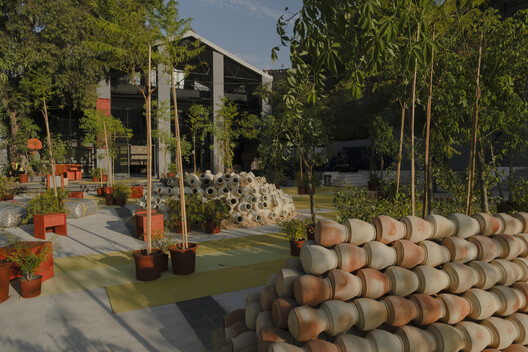
The program stretches across Ras El Ain, Jabal Al Lweibdeh, Jabal Amman, Iraq Al Amir, and Aqaba, giving the theme "Accumulations" a geographical dimension. At Qasr Al Abd in Iraq Al Amir, Dima Srouji's Natural Residents draws on historical accounts of the area's water abundance, while Kais Al Rawi and Julia Koerner's Lamella Series in Clay explores the possibilities of combining local clay with 3D-printing techniques. The program also extended to Aqaba through a collaboration with WUJŨD Art Foundation, bringing together works by bahraini-danish, NEW SOUTH, Tasneem Zraikat, and Yazeed Khaldoun Balqar.
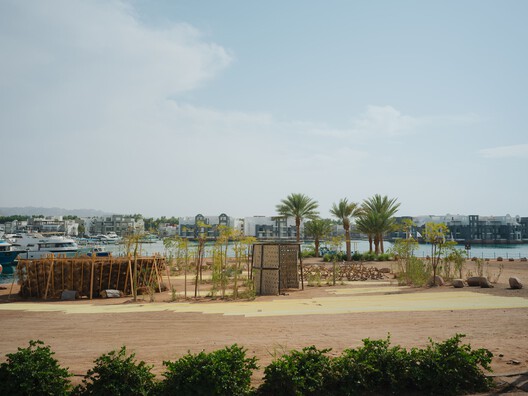
This geographical spread became one of its most interesting propositions: if accumulation describes how a place is formed through layers of activity, memory, and material transformation, understanding it requires moving beyond the exhibition itself and encountering the city in which those layers have gathered. Rather than presenting the city's material and cultural histories as subjects contained within an exhibition, the event invited visitors to encounter them through the act of moving around Amman. The city became something to be read through its different layers, and the venues became points of entry into that reading.
Design for Aging, Decay, and Open-Ended Use
The idea of accumulation is introduced before visitors encounter any of the individual works. The main exhibition venue, the Hangar in Ras El Ain, is itself an example of the kind of layered history the edition asks audiences to consider. Built in the 1930s to house electricity generators during a period of rapid urban development, the industrial structure was later rehabilitated by TURATH: Architecture and Urban Design in collaboration with the Greater Amman Municipality. Its own history makes it an unusually appropriate setting for an exhibition about accumulation: the building has already passed through several economic, infrastructural, and cultural lives before becoming an exhibition space.
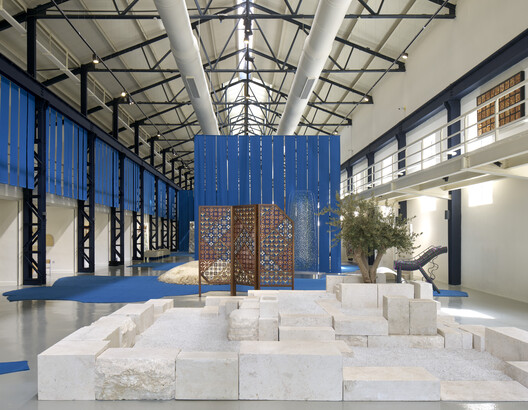
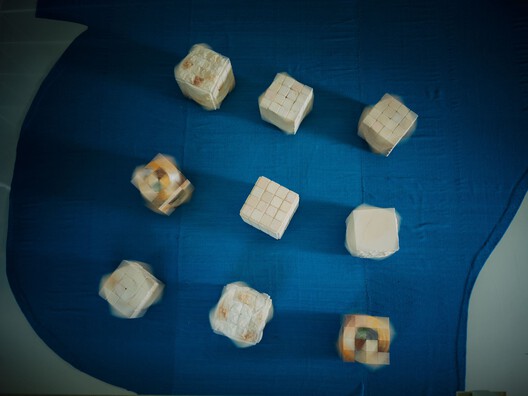
Inside, Laith Matarweh Studio for Architecture's "Al-Mastaba" and DA+SA's "Common Ground" approach continuity from different directions. Combining stone and concrete, "Al-Mastaba" is conceived as a future ruin, with gaps between its elements and gravel surrounding the structure anticipating the gradual emergence of vegetation. Weathering and ecological change become part of its intended life rather than evidence of its eventual failure. "Common Ground," meanwhile, uses modular blocks arranged on a grid to establish a setting for gathering without prescribing a single configuration or activity. One leaves room for material and ecological transformation; the other allows social use to shape the outcome, both questioning the expectation that design should determine a definitive result at the moment of completion. Also at the Hangar, Praxis's Infusing Green Infrastructure in Amman explores how everyday urban spaces, including a staircase, a park, and an undeveloped plot, might accommodate site-specific green infrastructure. Shifting from urban ecology to material knowledge and cultural memory, Abeer Seikaly's Uyun brings together wool spun by women in the Jordanian Badia and crocheted in Amman with recycled glass beads from Damascus, tracing the movement of materials and skills across places and generations.
Re-engaging the City's Existing Resources
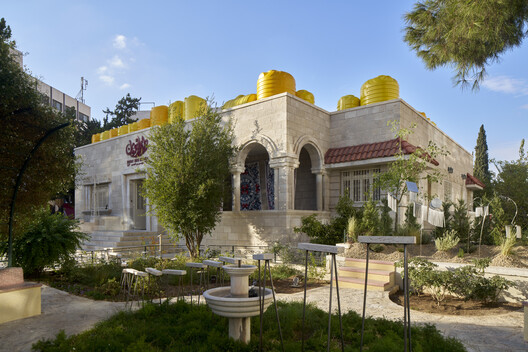
The relationship between design and environmental resources extended beyond the Hangar, finding a more direct expression in interventions across the city. In a region where water scarcity, construction waste, and the pressures of urban growth are everyday realities, sustainability becomes difficult to discuss meaningfully without considering the particular materials and infrastructures through which people live. The projects that engaged these questions most directly were not necessarily those presenting a new technology, but those reconsidering the role of resources already present in the city.
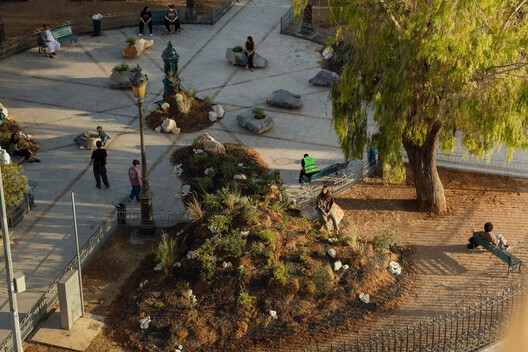
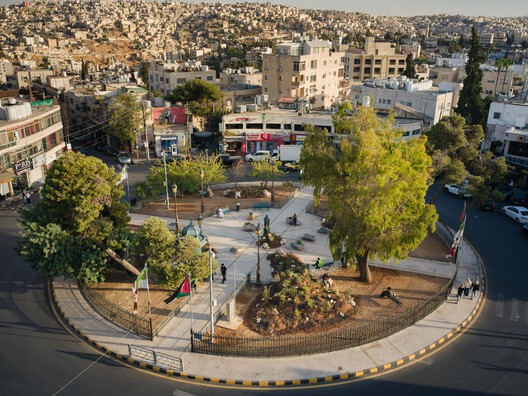
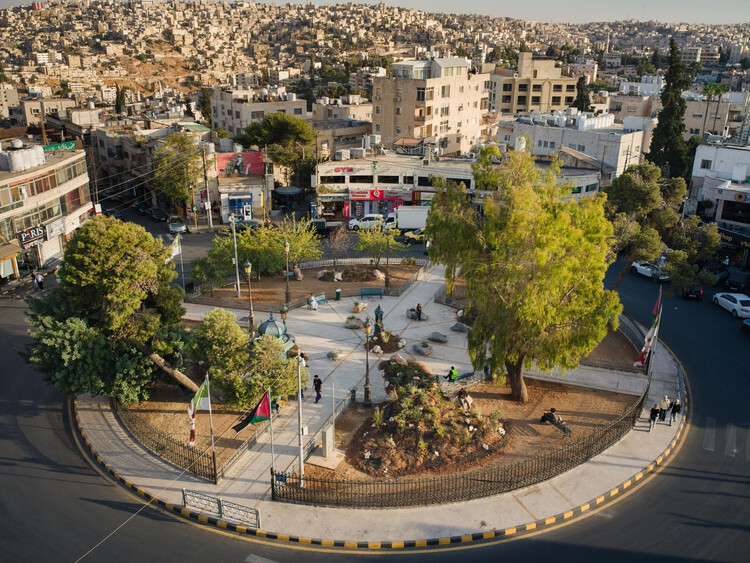
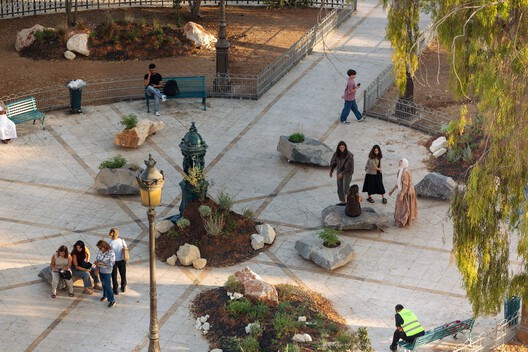
At Paris Circle, FADAA's "A Brief Untaming" temporarily transformed a familiar roundabout through earth berms made from soil and stone salvaged from construction excavations, alongside mobile planters containing native flora and wild vegetation. By allowing landforms and planting to extend beyond the roundabout's formal boundaries, the intervention challenged the controlled appearance of conventional civic landscaping. Planting is often introduced into public space as a finished visual layer, expected to remain contained and subordinate to roads, sidewalks, and buildings. FADAA instead explored what might happen if vegetation and topography were allowed a less controlled presence, drawing attention to native ecologies and the relationship between urban development and natural habitats. The temporary nature of the installation gives the proposal an experimental quality, but it also leaves open the question of how such an approach might translate into longer-term public-space management.
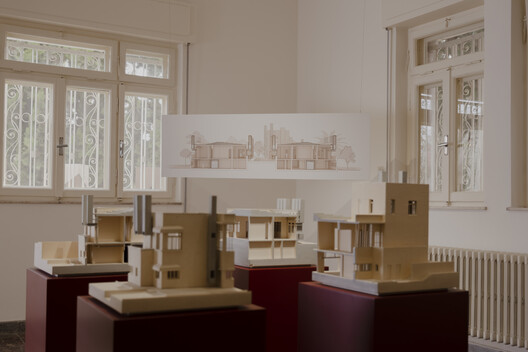
EAST Architecture Studio's "Bracing Accumulations," installed at Darat Abu Adnan, addressed the similar relationship between existing resources and contemporary needs through a different scale of intervention. Working with a heritage house dating from the 1950s, the studio transformed its rooftop and facade into a system for collecting and redistributing rainwater. The building's existing fabric became the basis for an environmental infrastructure, connecting adaptive reuse to Jordan's long history of managing limited water resources. The distinction between these projects is productive. One works with excavated matter and native vegetation to reconsider a public landscape; the other adapts an existing building to participate in water management. Both move sustainability away from the level of an abstract aspiration and toward the conditions of a particular place. The venue also hosted part of the Nuzul, a birdhouse project curated by Faysal Tabbarah scattered across different venues, featuring works such as Dār Al ʿAwda by Mariam Arwa and Yasmine Mansour, Omar Darwish's Binayat Al-Douri, Jessica Azizeh and Yasmin Tams's In the Nectar of the Flower of Cities, and Nada Barqawi's Of Kin.
Designing for Existing Practice
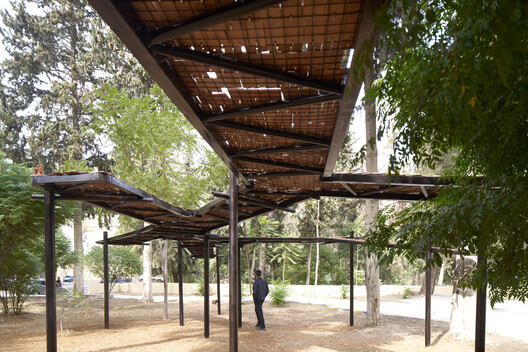
Some of the edition's most revealing moments emerged where design encountered activities that already belonged to the city. In Ras El Ain Park, Civil Architecture's permanent installation "Folly" creates a shaded gathering place beneath a ceramic-tile canopy manufactured locally by Haswa. Small figures of people and animals placed along the roof introduce a degree of ambiguity, while the structure itself offers a straightforward public function: shelter and a place to pause among the trees. Nearby, Mohamad Nahleh's permanent installation Domes of the Rock brings architectural memory into the same everyday setting. Referencing Jerusalem's Dome of the Rock through a reduced-scale wooden and steel form integrated with seating and lighting, the work shifts a familiar architectural image away from the monumental context in which it is usually encountered.
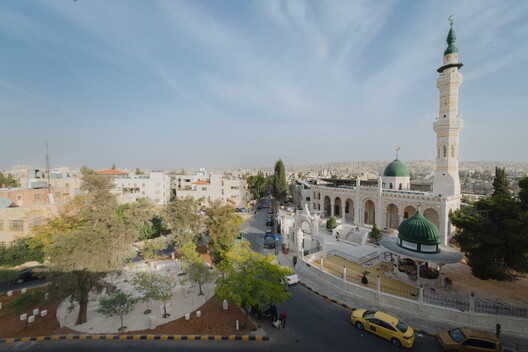
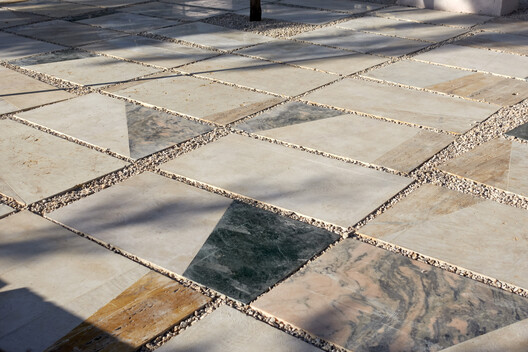
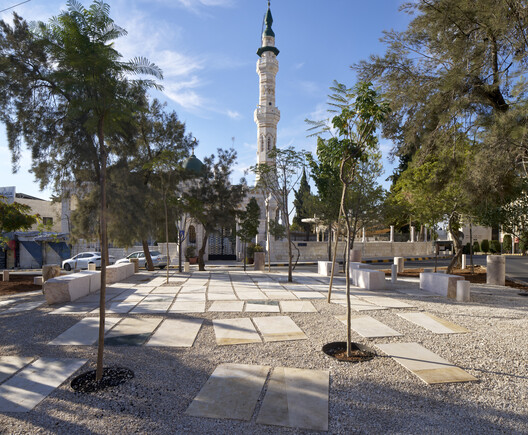
At the Ash Shariah College Intersection in Jabal Al Lweibdeh, "Ard Al Sahn," a permanent intervention by Ziad Jamaleddine and Makram el Kadi of L.E.FT, with Iheb Guermazi and Beya Othmani, makes the relationship between design and existing practice even more tangible. Built using locally sourced stone waste, the intervention introduces a surface oriented toward the Qibla, with stone elements shaped to evoke prayer rugs. Across the intersection from the Shariah Mosque, the space has already begun to accommodate Friday prayers, when the mosque fills, and worshippers extend into the surrounding public realm.
What Accumulates, and What Comes Next?
Amman Design Week 2026 offered a way to consider design not as an isolated act of creation, but as part of a longer process shaped by cultural exchange, material knowledge, and changing ways of life. Across the program, existing buildings, overlooked resources, and everyday public spaces emerged not as remnants of the past, but as active starting points for new forms of use and interpretation. Accumulation, in this sense, is not simply about what a city retains, but how its inherited conditions can be reworked to accommodate changing needs while remaining connected to place.
The implications extend beyond the event, touching on how local knowledge and material traditions might inform contemporary building practices, and how design can leave room for future generations to adapt and reinterpret what they inherit. The interventions across Amman offered different ways of engaging with these questions, from reusing construction materials to creating spaces that respond to existing social practices. What accumulates, then, is never fixed: each intervention enters a longer history of making, inhabiting, and transforming the city, adding another layer to what is already there.