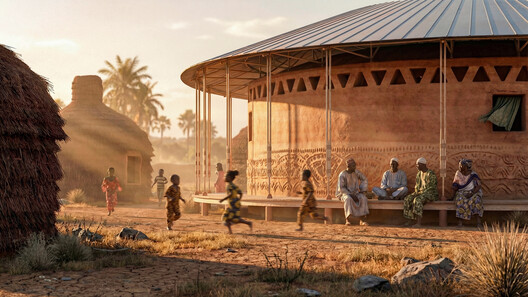
As cities change, so do our expectations of them. People are asking for more caring spaces: public places open to all ages and genders, nature within reach of every social class, and settings that foster connection. Few design intentions hold these together as well as spaces for children. This selection of unbuilt projects submitted by ArchDaily readers showcases different approaches to care-based architecture. Schools, daycare centers, a library, a youth center, and a new model for orphanages take on the mission of providing a safe and stimulating environment for children at every stage of their development. Not yet built but carefully designed, these proposals offer a glimpse into spaces for play, learning, and calm that fuel creativity in design for people of all ages.
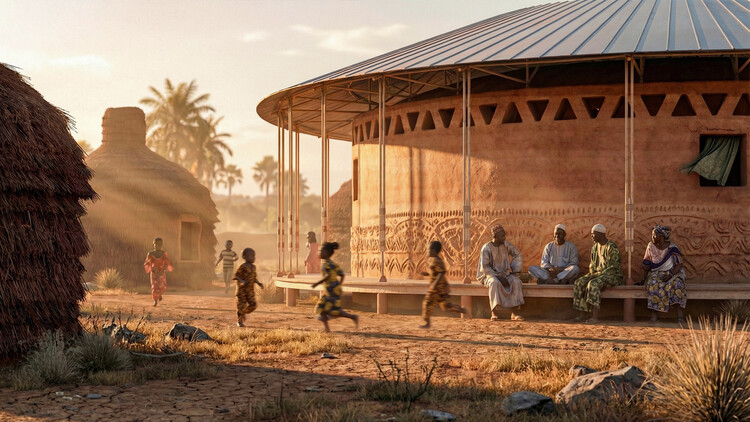
When thinking about children's areas, colors, playful volumes, daylight, and open air come to mind. Some of that is reflected in this selection of conceptual projects, grounded in the local realities of Senegal, Brazil, Vietnam, India, Italy, and Ukraine. The six projects are built around learning, encounter, play, and safety, shaped into curved earthen or brick buildings, colorful playscapes, light-filled interiors, and, most of all, a permanent reference to plant life. Biophilic design, in different contexts, shapes and sizes, seems to be a cornerstone of the environment envisioned for future generations. Whether out of nostalgia, experience or a protective instinct, an enduring connection to nature, or an idea of it, emerges as a common thread in the design of these proposals. They are presented as lived spaces, and their differences reflect the stages of childhood through the integration of movement, atmosphere and the opportunities they offer for the collective care of multiple generations.


