1. ArchDaily
  2. School Design

School Design: The Latest Architecture and News

How Asia Built Schools in 2025: 5 Site-Sourced Rural Projects

Subscriber Access | 

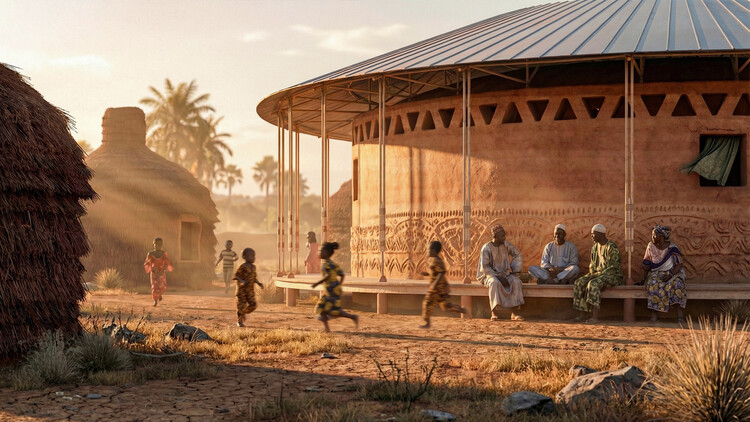
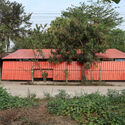
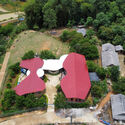
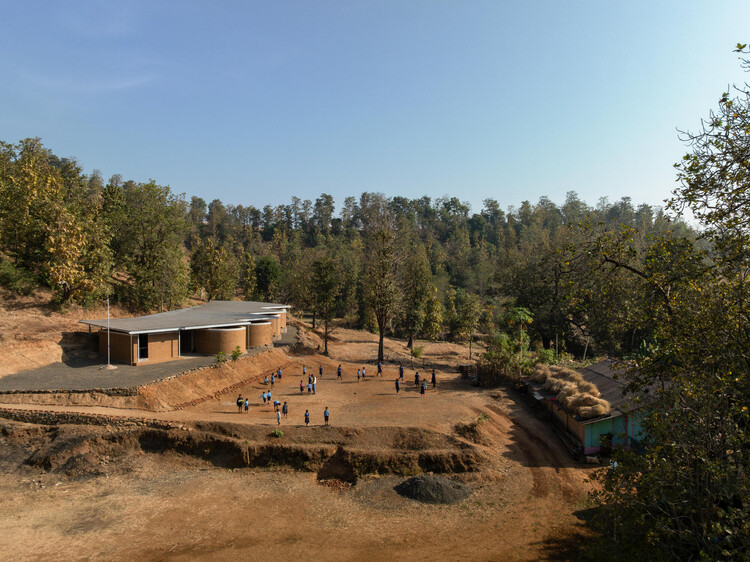
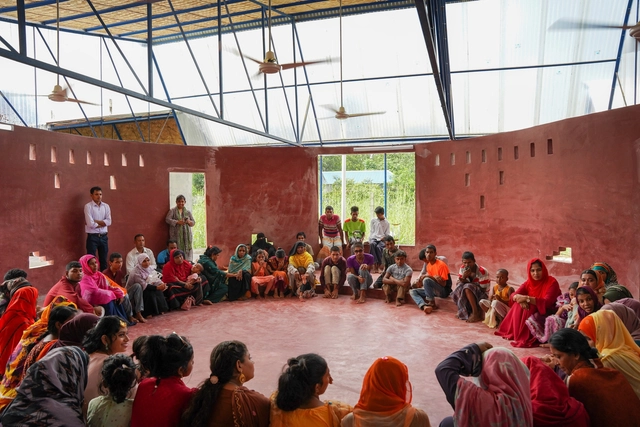
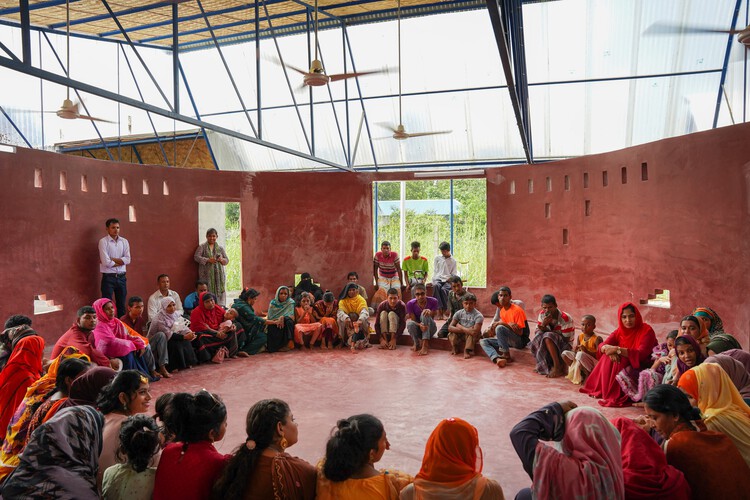
In the mountainous regions of Vietnam, the borderlands of Thailand, and the rugged Western Ghats of India, building school projects remains a challenge defined by logistics. In areas where infrastructure and industrial supply chains are limited or distant, transporting each kilogram of material can significantly increase costs and logistical complexity. During 2025, several school projects in rural contexts in Asia showed how the architect's role often shifted from a designer of form to a strategist of procurement. The primary challenge was not merely aesthetic but a matter of durability: using locally available materials and protecting them from monsoon rains, high-velocity winds, and sometimes seismic instability.

How Asia Built Schools in 2025: 5 Site-Sourced Rural Projects - Image 1 of 4How Asia Built Schools in 2025: 5 Site-Sourced Rural Projects - Image 2 of 4How Asia Built Schools in 2025: 5 Site-Sourced Rural Projects - Image 3 of 4How Asia Built Schools in 2025: 5 Site-Sourced Rural Projects - Image 4 of 4How Asia Built Schools in 2025: 5 Site-Sourced Rural Projects - More Images+ 2

Architecture and Agency: Rethinking Authorship Through Participatory Design

Subscriber Access | 

Architecture has historically produced many iconic buildings shaped by singular visions—often designed unilaterally for users, communities, and cities. While this top-down approach has enabled strong formal coherence and conceptual clarity, it has also prioritized authorship over engagement. The result: projects that may be celebrated as visionary, yet often feel disconnected from the everyday realities of those who inhabit them.

Designing for others is inherently complex. As architects, we are frequently tasked with creating environments for communities with whom we may have no personal or cultural familiarity. This distance, however, can offer valuable objectivity. It allows us to engage diverse perspectives with fresh eyes, critically analyzing the needs and constraints of multiple stakeholders. Through this process, the discipline of architecture has advanced—pushing boundaries in spatial thinking, material innovation, and structural experimentation.

Architecture and Agency: Rethinking Authorship Through Participatory Design - Image 1 of 4Architecture and Agency: Rethinking Authorship Through Participatory Design - Image 2 of 4Architecture and Agency: Rethinking Authorship Through Participatory Design - Image 3 of 4Architecture and Agency: Rethinking Authorship Through Participatory Design - Image 4 of 4Architecture and Agency: Rethinking Authorship Through Participatory Design - More Images+ 29

Architecture for Neurodiversity: Designing for Control, Choice, and the Senses

Publicly occupied spaces can be overwhelming. Airports, schools, stadiums, and workplaces all feature environments with visual chaos that can be disorienting and stressful for individuals, especially those who are neurodiverse. The bombardment of stimuli, unpredictable movements, and competing visual information can create barriers to occupant comfort. Architects are regularly encouraged to create spaces that recognize and honor individual differences. Designing for neurodiversity is one way of championing inclusivity and extending principles of universal design.

Architecture for Neurodiversity: Designing for Control, Choice, and the Senses - Image 1 of 4Architecture for Neurodiversity: Designing for Control, Choice, and the Senses - Image 2 of 4Architecture for Neurodiversity: Designing for Control, Choice, and the Senses - Image 3 of 4Architecture for Neurodiversity: Designing for Control, Choice, and the Senses - Image 4 of 4Architecture for Neurodiversity: Designing for Control, Choice, and the Senses - More Images+ 3

From Nature-Inspired Resorts to City Reconversions, Discover the Recent Work of Gensler, Foster + Partners, and More

The change of the calendar year marked the culmination of several processes in the world of renowned architecture firms. Between December 2024 and February 2025, Gensler unveiled a rendering of a Manhattan redevelopment project, Foster + Partners released renderings of a new hotel and luxury residences in Brazil, and Herzog & de Meuron announced the completion date for the new Memphis Art Museum. International competitions revealed their results, highlighting the winning project of the young firm Unformed Design, as well as the collaboration between the Portuguese Fala Atelier and the Swiss Continentale on an educational architecture project. These projects showcase the broad scope of architectural design, from the detailing of a high-end project's relationship with nature to the urban renewal potential of a programmatic conversion project.

From Nature-Inspired Resorts to City Reconversions, Discover the Recent Work of Gensler, Foster + Partners, and More - Image 1 of 4From Nature-Inspired Resorts to City Reconversions, Discover the Recent Work of Gensler, Foster + Partners, and More - Image 2 of 4From Nature-Inspired Resorts to City Reconversions, Discover the Recent Work of Gensler, Foster + Partners, and More - Image 3 of 4From Nature-Inspired Resorts to City Reconversions, Discover the Recent Work of Gensler, Foster + Partners, and More - Image 4 of 4From Nature-Inspired Resorts to City Reconversions, Discover the Recent Work of Gensler, Foster + Partners, and More - More Images+ 22

Learning Through Play: Architecture for Kids in Educational Spaces and Playgrounds

Subscriber Access | 

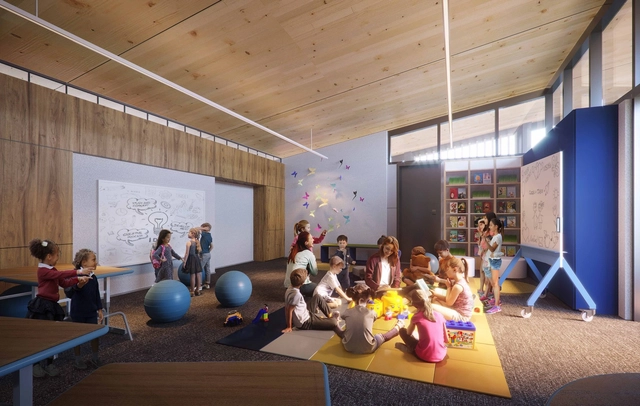
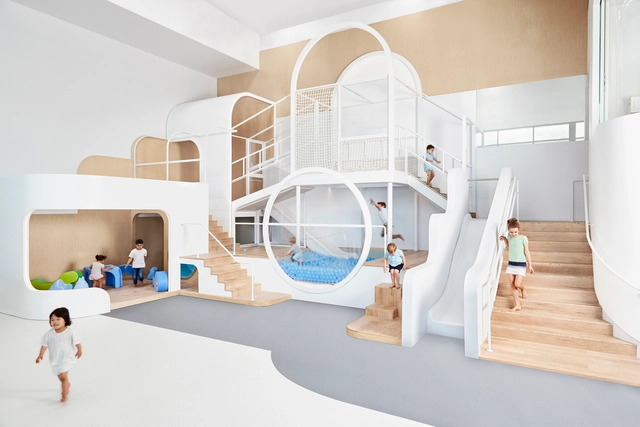
Designing for children is certainly not child's play. While adults lead the design process, the end-users are often children, as seen in kindergartens, schools, and parks. Architects have the responsibility to create built environments that provide children with opportunities to play, explore, and learn, even in today's digital age.

Learning Through Play: Architecture for Kids in Educational Spaces and Playgrounds - Image 1 of 4Learning Through Play: Architecture for Kids in Educational Spaces and Playgrounds - Image 2 of 4Learning Through Play: Architecture for Kids in Educational Spaces and Playgrounds - Image 3 of 4Learning Through Play: Architecture for Kids in Educational Spaces and Playgrounds - Image 4 of 4Learning Through Play: Architecture for Kids in Educational Spaces and Playgrounds - More Images+ 13

CHYBIK + KRISTOF Unveils Culturally-Inspired School Design in Mulbekh, North India

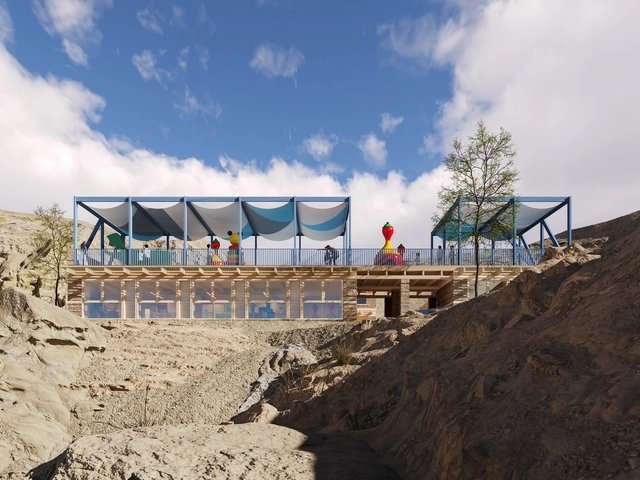
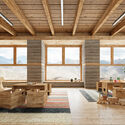
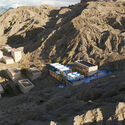
Czech-based architectural firm CHYBIK + KRISTOF has revealed its design for a new school in Mulbekh, North India, in collaboration with the Czech NGO Himalayan Patron and Spring Dales Public School. The project aims to provide quality education in the region while preserving local culture. This initiative is particularly significant as many children, especially girls, from remote ethnic minority communities, have faced limited access to education due to the area's harsh climate and challenging terrain.

CHYBIK + KRISTOF Unveils Culturally-Inspired School Design in Mulbekh, North India - Image 1 of 4CHYBIK + KRISTOF Unveils Culturally-Inspired School Design in Mulbekh, North India - Image 2 of 4CHYBIK + KRISTOF Unveils Culturally-Inspired School Design in Mulbekh, North India - Image 3 of 4CHYBIK + KRISTOF Unveils Culturally-Inspired School Design in Mulbekh, North India - Image 4 of 4CHYBIK + KRISTOF Unveils Culturally-Inspired School Design in Mulbekh, North India - More Images+ 4

An Experimental School in Switzerland and a Wood Art Center in Poland: 8 Unbuilt Cultural and Educational Projects by Established Firms

Subscriber Access | 

Educational and cultural centers serve as pivotal spaces where communities engage with knowledge, creativity, and shared experiences. As architectural programs, they offer unique opportunities to explore how physical environments can foster learning, cultural expression, and social interaction. The significance of these projects lies not just in their function but in how they reflect the values and aspirations of society. When established architecture firms take on these projects, their design choices become a lens through which we can examine contemporary approaches to space, place, and community, offering a glimpse into the evolving role of architecture in shaping educational and cultural landscapes.

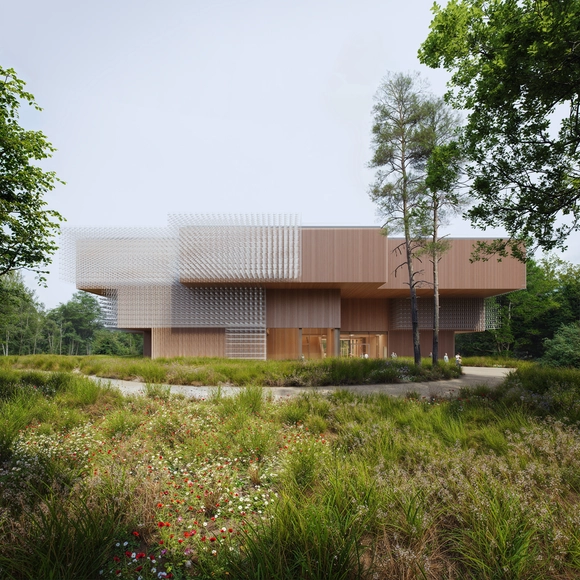
Among this week's curated list of unbuilt projects submitted by established architecture practices, fala atelier’s project for a school in Broc, Switzerland, stands out with its sensitive integration of Alpine architectural elements; WXCA’s Xylopolis Centre in Poland reflects a deep contemplation on humanity’s relationship with nature, while KPF’s life sciences building in London and Jones Studio’s Water Education Center in Arizona further exemplify how architecture can address contemporary societal needs, from fostering innovation ecosystems to educating the public on critical environmental issues.

An Experimental School in Switzerland and a Wood Art Center in Poland: 8 Unbuilt Cultural and Educational Projects by Established Firms - Image 20 of 4An Experimental School in Switzerland and a Wood Art Center in Poland: 8 Unbuilt Cultural and Educational Projects by Established Firms - Image 34 of 4An Experimental School in Switzerland and a Wood Art Center in Poland: 8 Unbuilt Cultural and Educational Projects by Established Firms - Image 33 of 4An Experimental School in Switzerland and a Wood Art Center in Poland: 8 Unbuilt Cultural and Educational Projects by Established Firms - Image 7 of 4An Experimental School in Switzerland and a Wood Art Center in Poland: 8 Unbuilt Cultural and Educational Projects by Established Firms - More Images+ 32

OMA, Studio A Kwadraat, and Circlewood Win Amsterdam School Competition with Modular Wood Construction System

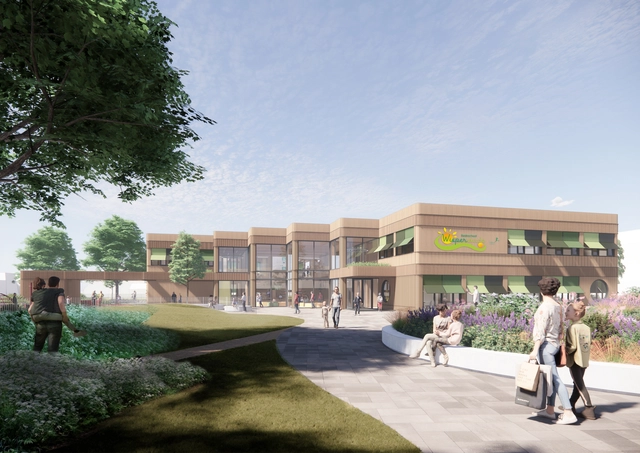
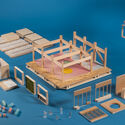
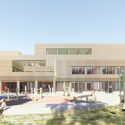
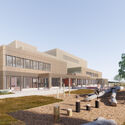
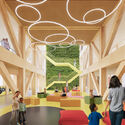
As part of the Schools by Circlewood consortium, OMA’s David Gianotten and Michael den Otter, together with Studio A Kwadraat, represented by Jimmy van der Aa, have won the competition to design the Wisperweide school in Weesp. This will become the first school to be built using Schools by Circlewood’s prefabricated wooden modular system, developed in collaboration with OMA. The system has earlier been chosen by the administration of Amsterdam to be employed across the city to provide flexible and sustainable elementary schools.

OMA, Studio A Kwadraat, and Circlewood Win Amsterdam School Competition with Modular Wood Construction System - Image 1 of 4OMA, Studio A Kwadraat, and Circlewood Win Amsterdam School Competition with Modular Wood Construction System - Image 2 of 4OMA, Studio A Kwadraat, and Circlewood Win Amsterdam School Competition with Modular Wood Construction System - Image 3 of 4OMA, Studio A Kwadraat, and Circlewood Win Amsterdam School Competition with Modular Wood Construction System - Image 4 of 4OMA, Studio A Kwadraat, and Circlewood Win Amsterdam School Competition with Modular Wood Construction System - More Images+ 4

A Primary School in the Tuscan Countryside and a Fine Arts Academy Extension in Germany: 8 Unbuilt Educational Facilities Submitted by the ArchDaily Community

Subscriber Access | 

As the summer days come to an end, the focus naturally shifts to the realm of academia, a space full of curiosity, energy, and ingenuity. For architects, educational spaces are an opportunity for exploration, as they gather eager students together with professors and experts in their respective fields. The environment of educational facilities thus becomes a canvas for the cultivation of creativity, curiosity, and growth. From the playfulness of kindergartens and preschools to the halls of faculties that shape the scholars of tomorrow, the architecture of educational spaces must balance structure and flexibility to respond to the needs of students, teacher, and their larger communities.

This week’s curated selection of Best Unbuilt Architecture highlights designs submitted by the ArchDaily community dedicated to educational institutions. From innovative programs dedicated to child development and community engagement to specialized high schools or inclusive institutions learning to work with locally available materials such as rammed earth, this selection highlights projects dedicated to the exchange of knowledge in its varied forms.

A Primary School in the Tuscan Countryside and a Fine Arts Academy Extension in Germany: 8 Unbuilt Educational Facilities Submitted by the ArchDaily Community - Image 7 of 4A Primary School in the Tuscan Countryside and a Fine Arts Academy Extension in Germany: 8 Unbuilt Educational Facilities Submitted by the ArchDaily Community - Image 18 of 4A Primary School in the Tuscan Countryside and a Fine Arts Academy Extension in Germany: 8 Unbuilt Educational Facilities Submitted by the ArchDaily Community - Image 24 of 4A Primary School in the Tuscan Countryside and a Fine Arts Academy Extension in Germany: 8 Unbuilt Educational Facilities Submitted by the ArchDaily Community - Image 32 of 4A Primary School in the Tuscan Countryside and a Fine Arts Academy Extension in Germany: 8 Unbuilt Educational Facilities Submitted by the ArchDaily Community - More Images+ 42

OMA / David Gianotten and Circlewood Develop a Modular Wood System to Create Flexible Schools for the City of Amsterdam

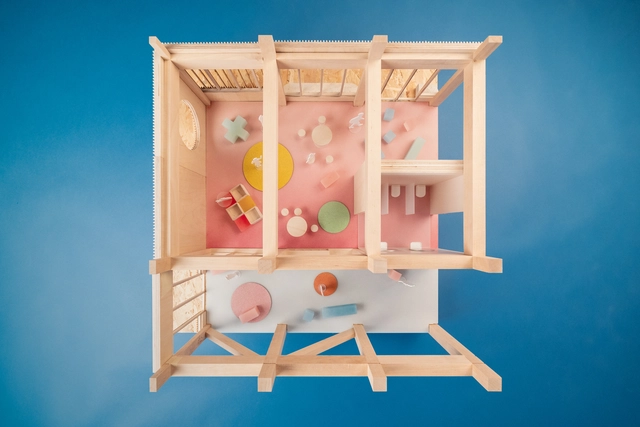
As part of the Circlewood consortium, OMA’s David Gianotten and Michel den Otter have developed a modular system to build schools that can adapt and transform throughout their lifecycle. The system was selected by the City of Amsterdam to be employed to build multiple schools in the coming ten years, as part of the Innovation Partnership School Buildings program. The citywide initiative aims to build nine to thirty “high-quality, flexible, and sustainable” schools as a way to contribute to the city’s goal of becoming fully circular by 2050.

OMA / David Gianotten and Circlewood Develop a Modular Wood System to Create Flexible Schools for the City of Amsterdam - Image 1 of 4OMA / David Gianotten and Circlewood Develop a Modular Wood System to Create Flexible Schools for the City of Amsterdam - Image 2 of 4OMA / David Gianotten and Circlewood Develop a Modular Wood System to Create Flexible Schools for the City of Amsterdam - Image 3 of 4OMA / David Gianotten and Circlewood Develop a Modular Wood System to Create Flexible Schools for the City of Amsterdam - Image 4 of 4OMA / David Gianotten and Circlewood Develop a Modular Wood System to Create Flexible Schools for the City of Amsterdam - More Images+ 1

The Salone del Mobile Transforms General Layout and Presents 2023 Theme

The 61st edition of The Salone del Mobile transformed its general layout and program, including Euroluce, the iconic International Lighting Exhibition in Milan. Curated by architect Beppe Finessi, in collaboration with Formafantasma and the studio Lombardini22, the new vision for The Salone del Mobile will improve accessibility and the trade fair and user experience. Running from 18th to 23rd April 2023 at Rho Fiera Milano, the 2023 Salone will focus on schools and universities under the theme "Design School."

The Salone del Mobile Transforms General Layout and Presents 2023 Theme - Image 1 of 4The Salone del Mobile Transforms General Layout and Presents 2023 Theme - Image 2 of 4The Salone del Mobile Transforms General Layout and Presents 2023 Theme - Image 3 of 4The Salone del Mobile Transforms General Layout and Presents 2023 Theme - Image 4 of 4The Salone del Mobile Transforms General Layout and Presents 2023 Theme - More Images

Tutoring with Timber: Using Wood in Schools

 | Sponsored Content

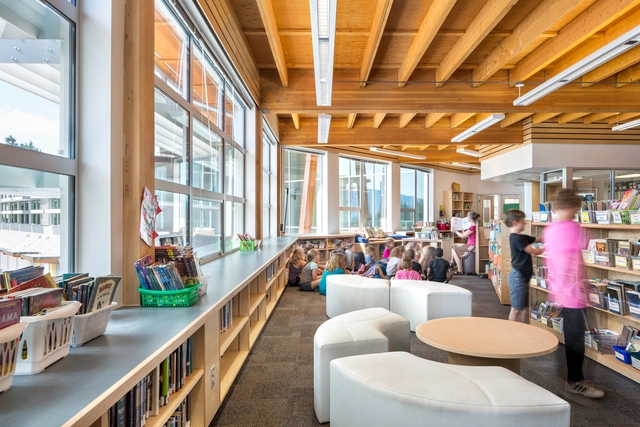
How does school design influence the process of teaching and learning? Understanding current educational design trends and methodologies is key to designing healthy spaces for students to develop their social and academic capacities.

If we look at the evolution of school design through time, we can see that each period has its own challenges and preferences. Today's main challenge in school design is to create spaces that can integrate open learning environments that incorporate diversity of learning spaces, social interaction and sustainability.

The architecture industry seems to constantly be on the lookout for new materials and methodologies that better incorporate sustainability. One material which has stood the test of time, while also finding space for innovation, is wood. In this context, British Columbia (Canada) stands out as one of the world's largest exporters of wood products, and has successfully applied a number of strategies to maximize its use in sustainable design. One notable example, which will be explored in this article, is the use of wood in schools.

LINK Arkitektur Designs a Rain-Friendly School Near Gothenburg

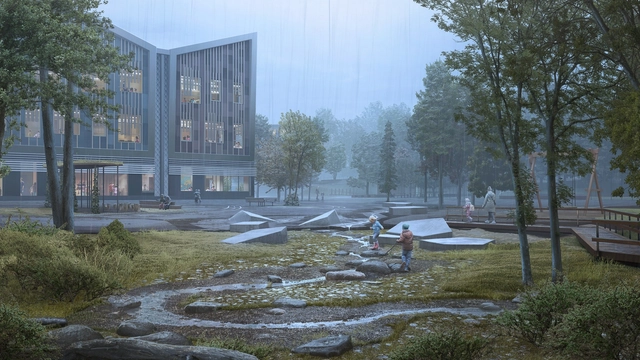
LINK Arkitektur has revealed the design of a school that integrates the local climate conditions and challenges within the educational process. Located in Torslanda near Gothenburg, Sweden, where it rains every other day during the school year, the project uses water as a resource for both play and learning, taking a disruptive situation and turning it into an opportunity for understanding nature and the state of the environment.

Natural Light Enhances Progressive Learning at Hessenwald School

 | Sponsored Content

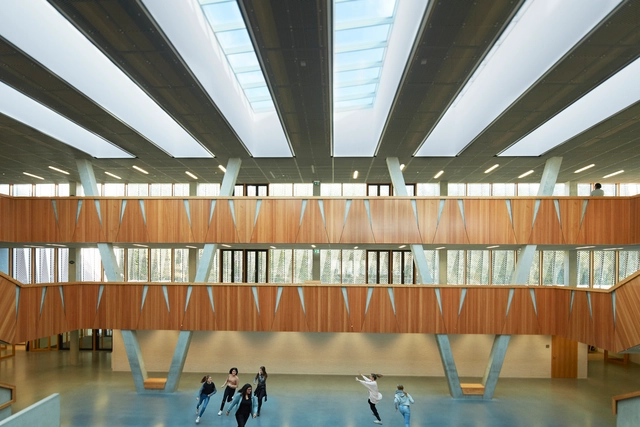
Hessenwald School in Weiterstadt, Germany, is an example of energy-efficient, contemporary architecture that offers a new teaching and pedagogical model. At the centre of both model and building stands a well-lit and well-ventilated three-storey atrium.

"Design Should Educate and Uplift": VMDO's Rob Winstead on Social Justice and Building Sustainable Futures

Subscriber Access | 

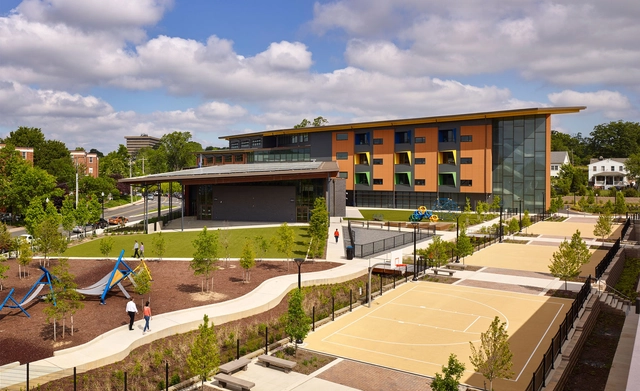
Shaping the future begins with education. For VMDO Principal Rob Winstead, learning spaces go hand in hand with sustainability. As a nationally-recognized expert in education, Winstead is an advocate for blending thoughtful design with high performance goals. In an exclusive interview with ArchDaily, Winstead talks about his personal background and experiences, as well as his role in shaping how VMDO approaches sustainability, education and social justice.

"Design Should Educate and Uplift": VMDO's Rob Winstead on Social Justice and Building Sustainable Futures - Arch Daily Interviews"Design Should Educate and Uplift": VMDO's Rob Winstead on Social Justice and Building Sustainable Futures - Arch Daily Interviews"Design Should Educate and Uplift": VMDO's Rob Winstead on Social Justice and Building Sustainable Futures - Arch Daily Interviews"Design Should Educate and Uplift": VMDO's Rob Winstead on Social Justice and Building Sustainable Futures - Arch Daily InterviewsDesign Should Educate and Uplift: VMDO's Rob Winstead on Social Justice and Building Sustainable Futures - More Images+ 11

SET Architects' Climbing-Frame Inspired Sassa School Prioritizes Adaptability

Ten years after a destructive earthquake rocked Italy's central Abruzzo region, many students still attend class in temporary modules similar to containers. Named winners of an international competition, SET Architects’ design for the new “Sassa School Complex” proposes reconstructing a place for students and the community to learn, gather, and grow. Inspired by the modularity and essential nature of climbing frame play structures, the architects describe the design as a metaphor for “freedom and social aggregation as a fundamental value for dynamic and innovative teaching.”

SET Architects' Climbing-Frame Inspired Sassa School Prioritizes Adaptability  - Image 1 of 4SET Architects' Climbing-Frame Inspired Sassa School Prioritizes Adaptability  - Image 2 of 4SET Architects' Climbing-Frame Inspired Sassa School Prioritizes Adaptability  - Image 3 of 4SET Architects' Climbing-Frame Inspired Sassa School Prioritizes Adaptability  - Image 4 of 4SET Architects' Climbing-Frame Inspired Sassa School Prioritizes Adaptability  - More Images+ 23

Sandy Hook School Architect Testifies in Front of Congress About School Safety

Following up on the AIA's recent update of guidelines regarding school safety, architect Jay Brotman, designer of the new Sandy Hook Elementary School, testified in front of the US Department of Education this week to urge the government to adopt safer standards for design. While not unheard of, it is not typical for architects to stand in front of Congress.