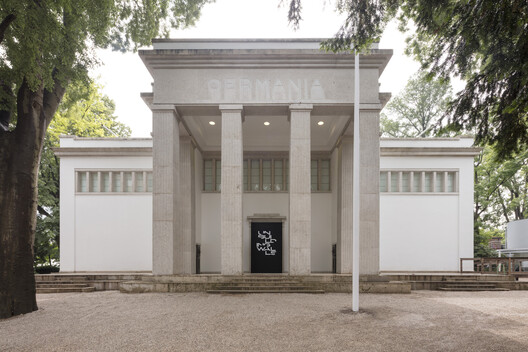
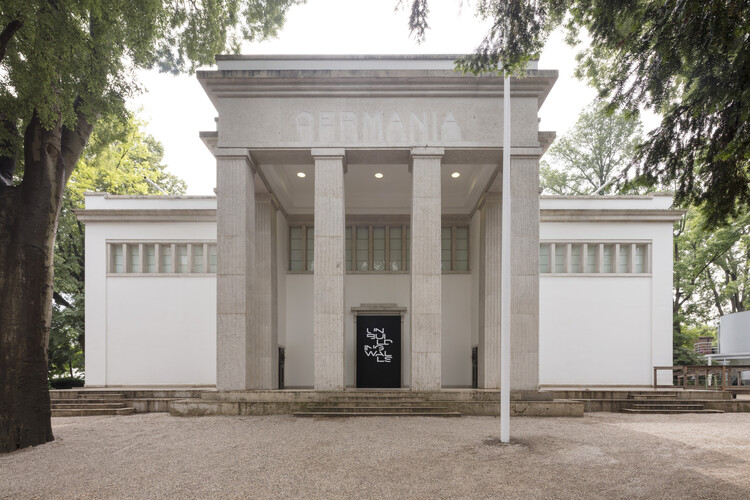
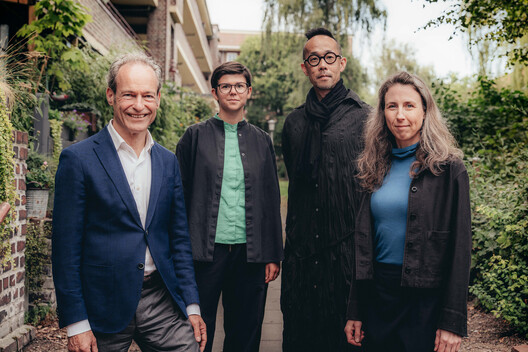
The German Federal Ministry for Housing, Urban Development and Building has appointed Kawahara Krause Architects, Andres Lepik, and Olga Cobuscean as curators for the German Pavilion at the 20th International Architecture Exhibition — La Biennale di Venezia 2027. The exhibition is titled "CONVIVERE — A Repertoire of Living Together" and turns visitors' attention to the in-between spaces of housing: the threshold, the stairwell, the courtyard, the space in front of the door. The curatorial argument starts from a diagnosis of today's growing social isolation, political polarization, and increasing pressure to build more and faster, and uses these spaces, where everyday coexistence begins, to ask how architecture can contribute to the foundations of democracy.

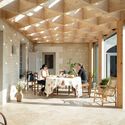

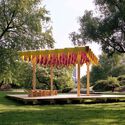
From the curators' perspective, these often-overlooked domestic spaces are where trust, neighborliness, and life unfold. In-between spaces mediate between the intimacy of the home and the anonymity of the city, both connecting and separating private life and the shared world around us. They enable informal encounters, proximity, and a sense of belonging. These qualities are what the team calls "CONVIVERE," a design concept emerging from precise spatial decisions. In the context of the exhibition, the concept is illustrated with a repertoire of spatial situations that facilitate interaction, drawn from housing of different periods across Germany. The team's objective is to call attention to those moments and transitions that actively invite social interaction. The examples are therefore chosen not for the building itself, but to reveal the capacity of space to shape how we live together.
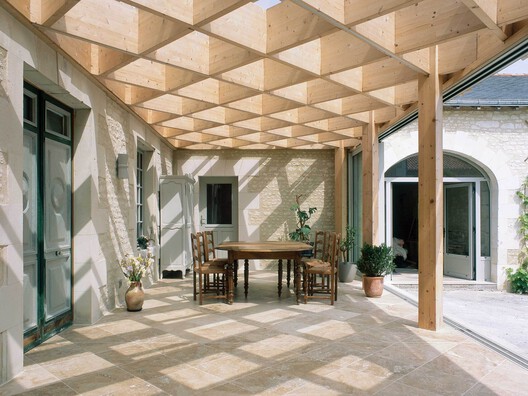
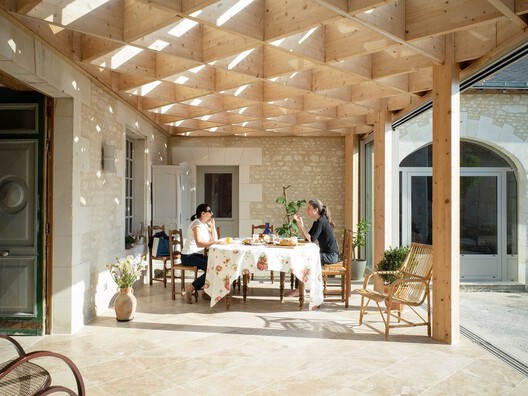
From the curators' perspective, these often-overlooked domestic spaces are where trust, neighborliness, and life unfold. In-between spaces mediate between the intimacy of the home and the anonymity of the city, both connecting and separating private life and the shared world around us. They enable informal encounters, proximity, and a sense of belonging. These qualities are what the team calls "CONVIVERE," a design concept emerging from precise spatial decisions. In the context of the exhibition, the concept is illustrated with a repertoire of spatial situations that facilitate interaction, drawn from housing of different periods across Germany. The team's objective is to call attention to those moments and transitions that actively invite social interaction. The examples are therefore chosen not for the building itself, but to reveal the capacity of space to shape how we live together.
Related Article
"Do Architecture": Wang Shu and Lu Wenyu Announce Theme and Title for 2027 Venice Architecture BiennaleThe exhibition project is led by Kawahara Krause Architects, a Hamburg-based German-Japanese architecture practice led by Tatsuya Kawahara and Ellen Kristina Krause. Both founders have extensive experience teaching architectural design at various universities, and the office received the Bauwelt Prize in 2013 for its first built work, an installation titled "Line, Surface, Space" (Linie, Fläche, Raum). Co-curators Andres Lepik and Olga Cobuscean work across architectural research and theory. Andres Lepik is an art and architectural historian who has held curatorial roles at the Neue Nationalgalerie Berlin and the Architecture and Design Department of the Museum of Modern Art, New York, alongside his academic work. Olga Cobuscean is dedicated to exploring the everyday significance of inhabited architecture and the conditions of its production for the common good, through research, writing, and teaching.
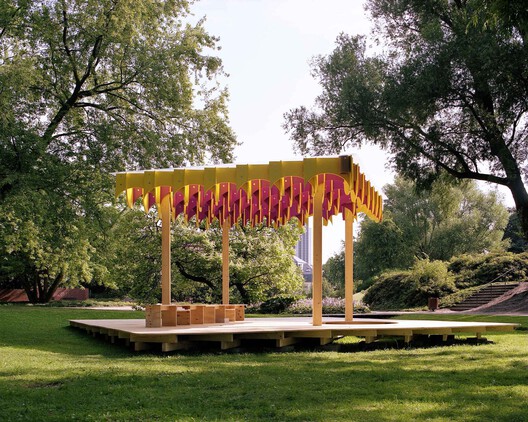
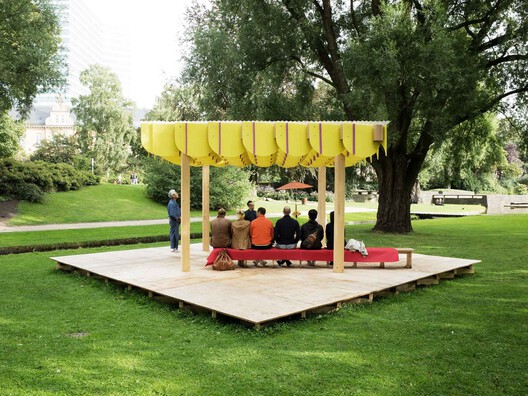
The exhibition material will be developed in collaboration with students from four German universities, who will be responsible for researching, exploring, and representing the exhibition's spatial situations. The institutions are RWTH Aachen University (with Professor Anne-Julchen Bernhardt), RPTU Kaiserslautern (with Professor Oda Pälmke), the Technische Universität München (with Professor Benedikt Boucsein), and the Staatliche Akademie der Bildenden Künste Stuttgart (with Professor Tatsuya Kawahara). The curatorial team will share more details about the exhibition's content in early 2027. The task now facing the architect-curators, co-curators, researchers, and students is to select and illustrate cases that provide a tangible answer to the question: what can architecture contribute to the spaces where democratic society takes shape?
The 20th Architecture Biennale in Venice will take place from May 8 to November 21, 2027, with preview days on May 6 and 7. Other recent pavilion announcements include the Ukrainian exhibition, "Pool of Questions," designed by the team from CO-HATY, a local volunteer initiative restoring abandoned buildings in the country to transform them into stable homes for internally displaced people. The Türkiye Pavilion will showcase "Spolia Futures," examining the concept of spolia, traditionally understood as the reuse of architectural elements, as an evolving architectural method rather than solely a historical practice. The Australian contribution to the Biennale is based on the ongoing Housing Atlas of Australia research initiative and will present a selection of Australian multi-dwelling housing projects through drawings, photographs, film, and data.


