1. ArchDaily
  2. German Pavilion

German Pavilion: The Latest Architecture and News

12 Pavilions at EXPO 2025 Osaka Highlight Immersive Spatial Experiences

 | Sponsored Content

Since its inauguration this spring, Expo 2025 Osaka has captured global attention from multiple perspectives, demonstrating how architecture can function as a laboratory for exploring solutions to pressing challenges. After 55 years, Osaka is once again hosting the World Expo, with each installation organized around the sub-themes Saving Lives, Empowering Lives, and Connecting Lives. These pavilions take forms that express the identity and values of their region through distinctive architectural languages, forming the central axis of their design. Building on this foundation, some installations serve as laboratories for the future society, utilizing technology to enhance experiences both inside and outside the spaces, transforming the visit through light, sound, visuals, and movement as part of the technological innovation showcased at the event.

12 Pavilions at EXPO 2025 Osaka Highlight Immersive Spatial Experiences - Image 1 of 412 Pavilions at EXPO 2025 Osaka Highlight Immersive Spatial Experiences - Image 2 of 412 Pavilions at EXPO 2025 Osaka Highlight Immersive Spatial Experiences - Image 3 of 412 Pavilions at EXPO 2025 Osaka Highlight Immersive Spatial Experiences - Image 4 of 412 Pavilions at EXPO 2025 Osaka Highlight Immersive Spatial Experiences - More Images+ 27

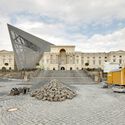
The German Pavilion Tests Urban Limits in a Warmer World at the 2025 Venice Architecture Biennale

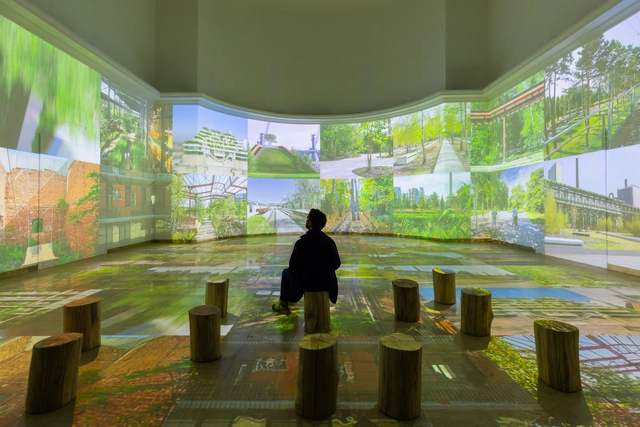
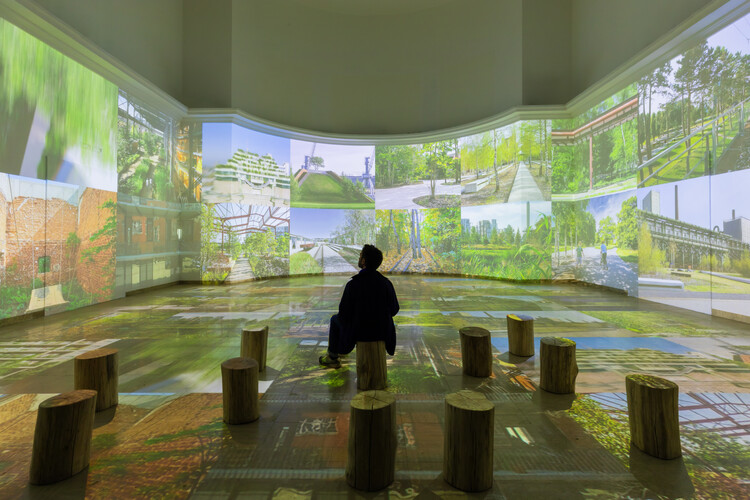
Germany's contribution to the 19th Venice Architecture Biennale 2025 exposes visitors physically and psychologically to the future urban climate: a STRESSTEST that makes the need for immediate action palpable. The exhibition takes a clear stance: climate change is an unstoppable reality, and the measures taken so far are inadequate. It presents a scenario in which climate change manifests globally through rising temperatures, extreme weather, and sea level rise, with its effects directly felt at a local level: urban spaces suffering from heat stress. Curators Nicola Borgmann, Elisabeth Endres, Gabriele G. Kiefer, and Daniele Santucci have designed an exhibition to highlight the impacts of global warming on urban life in an urgent call to action, emphasizing that this reality threatens urban social life, productivity, and the health and survival of citizens.

The German Pavilion Tests Urban Limits in a Warmer World at the 2025 Venice Architecture Biennale - Image 1 of 4The German Pavilion Tests Urban Limits in a Warmer World at the 2025 Venice Architecture Biennale - Image 2 of 4The German Pavilion Tests Urban Limits in a Warmer World at the 2025 Venice Architecture Biennale - Image 3 of 4The German Pavilion Tests Urban Limits in a Warmer World at the 2025 Venice Architecture Biennale - Featured ImageThe German Pavilion Tests Urban Limits in a Warmer World at the 2025 Venice Architecture Biennale - More Images+ 31

LAVA Architects' German Pavilion Opens at Expo 2025 Osaka with Focus on Sustainability and Circularity

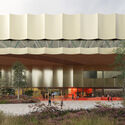
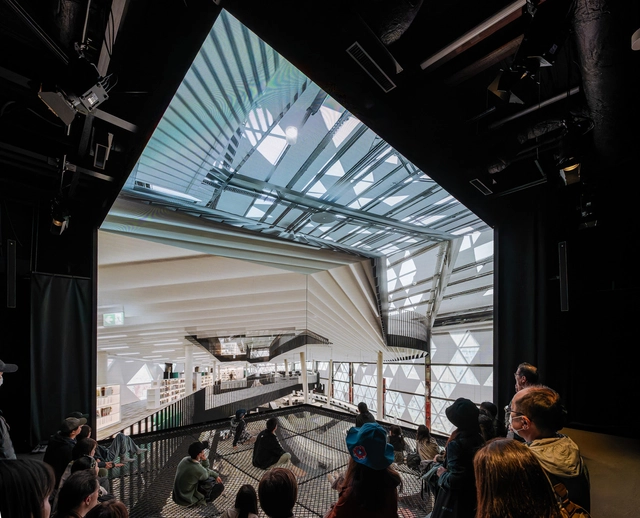
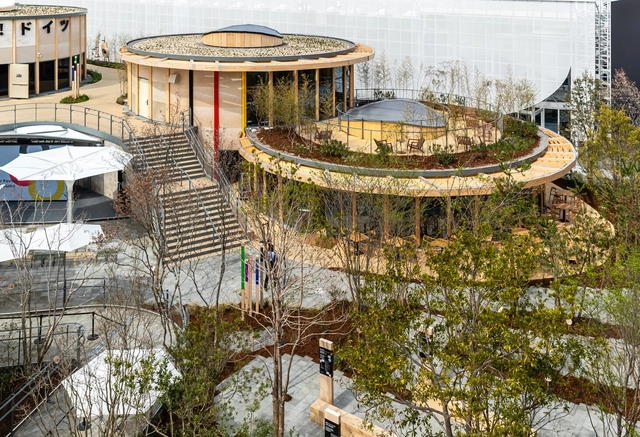
Officially open since April 13 as part of Expo 2025 Osaka, the German Pavilion, designed by LAVA Architects. brings to life the theme of the circular economy. Previously unveiled under the title "Wa! Doitsu" (translated as "Wow! Germany"), the Pavilion explores concepts around circularity, showcasing the "terminological culmination of the sustainability discussion." Focusing on returning all consumable goods to the cycle of the economy, achieving zero waste, and minimizing resource consumption, the theme is visible throughout the entire design.

LAVA Architects' German Pavilion Opens at Expo 2025 Osaka with Focus on Sustainability and Circularity - Image 1 of 4LAVA Architects' German Pavilion Opens at Expo 2025 Osaka with Focus on Sustainability and Circularity - Image 2 of 4LAVA Architects' German Pavilion Opens at Expo 2025 Osaka with Focus on Sustainability and Circularity - Image 3 of 4LAVA Architects' German Pavilion Opens at Expo 2025 Osaka with Focus on Sustainability and Circularity - Image 4 of 4LAVA Architects' German Pavilion Opens at Expo 2025 Osaka with Focus on Sustainability and Circularity - More Images+ 47

When the World Came to Montreal: The Urban Legacy of Canada’s Expo 67

Subscriber Access | 

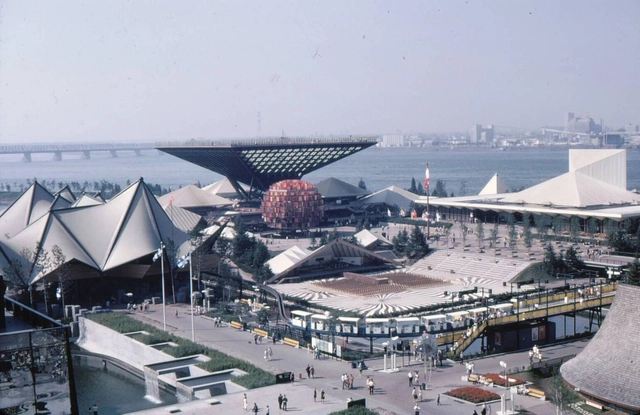
Canada's Expo 67 stands as one of the most successful world expos ever held, setting records and leaving an enduring impact on Montreal's urban landscape. As part of Canada's 100 years celebrations, the event provided an opportunity for the city to showcase its cultural and technological achievements on a global platform. With over 50 million visitors in just six months, it shattered attendance records, including an astonishing 569,500 visitors in a single day. An unprecedented feat for a world fair at the time. Now, 58 years later, and with the Osaka Expo 2025 set to showcase how to design the future society for our lives, it is worth revisiting the legacy of Expo 67 and exploring the urban transformations it brought to Montreal.

When the World Came to Montreal: The Urban Legacy of Canada’s Expo 67 - Image 1 of 4When the World Came to Montreal: The Urban Legacy of Canada’s Expo 67 - Image 2 of 4When the World Came to Montreal: The Urban Legacy of Canada’s Expo 67 - Image 3 of 4When the World Came to Montreal: The Urban Legacy of Canada’s Expo 67 - Image 4 of 4When the World Came to Montreal: The Urban Legacy of Canada’s Expo 67 - More Images+ 4

Learning from Global Architecture Exhibitions: Resource Efficiency, Vernacular Intelligence, and Social and Environmental Advocacy

Over the past year, architecture exhibitions have significantly addressed pressing global issues such as climate change, resource scarcity, and social advocacy. According to the Harvard Graduate School of Design, architecture exhibitions can foster dynamic engagement with contemporary issues, serving as platforms for experimentation and critique. These events, such as the Venice Architecture Biennale, Sharjah Architecture Triennial, Milan Design Week, and Concéntrico, serve as essential platforms for creatives to showcase and explore new ideas. Moreover, they have been instrumental in addressing the urgent challenges posed by the climate crisis by promoting sustainable practices.

Learning from Global Architecture Exhibitions: Resource Efficiency, Vernacular Intelligence, and Social and Environmental Advocacy - Image 1 of 4Learning from Global Architecture Exhibitions: Resource Efficiency, Vernacular Intelligence, and Social and Environmental Advocacy - Image 2 of 4Learning from Global Architecture Exhibitions: Resource Efficiency, Vernacular Intelligence, and Social and Environmental Advocacy - Featured ImageLearning from Global Architecture Exhibitions: Resource Efficiency, Vernacular Intelligence, and Social and Environmental Advocacy - Image 3 of 4Learning from Global Architecture Exhibitions: Resource Efficiency, Vernacular Intelligence, and Social and Environmental Advocacy - More Images+ 9

A Mindset of Revival: Exploring Reuse in Urban Biennales and Pavilions

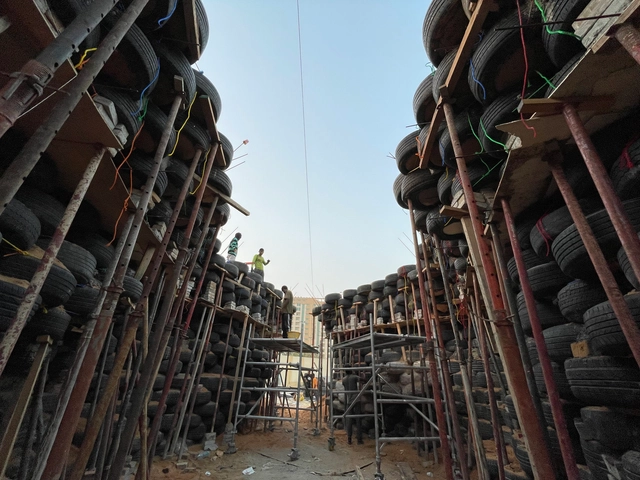
In light of the looming climate crisis and the pursuit of sustainability, the concepts of revival and reuse have emerged as crucial strategies in the quest for decarbonization in the architecture industry. These principles preach that creating new structures may be sustainable but encourage architects to minimize their ecological footprint by reactivating and recycling existing resources. This year specifically, innovative projects in line with these themes were displayed as part of the 18th International Architecture Exhibition – La Biennale di Venezia. This world-renowned event’s core purpose is to serve as a platform for architects, designers, and thinkers to collectively reimagine sustainability, decarbonization, resource conservation, and the industry's future.

 A Mindset of Revival: Exploring Reuse in Urban Biennales and Pavilions - Image 1 of 4 A Mindset of Revival: Exploring Reuse in Urban Biennales and Pavilions - Image 2 of 4 A Mindset of Revival: Exploring Reuse in Urban Biennales and Pavilions - Image 3 of 4 A Mindset of Revival: Exploring Reuse in Urban Biennales and Pavilions - Image 4 of 4 A Mindset of Revival: Exploring Reuse in Urban Biennales and Pavilions - More Images+ 5

Rethinking the Biennale: In Conversation with Anh-Linh Ngo, Curator of the German Pavilion at the 2023 Venice Biennale

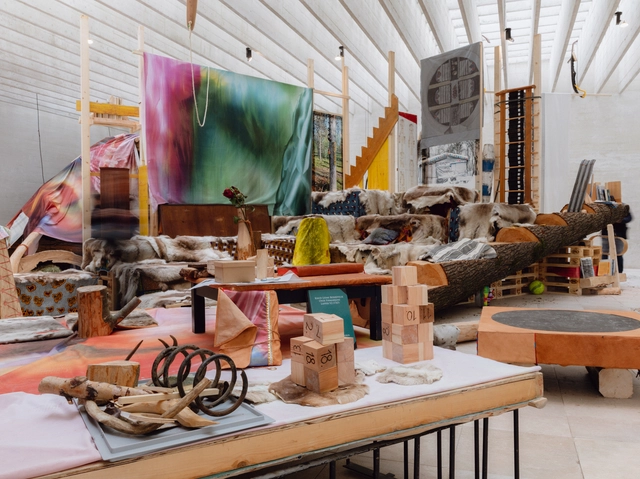
The German Pavilion Open for Maintenance / Wegen Umbau geöffnet at this years 18th International Architecture Exhibition – La Biennale di Venezia was curated by ARCH+ and Summacumfemmer Büro Juliane Greb. At its core, the exhibition addresses the resource problem and the material cycles of the biennale. Inside the pavilion is a functioning workshop dedicated to applying these concepts of care, repair, and maintenance to Venice onsite. In Venice, ArchDaily had the chance to speak with the co-curator Anh-Linh Ngo, where he discussed the different aspects of the German Pavilion.

Rethinking the Biennale: In Conversation with Anh-Linh Ngo, Curator of the German Pavilion at the 2023 Venice Biennale - Image 8 of 4Rethinking the Biennale: In Conversation with Anh-Linh Ngo, Curator of the German Pavilion at the 2023 Venice Biennale - Image 7 of 4Rethinking the Biennale: In Conversation with Anh-Linh Ngo, Curator of the German Pavilion at the 2023 Venice Biennale - Image 6 of 4Rethinking the Biennale: In Conversation with Anh-Linh Ngo, Curator of the German Pavilion at the 2023 Venice Biennale - Image 5 of 4Rethinking the Biennale: In Conversation with Anh-Linh Ngo, Curator of the German Pavilion at the 2023 Venice Biennale - More Images+ 16

The Barcelona Pavilion, an Instrument of Expression: 10 Interventions to Reflect on Contemporary Architecture

Subscriber Access | 

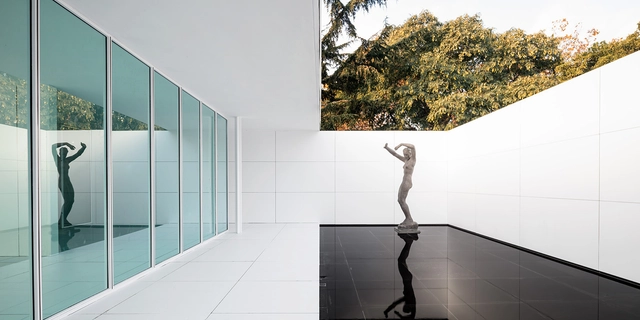
In 1929, Ludwig Mies van der Rohe and Lilly Reich design the German National Pavilion for the 1929 Barcelona International Exhibition. The official reception for the exhibition was held there, presided over by King Alfonso XIII and the German authorities. From then on, the story is well known to everyone. A symbolic work of the Modern Movement, the Pavilion has been extensively studied and interpreted, and has inspired the work of several generations of architects.

Luftwerk and Iker Gil Install Light Intervention at the Farnsworth House

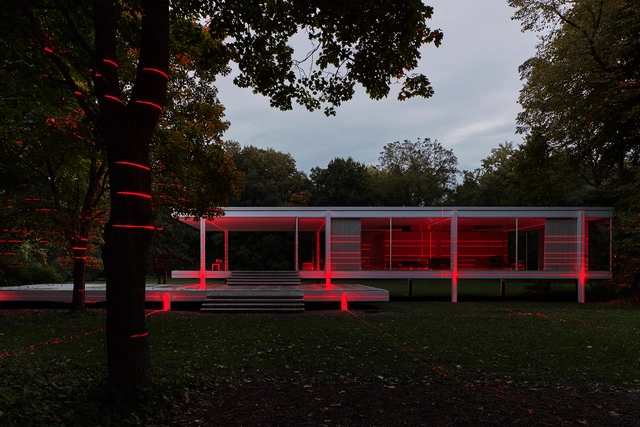
Geometry of light, is a multimedia intervention by Luftwerk in collaboration with Iker Gil, exhibited in October, during the third edition of the Chicago Architecture Biennial, at the Farnsworth House in Plano, Illinois.

Luftwerk and Iker Gil Install Light Intervention at the Farnsworth House - Image 1 of 4Luftwerk and Iker Gil Install Light Intervention at the Farnsworth House - Image 2 of 4Luftwerk and Iker Gil Install Light Intervention at the Farnsworth House - Image 3 of 4Luftwerk and Iker Gil Install Light Intervention at the Farnsworth House - Image 4 of 4Luftwerk and Iker Gil Install Light Intervention at the Farnsworth House - More Images+ 17

Artist Spencer Finch Evokes Kyoto's Ryoan-ji Garden at the Mies Pavilion

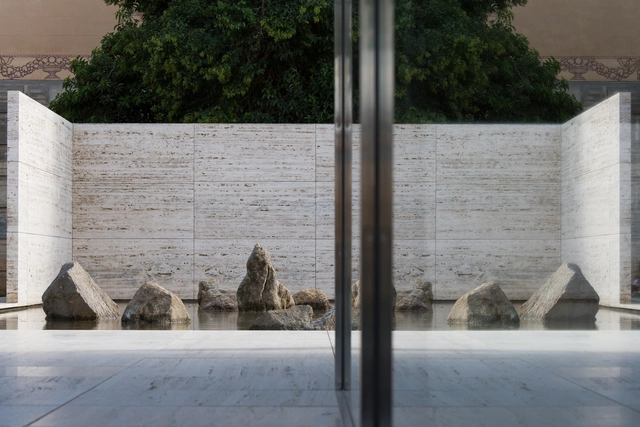
It would be hard to associate zen philosophy with Mies van der Rohe, even harder to associate it with the German Pavilion in Barcelona. Nevertheless, the latest work by American artist Spencer Finch, Fifteen stones (Ryōan-ji), precisely establishes that connection with the iconic pavilion.

Spencer Finch was the latest artist invited to intervene the Fundació's pavilion. With the aim of "provok[ing] new looks and reflections through [his] intervention in the Pavilion, [he] enhanced it as a space for inspiration and experimentation for the most innovative artistic and architectural creation." Finch joined a prominent team of artists and architects, including SANAA, Jeff Wall, Ai Wei Wei, Enric Miralles, Andrés Jaque, and Anna & Eugeni Bach, among others.

Artist Spencer Finch Evokes Kyoto's Ryoan-ji Garden at the Mies Pavilion - Image 1 of 4Artist Spencer Finch Evokes Kyoto's Ryoan-ji Garden at the Mies Pavilion - Image 2 of 4Artist Spencer Finch Evokes Kyoto's Ryoan-ji Garden at the Mies Pavilion - Image 3 of 4Artist Spencer Finch Evokes Kyoto's Ryoan-ji Garden at the Mies Pavilion - Image 4 of 4Artist Spencer Finch Evokes Kyoto's Ryoan-ji Garden at the Mies Pavilion - More Images+ 5

German Pavilion at the 2018 Venice Biennale Will Respond to Debates on Nations, Protectionism and Division

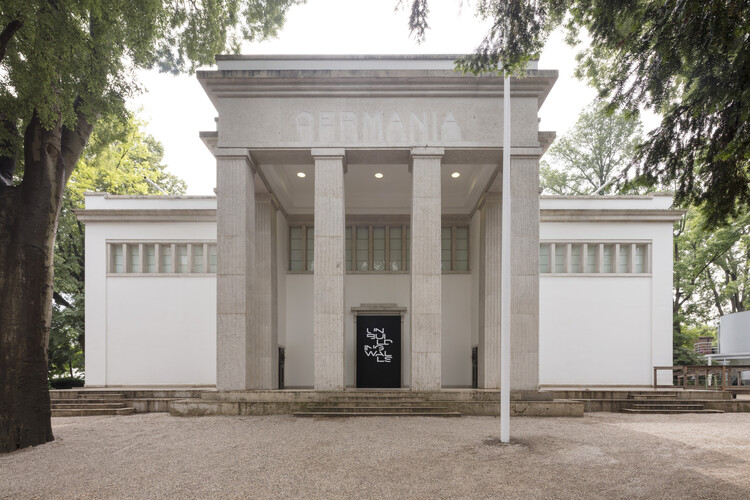
In 2018, Germany will be reunified for 28 years, the precise amount of time that the inner German border wall—which was active from between 1961 and 1989—stood between "East" and "West". With this in mind, the German State have announced "Unbuilding Walls" as the theme of the German Pavilion at the 2018 Venice Architecture Biennale. Curated by GRAFT with Marianne Birthler, the exhibition will be designed to "respond to current debates on nations, protectionism, and division."

German Pavilion / Shanghai 2010 Expo

Subscriber Access | 

Here’s another great time lapse video from Seppe, this time walking us through the German Pavilion in Shanghai designed by Schmidhuber + Kaindl GmbH (more Shanghai coverage here). Entitled Balancity, the pavilion is designed by Lennart Wiechell and at 6,000 m2, it is the country’s largest structure at any exposition. The building’s geometric mass was conceived as a three dimensional sculpture and the form wraps certain spaces which showcase different aspects of Germany. As you can see in the video, the pavilion includes a central energy source, a factory-like section, an opera and cultural section, and even a park. The areas show Germany’s technological progressions and products meant to help solve urbanization problems, and visitors slowly glide past certain installations on moving walkways. Unlike other countries’ pavilions that seem to work off of one cohesive theme, the German pavilion seems much more “busy” – it is a conglomeration of many different ideas and products with lots to see at each turning corner. What do you think of Balancity?

Check out other videos Seppe has shared with us like his British Pavilion time lapse or his Denmark Pavilion video. Full list of credits after the break.