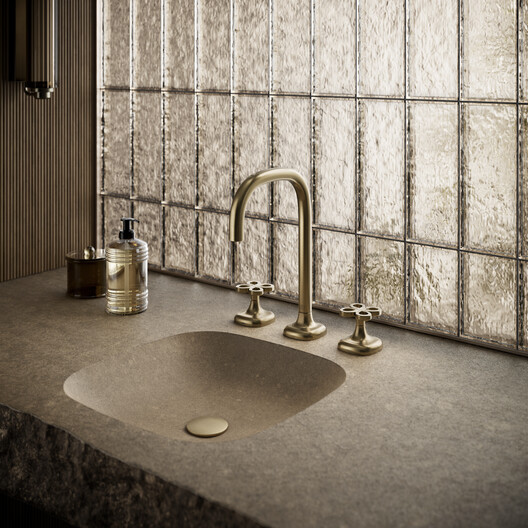
Symbols have always traveled through architecture. They appear in carved stone, woven textiles, painted ceilings and walls, door hardware, and everyday objects, carrying the beliefs, rituals, and histories of the cultures that first created them. Across contemporary interiors, designers continue this dialogue with place by revisiting historical symbols and translating them through new materials, manufacturing techniques, and architectural forms.
The Ruyi knot is one such example. For centuries, the interwoven motif has been part of the Chinese knotting tradition, symbolizing continuity, harmony, and good wishes. Its gently looping geometry has appeared across decorative objects and ceremonial crafts, demonstrating how cultural references can become part of a design vocabulary that extends far beyond ornament.
Chinese Knotting as Design Inspiration
This idea became the starting point for The Knot, a contemporary bathroom fitting developed by Hong Kong-based design studio AB Concept in collaboration with Dornbracht. For architects and interior designers, cultural references often serve as more than visual motifs. They introduce narratives into everyday objects, connecting function with memory, identity, and ritual. Founded by architect Terence Ngan and interior designer Ed Ng, AB Concept is known for weaving local traditions, nature, and cultural context into contemporary interiors across Asia, Europe, and the Middle East. That approach shaped The Knot, an expansion of Dornbracht's Coya collection through the lens of one of China's oldest symbols.
Chinese knot-tying is an ancient craft that dates back more than two thousand years. What began as knots used in clothing and accessories gradually evolved into a decorative and symbolic practice associated with festivals, weddings, religious ceremonies, and family celebrations. Over centuries, individual knot patterns acquired distinct meanings and were exchanged as wishes for happiness, prosperity, longevity, and protection.
The Meaning of the Ruyi Knot
Among the best-known is the Ruyi knot. The word ruyi is commonly translated as "as you wish," making the knot a traditional symbol of blessings, good fortune, and harmonious living. Its continuous interwoven form has no visible beginning or end, expressing continuity and infinity through a single uninterrupted line. For Ed Ng, the motif offered a way to translate this cultural symbolism into an object encountered every day. He explains:
I often draw inspiration from patterns in nature or cultural symbols, because their meaning can be expressed through very simple forms. [...] For me, this offers a direct analogy to the natural, eternally renewing cycle of water. The Ruyi knot is thus a metaphor for something that is constantly in flux and connected to everything.
The integration of symbolism in interior design reflects an interest in spaces that support everyday rituals. Bathrooms, in particular, have evolved beyond purely functional rooms into environments associated with calm, wellbeing, restoration, and quiet routines. Materials, lighting, and objects are selected as much for the atmosphere they create as for their performance.
This perspective shares common ground with feng shui, the Chinese philosophical practice of arranging environments to create balance between people and their surroundings. Literally meaning "wind and water," feng shui is based on principles of orientation, proportion, materiality, and the movement of qi, often described as life energy, through space. The Ruyi knot is an auspicious motif within the Chinese knotting tradition and is also commonly used in feng shui as a symbol believed to encourage harmony, good fortune, and the positive flow of qi within a space. Translating that motif into a bathroom fitting turns a familiar interaction into part of a daily ritual. As AB Concept describes the intention behind the design:
This reimagined motif transforms the handle into a tactile daily ritual, being the first and last object touched each day, embodying a sense of profound thoughtfulness to wish you the best in everyday life.
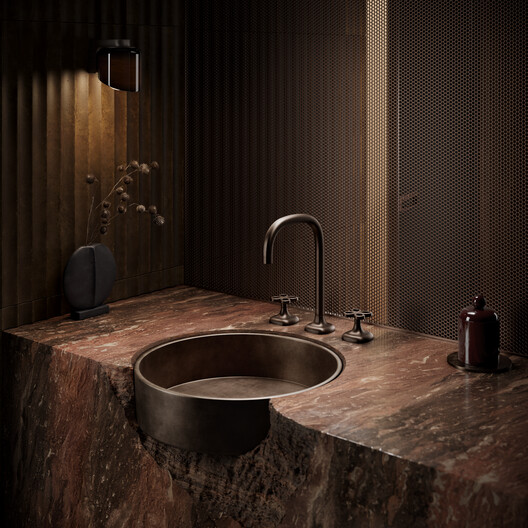
From Braided Textile to Polished and Brushed Metal
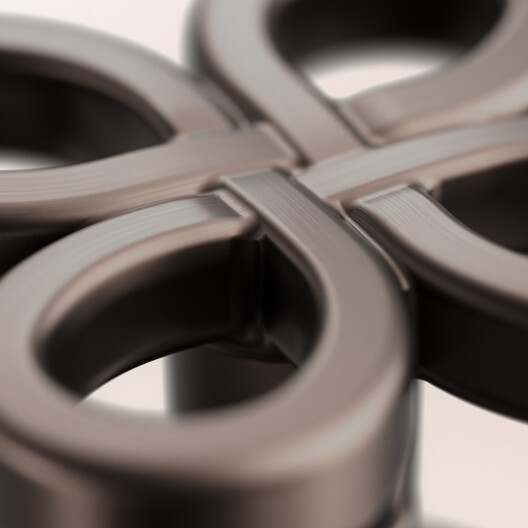
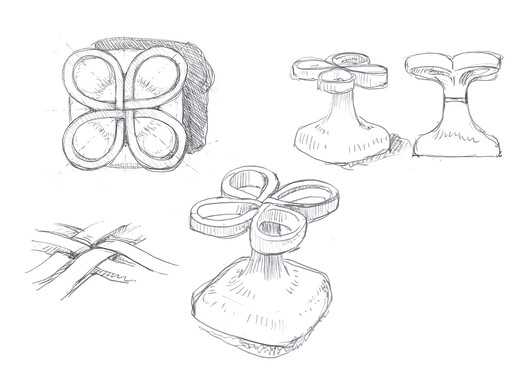
Working with Dornbracht, AB Concept translated the soft geometry of a braided cord into the handles of the Coya faucet collection, originally designed by Sieger Design. Instead of replacing Coya's identity, the design expands its existing language of circles and squares through four symmetrical loops woven around a square center.
The resulting handle preserves the rhythm of the original knot while introducing a sculptural form with a distinct tactile character. Every curve serves an aesthetic and ergonomic purpose, guiding the fingertips into a natural grip without calling attention to the mechanics of the gesture. These decisions are the "invisible" part of the design process. As Ng explains:
It's hardly noticed consciously, but it feels natural and right.
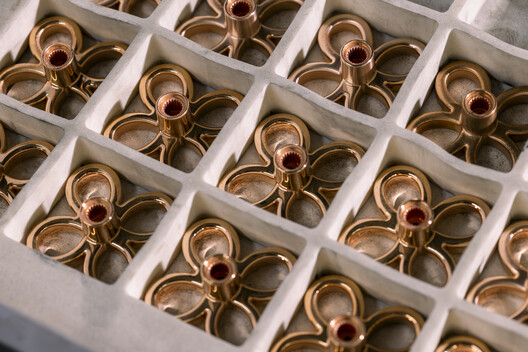
Translating the softness of a woven knot into precision metal required an equally considered manufacturing process. The cloverleaf geometry, fine radii, and intersecting curves of The Knot could not be finished through standard automated production alone. According to Dornbracht, each handle is individually polished or brushed by hand before receiving its final finish, allowing experienced craftspeople to refine the transitions within the complex geometry. The manufacturing process becomes part of the design itself, interpreting an old textile tradition through contemporary metalworking.
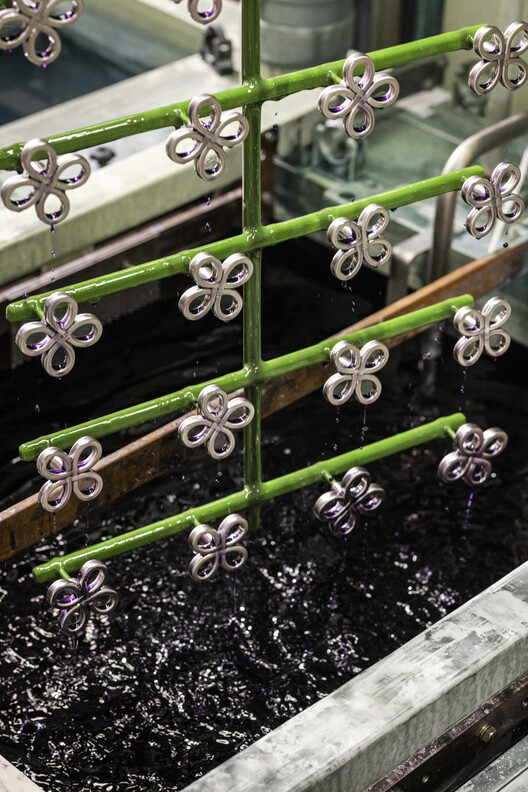
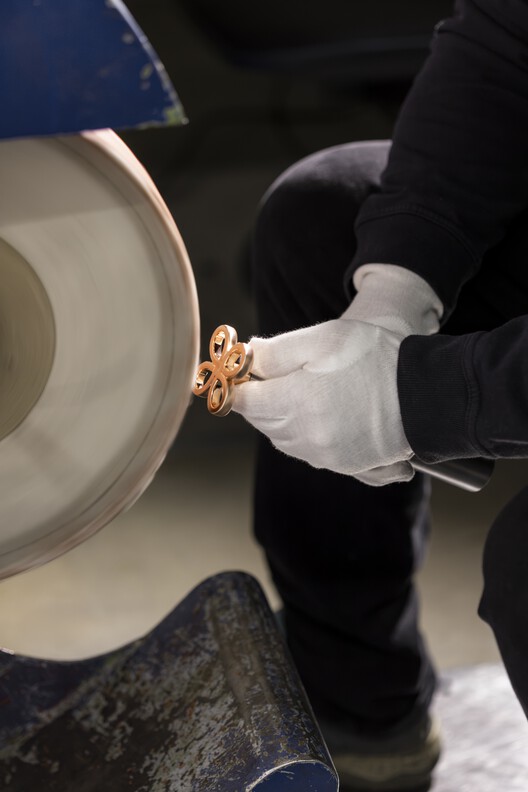
Many of the most interesting developments in product design emerge through experimentation. Collaborations and limited editions create space to explore ideas that sit outside standard collections, testing new relationships between material, symbolism, and manufacturing. Dornbracht's Atelier Editions were conceived as one such platform, pairing designers with the company's manufacturing expertise to reinterpret familiar objects through new cultural and formal perspectives. Developed with AB Concept, The Knot is the second edition in the series, following The Rock in 2025.
For architects and interior designers, projects like The Knot illustrate how symbols rooted in craft traditions become design tools that shape experience and memory. The result is an everyday architectural element that carries both function and cultural narrative, showing how contemporary design continues to connect people, places, and tradition.