Since the 2008 crash, a scatter of small practices (none more than fifteen years old and none large enough to need a manifesto in the traditional sense) have arrived, independently of one another, at some version of the same refusal: to sound too certain, too soon, in a discipline that had spent the previous decade selling confidence as a finish. They would probably resist being filed under one heading, but the coincidence itself is that something about practising architecture after 2008 made innocence look like the only posture worth trying.
At least from 2019 onwards, Fala has circulated a two-word description of itself, repeated verbatim across dozens of architecture outlets: a "naïve architecture practice." No footnote, no irony, just an office, founded in 2013, that built a decade of houses, birdhouses and institutional commissions on a term architecture had spent a century trying to outgrow. The question the phrase raises is not whether the buildings are any good (as they generally are) but what it means for a practice to choose innocence as a public position. Where does post-irony end and marketing begin?
Naivety, in these offices, is rarely the absence of theory; it is a theory that keeps its receipts hidden, an idealism practised by people who already know better and choose to act otherwise anyway. Whether that choice stays in a position or hardens into a style is a question architecture has faced before, under different names, and one this generation is now answering in public.
Romanticising the ordinary
The German Romantic Novalis wrote, in his fragments of the 1790s, that to romanticize the world is to make the familiar strange and the finite appear infinite, a project of re-enchantment, not escapism. Two centuries later, Timotheus Vermeulen and Robin van den Akker named that oscillation as metamodernism; a structure of feeling as Raymond Williams described; a shared sensibility not yet fixed into doctrine that moves between modern sincerity and postmodern doubt without settling in either. They called its emotional register informed naivety, an idealism practiced by people who already know better, and choose to act as if they didn't.
That is presumably why a cluster of small practices, working independently of one another after the 2008 financial crisis, converged on some version of the same refusal: refusing the heroic register that had defined the profession from the postmodern star system through the parametric decade that followed it.
In 2008, at the 11th Venice Architecture Biennale whose theme was Out There: Architecture Beyond Building, Patrik Schumacher presented the Parametricist Manifesto, declaring computational form-finding the discipline's next unified style. A curious claim made in the same year the financial system it depended on for commissions began to collapse. The manifesto borrowed its framework from science, describing styles as design research programmes to be pursued with the same tenacity as a scientific paradigm, and it came with an explicit list of prohibitions: avoid familiar typologies, avoid straight lines, avoid corners, avoid right angles. Sophistication was, quite literally, the absence of the corner. Parametricism promised mastery over complexity itself: façades and towers whose curvature no single hand had drawn, generated instead by scripts tuned by an author who remained, nonetheless, very much an author. The irony, arguably, was that a style built on the rhetoric of dissolving the individual hand into computation ended up consolidating one of the most recognisable names in the discipline, Zaha Hadid Architects, whose signature grew more legible regardless of who or what had generated the curvature.
A signature skyline commission and a parametric tower share the common assumption that architecture demonstrates its intelligence through visible difficulty. Young offices founded after 2008, mostly working in cities without sovereign wealth behind them, could not follow the spectacle to its new address. Competitions dried up, commissions arrived smaller, and self-initiated work replaced institutional ones. But scarcity alone does not explain the choice of aesthetic. A modest budget can still produce an austere building — and plenty of post-crash practices went that route. Naivety was something more pointed: a direct rebuttal, in temperament if not in name, of everything parametric had just claimed for itself. Where Schumacher's manifesto promised a unified style "penetrating into all corners of the discipline", these offices worked at the scale of a birdhouse; where computation promised mastery over complexity, they let a hand-drawn line stay a hand-drawn line visibly. Aoa architects would state the disavowal outright, architecture, they wrote, is not a hero, and they do not believe it will change the world — a sentence that reads, whether intended or not, as a direct answer to a manifesto that had just declared the opposite. The refusal was not only of the budget parametricism required, but it was also of the confidence that parametricism, somehow, performed.
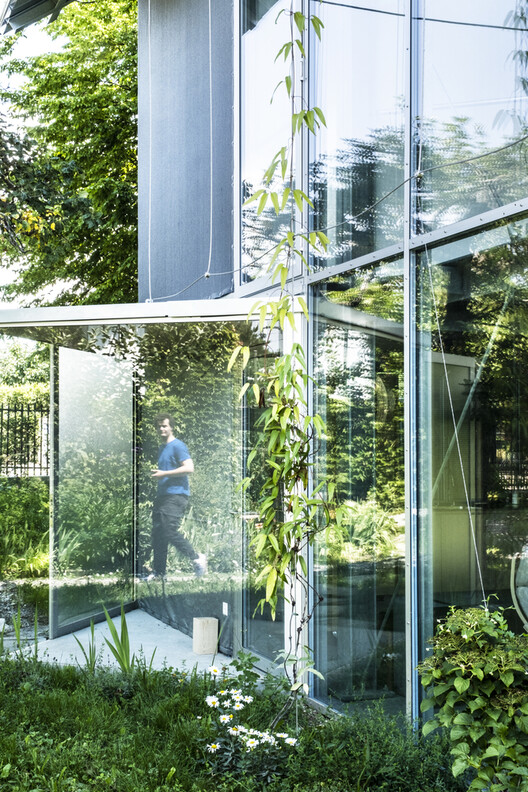
Naivety, reading this way, looks less like a philosophical choice than a method assembled from what was on hand, then sharpened into a position against what that hand couldn't reach. The aesthetic came first, worked out through constraint, project by project. The vocabulary to explain it arrived later, sophisticated enough to make legible what practice had already settled by instinct and temperament alike. It means the theory did not produce the buildings; the buildings quietly produced the need for a theory.
A generation that agreed not to be impressive
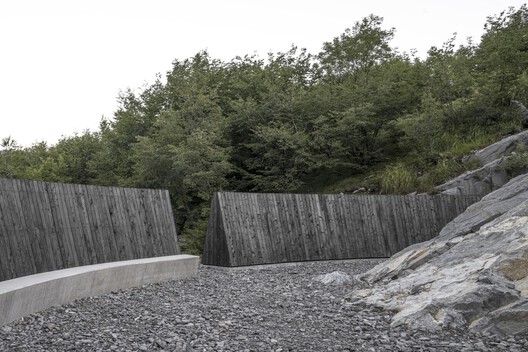
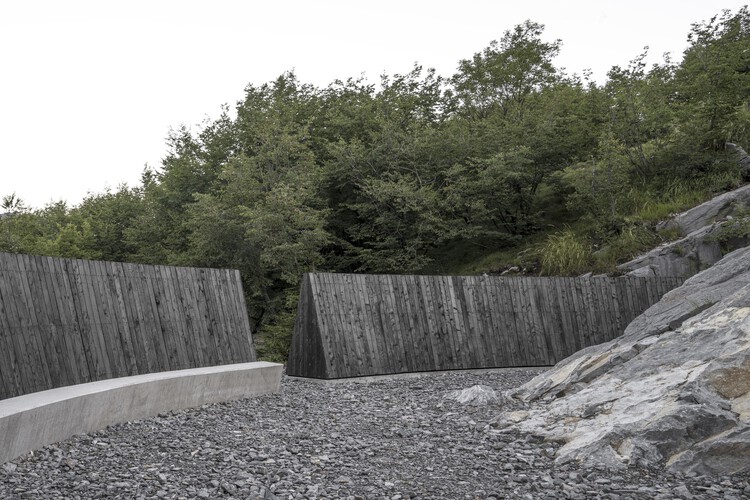
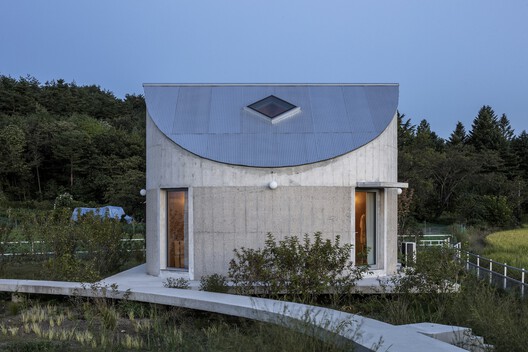
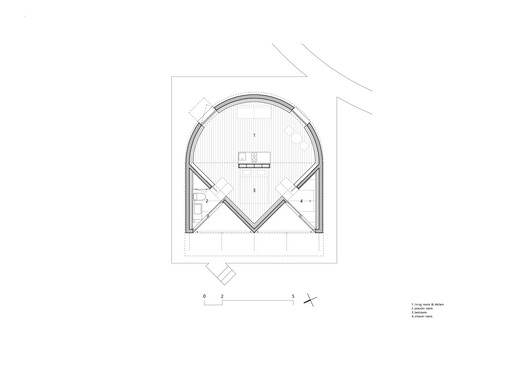
In Seoul, aoa architects publish a statement that reads almost as a rebuttal of the discipline's self-importance. Architecture, they write, is not a hero, and they do not believe it will change the world. Their built work follows through on the disavowal. Hoji Gangneung, a 2022 cluster of five guesthouses in the South Korean countryside, gives each volume a plain, almost childish name (the Octagonal House, the Round House, the Long House) instead of the swarm-and-field vocabulary parametricism had made fashionable. Lead architect Jaewon Suh has described the aim as building something at once familiar and unfamiliar, a small act of resistance against Korea's booming market for manufactured-luxury vacation stays marketed with kitsch confidence. The concrete ring path linking the five buildings gives neighbours a plain place to walk between houses that look, deliberately, like nothing more than a tent, a warehouse, and a strange face wearing a hat.
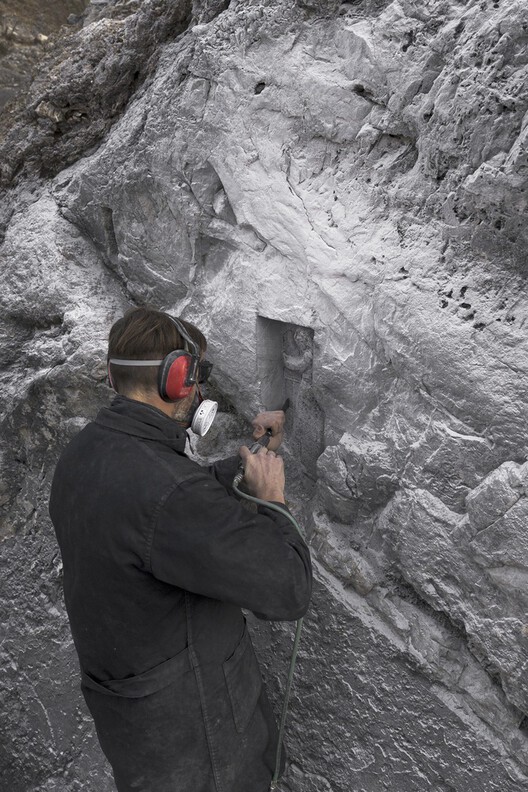
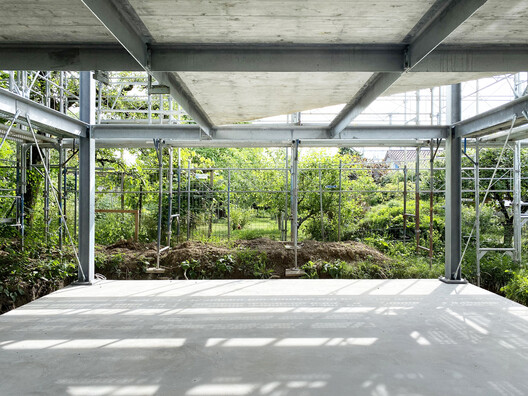
In Zurich, Comte/Meuwly, a practice founded in 2018 by Adrien Comte and Adrien Meuwly, could be described as cultivating the capacity to be surprised by ordinary encounters. A direct gloss on Novalis's beauty found not in the sublime but in the scrupulous assembly of modest things. Their portfolio moves at every scale without changing method, treating each commission as a narrative built from reading what is already there. The office has been rewarded for this, a Hochparterre "Kaninchen" prize in 2019, a Distinction Romande d'Architecture in 2023 for the Filter House, and, within six years of founding, professorships at one of Europe's most prestigious architecture schools, ETH Zurich. The institutional legitimacy arrived quickly enough, and the "modest things" were never mistaken for modest ambition.
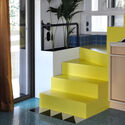
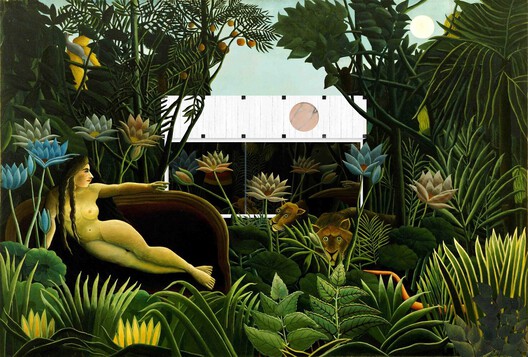
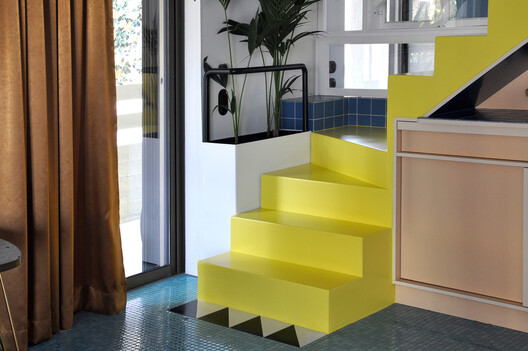
In Athens, Point Supreme, founded by Marianna Rentzou and Konstantinos Pantazis in the year of the crash, builds what could be called architectural magic realism. Postmodern collage as an antidote to minimalist seriousness, deployed against the backdrop of Greek sovereign default. Athens Heaven, a 2007 self-initiated proposal to bury the city's most degraded district under an artificial park connecting the Acropolis to the sea, is a non-realistic proposal, a speculative civic fantasy delivered in the same year international juries were still rewarding parametric renderings for their technological daring, except this one asked for a park instead of a curve.
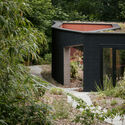
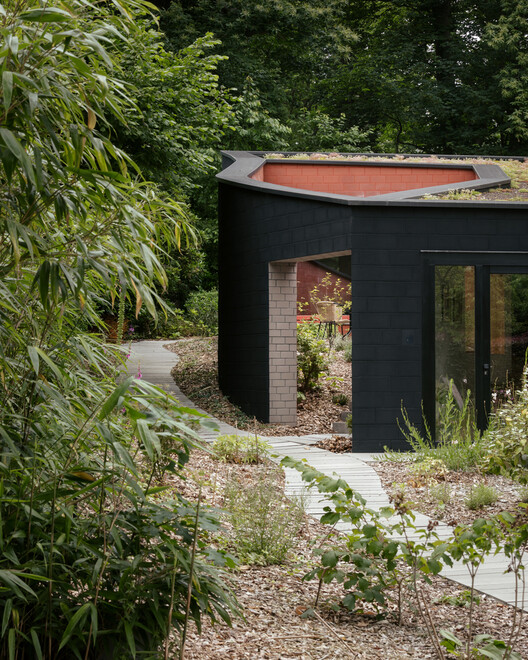
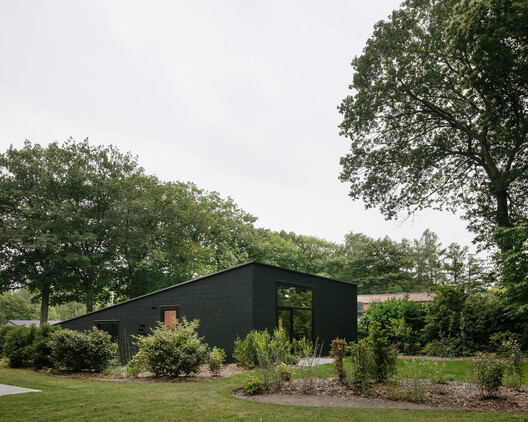
In Antwerp, Bovenbouw describes its own project in terms of an exoticism of the everyday. The Weekend House, a modest 121-square-metre bungalow in Bazel, follows the ground's own contour. Black masonry outside, a red terrace, a white interior, picture windows framing the valley. Nothing about it asks to be looked at twice, which is, in this context, exactly the point. But refusing spectacle is not the same as escaping attention; it just relocates where the attention goes.
None of these would likely accept being filed under a single label. The argument is precisely that no consolidated movement sits behind them, because the feed and the group show are how sensibility now travels between studios. None of these studios shares the same geography, and, in aoa's case, not even the same historical position (as Korea's defining economic trauma sits closer to 1997 than to 2008). What these offices have in common is the exposure to the same global visual economy, the same competition renderings, the same digital platforms and eventually the same feed. In this sense, naivety, for this generation, was some kind of knowledge that declined to perform itself.
Position or Pose
Jos de Mul, in his study of Romantic desire in modern and postmodern art, describes an oscillation between enthusiasm and irony, an unfulfillable desire for meaning that both Romantic and metamodern sensibilities inherit. If informed naivety already contains the ironic knowledge it claims to have set aside, then the sincerity was conditional from the outset. A practice that announces its innocence has already performed the calculation that innocence is supposed to lack. What separates this generation from the modernists they are sometimes compared to is exactly this residue of knowing. CIAM's postwar functionalists believed that architecture could repair the world. Nobody founding a practice in 2009 could believe that without irony sitting somewhere in the sentence, not because conviction had weakened, but because the previous decades' confident failures, financial and technological, were still visible in the rearview mirror.
What these practices share is not a shared style but a shared reluctance to sound too certain, too soon, in a discipline still recovering from the confidence of the decade before the crash. Whether that reluctance survives contact with institutional legitimacy is a question this generation is still answering, one project at a time.
This article is part of the ArchDaily Topic: The Lure of Escapism in Architecture and Alternative Worlds. Every month we explore a topic in-depth through articles, interviews, news, and architecture projects. We invite you to learn more about our ArchDaily Topics. And, as always, at ArchDaily we welcome the contributions of our readers; if you want to submit an article or project, contact us.


