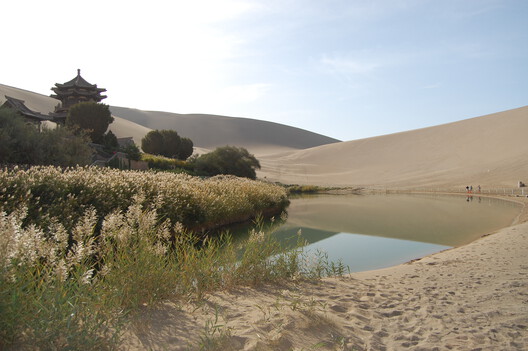
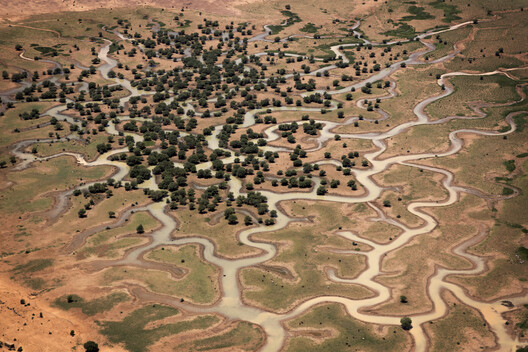
The idea of a "Great Green Wall" designates a large-scale reforestation initiative undertaken specifically to halt desertification. Currently underway in Africa to prevent the advancement of the Sahara Desert and in China around the Gobi Desert, it is a landscape, agriculture, economic, and social development project in reaction to the rise of global temperatures, over-farming, and unsuitable land management. Both projects, currently underway, are intersectional initiatives involving governments from different countries, civil society organisations, and both individual volunteers and organised groups, guided by the idea of a unified response to global environmental issues through wildlife restoration. It is a large-scale, infrastructural application of a 'green' or 'wildlife corridor': a linear strip of vegetation or natural landscape that connects fragmented ecosystems and wildlife populations separated by human development on a continental scale.
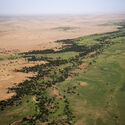
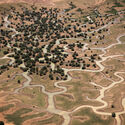
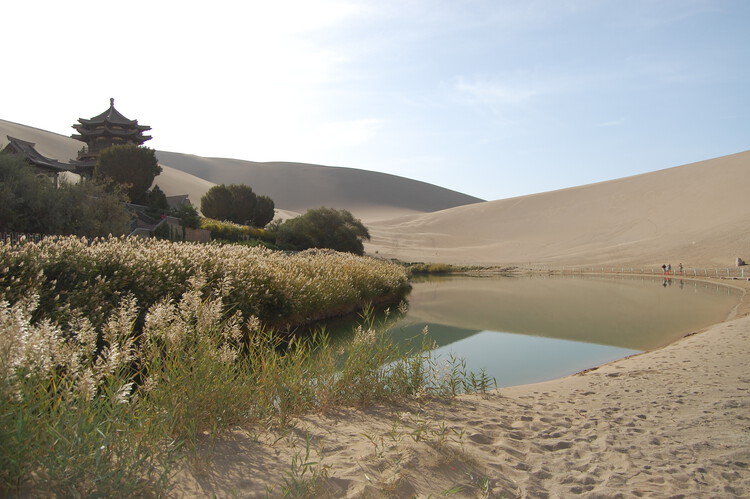
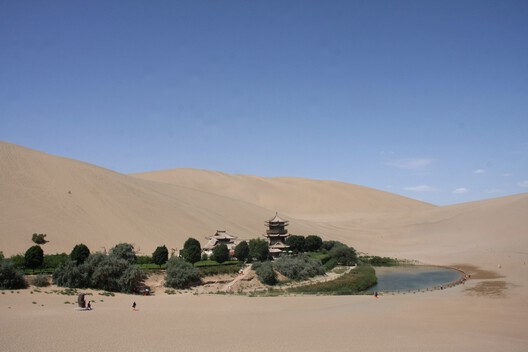
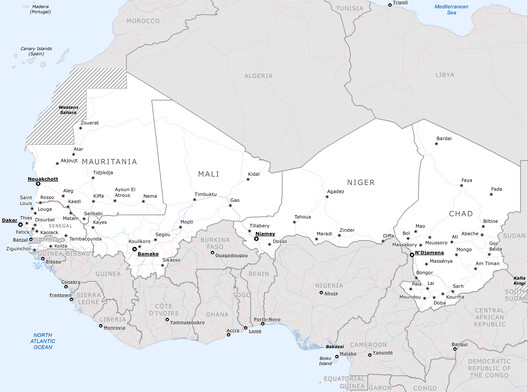
In Africa, the Great Green Wall of the Sahara was launched by the African Union in 2007, with the ambition to grow an 8,000km-wide band across the continent's Sahel region. The band is located at the southern end of the Sahara Desert, a semi-arid region stretching from Senegal on the Atlantic coast to Djibouti on the Red Sea, experiencing persistent droughts, shortages of food supplies, and conflicts leading to mass migration. The Great Green Wall was initially conceived as a continuous belt of trees to slow the desert's expansion, and has since evolved into a broader ecological strategy involving the restoration of degraded landscapes, improving agricultural productivity, and strengthening rural livelihoods. The current target is to restore 100 million hectares of degraded land by 2030 while supporting employment, food security, and climate resilience. This transnational initiative was preceded by the case of Algeria in the 1960s, known as the Algerian Green Dam or, in French, the Barrage vert.
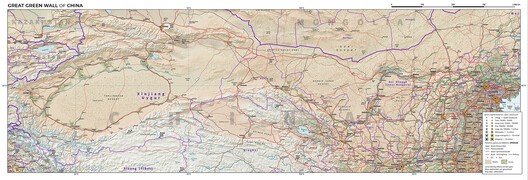
The Chinese initiative, on the other hand, goes back to 1978 with the Three-North Shelterbelt Program (TNSP), a long-term ecological restoration initiative addressing desertification, soil erosion, and wind erosion across the country's northeast, north, and northwest regions. The program is scheduled to run until 2050 in successive implementation phases, covering around 4 million square kilometres across 13 provincial-level regions. Unlike the example of Africa, the project did not start as a continuous forest but rather as an extensive network of shelterbelts, restored forests, grasslands, and other ecological interventions designed to stabilise landscapes, protect agricultural land, and improve ecological resilience in the Gobi Desert. The project has entered its sixth phase (2021–2030), supported by updated national planning, with greater emphasis on native vegetation, ecological monitoring, and landscape-scale planning.
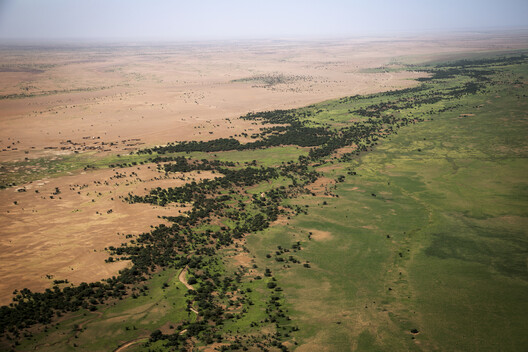
While facing particular territorial, social, and political challenges, the implementation of the Great Green Wall projects relies on a combination of ecological restoration techniques tailored to local environmental conditions, including assisted natural regeneration, agroforestry, water-harvesting systems, dune stabilisation, and the planting of native species alongside sustainable land management practices. While in the African case a mosaic of interventions is carried out by national agencies, local communities, and international partners, in China the government plan follows the idea of a uniform physical infrastructure, responding to a centralised administrative structure. The Sahel region presents uneven advances, with countries such as Senegal, Niger, and Ethiopia reporting significant restoration efforts. According to the UNCCD, ongoing challenges are related to water availability, forest quality, and the long-term sustainability of plantations in arid environments, with the common goal of reducing soil erosion.
From distinct political, social, and geographical backgrounds, both initiatives remain committed to their restoration targets and economic perspectives, becoming part of the world's largest landscape restoration initiatives. Other recent rewilding and restoration projects worldwide include SLA's design for the public realm and streetscapes of Toronto's new 39.8-hectare waterfront community, "Ookwemin Minising," located in the Port Lands, an industrial and recreational district southeast of downtown Toronto. In Paris, Parc de la Villette is undergoing a major transformation, combining a newly opened urban farm with restored biodiversity as part of a strategy to adapt the 55.5-hectare park to climate change. In Budapest, a team led by French architecture practice Coldefy, comprising CITYFÖRSTER, Sporaarchitects, TREIBHAUS.LAND, and Marko & Placemakers, won the competition to design a masterplan for Rákosrendező, a brownfield site long regarded as the city's "rust belt."


