1. ArchDaily
  2. Desert

Desert: The Latest Architecture and News

Escuelita Lochiel: An ArchDaily Student Project Awards Winner Reframing Education Through Adobe

Subscriber Access | 

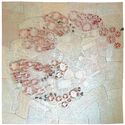
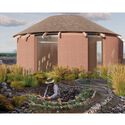
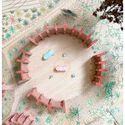
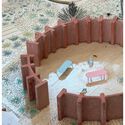
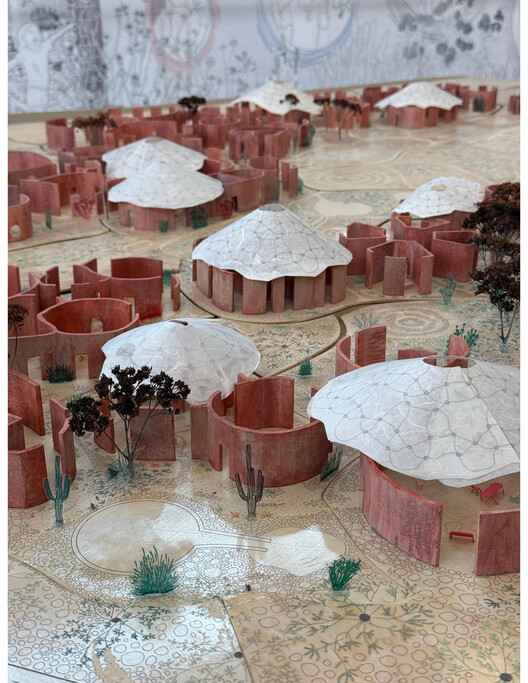
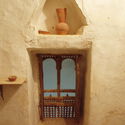
In the high desert of the San Rafael Valley, a few miles from the United States-Mexico border in Lochiel, Arizona, an adobe schoolhouse has stood for more than a century. Built before 1905, before Arizona was an incorporated state, the schoolhouse served generations of Mexican American students from Arizona and Sonora, cultivating shared cultural experiences, stories, and relationships that transcend physical and political boundaries. Over decades of education and shared histories, it became a place where language and narrative moved freely, even as geopolitical tensions continued to rise along the border. Today, it is one of the last remaining one-room adobe schoolhouses in the United States.

Adobe is among the oldest building technologies in the American Southwest, and among the most demanding to steward. In desert climates, earthen walls face intense weathering from temperature extremes, cracking due to seasonal shifts, and accelerated decay after storm events. These vulnerabilities require sustained and skilled maintenance over many seasons and compounding decades. After years of encroaching abandonment and structural threats, a twelve-year restoration effort by local community members who understood this building as critical cultural infrastructure brought the schoolhouse back from the edge of demolition. That the community chose to undertake this effort, given everything Adobe construction demands of those who care for it, is a statement about what the loss of this building would have cost. The result is a structure that now stands as a monument to Mexican American heritage and a living archive of rural border education.

Escuelita Lochiel: An ArchDaily Student Project Awards Winner Reframing Education Through Adobe - Image 1 of 4Escuelita Lochiel: An ArchDaily Student Project Awards Winner Reframing Education Through Adobe - Image 2 of 4Escuelita Lochiel: An ArchDaily Student Project Awards Winner Reframing Education Through Adobe - Image 3 of 4Escuelita Lochiel: An ArchDaily Student Project Awards Winner Reframing Education Through Adobe - Image 4 of 4Escuelita Lochiel: An ArchDaily Student Project Awards Winner Reframing Education Through Adobe - More Images+ 5

The Line at a Crossroads: Revisiting NEOM's Vision for a Utopian City

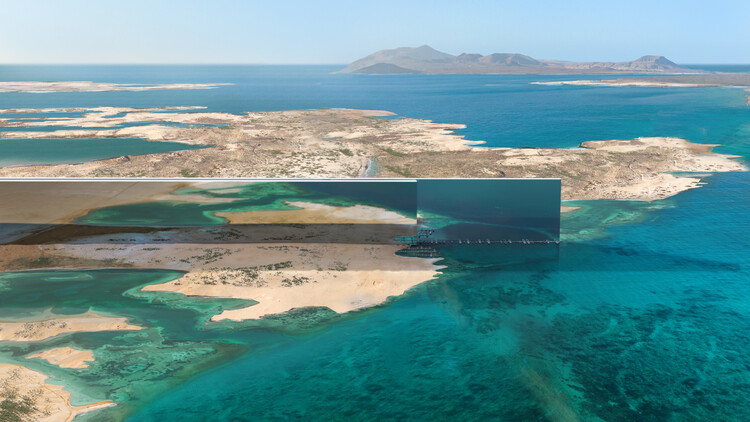
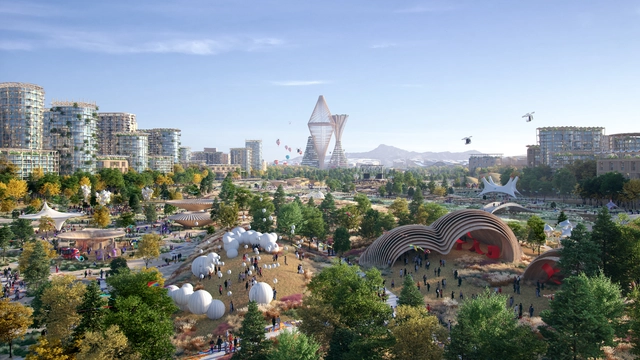
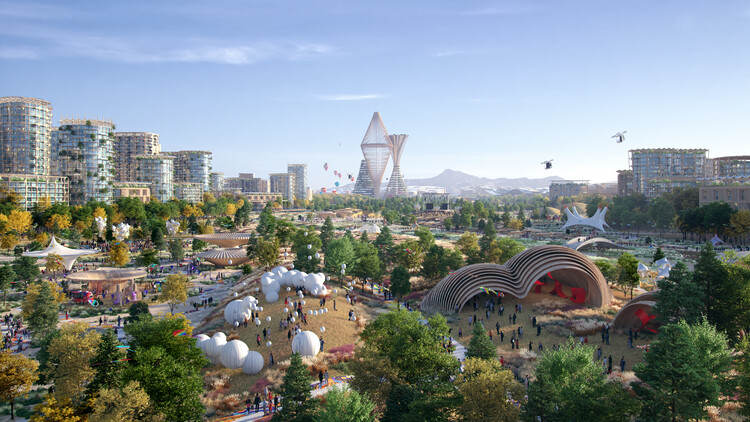
In 2023, ArchDaily's editor-in-chief sat down with Tarek Qaddumi, Executive Director of the Line Design at NEOM, at the closing of the Line Exhibition in Riyadh. Qaddumi described a layered, three-dimensional city organized around the idea of a "five-minute sphere" of access: walkable communities stacked vertically, connected by high-speed rail, freed from cars and conventional street infrastructure, and designed to coexist symbiotically with the surrounding natural landscape. It was a compelling vision, and in the context of the moment, it was simultaneously credible and appealing. For architects and urban thinkers grappling with the failures of twentieth-century city-building, the ideas articulated were worth engaging and planning.

The Line at a Crossroads: Revisiting NEOM's Vision for a Utopian City - Image 1 of 4The Line at a Crossroads: Revisiting NEOM's Vision for a Utopian City - Image 2 of 4The Line at a Crossroads: Revisiting NEOM's Vision for a Utopian City - Image 3 of 4The Line at a Crossroads: Revisiting NEOM's Vision for a Utopian City - Image 4 of 4The Line at a Crossroads: Revisiting NEOM's Vision for a Utopian City - More Images+ 5

The Earthen Towers of Shibam: A Vertical City in the Yemeni Desert

Subscriber Access | 

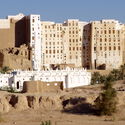
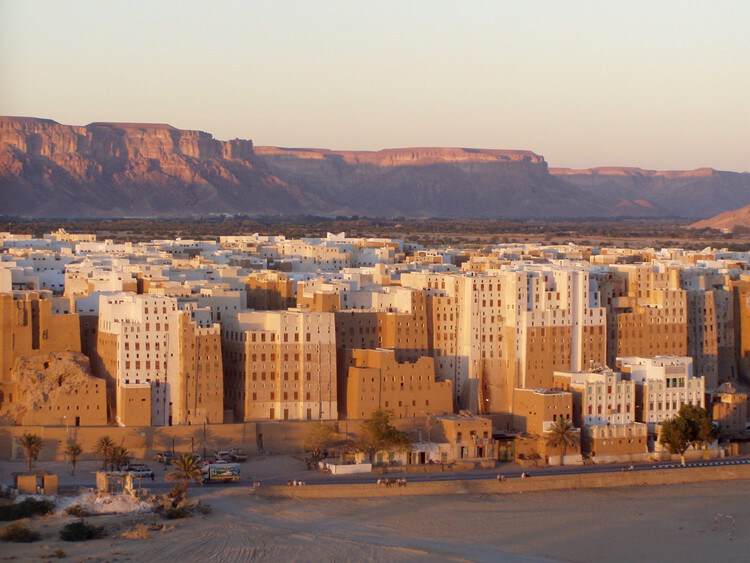
Symbols of technological development and urban density, tall buildings as we know them today emerged in the late nineteenth century, particularly in the United States, as a response to the rapid expansion of urban commerce and the need to grow cities without occupying additional land. The term skyscraper, for instance, was coined in the 1880s and originally referred to buildings with around 10 to 20 stories—an impressive height for the time.

However, the idea of building vertically is much older than the steel-and-glass skyscrapers of modern cities might suggest. Long before the Industrial Revolution, some societies were already experimenting with forms of vertical urbanization as a response to limited space, territorial defense, or environmental adaptation.

The Earthen Towers of Shibam: A Vertical City in the Yemeni Desert - Image 1 of 4The Earthen Towers of Shibam: A Vertical City in the Yemeni Desert - Image 2 of 4The Earthen Towers of Shibam: A Vertical City in the Yemeni Desert - Image 3 of 4The Earthen Towers of Shibam: A Vertical City in the Yemeni Desert - Image 4 of 4The Earthen Towers of Shibam: A Vertical City in the Yemeni Desert - More Images+ 7

From Desert to Forest: 8 Unbuilt Houses Designed as Contemporary Retreats

Subscriber Access | 

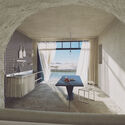
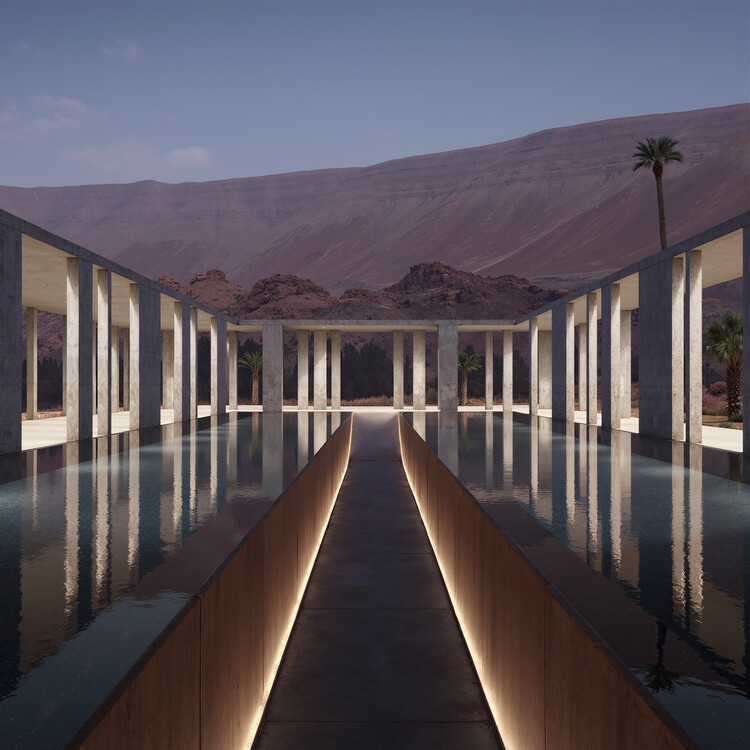
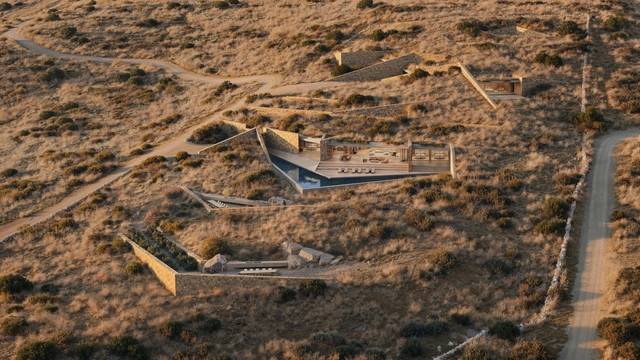
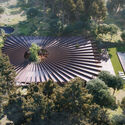
Residential architecture remains one of the most active fields for unbuilt architectural exploration, offering a lens through which architects rethink how domestic space can respond to landscape, climate, and contemporary patterns of living. In this Unbuilt edition, submitted by the ArchDaily community, the selected proposals bring together a range of residential projects that engage with houses, villas, and retreats as sites of withdrawal, mediation, and everyday inhabitation. Rather than treating the home as a fixed or isolated object, these projects approach it as a spatial framework that negotiates exposure, privacy, and connection to place.

From Desert to Forest: 8 Unbuilt Houses Designed as Contemporary Retreats - Image 24 of 4From Desert to Forest: 8 Unbuilt Houses Designed as Contemporary Retreats - Image 36 of 4From Desert to Forest: 8 Unbuilt Houses Designed as Contemporary Retreats - Image 47 of 4From Desert to Forest: 8 Unbuilt Houses Designed as Contemporary Retreats - Image 23 of 4From Desert to Forest: 8 Unbuilt Houses Designed as Contemporary Retreats - More Images+ 44

Mecanoo’s Natural History Museum Opens in Abu Dhabi’s Saadiyat Cultural District

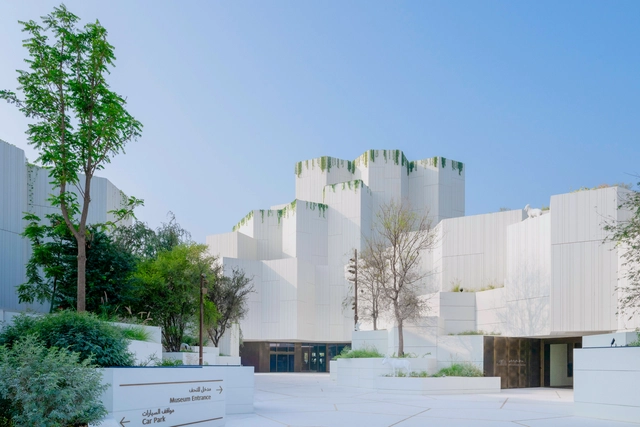
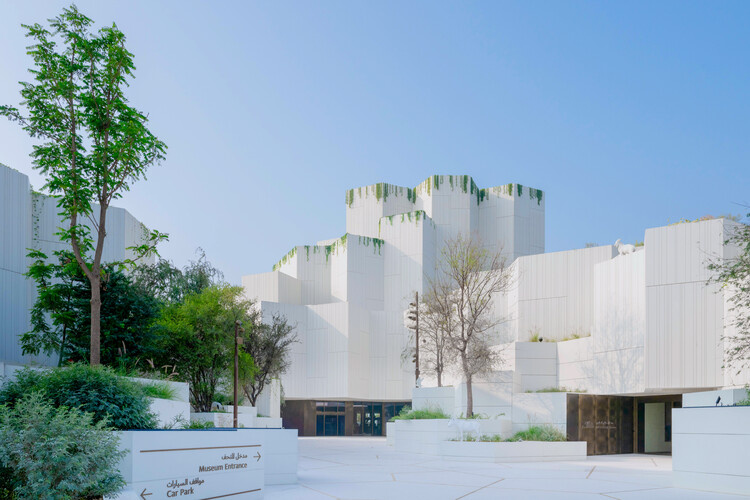
Back in April 2022, Abu Dhabi unveiled the first images of a new Natural History Museum designed by the Dutch practice Mecanoo. Three years later, on November 22, 2025, the museum opened its doors to the public, presenting 13.8 billion years of science and discovery with a special focus on the Arabian region. Covering more than 35,000 sqm, the design is intended to resonate with natural rock formations. Geometry acts as the unifying theme, with pentagonal shapes referencing cellular structures. Water and vegetation, symbols of life in the desert, also play an important role in the design. Located in Abu Dhabi's Saadiyat Cultural District, the building houses rare meteorites, dinosaur fossils, and reconstructions of the region's prehistoric landscapes, combining natural history, storytelling, and immersive environments. Through interactive exhibitions, special events, and community-science programmes, the museum seeks to encourage audiences of all ages to engage with the natural world.

Mecanoo’s Natural History Museum Opens in Abu Dhabi’s Saadiyat Cultural District - Image 1 of 4Mecanoo’s Natural History Museum Opens in Abu Dhabi’s Saadiyat Cultural District - Image 2 of 4Mecanoo’s Natural History Museum Opens in Abu Dhabi’s Saadiyat Cultural District - Image 3 of 4Mecanoo’s Natural History Museum Opens in Abu Dhabi’s Saadiyat Cultural District - Image 4 of 4Mecanoo’s Natural History Museum Opens in Abu Dhabi’s Saadiyat Cultural District - More Images+ 8

The Grand Egyptian Museum Fully Opens, Completing Giza’s New Cultural Landmark

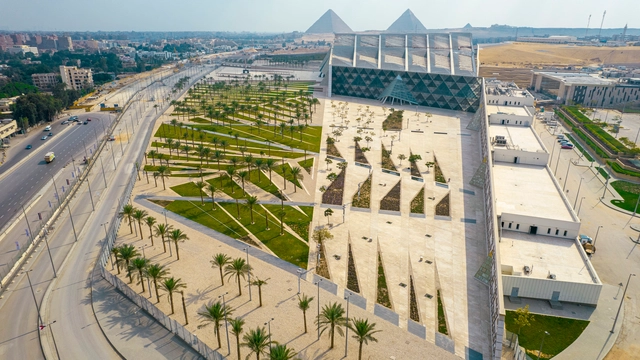
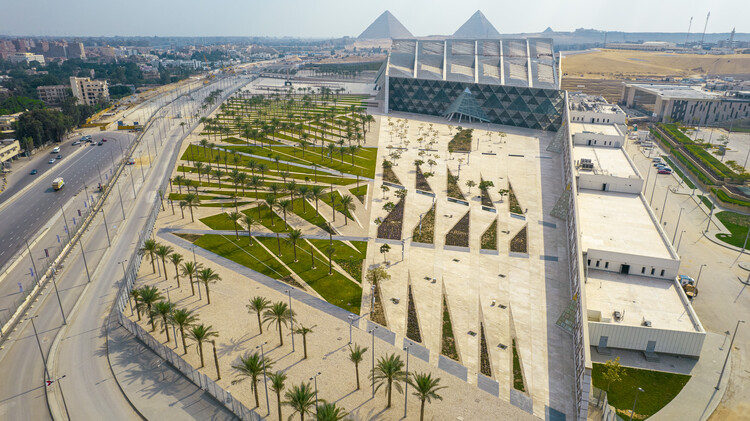
The Grand Egyptian Museum (GEM) in Cairo will open to the public on November 1, 2025, completing a project that has been in development for more than two decades. Designed by Heneghan Peng Architects, the museum is located on the Giza Plateau, approximately two kilometers from the Pyramids of Giza, and occupies a 500,000-square-meter site positioned between the edge of Cairo and the desert. Conceived as a new cultural and research center, the museum aims to present the legacy of ancient Egyptian civilization within a contemporary architectural framework.

The Grand Egyptian Museum Fully Opens, Completing Giza’s New Cultural Landmark - Image 1 of 4The Grand Egyptian Museum Fully Opens, Completing Giza’s New Cultural Landmark - Image 2 of 4The Grand Egyptian Museum Fully Opens, Completing Giza’s New Cultural Landmark - Image 3 of 4The Grand Egyptian Museum Fully Opens, Completing Giza’s New Cultural Landmark - Image 4 of 4The Grand Egyptian Museum Fully Opens, Completing Giza’s New Cultural Landmark - More Images+ 5

The Architect as Mediator of Materials: Lessons from Hybrid Habitats

With deep roots, sturdy trunks, and the ability to withstand extreme temperatures, date palms (Phoenix dactylifera) are among the species best adapted to the arid desert environment. It is no coincidence that in many local indigenous cultures they are known as the "tree of life," as their fruits, leaves, and trunks have provided food, shelter, and building materials for thousands of years. Without them, much of human settlement in desert regions would not have been possible. Today, widely cultivated across desert regions around the world, the species continues to sustain traditional agricultural  practices, yet its potential can be further enhanced and expanded through the efforts of contemporary researchers.

Lina Ghotmeh — Architecture Envisions a Landscape-Inspired Desert Dwelling in AlUla, Saudi Arabia

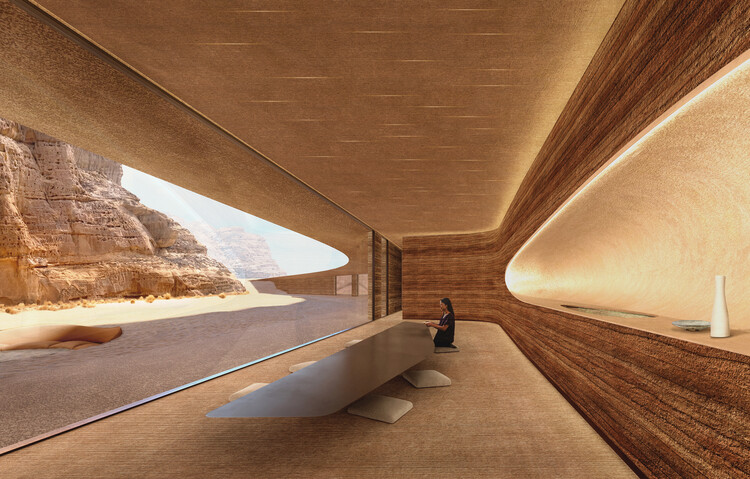
Lina Ghotmeh — Architecture recently revealed images of the AlUla Immersive Living project, a proposed dwelling envisioned to emerge from the desert landscape of Saudi Arabia. Its form is shaped by the site's light and wind, rooted in climate, and positioned between rock and dune. The design follows the concept of a shelter belonging as much to the desert as to its inhabitants, and behaving as a "living landscape." The structure is conceived with thick rammed-earth walls, contrasted by open platforms that frame the sky. It is presented as a statement of architecture intended "not to dominate but to host," providing refuge without severing connections, reflecting Lina Ghotmeh's position at the intersection of context, craft, and care.

Lina Ghotmeh — Architecture Envisions a Landscape-Inspired Desert Dwelling in AlUla, Saudi Arabia - Image 1 of 4Lina Ghotmeh — Architecture Envisions a Landscape-Inspired Desert Dwelling in AlUla, Saudi Arabia - Image 2 of 4Lina Ghotmeh — Architecture Envisions a Landscape-Inspired Desert Dwelling in AlUla, Saudi Arabia - Image 3 of 4Lina Ghotmeh — Architecture Envisions a Landscape-Inspired Desert Dwelling in AlUla, Saudi Arabia - Image 4 of 4Lina Ghotmeh — Architecture Envisions a Landscape-Inspired Desert Dwelling in AlUla, Saudi Arabia - More Images+ 29

Burning Man 2025: 15 Temporary Installations in the Black Rock Desert

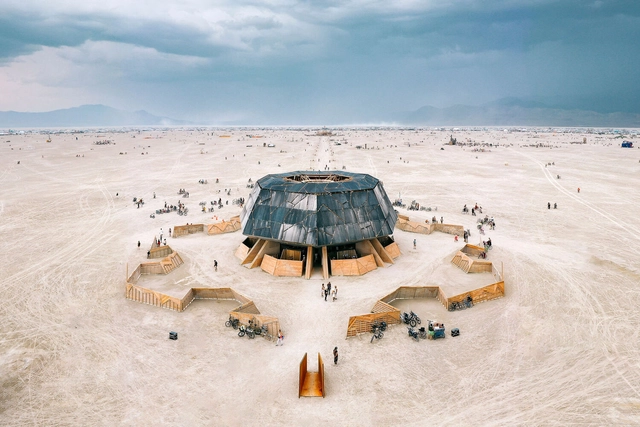
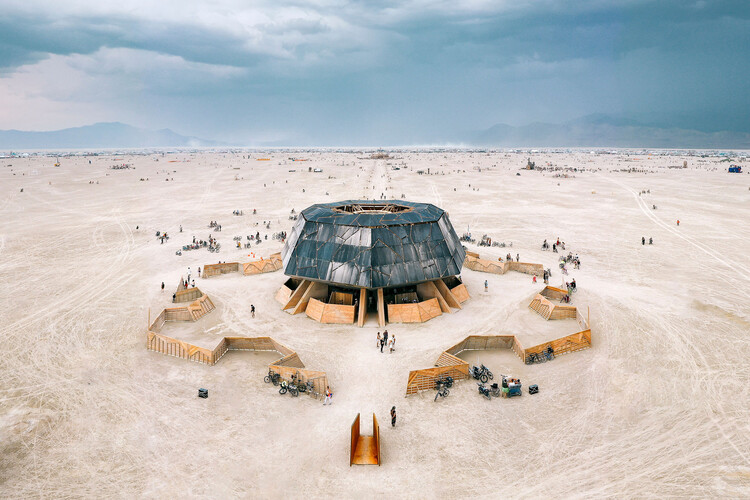
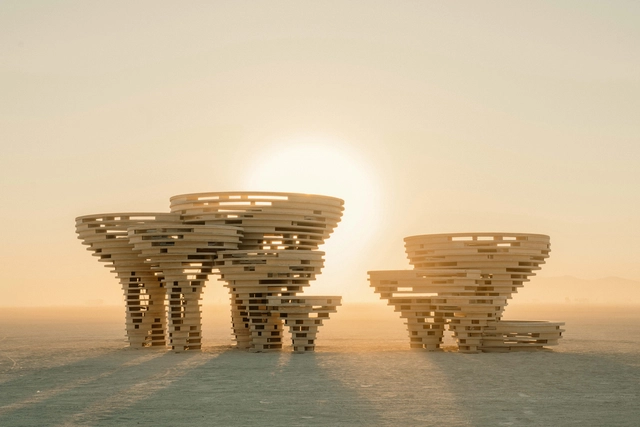
Each year, Burning Man transforms Nevada's Black Rock Desert into a temporary city where large-scale installations define both the landscape and the collective experience. Serving as a platform for experimental design, the event brings together artists, architects, and interdisciplinary teams to create works that blur the boundaries between sculpture and architecture. These temporary structures often function as gathering spaces, landmarks, or immersive environments, embodying the festival's guiding principle of impermanence.

The 2025 edition introduced projects that examined themes of ecology, memory, and connectivity while responding to the challenges of building in the desert. Ranging from intimate interactive pieces to monumental landmarks, the installations encouraged reflection, participation, and community engagement before disappearing at the close of the event.

Burning Man 2025: 15 Temporary Installations in the Black Rock Desert - Image 1 of 4Burning Man 2025: 15 Temporary Installations in the Black Rock Desert - Image 2 of 4Burning Man 2025: 15 Temporary Installations in the Black Rock Desert - Image 3 of 4Burning Man 2025: 15 Temporary Installations in the Black Rock Desert - Image 4 of 4Burning Man 2025: 15 Temporary Installations in the Black Rock Desert - More Images+ 21

The Nubian Vault: Reviving Ancient Techniques for Modern Solutions

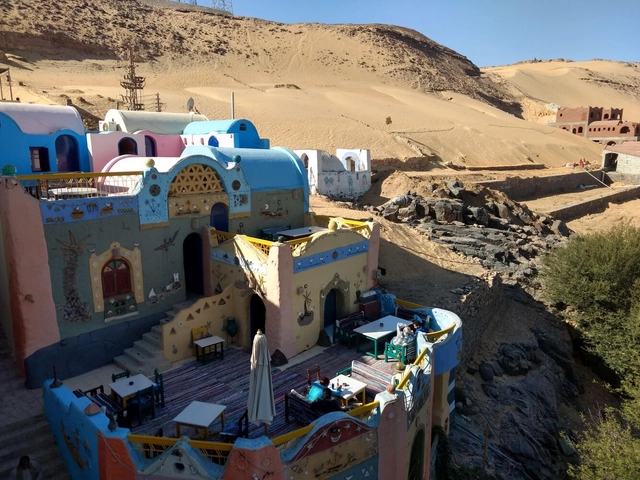
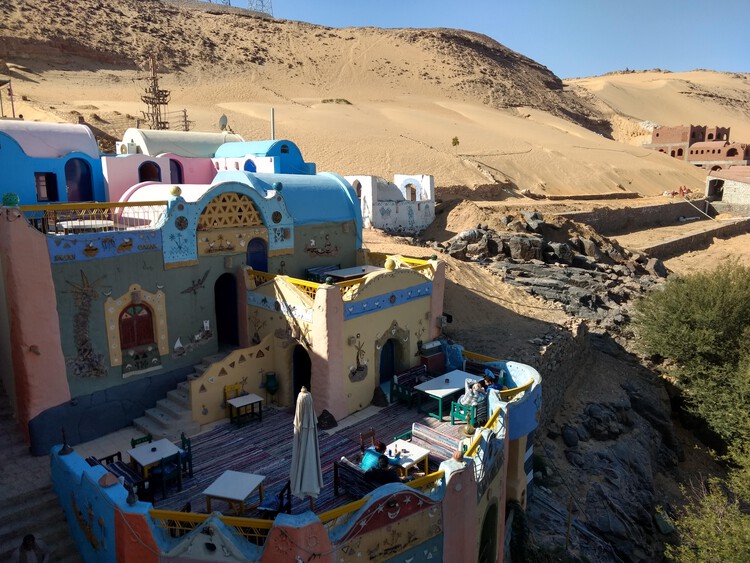
The colorful houses of Aswan in the south of modern-day Egypt attract tourists who venture that far up the River Nile. Accessed by small river boats, islands like Suheil West are the homes of Nubian communities, some of whom had had to relocate after the building of the Aswan High Dam in the 1960s. Behind the picturesque views of plastered walls covered in murals and motifs, perched on rocky hills overlooking the Nile, is a construction technique used locally for centuries. It uses locally sourced materials, conserves nature, and regulates internal temperatures against the heat in the day and the cold at night.

The Nubian Vault: Reviving Ancient Techniques for Modern Solutions - Image 1 of 4The Nubian Vault: Reviving Ancient Techniques for Modern Solutions - Image 2 of 4The Nubian Vault: Reviving Ancient Techniques for Modern Solutions - Image 3 of 4The Nubian Vault: Reviving Ancient Techniques for Modern Solutions - Image 4 of 4The Nubian Vault: Reviving Ancient Techniques for Modern Solutions - More Images+ 8

Egypt’s Pavilion at the Venice Architecture Biennale 2025 Examines the Balance Between Conservation and Development

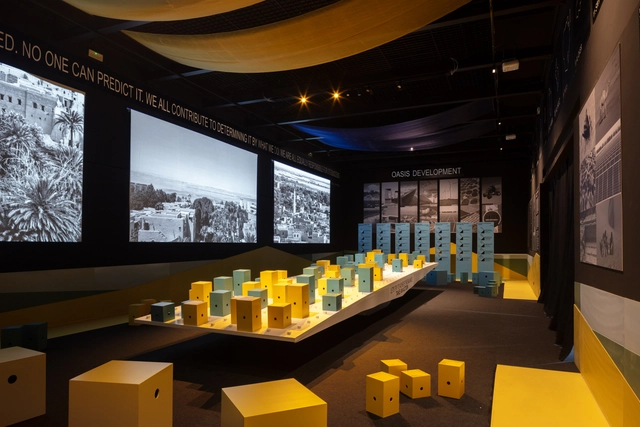
At the 19th International Architecture Exhibition - La Biennale di Venezia, Egypt presents Let's Grasp the Mirage, its national pavilion offering an interactive exploration of sustainability through the symbolic lens of the Egyptian oasis. Curated by Salah Zikri, Ebrahim Zakaria, and Emad Fikry, and commissioned by the Ministry of Culture Egypt and Accademia d'Egitto, the project reflects on the delicate balance between conservation and development, aligning with the Biennale's 2025 theme "Intelligens. Natural. Artificial. Collective."

Egypt’s Pavilion at the Venice Architecture Biennale 2025 Examines the Balance Between Conservation and Development - Image 8 of 4Egypt’s Pavilion at the Venice Architecture Biennale 2025 Examines the Balance Between Conservation and Development - Image 10 of 4Egypt’s Pavilion at the Venice Architecture Biennale 2025 Examines the Balance Between Conservation and Development - Image 9 of 4Egypt’s Pavilion at the Venice Architecture Biennale 2025 Examines the Balance Between Conservation and Development - Image 11 of 4Egypt’s Pavilion at the Venice Architecture Biennale 2025 Examines the Balance Between Conservation and Development - More Images+ 10

From the Islands of Indonesia to the Forests of Germany, Discover 8 Proposals for Residential Nature Retreats from the ArchDaily Community

Subscriber Access | 

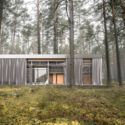
Residential houses, villas, and retreats are increasingly being designed as places of pause—spaces where architecture supports rest, reflection, and stronger connections to nature. Rather than focusing solely on urban living or compact efficiency, these homes are set in remote, scenic, or rural locations, where the landscape becomes an essential part of daily life. Through careful siting, use of natural materials, and open layouts, they offer an elevated standard of living that is both intentional and grounded in place.

From the Islands of Indonesia to the Forests of Germany, Discover 8 Proposals for Residential Nature Retreats from the ArchDaily Community - Image 6 of 4From the Islands of Indonesia to the Forests of Germany, Discover 8 Proposals for Residential Nature Retreats from the ArchDaily Community - Image 20 of 4From the Islands of Indonesia to the Forests of Germany, Discover 8 Proposals for Residential Nature Retreats from the ArchDaily Community - Image 9 of 4From the Islands of Indonesia to the Forests of Germany, Discover 8 Proposals for Residential Nature Retreats from the ArchDaily Community - Image 42 of 4From the Islands of Indonesia to the Forests of Germany, Discover 8 Proposals for Residential Nature Retreats from the ArchDaily Community - More Images+ 42

Comfort and Seclusion: 5 Hotels in the Deserts of Latin America

Subscriber Access | 

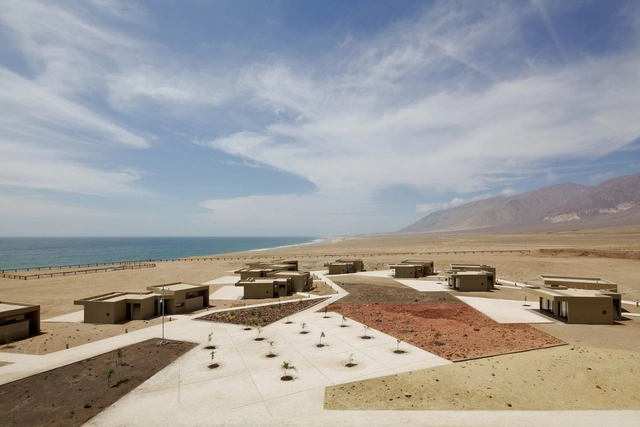
The desert is a landscape in constant transformation. Shaped by the wind, its dunes, ridges, and fissures emerge and fade in an ever-shifting expanse, as if the scenery itself were alive. It is a land of stark contrasts, where the scorching heat of the day gives way to the crisp coolness of the night, revealing nature in its most primal form. In such a dynamic and untamed environment, how can architecture not only integrate but also respect and engage with its surroundings? This is the challenge faced by hotels built within Latin America’s vast desert landscapes.

Comfort and Seclusion: 5 Hotels in the Deserts of Latin America - Image 1 of 4Comfort and Seclusion: 5 Hotels in the Deserts of Latin America - Image 2 of 4Comfort and Seclusion: 5 Hotels in the Deserts of Latin America - Image 3 of 4Comfort and Seclusion: 5 Hotels in the Deserts of Latin America - Image 4 of 4Comfort and Seclusion: 5 Hotels in the Deserts of Latin America - More Images+ 7

Desert X 2025 Exhibition Opens with 11 Art Installations in California’s Coachella Valley

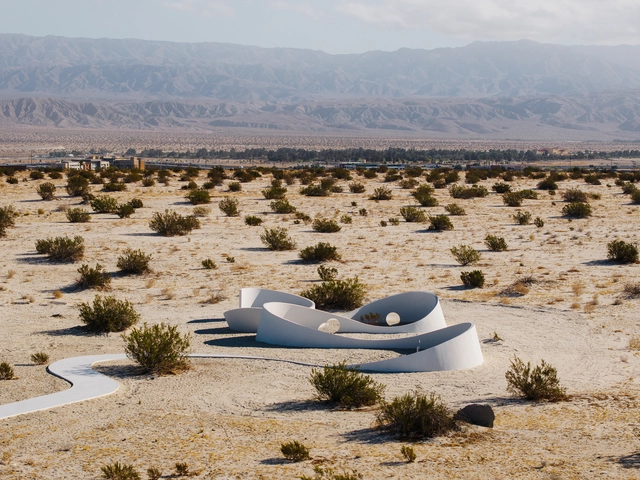
Desert X is a site-specific international art exhibition taking place this year across the Coachella Valley, California. Its fifth edition, curated by Artistic Director Neville Wakefield and co-curator Kaitlin Garcia Maestas, opened on March 10, 2025, featuring eleven installations by international artists integrated into the desert landscape. Artists were invited to propose alternative ways of perceiving a world "increasingly encircled by the transformational effects of nature and humanity," through physical installations in specific locations within the California desert. In this context, architecture is understood as the most visible evidence of human transformation, while immaterial elements, such as wind and light, highlight the transformative effects not only of human activity but also of nature itself. The exhibition is free and open to all, running through May 11, 2025. Below are images and descriptions of the eleven art installations featured in this year's Desert X exhibition.

Desert X 2025 Exhibition Opens with 11 Art Installations in California’s Coachella Valley - Image 1 of 4Desert X 2025 Exhibition Opens with 11 Art Installations in California’s Coachella Valley - Image 2 of 4Desert X 2025 Exhibition Opens with 11 Art Installations in California’s Coachella Valley - Image 3 of 4Desert X 2025 Exhibition Opens with 11 Art Installations in California’s Coachella Valley - Image 4 of 4Desert X 2025 Exhibition Opens with 11 Art Installations in California’s Coachella Valley - More Images+ 84

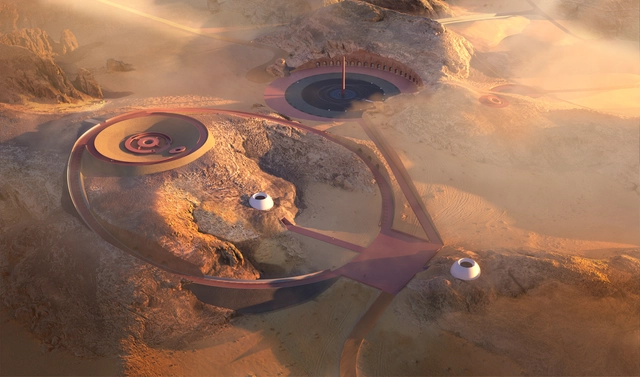
James Turrell Unveils Monumental Commission for Wadi AlFann in AlUla

The AlUla Arts Festival, running from January 16th to February 22nd, 2025, features a significant exhibition of works by renowned Light and Space artist James Turrell. Presented by Wadi AlFann, the exhibition, curated by Michael Govan of LACMA, offers a unique preview of Turrell's upcoming monumental commission for Wadi AlFann, a sprawling contemporary art destination in the AlUla region of north-west Saudi Arabia. The exhibition, located in AlJadidah Arts District within AlUla's historic old town, provides context for Turrell's ambitious project, which will involve the creation of a series of chambers within the canyon floor, designed to create a sensory experience of light, color, and perception.

James Turrell Unveils Monumental Commission for Wadi AlFann in AlUla - Image 1 of 4James Turrell Unveils Monumental Commission for Wadi AlFann in AlUla - Image 2 of 4James Turrell Unveils Monumental Commission for Wadi AlFann in AlUla - Image 3 of 4James Turrell Unveils Monumental Commission for Wadi AlFann in AlUla - Image 4 of 4James Turrell Unveils Monumental Commission for Wadi AlFann in AlUla - More Images+ 5

An Interconnected Mushroom Grove and a Shelter from the Desert Sun: 8 Installations at Burning Man 2024

Known for its unconventional art installations and striking desert setting, the Burning Man festival has concluded this year with an array of temporary installations spread across the Black Rock Desert in Nevada. The festival's 2024 theme, "Curiouser & Curiouser," inspired by Lewis Carroll's Alice in Wonderland, encouraged participants to embrace wonder and whimsy.

At Burning Man, a tapestry of themes emerges through diverse installations, from reflections on connectivity and isolation to explorations of time and space. Installations like Nebula Shroom Grove and the Temple of Together emphasize community and unity, inviting interaction and participation. Pieces like "I'm Fine" and Tree Circle delve into universal emotions and humanity's connection to the infinite, while works like Matter Out of Time and The End of Time play with perceptions of time and reality.

An Interconnected Mushroom Grove and a Shelter from the Desert Sun: 8 Installations at Burning Man 2024 - Image 1 of 4An Interconnected Mushroom Grove and a Shelter from the Desert Sun: 8 Installations at Burning Man 2024 - Image 2 of 4An Interconnected Mushroom Grove and a Shelter from the Desert Sun: 8 Installations at Burning Man 2024 - Image 3 of 4An Interconnected Mushroom Grove and a Shelter from the Desert Sun: 8 Installations at Burning Man 2024 - Image 4 of 4An Interconnected Mushroom Grove and a Shelter from the Desert Sun: 8 Installations at Burning Man 2024 - More Images+ 36

First Look at Burning Man 2024: Exploring Curiouser & Curiouser Art Installations

Every August, the Black Rock Desert in Nevada transforms into a vibrant city for Burning Man, a week-long festival that culminates in the ceremonial burning of a large wooden effigy. Established in 1986, the festival is renowned for its unconventional art installations and striking desert setting. While varied in their expression, the installations follow a central theme of the year. For this edition, the title “Curiouser & Curiouser” takes inspiration from the Mad Hatter from Lewis Carroll’s Alice in Wonderland, prompting participants to engage with wonder and embrace the whimsical and mysterious. This year’s central temple installation is designed by Caroline Ghosn to represent togetherness and mutual respect. Following a Burning Man Tradition, the temple design is selected following an international competition.
Harnessing Thermal Mass for Sustainable Living: 4 Residential Projects in the U.S. Deserts

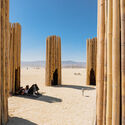
Thermal mass is the ability of a material to absorb, store, and release heat. Used to moderate building temperatures by reducing fluctuations, the concept is crucial in improving energy efficiency. Materials with relatively high thermal mass, such as stone, concrete, rammed earth, and brick, can absorb significant heat during the day and release it slowly when temperatures drop at night, reducing the need for heating and cooling systems. Properties like heat capacity, thermal conductivity, and density are all considered when assessing the thermal mass property of a material.
Harnessing Thermal Mass for Sustainable Living: 4 Residential Projects in the U.S. Deserts - Image 1 of 4Harnessing Thermal Mass for Sustainable Living: 4 Residential Projects in the U.S. Deserts - Image 2 of 4Harnessing Thermal Mass for Sustainable Living: 4 Residential Projects in the U.S. Deserts - Image 3 of 4Harnessing Thermal Mass for Sustainable Living: 4 Residential Projects in the U.S. Deserts - Image 4 of 4Harnessing Thermal Mass for Sustainable Living: 4 Residential Projects in the U.S. Deserts - More Images+ 8