
When Francis Kéré set out to build a school in his home village of Gando, Burkina Faso, he chose clay, a material his own community associated with scarcity, not architecture. To prove it could hold, he built test bricks and submerged one in water for five days before showing his neighbors it hadn't failed. Then he trained the villagers themselves to raise the walls, rather than bringing in a construction crew from the city. More than 200 people from Gando have since worked as builders because of that choice. The school carries something a materials list alone cannot: the trace of the hands that will go on living in the village long after the scaffolding came down.




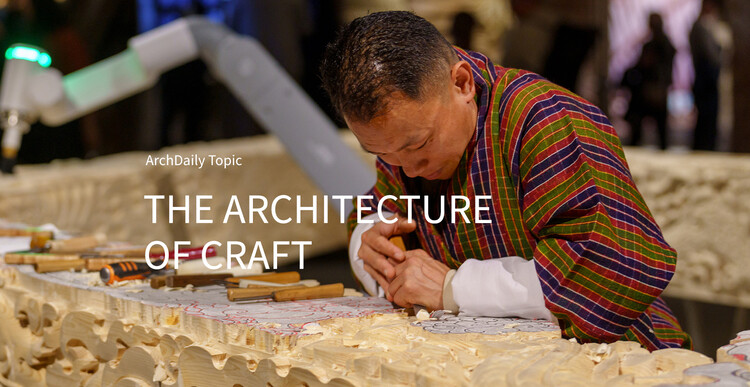
The relationship between architecture and the specific hands that shaped it sits at the core of The Architecture of Craft: Handmade Stories in a Digital Age, ArchDaily's Monthly Topic for August. The theme examines craftsmanship across scales, from ancestral techniques to digital fabrication, asking what stories are embedded in handmade materials, tailored details, and imperfect surfaces — and whether the presence of the artisan enriches or transforms how architecture is experienced. It also asks harder questions about who gets to practice craft and who benefits from it: is skilled making becoming a luxury reserved for the few, or can it help broaden access to good design?
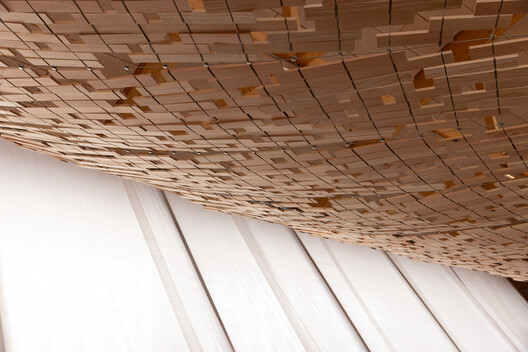
Coverage this month looks at architects who have taken material production into their own hands, treating the making of brick, rammed earth, or textile as an extension of design itself, and at how imperfection and texture read as intention in contemporary interiors, where the handmade surface carries a legibility that polish cannot.
Related Article
Historic Materials in the Digital Age: How Digitally Assisted Stone Carving Adds a New Dimension to Heritage RestorationIt also turns to craft under pressure: what reconstruction after conflict stands to lose or preserve of a place's building knowledge, and whether handmade work can survive without becoming a luxury good reserved for those who can pay for it. Running beneath these is a question of labor and politics: who gets to make, under what conditions, and to what end.
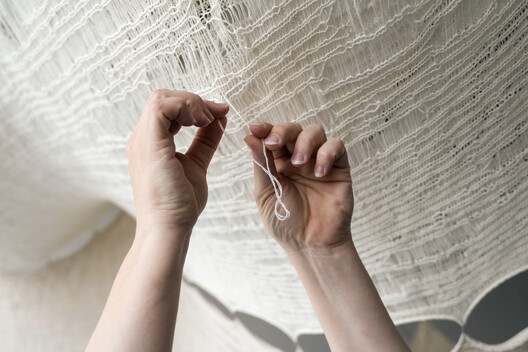
Does the visible trace of the artisan still matter when so much of building can now be automated? Can craftsmanship scale without losing the intention that makes it meaningful in the first place? And as AI reshapes how buildings are conceived, does it push architecture closer to the hand that makes it, or further away?
This article is part of the ArchDaily Topic: The Architecture of Craft: Handmade Stories in a Digital Age. Every month we explore a topic in-depth through articles, interviews, news, and architecture projects. We invite you to learn more about our ArchDaily Topics. And, as always, at ArchDaily we welcome the contributions of our readers; if you want to submit an article or project, contact us.

