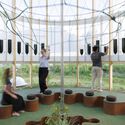
Call for Entries | 1st Design + AI Hackathon URP 2026: Multifunctional Transformable Furniture
Call for Entries | 1st Design + AI Hackathon URP 2026: Multifunctional Transformable Furniture

Architectural ornamentation has been a recurrent subject of debate across the industry for decades. A practice that was largely abandoned during the Modernist movement could now be standing on a platform that might, again, allow its resurgence, due to the current convergence of robotics, artificial intelligence (AI), and digital fabrication. Technology has seemingly removed the primary obstacle to decorative detail: the high cost of skilled manual labor. However, this new technical capacity demands a critical examination: What does ornamentation truly represent, and what do we gain or lose by resurrecting it through algorithmic design?

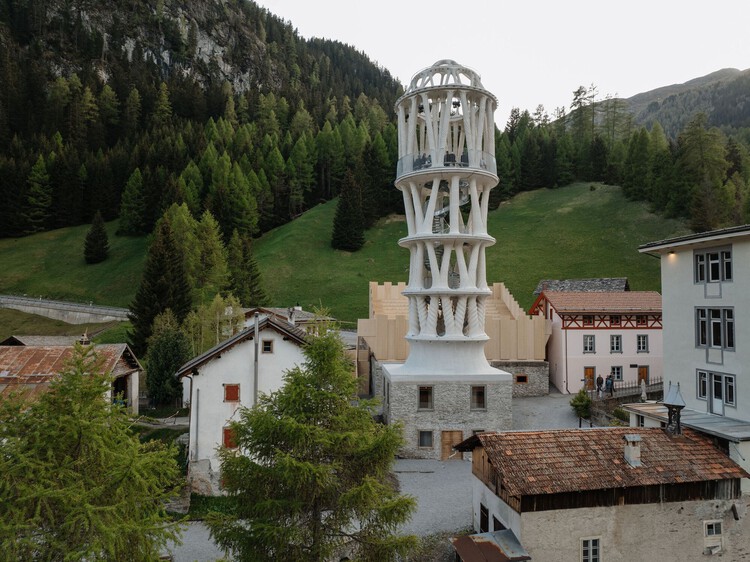
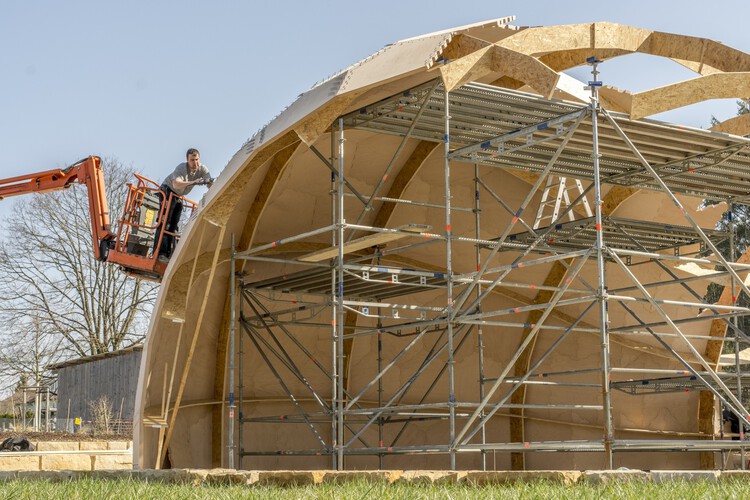
Architectural prototypes are often used to test decisions before construction begins. But in some practices, prototyping begins while those decisions are still taking shape. Moving an idea from drawing into matter introduces questions that depend on making itself: how a material can be cut or joined, how much a piece weighs, how an assembly comes together, whether parts can be reused, or even what form the project should take.
TAKK, salazarsequeromedina, and Ensamble Studio each make physical experimentation part of their design process, but they ask different things of it. For TAKK, prototypes help test how materials and components come together as a construction system. For salazarsequeromedina, models and built systems remain open to dismantling, recombination, and later uses. Ensamble Studio uses physical experiments to generate geometry and construction knowledge that can move into engineering and full-scale building. What distinguishes these approaches is not simply that they prototype, but what each practice expects to learn through the prototype.

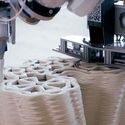
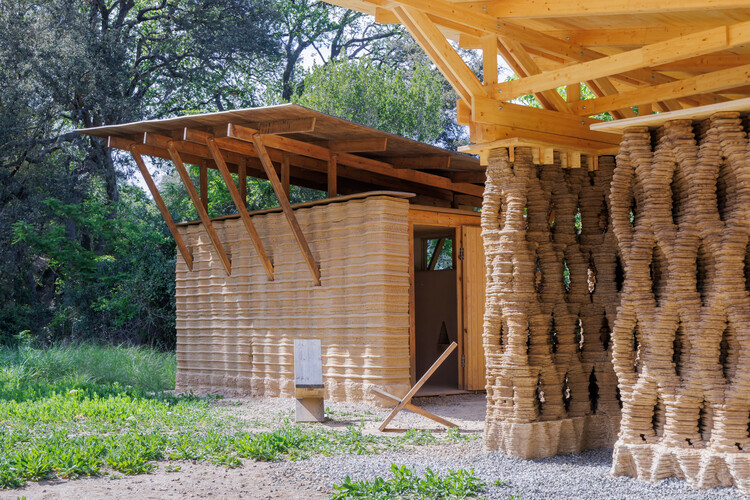
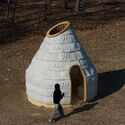
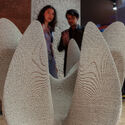
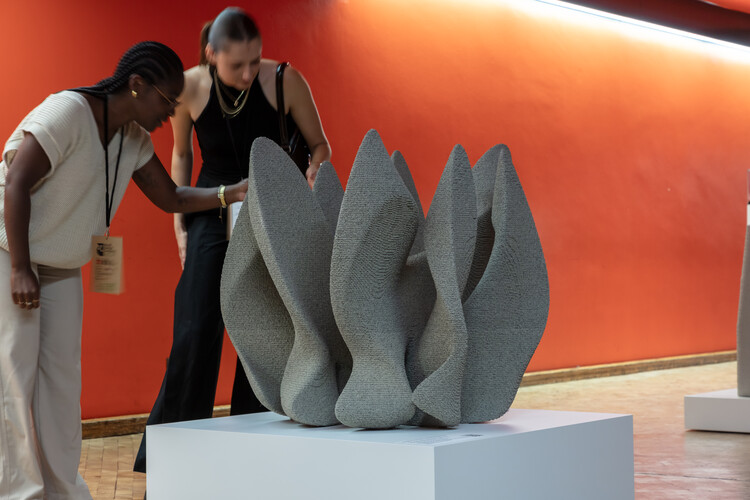
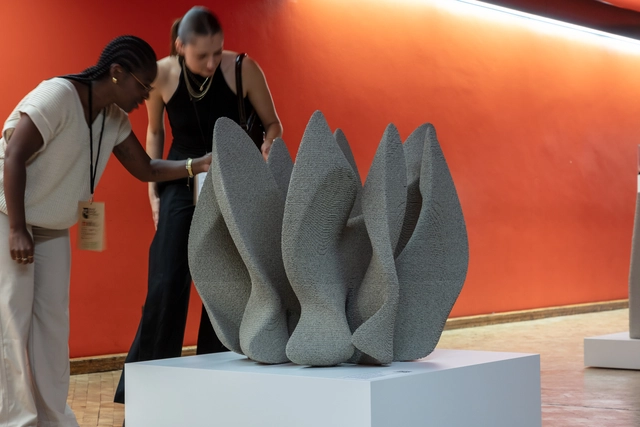
In 2021, a collaboration between the Italian architecture studio Mario Cucinella Architects and WASP, an Italian 3D-printing company, led to the development of TECLA: a house 3D-printed entirely from raw earth. Five years later, the technology behind it has grown, quietly spreading across several continents and design practices. By controlling the speed, angle, and path of the extruder nozzle, architects are able to create more than just walls. Throughout the years, they have been experimenting with how to shape the 3D-printed material into detailed surface motifs, reintroducing relief, texture, and intricate patterns directly into the structure. In this way, they are attempting to bridge earth-building traditions with digital computation, in an era where code is starting to influence form and material expression in architecture.

In 1968, the furniture designer and RCA professor David Pye published The Nature and Art of Workmanship, a book built around a distinction between "workmanship of risk" and the "workmanship of certainty." Pye was not writing about architecture, and despite how the phrase gets used today, he was not really writing about hands versus machines either. He pointed out that a printing press, entirely mechanical, still depends on someone judging the ink and the register, while a woodturner working a lathe by hand can follow a template closely enough that almost nothing is left to chance.
Workmanship of risk, in Pye's definition, is any process where the outcome is not fixed in advance but depends on the judgment, dexterity, and attention the maker exercises while the work is still underway. Workmanship of certainty is the opposite condition, as the result is settled before production begins, locked into a jig, a mold, or a program, so that everything downstream is execution. Pye was careful to note that neither mode is inherently superior and that a numerically controlled machine, calibrated to leave room for drift, can sit closer to risk than a hand tool run to a fixed template.

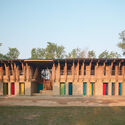
When Francis Kéré set out to build a school in his home village of Gando, Burkina Faso, he chose clay, a material his own community associated with scarcity, not architecture. To prove it could hold, he built test bricks and submerged one in water for five days before showing his neighbors it hadn't failed. Then he trained the villagers themselves to raise the walls, rather than bringing in a construction crew from the city. More than 200 people from Gando have since worked as builders because of that choice. The school carries something a materials list alone cannot: the trace of the hands that will go on living in the village long after the scaffolding came down.

At a time of ecological emergency, architecture cannot be separated from the extractive systems on which it depends. As the technosphere expands, linking material flows, energy consumption, and digital infrastructures, design becomes increasingly entangled in these processes. How can design practice intervene in anthropocentric systems and transform the architectural process and aesthetics through an investigation of material intelligence? More broadly, how does architecture engage with the agency and intelligence of non-human entities to rebalance the environmental burden?

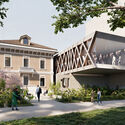
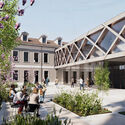
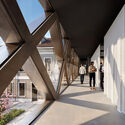
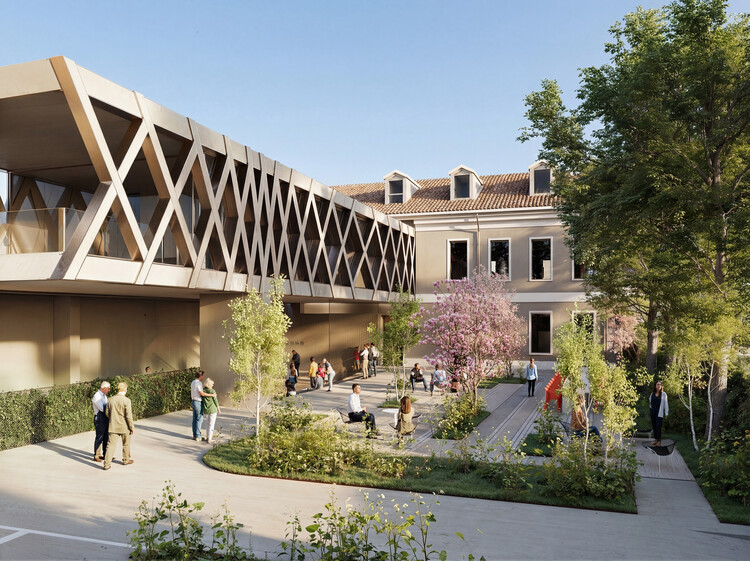
CRA–Carlo Ratti Associati has been selected to design the Buzzi Heritage cultural center in Casale Monferrato, Italy. The proposal introduces a 100-meter-long suspended truss that links two former educational buildings, consolidating archival, research, and cultural functions within a single structure. The project also marks the first real-world application of a patented structural system developed through research by Carlo Ratti Associati in partnership with Maestro Technologies. Positioned above a system of open spaces, the intervention reconfigures the site as a publicly accessible cultural complex while maintaining a clear distinction between built and landscaped areas.

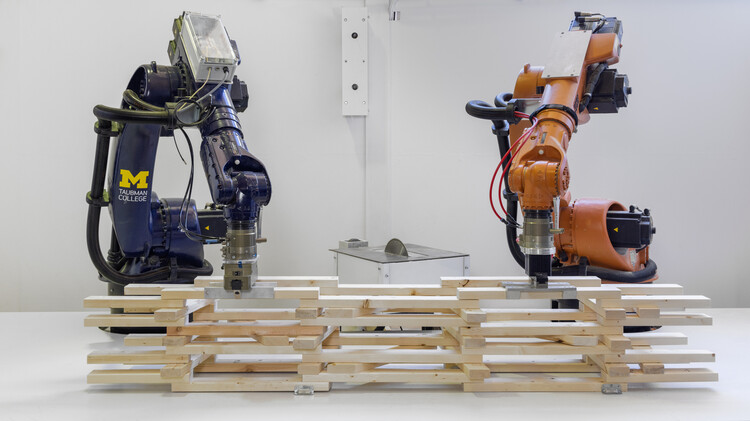
By exploring the art of robotics in construction, advances in architectural technologies are increasingly shaping multiple aspects of human life. From robotic arms and drones to robots that move across large surfaces and even 3D printing robots, their use in construction is accelerating research and the development of new working methods, as well as structural and material experimentation. In collaboration with multiple disciplines and spanning various facets of architecture, the role of robots in the contemporary landscape demonstrates a potential that extends beyond merely automating processes or reducing construction times and costs. This raises the question: Are we building architecture to serve technology, or technology to serve architecture?

What does it mean to practice ecological responsibility beyond performance metrics or carbon calculations? How can fabrication become a design method rather than a final outcome? Founded in Seoul, Yong Ju Lee Architecture is a practice led by architect and researcher Yong Ju Lee. Across installations, research-driven proposals, and cultural projects, the studio positions architecture as an experimental discipline rooted in making: a process in which design emerges from material behavior, prototyping, and fabrication logic as much as from drawing or representation. Bridging professional practice and academia, his work consistently expands the architectural toolkit through computational design, experimental material research, and an evolving commitment to ecology as a responsibility and a design driver. In 2025, the studio was selected as a winner of the ArchDaily Next Practices Awards.
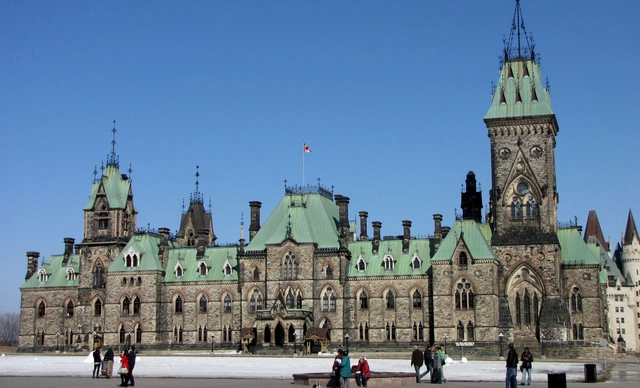
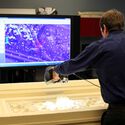
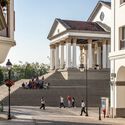
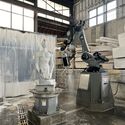
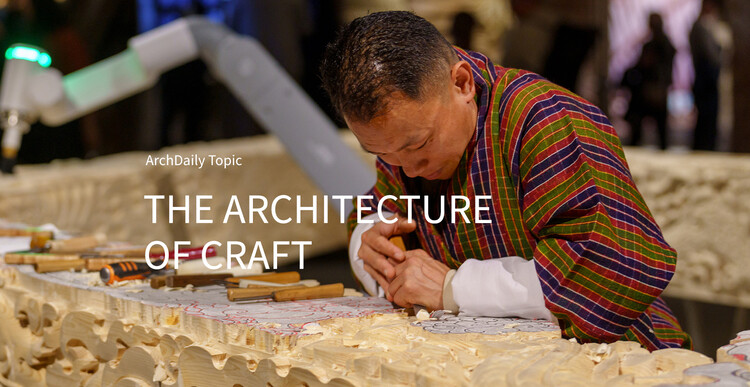
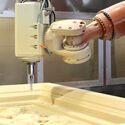
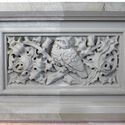
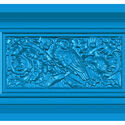
Heritage restoration has always been an intricate process that requires delicate balancing between preserving the integrity of historic materials while integrating contemporary techniques that can enhance accuracy, efficiency, and resilience. With the restoration process of Parliament Hill in Ottawa, Canada's capital city, this intersection of tradition and technology is now on full display. The East Block, built in 1865, offers a compelling example of how digital tools can support the efforts of heritage restoration and contribute to a centuries-old craft such as stone carving.

Once confined to the aerospace and automotive industries, composite materials have taken on an increasingly central role in contemporary architecture. By combining two or more components, such as fibers and polymers, they offer lightness and strength, high durability, formal freedom, and enhanced environmental performance. Their incorporation into architectural practice marks a profound transformation in how we design, fabricate, and inhabit space.
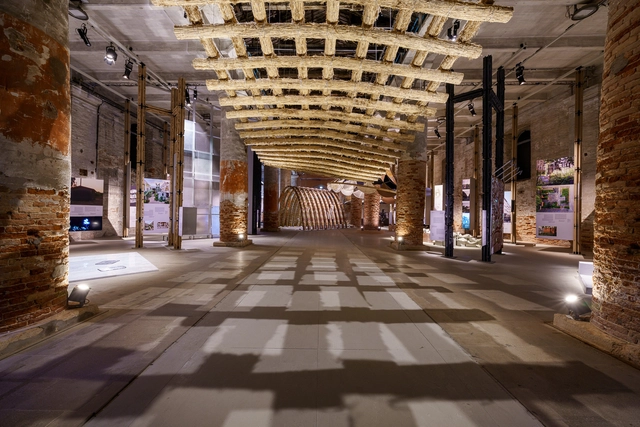
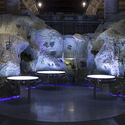
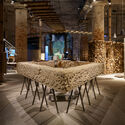
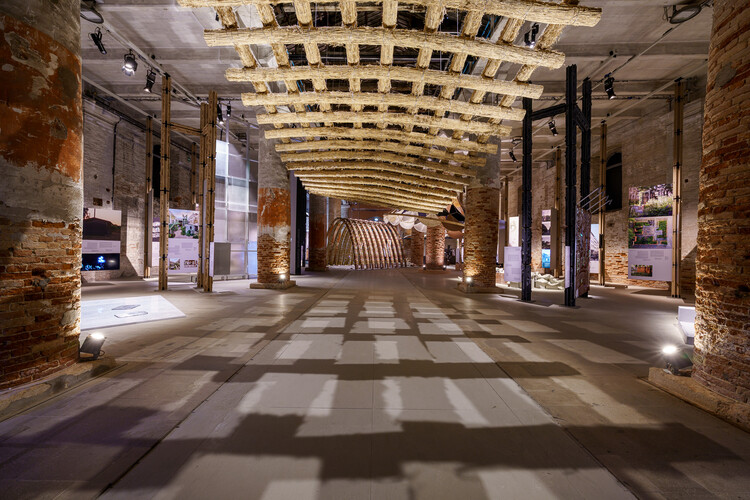
With just a few days left before the six-and-a-half-month 19th Venice Architecture Biennale comes to an end, it is possible to look back on some of the most notable contributions within its thematic framework. Marked by the largest call for participants to date, the Biennale's diversity of topics and the range of installations on display go beyond easy recapitulation. As part of that reflection, several initiatives can be highlighted as illustrative of the principles reflected in the curatorial theme, "Intelligens. Natural. Artificial. Collective." The concepts interwoven in Carlo Ratti's title form a call to address the urgent need for substantial solutions amid the accelerating climate crisis, positioning the Biennale as a platform for diverse design proposals and experiments organized around three forms of intelligence: natural, artificial, and collective. Beyond the national pavilions and numerous collateral events held throughout Venice over the past six months, among the more than 700 participants are projects that, through practice, embody four shared intentions: opening conversations about the future, proposing systemic responses to local realities, placing technology at the center of design innovation, and pursuing material research rooted in local sensitivity.

Architecture has entered a pivotal moment. As cities continue to grow under the weight of climatic and social pressures, the materials and systems that shape them are being redefined. Artificial intelligence and robotics, once used to accelerate construction processes, are now being rethought as tools for cultivation. Printed structures that grow, breathe, and decay. Cultivation, in this context, refers to designing with biological materials, where growth and decay are active parameters, merging digital precision with ecological intelligence. This evolution shows the shift from efficiency to empathy, where architecture becomes an agent of active repair. The introduction of mycelium and other natural materials into 3D printing presents a new paradigm in architecture: the logic of the living. A place where computation and fabrication meet biological adaptability.
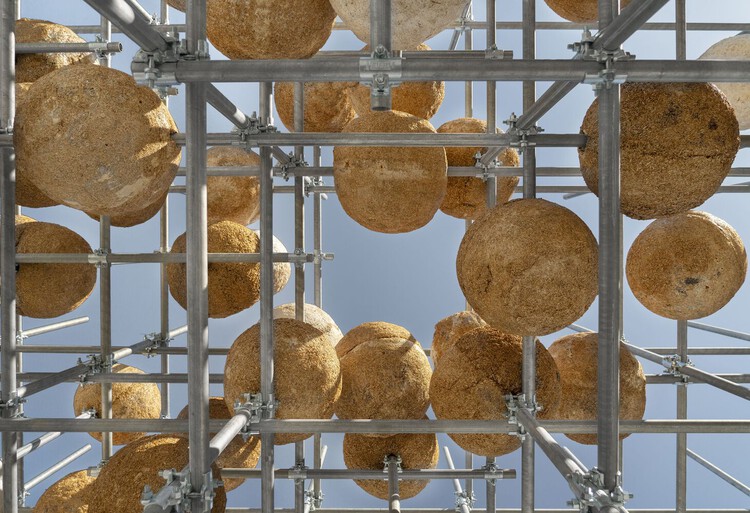
AI and robotics, once associated with industrial efficiency, are now opening new ways of designing. Early examples, such as ICON's 3D-printed housing prototypes, focused on speed and automation but offered little response to their surroundings. Newer projects, such as the MycoMuseum at the 2025 Venice Architecture Biennale, reinterpret these tools through a biological lens. Instead of shaping concrete, they cultivate living materials, marking a shift from pure optimization toward regeneration.

SCI-Arc alumni continue to make an indelible mark on the global design landscape, pioneering new approaches in architecture, technology, and interdisciplinary practices. With a reputation for fostering radical experimentation, the school has produced graduates whose work challenges conventions and redefines spatial possibilities. Recent alumni achievements underscore SCI-Arc's role in shaping the next generation of architects and creative thinkers.

SCI-Arc alumni continue to make an indelible mark on the global design landscape, pioneering new approaches in architecture, technology, and interdisciplinary practices. With a reputation for fostering radical experimentation, the school has produced graduates whose work challenges conventions and redefines spatial possibilities. Recent alumni achievements underscore SCI-Arc's role in shaping the next generation of architects and creative thinkers.
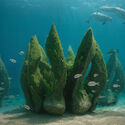
Zaha Hadid Architects' design for a digitally fabricated marine habitat in the North Lantau Marine Park conservation zone in Hong Kong was recently presented at the World Design Congress exhibition in London. The event took place at the Barbican Centre between September 9 and 10, one of the world's most recognized examples of Brutalist architecture. Its theme, "Design for Planet," called on designers and commissioners of design to take on their most critical brief to date: to design a regenerative future in the face of climate change and to examine design's role as a tool for environmental action. In this context, Zaha Hadid Architects presented Nereid, a digitally fabricated habitat developed with advanced 3D printing technologies by D-Shape, aimed at supporting the natural regeneration of marine ecosystems.

As urban neighborhoods continue to evolve, design plays a key role in shaping how buildings respond to urbanization, functional demands, and the character of their surroundings. Intertwined, these elements guide the transformation of urban life and influence how new developments engage with their context—a dynamic clearly visible in Seattle's Central District. Long considered a historic hub for the city's African American community, the Africatown Plaza project proposes a comprehensive approach that integrates architectural performance with community resonance, using the building envelope as a primary medium.