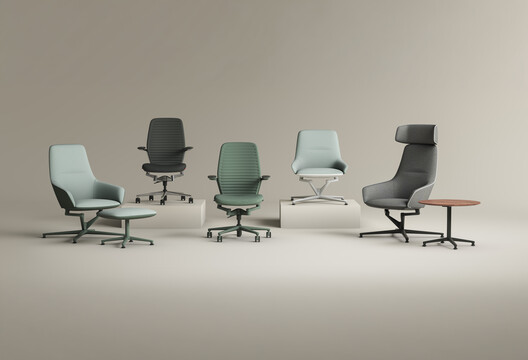
For decades, professionals have accepted an uncomfortable reality: hours spent at a desk often result in stiff backs, constant shifting, and creeping mental fatigue. While conventional ergonomic seating has sought to improve comfort through adjustable mechanisms, it has largely continued to assume that effective sitting depends on maintaining a stable posture. Growing understanding of the relationship between movement, physical well-being, and cognitive performance suggests a different approach, one in which motion becomes an integral part of the seating experience rather than something to be minimized.
Rejecting this long-standing assumption, KI introduces Cognetic Technology™, a patented seating innovation invented by Aaron DeJule and centered around movement-based seating experiences. Rather than relying on conventional mechanical adjustments, the technology operates in sync with the body through passive, gravity-powered movement, transforming motion from a workplace distraction into a source of effortless comfort, continuous alignment, and enhanced human performance.
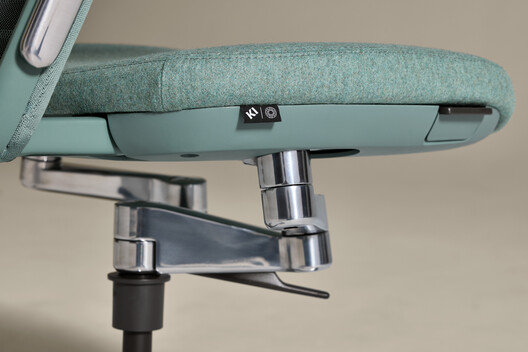
Cognetic Technology™ Adaptive Seating Experience
Cognetic Technology™ is rooted in the personal story of survival and necessity surrounding industrial designer Aaron DeJule, after a serious car accident that left him coping with chronic pain, making prolonged sitting painfully difficult. As DeJule attempted to return to work, he discovered a fundamental flaw in traditional ergonomics: even highly adjustable office chairs failed because they still forced the body to adapt to a rigid frame rather than allowing the chair to move naturally with the spine. This friction sparked a key realization: what if seating responded to people instead of forcing people to respond to seating? Abandoning conventional mechanical levers, DeJule spent years experimenting with physics and gravity to engineer a multi-axis system that uses the body's own weight to effortlessly support posture variability and pressure point distribution.
This breakthrough directly addresses the company's human-centered design philosophy and what scientists call the Sedentary-Cognitive Paradox. Knowledge work inherently requires long periods at a desk chair, yet the human brain requires physical movement to sustain focus, clarity, and processing speed. DeJule's design addresses this by simultaneously uniting three pillars of human performance: mechanical ergonomics, physiological well-being, and neurocognitive support. Driven by a completely passive, gravity-powered motion, the technology shifts into a subconscious experience that engages the body's internal regulatory systems without requiring effort or manual manipulation from the user.
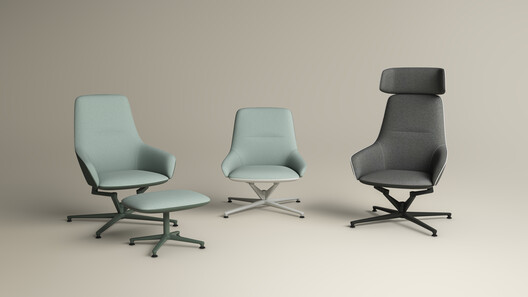
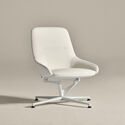
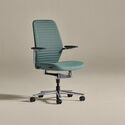
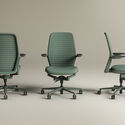
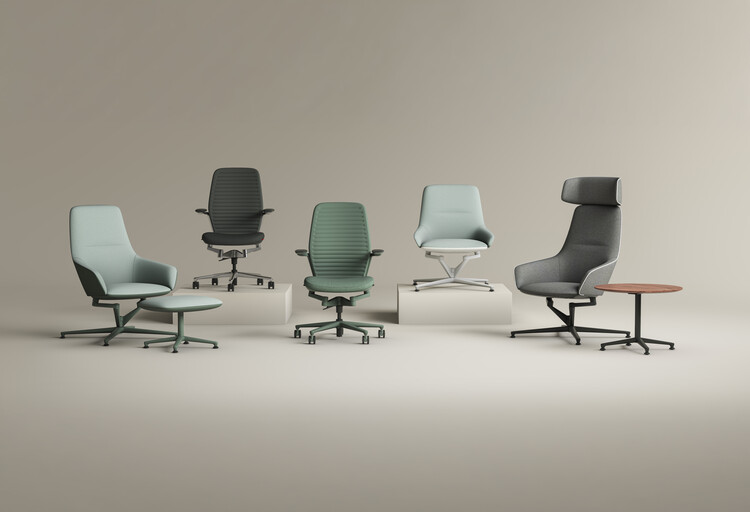
Kiaura Collection Engineered For Cognitive Ease
This technological innovation finds its exclusive manifestation in the comprehensive Kiaura Collection™, designed by Aaron DeJule for KI. Moving beyond a singular product, Kiaura collection offers extensive design flexibility and tactile materiality across three workplace typologies of Task, Conference, and Lounge seating, giving architects and interior designers a cohesive architectural language to build fluid, high-performance spaces. The task and conference models feature a refined lock/unlock control to engage movement when needed, while the lounge variations utilize a weight-activated auto-unlock for seamless operation. Visually, the collection balances technical performance with refined aesthetics, offering monochromatic and polished aluminum configurations, customizable control colors, and tailored welting.
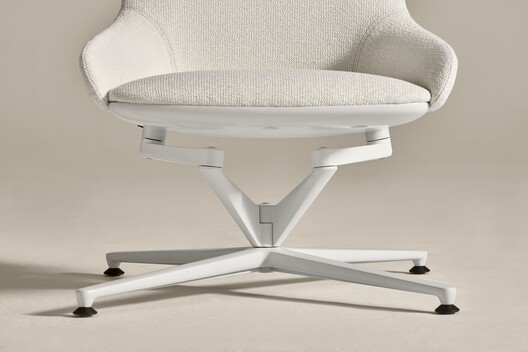
By embedding Cognetic Technology™ directly into these diverse configurations, Kiaura delivers a measurably profound impact on human performance. Controlled user testing and independent research reveal that integrating these passive micro-movements supports blood flow, keeps neural pathways active, and prevents cortisol buildup. During extended sitting periods, users experienced up to a 30% reduction in anxiety, improved cognitive processing, sustained focus, and a significant reduction in lower-back fatigue and compression at the close of the workday. This successful blend of DeJule's design execution and KI's manufacturing challenges the corporate world, proving that cognitive endurance is entirely dependent on physical fluidity.


