1. ArchDaily
  2. Seating

Seating: The Latest Architecture and News

Plastic That Is Not a Plastic: Redefining Circularity in Open-Plan Design

 | In Collaboration

When walking into a large living space, a hotel lobby, or an open-plan workplace, the first thing that can be noticed is not what divides the space, but what holds it together. There are rarely clear boundaries, no obvious rooms, no strict partitions, yet the space still feels organized. Some areas invite a pause; others dictate movement; others foster community. The transitions are subtle, but legible.

At the same time, these interiors are expected to do more. They must accommodate constant change, withstand intensive use, and respond to environmental pressures by reducing waste, extending lifespans, and avoiding frequent replacement. The question is not only how a space looks, but how it performs over time. What is actually doing the heavy lifting?

Morning Rituals: Architecture of Breakfast Spaces

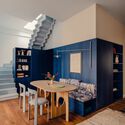
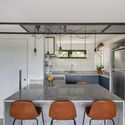
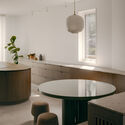
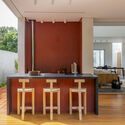
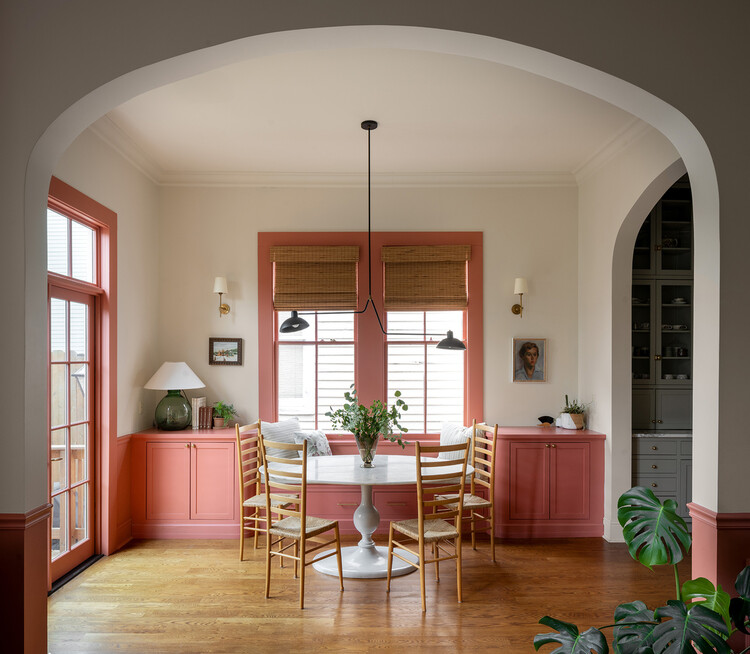
Breakfast nooks emerged in the early twentieth century in response to increasing domestic density and shifting ideas about everyday life. Rooted in the American Arts and Crafts movement and popularized through bungalow housing of the 1910s and 1920s, they evolved from the more formal Victorian breakfast room into compact, built-in spaces embedded within the kitchen. As houses grew smaller and more economical, architects and millwork companies used fixed benches and tables to occupy corners, alcoves, and bay windows that might otherwise be inefficient. These light-filled enclosures provided an affordable means of concentrating daily activities while preserving comfort and spatial clarity.

Morning Rituals: Architecture of Breakfast Spaces - Image 1 of 4Morning Rituals: Architecture of Breakfast Spaces - Image 2 of 4Morning Rituals: Architecture of Breakfast Spaces - Image 3 of 4Morning Rituals: Architecture of Breakfast Spaces - Image 4 of 4Morning Rituals: Architecture of Breakfast Spaces - More Images+ 13

Refurbishing Theater Spaces: Adapting Cultural Landmarks for Modern Audiences

Subscriber Access | 

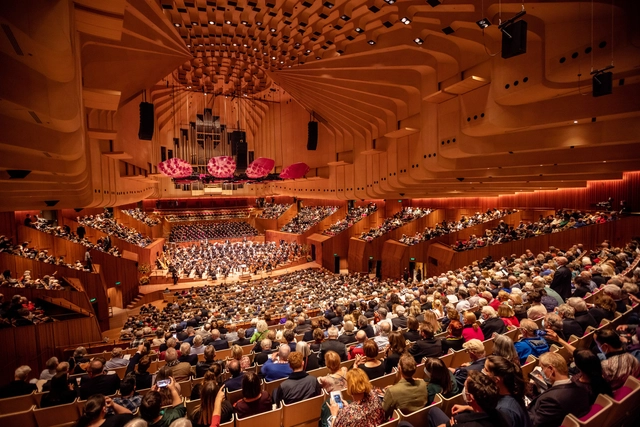
Theaters serve as cultural and social institutions, shaping society by providing spaces where stories of identity, race, and justice are brought to life. These venues foster community through shared, live experiences, sparking conversations that resonate beyond the stage. Architecturally, theaters are more than performance spaces—they are landmarks that embody both the history and future of the arts. Their design often reflects the cultural importance of storytelling, while their refurbishments ensure they remain relevant in a modern context.

In this week's AD Interior Focus, ArchDaily explores how the refurbishment of iconic theaters like the Royal Opera House in London, United Kingdom, and Sydney Opera House in Australia goes beyond modernizing comfort and accessibility. It delves into how these projects preserve the architectural integrity of these historic landmarks, ensuring their design continues to serve as a backdrop for both artistic expression and social discourse.

Refurbishing Theater Spaces: Adapting Cultural Landmarks for Modern Audiences - Image 1 of 4Refurbishing Theater Spaces: Adapting Cultural Landmarks for Modern Audiences - Image 2 of 4Refurbishing Theater Spaces: Adapting Cultural Landmarks for Modern Audiences - Image 3 of 4Refurbishing Theater Spaces: Adapting Cultural Landmarks for Modern Audiences - Image 4 of 4Refurbishing Theater Spaces: Adapting Cultural Landmarks for Modern Audiences - More Images+ 12

Are Modular Seating Systems Redefining Our Perception of Public Spaces?

What is our vision of public spaces from the past? Consider, for instance, a park—arguably the most iconic example of this typology. It is an environment designed with winding paths and rest areas, where we often find tables and fixed benches, positioned along the way. Its design prioritizes permanence and contemplation. But when we turn to the present, how do we envision it now? Indeed, the traditional concept of public space has not disappeared entirely. However, our way of interacting with it has changed, driven by the need for flexibility in ever-changing environments. This shift has sparked the exploration of new design approaches. As a result, modular seating systems have become a dynamic field of experimentation, continuously adapting to changing uses and perceptions.

Designing Meeting Rooms for the Contemporary Office: Partitions, Seating, Tables and Lighting

 | Sponsored Content

“Two brains are better than one,” goes the old saying. And with good reason. As the social beings that we are, humans thrive through interpersonal interactions and the dynamic exchange of ideas. It is these collective thoughts that tend to flourish, evolve and reach their full potential, fueled by a diversity of perspectives and experiences. That is precisely why teamwork stands as one of the most valued pillars of any working environment, and also explains why office workers spend an average of 37% of their time every week sitting in meetings. It’s no surprise then that modern office settings embrace meeting rooms as designated spaces for collaborative ideation and decision-making. But not in the way many might imagine. Gone are the days of bland conference rooms with nothing but a large table, uncomfortable chairs and white walls, giving way to new, more innovative models that respond to a shifting paradigm.

Circles in Interior Design: 27 Projects that Embrace Roundness

Subscriber Access | 

Circles, as a fundamental geometric shape, possess a captivating and harmonious quality that has been seamlessly integrated into architecture and design across various eras and styles. From subtle accents to bold focal points, the use of circles in interior design transcends mere ornamentation, often symbolizing continuity, connection, and a soothing visual rhythm. With their endless and unbroken curves, they offer a sense of unity, movement, and balance that can transform spaces into inviting and aesthetically pleasing environments – an effect especially useful for interior design. In this article, we take a look at 27 projects from our ArchDaily database that illustrate circular forms in interiors across the globe.

Circles in Interior Design: 27 Projects that Embrace Roundness - Image 1 of 4Circles in Interior Design: 27 Projects that Embrace Roundness - Image 2 of 4Circles in Interior Design: 27 Projects that Embrace Roundness - Image 3 of 4Circles in Interior Design: 27 Projects that Embrace Roundness - Featured ImageCircles in Interior Design: 27 Projects that Embrace Roundness - More Images+ 30

Where Did All of the Public Benches Go?

Subscriber Access | 

The design and functionality of public spaces in cities are always under scrutiny. Whether its accessibility to public parks and green spaces, the distance people live from public transportation, or the ways that spaces can be designed to make city life more safe and equitable. But now a new issue and one that lives at a smaller scale is starting to arise- where did all of the public seats go?

Where Did All of the Public Benches Go? - Image 1 of 4Where Did All of the Public Benches Go? - Image 2 of 4Where Did All of the Public Benches Go? - Image 3 of 4Where Did All of the Public Benches Go? - Image 4 of 4Where Did All of the Public Benches Go? - More Images+ 1

Local Collective Imagines Seating Made from Clay for London's Railway Station

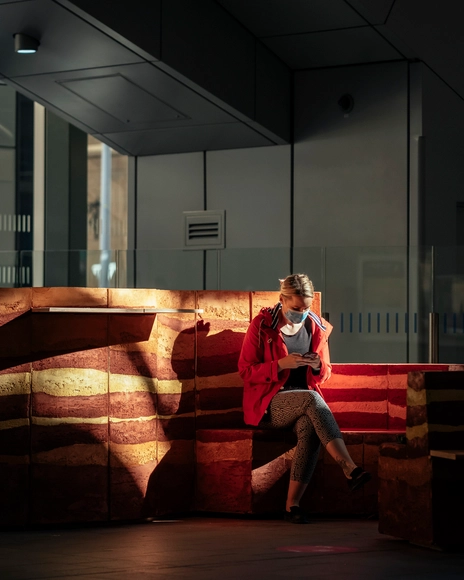
Local Collective has designed a seating made of clay for the London Festival of Architecture and Network Rail. Unveiled at London Bridge Station, the urban furniture is a result of a “competition organized by the LFA and Network Rail to create public installations that celebrate London’s shared spaces and connect people with playful encounters”.

Local Collective Imagines Seating Made from Clay for London's Railway Station - Image 1 of 4Local Collective Imagines Seating Made from Clay for London's Railway Station - Image 2 of 4Local Collective Imagines Seating Made from Clay for London's Railway Station - Image 3 of 4Local Collective Imagines Seating Made from Clay for London's Railway Station - Image 4 of 4Local Collective Imagines Seating Made from Clay for London's Railway Station - More Images+ 11

10 Innovative Outdoor Benches Shaping Public Spaces

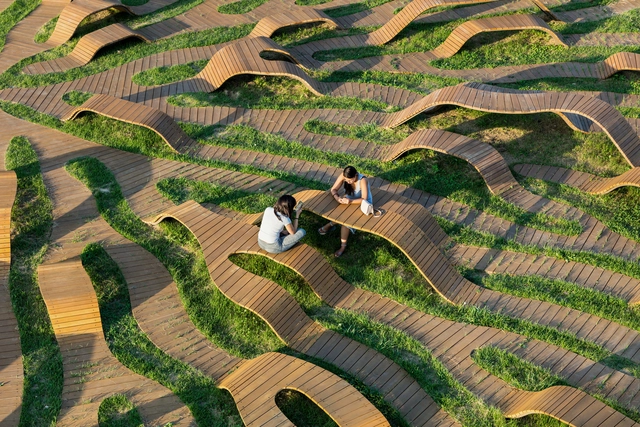
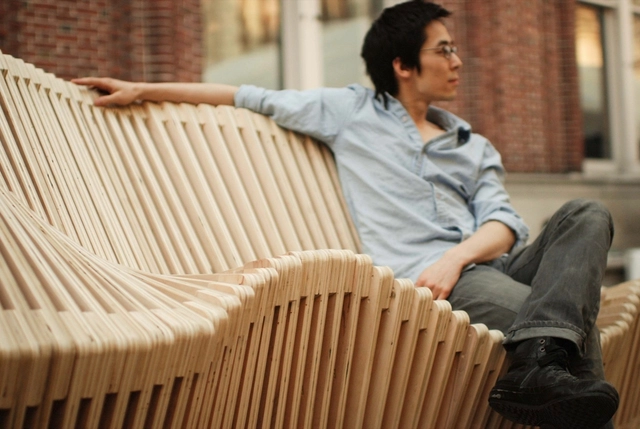
In order to create vibrant public spaces, people need to have a constant presence in these locations, whether they are on their own or in groups. In fact, they need to linger in these places and establish social interactions. To do so, one major element has to be incorporated into the urban setting: the bench.

This seating feature, simple or high tech, insures firstly the comfort of the passersby and animates the area consequently, through the addition of the missing human aspect. Sometimes, this is all it takes to revive a space that became a dull passage. The most basic urban design component can take many forms and can be created from different materials, always generating a statement and serving its purpose.

How to Design Theater Seating, Shown Through 21 Detailed Example Layouts

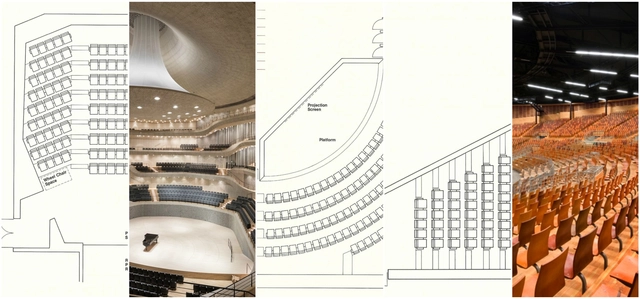
Audience sightlines, accessibility and acoustics all make theater seating a hugely precise art. As part of their set of online resources for architects and designers, the team at Theatre Solutions Inc (TSI) have put together a catalog of 21 examples of theater seating layouts. Each layout is well detailed, with information on the number of seats, the floor seating area and row spacing. These layouts fall under three general forms; to supplement this information, alongside TSI's diagrams we've included the pros and cons of each type, as well as examples of projects which use each format. Read on for more.

How to Design Theater Seating, Shown Through 21 Detailed Example Layouts - Image 22 of 4How to Design Theater Seating, Shown Through 21 Detailed Example Layouts - Image 23 of 4How to Design Theater Seating, Shown Through 21 Detailed Example Layouts - Image 26 of 4How to Design Theater Seating, Shown Through 21 Detailed Example Layouts - Image 31 of 4How to Design Theater Seating, Shown Through 21 Detailed Example Layouts - More Images+ 27

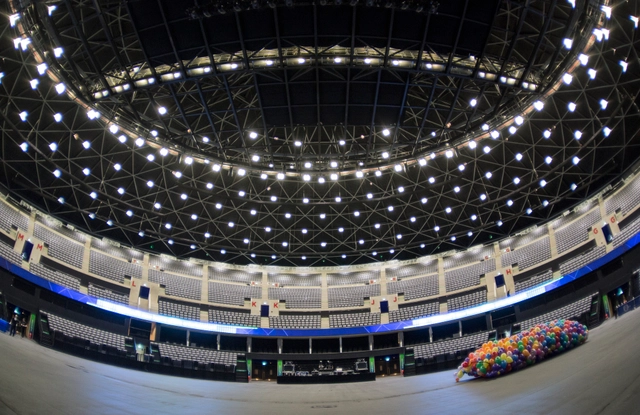
Foster + Partners' SSE Hydro Arena Features Translucent Skin, Innovative Seating System

Glasgow has just unveiled its new multipurpose structure which will end up revitalizing the Clyde Waterfront, which went into decline and neglect for many years following the closure of the town's major shipyards. After 8 years of construction, Foster + Partners' SSE Hydro now reveals its ETFE facade which is lit up every evening. During the day it manages to blend in with the usual changing Glasgow skyline.

The structure of the SSE Hydro Arena is covered by a 1.400 ton steel housing – one of the largest domes in Europe - and the ETFE translucent building enclosure allows one to discern what is happening inside from the outside. A 260 ton ring which supports the lighting is suspended from the dome, which will allow spectacular and customized lighting for each show.

The modern technology applied to this project contrasts with its interior structure that has been based on the Roman amphitheater, allowing each and every spectator at an event -- which can be up to 13.000 -- to have an optimal view of the stage. The viewing angle and comfort of the user is furthermore guaranteed by the special seating system designed by Foster + Partners along with Figueras International Seating.

Foster + Partners' SSE Hydro Arena Features Translucent Skin, Innovative Seating System - Image 1 of 4Foster + Partners' SSE Hydro Arena Features Translucent Skin, Innovative Seating System - Image 2 of 4Foster + Partners' SSE Hydro Arena Features Translucent Skin, Innovative Seating System - Image 3 of 4Foster + Partners' SSE Hydro Arena Features Translucent Skin, Innovative Seating System - Image 4 of 4Foster + Partners' SSE Hydro Arena Features Translucent Skin, Innovative Seating System - More Images+ 7