
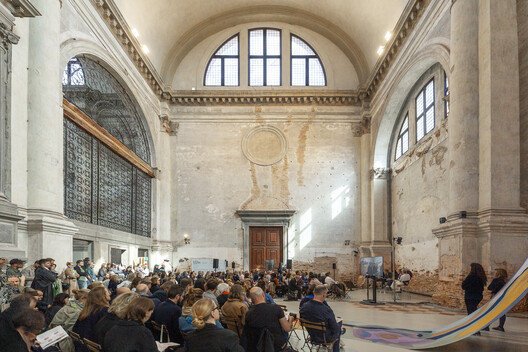
A collective discussion titled "Beyond Recognition: Exploring the Role of Architectural Awards" is taking place on June 29 in Barcelona, on the occasion of the UIA World Congress of Architects 2026. The debate starts from the conviction that, in today's context of accelerating global challenges, the role of architectural awards must evolve. The event follows the conversation initiated during the 2025 Venice Architecture Biennale, where the relevance of awards was questioned, paving the way for a new conversation on how architectural awards can contribute to shaping practice, institutions, and public discourse. The discussion sessions are convened by representatives of major international awards: the Aga Khan Award for Architecture, Ammodo Architecture Award, EUmies Awards, Holcim Foundation Awards, Mies Crown Hall Americas Prize, and the OBEL Award, and are joined by prominent figures in the field of architecture and design.
The initial premise of the event is that, in the current global context, architecture awards should shift from a role of "recognition" to one of "responsibility." Having long served to recognize design excellence and bring visibility to diverse achievements in architecture, awards have contributed to shaping how we perceive, discuss, and ultimately value architecture. Through processes of selection and distinction, they help construct contemporary narratives of the discipline, influencing public discourse, professional priorities, and the work that gains cultural legitimacy and historical visibility. As separate entities, they can reflect varied cultural, regional, and professional priorities, setting distinct criteria and proposing lines for collective discourse.
Architecture is never purely technical or aesthetic; it is inherently ethical. Architectural awards, therefore, carry an important responsibility in helping define the values, priorities, and forms of practice that society chooses to recognise and advance — Farrokh Derakhshani, Director, Aga Khan Award for Architecture
The debate on their contemporary role aims to explore the possibilities of awards in defining architecture's evolving responsibilities and directing attention toward environmentally and socially conscious forms of practice. To face global challenges of "unprecedented scale, speed, and complexity," this alliance of award organizations affirms that their role must extend beyond recognition to communicate new standards of quality. The criteria should therefore move from a single canon to diverse understandings of value, actively shaping the future of the discipline. The session aims to expand this reflection beyond the institutions, involving not only award organizations but also architecture critics and "front-row peers" directly engaged in contemporary practice.
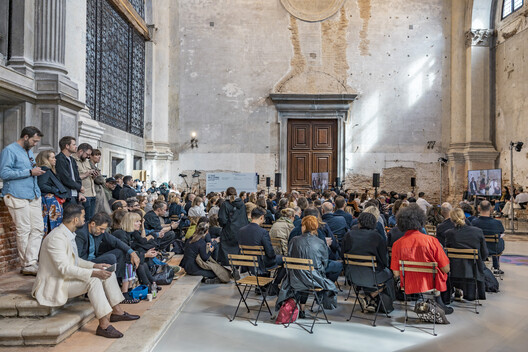
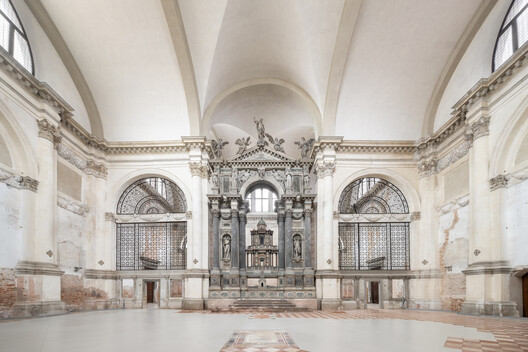
The critics joining the session are Christele Harrouk, Editor-in-Chief of ArchDaily; Federica Zambeletti, Founder and Managing Director of Koozarch; and Amit Gupta, Founder and Editor-in-Chief of STIR. They will be joined by José Pablo Ambrosi, Co-founder of Taller Capital; Tatiana Bilbao, Founder of Tatiana Bilbao Estudio; Gabriela Carrillo, Founder of Taller Gabriela Carrillo and Co-Founder of Colectivo c733; Loreta Castro, Co-founder of Taller Capital; Alejandro Echeverri, Architect and Distinguished Professor in Urbanism at TEC Monterrey; Margarita Jover, Co-founder of Aldayjover; Rahul Mehrotra, Founder Principal of RMA Architects of Mumbai and Boston; Kate Orff, Founder of SCAPE Studio; Mauricio Pezo, Co-founder of Pezo von Ellrichshausen; and Gustavo Utrabo, Founder of Estúdio Gustavo Utrabo
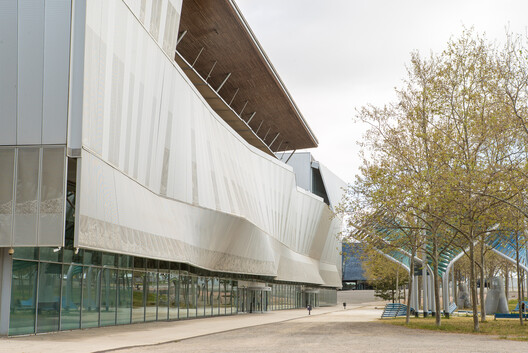
The session will also be attended by award directors, including Farrokh Derakhshani, Director of the Aga Khan Award for Architecture; Marleen van Driel, Director of Ammodo Architecture; Ivan Blasi, Director of the EUMies Awards; Laura Viscovich, Executive Director of the Holcim Foundation for Sustainable Construction; Dirk Denison, Director of the Mies Crown Hall Americas Prize; and Jesper Eis Eriksen, Executive Director of the OBEL Award. Hosted by the UIA, "Beyond Recognition: Exploring the Role of Architectural Awards" will take place on June 29, 15:00–16:20, at the Barcelona International Convention Centre (CCIB), as part of the Congress program under the theme Becoming: Architectures for a Planet in Transition.
At a time when the built environment must radically rethink how it uses resources, architecture awards help spotlight new models of practice rooted in collaboration — both with local communities and across the wider value chain that enables innovative projects to come to life — Laura Viscovich, Executive Director, Holcim Foundation for Sustainable Construction
In accordance with this line of questioning, the International Union of Architects (UIA) and UN-Habitat recently announced the winners of the third cycle of the UIA 2030 Award. The biennial award recognizes built projects that make meaningful contributions to achieving the United Nations Sustainable Development Goals (SDGs). On UNESCO's International Day of Light, the Daylight Award announced its 2026 laureates: Japanese architects Momoyo Kaijima and Yoshiharu Tsukamoto of Atelier Bow-Wow were honored for demonstrating how daylight can shape shared spaces and everyday life, while marine biologists Brittany N. Zepernick, Steven W. Wilhelm, and R. Michael McKay were recognized for their research on aquatic microorganisms. On June 3, the Diriyah Biennale Foundation revealed the four architecture studios shortlisted for the 2027 AlMusalla Prize, an international competition that commissions the design of a musalla for the third edition of the Islamic Arts Biennale.
This article is sponsored by VELUX, a global leader in daylight and ventilation solutions, and official partner of both the UIA 2026 World Congress of Architects and Barcelona 2026 World Capital of Architecture. As part of ArchDaily's coverage of the UIA 2026 World Congress of Architects, this series explores topics related to the Congress's curatorial theme, 'Becoming. Architectures for a Planet in Transition.'
At the Congress, VELUX will introduce Re:Living, an approach initiative exploring how existing buildings can be transformed from degenerative structures into regenerative catalysts for human and planetary health, positioning renovation as a critical pathway for addressing the interconnected climate, housing, health, and affordability challenges facing Europe.


