Architecture of Belonging: Vision Pakistan in Islamabad by DB Studios

Subscriber Access | 

For DB Studios, architecture is not only about building, but about belonging. It is about creating a situated practice, one that responds to its context, its people, and its local identity, expressed through materials, color, and spatial decisions. In this sense, design becomes a way of articulating a language rooted in its context and shaped by the people it serves.

Jahad Metro Plaza in Tehran: Reclaiming Infrastructure as Civic Space

Subscriber Access | 

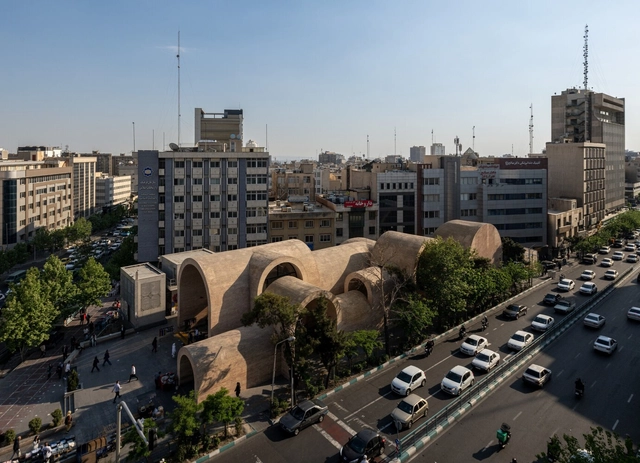
In Iran's capital, Tehran, movement defines the city. Each day, millions navigate a landscape shaped by highways, traffic corridors, and dense urban blocks. Over decades of rapid expansion, infrastructure has become the dominant language of development. Streets prioritize vehicles, sidewalks function as narrow conduits, and many public spaces operate primarily as passages rather than places of gathering. Across parts of West Asia, ongoing conflict has also reshaped the region's urban landscapes, where significant architectural environments have been damaged or transformed. Within this broader context, the preservation and creation of everyday civic space becomes increasingly meaningful. Recognized with the Aga Khan Award for Architecture, the Jahad Metro Plaza project, designed by KA Architecture Studio, demonstrates how modest infrastructural interventions can reshape the civic life of a city.

Women in Architecture: Progress, Gaps, and the Work Still Ahead

Each year, International Women's Day brings renewed attention to questions of gender within many professional fields, architecture among them. Public conversations often center on celebrating prominent figures or highlighting notable projects, moments that briefly illuminate the contributions of women within the discipline. Yet the visibility produced by these occasions sits within a longer and more complex trajectory. Over the past several decades, the architectural profession has undergone gradual shifts that have expanded opportunities and broadened participation, even as longstanding structures continue to shape how careers develop and how architectural work becomes visible.

Recasting Cultural Infrastructure: On AAU Anastas’s Aga Khan Award–Winning Wonder Cabinet

Subscriber Access | 

Among the 2025 Aga Khan Award winners is AAU Anastas and their project, Wonder Cabinet in Palestine, whose central aim is to serve as a haven for culture and creativity and a bridge between design and production. Beyond this meaningful project, AAU Anastas—working from offices in Bethlehem, Palestine, and Paris, France—has built a broad portfolio since 2015. Notable works include Dar Al Majous, a restoration in Bethlehem that challenges the boundary between domestic and public realms; the Tulkarm Courthouse (2015), one of their first projects that redefined civicness and social gathering on a prominent corner site in Tulkarm; and The Flat Vault, a commercial intervention that adds a juxtaposed stone vault to an existing monastery shop associated with a church built in the 12th century by the Crusaders.

Khudi Bari: Architecture for Climate Displacement

Subscriber Access | 

In the low-lying deltas of Bangladesh, water defines both life and loss. Every year, millions are forced to rebuild after floods wash away their homes, crops, and livelihoods. In these precarious territories, the act of building has become an act of resilience. It is here that Khudi Bari emerges as a modest yet radical proposal. Designed by Marina Tabassum Architects, the project provides a lightweight, modular, and affordable dwelling for communities displaced by climate change. Recognized as one of the winners of the 2025 Aga Khan Award for Architecture, it represents a form of architecture that empowers rather than imposes.

Abdelwahed El-Wakil Receives the 2025 Tamayouz Lifetime Achievement Award

Egyptian architect Abdelwahed El-Wakil has been named the recipient of the 2025 Tamayouz Lifetime Achievement Award. The recognition was announced during the Tamayouz Excellence Award Ceremony in Baghdad, held as part of the inaugural Arab Architecture Festival. The recognition highlights his contributions to the revival of traditional Islamic architecture, as well as his contributions as a researcher, educator, and mentor whose work has influenced generations of architects across the region and beyond.

Beyond Disaster Relief: The Evolution of Super-Adobe Into Permanent Structures in Hormuz, Iran

Subscriber Access | 

Hormuz Island, located in Iran, was a strategically significant port in the Persian Gulf, characterized by its landscape of colorful mountains. Despite its tourist appeal, the island faces significant socio-economic problems, with the local population having historically faced economic hardship. In response, the Majara Complex by ZAV Architects was conceived not merely as a building but as a deliberate architectural intervention designed to give control, opportunity, and economic benefit directly to the local community. To do this, the project channeled investment into local human resources and prioritized accessible construction techniques, creating a pathway for localized wealth creation. This allowed the Majara Complex to be one of the recipients of the Aga Khan Award for Architecture in 2025.

A Model for Community-Led Heritage Preservation: Esna's Aga Khan Award-Winning Revitalisation

Subscriber Access | 

Among the seven winners of this year's 16th Aga Khan Award for Architecture was the Revitalisation of Historic Esna in southern Egypt. Led by the Cairo-based firm Takween, the project was far more than a simple restoration. It was a comprehensive renewal effort that combined deep community engagement with the preservation of both tangible and intangible heritage. By creating thousands of jobs and restoring the historic center, the initiative offered a powerful alternative to demolition. The Aga Khan Trust lauded it as a 'replicable model for sustainable development'.

"To Emerge Naturally from the Site": Zhang Pengju on His Aga Khan Award-Winning West Wusutu Village

Subscriber Access | 

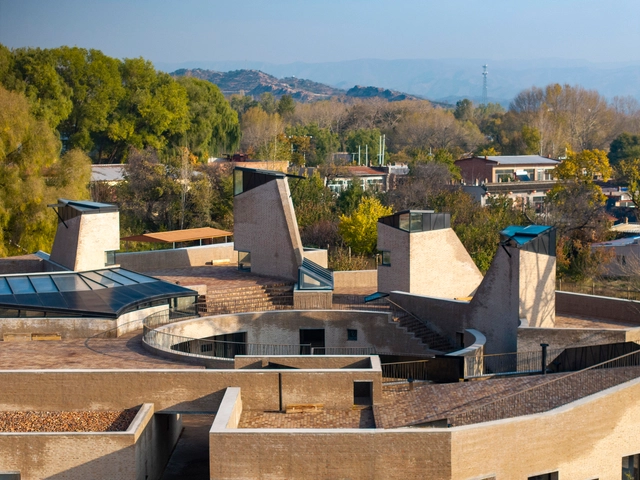
The 2025 Aga Khan Award for Architecture, one of the most prestigious honors in the field, celebrates projects that not only exhibit architectural excellence but also profoundly improve the quality of life for their communities. Among this year's winners is the West Wusutu Village Community Centre, a project in Hohhot, Inner Mongolia, by Chinese architect Zhang Pengju. In an era when rural areas often face social fragmentation and a loss of identity, this community center offers a powerful counter-narrative.

“Our Message This Time Was Optimism”: In Conversation with Farrokh Derakhshani, Director of the Aga Khan Award for Architecture

Today, September 2, the seven winners of the 16th Cycle (2023–2025) of the Aga Khan Award for Architecture were announced, following on-site reviews of the 19 shortlisted projects revealed in June. Established in 1977, the Award seeks to identify and encourage building concepts that respond to the physical, social, and economic needs of communities with a significant Muslim presence, while also addressing their cultural aspirations. To understand the vision behind this cycle's winners, ArchDaily's Editor-in-Chief, Christele Harrouk, spoke with Farrokh Derakhshani, who has been with the award for over four decades. He described the initiative as "a curated message to the world," a message that evolves with the times.

Aga Khan Award for Architecture Announces 2025 Winners

The independent Master Jury of the 16th Award Cycle (2023–2025) of the Aga Khan Award for Architecture has announced seven winners, selected following on-site reviews of projects shortlisted earlier in June. Collectively, the awarded works demonstrate architecture's potential to act as a catalyst for pluralism, community resilience, social transformation, cultural dialogue, and climate-responsive design. Two projects from Iran, and one each from Bangladesh, China, Egypt, Pakistan, and Palestine, will share a prize of $1 million, among the most significant awards in the field of architecture.

Aga Khan Award for Architecture 2025 Announces 19 Shortlisted Projects from 15 Countries

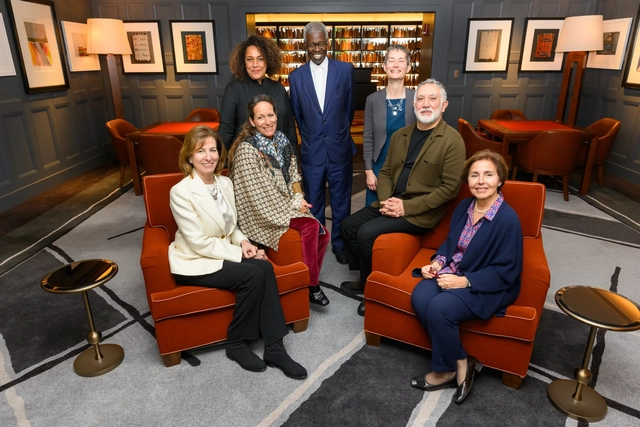
The Aga Khan Award for Architecture (AKAA) has announced the 19 shortlisted projects for its 2025 cycle. Selected from a pool of 369 nominations, these projects will compete for a share of the USD 1 million prize, one of the most significant awards in the field. The shortlist was determined by an independent Master Jury composed of nine members: Azra Akšamija, Noura Al Sayeh-Holtrop, Lucia Allais, David Basulto, Yvonne Farrell, Kabage Karanja, Yacouba Konaté, Hassan Radoine, and Mun Summ Wong. The Jury will meet later this summer to review on-site evaluations and select the final recipients of the 16th Award Cycle (2023–2025).

Do We Still Need Architecture Awards? Highlights from the "Beyond the Prize" Discussion Forum in Venice, Italy

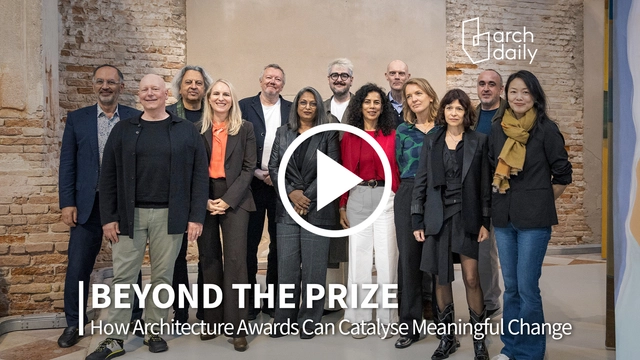
During the opening week of the 19th Venice Architecture Biennale, a consortium of six major architecture awards, including the Aga Khan Award for Architecture, the Holcim Foundation Awards, the EUmies Awards, the Mies Crown Hall Americas Prize, the OBEL Award, and the Ammodo Architecture Award, convened at TBA21–Academy's Ocean Space for a critical discussion titled "Beyond the Prize." This forum aimed to reflect on the role, relevance, and future potential of architecture awards amidst pressing social and environmental challenges. ArchDaily attended the public event and took the opportunity to ask the participants: What would the field of architecture look like if we stopped organizing architecture awards?

Beyond the Prize: Set in Venice, a New Discussion Forum Explores the Meaningful Impact of Architecture Awards

A moderated discussion hosted by the Aga Khan Award for Architecture, the Holcim Foundation Awards, the EUmies Awards, the Mies Crown Hall Americas Prize, the OBEL Award, and the Ammodo Architecture Award will take place in Venice during the opening week of the 19th Architecture Biennale. This consortium of six architecture awards, alongside international architects associated with the prizes, will gather on Friday, May 9, 2025, at TBA21–Academy's Ocean Space to discuss the overarching impact of architecture awards and their potential to promote meaningful change. Titled "Beyond the Prize," the event aims to critically reflect on these awards' purpose, trajectory, and potential in the face of contemporary social and environmental challenges.

Aga Khan Award for Architecture Announces Master Jury for the 2025 Edition

The Aga Khan Award for Architecture has announced the Master Jury for the 16th award cycle. The independent panel includes Pritzker Prize laureate Yvonne Farrell, ArchDaily founder David Basulto, and Lucia Allais, director of the Buell Center. Established in 1977 by Aga Khan IV, this competition set out to highlight architectural projects that have a significant positive impact on Islamic communities worldwide. The Award is presented in three-year cycles and has a monetary prize totaling US$1 million.

"The Site is the Architect, the Site is Materiality": On Ammar Khammash and Notes on Formation

Subscriber Access | 

Ammar Khammash is a Jordanian architect, designer, and artist best known for his approach that focuses on the preservation of cultural and natural heritage while crafting an architecture that engages with its surroundings. With deep admiration for nature and its ecosystems, Khammash trusts that "the site is the architect”, a statement for which he is renowned that underscores the profound influence of context on his architectural design. With over three decades of experience spanning various disciplines and across several Middle Eastern countries such as Jordan, Oman, Palestine, Egypt, Syria, and the UAE, Ammar Khammash has consistently attempted to preserve and enhance the symbiosis between human constructions and the natural environment. His contributions include the Royal Academy for Nature Conservation, the Wild Jordan Center, and the restoration of the Church of Apostles.

Aga Khan Award for Architecture Announces 2023-2025 Cycle Steering Committee Members

Last night, the Aga Khan Award for Architecture announced the constitution of its new Steering Committee for the 2023-2025 cycle. Composed of 5 primary jurors, this selection plays a pivotal role in the governance of the world-renowned award. Initially established in 1988, the award is internationally recognized as a leading award celebrating architecture projects that set a new standard of excellence in various practices, including architecture, planning practices, historic preservation, and landscape architecture. The award is also most known for its emphasis on applauding projects that use local resources and respect the contextual surroundings.

ASA North Presents "Remembrance of Things Present" Exhibition in Tehran, Iran

In 2020, Ahmadreza Schricker (ASA North) completed the Argo Contemporary Art Museum & Cultural Center design. Previously a 1920s beer distillery in the heart of Tehran, it has now been converted into a contemporary art center and is now the new home of the Pejman Foundation. ASA North is a studio based in Tehran that was chosen by ArchDaily as part of the 2023 New Practices. ArchDaily selects those practicing within the broadest definition of architecture and its exercise to share their innovative, fresh, and forward-thinking mission with the community. In the summer of 2023, the foundation hosted an exhibition featuring selected works from ASA North while documenting the transformation of the Argo Factory. The exhibition explored the studio’s practice, developing a commentary on their projects and their self-awareness.