

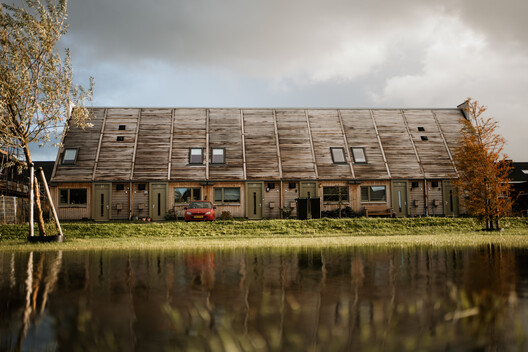
Netherlands-based, nature-inspired architecture practice ORGA has completed the design of a carbon-negative neighborhood in Marknesse, a village in the Dutch province of Flevoland. The project comprises 12 affordable rental homes built with a high percentage of biobased materials. Its main objective is to develop scalable housing solutions that minimize CO₂ emissions and reduce reliance on fossil resources. The design reinterprets the traditional Dutch brick house, known as the "Delft Red" typology, characterized by red brick facades and orange-red roof tiles, while introducing wooden chimneys that double as habitats for bats. Commissioned by housing association Mercatus, the prototype was built in the first half of 2025 and is intended for first-time buyers and low-income households.
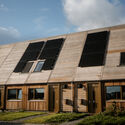
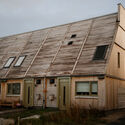
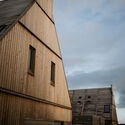
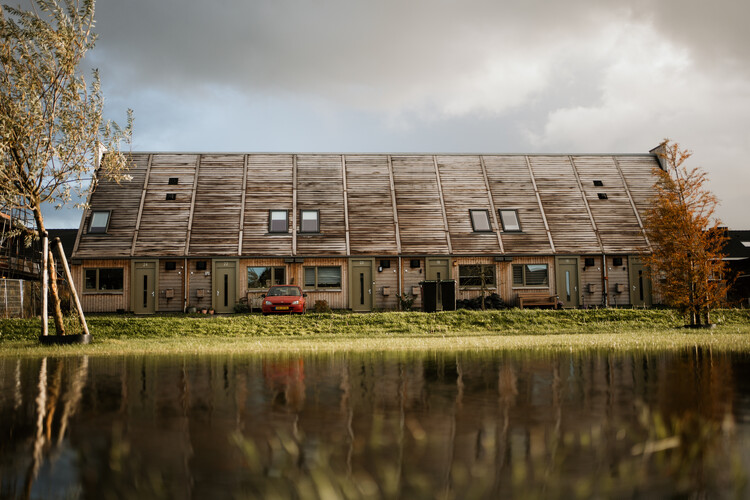
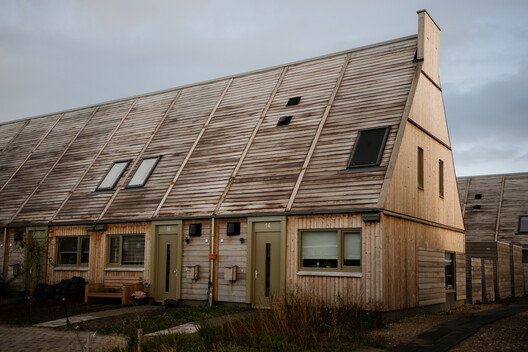
ORGA's project offers a biobased reinterpretation of the area's traditional architecture, referred to as "Delft Red" due to its characteristic materials and colors. The architectural approach rethinks this typology by incorporating circular design principles, aiming not only to deliver affordable housing but also to establish a replicable model for other neighborhoods. From a cultural heritage perspective, the design includes wooden "chimneys" on the end gables as a contemporary nod to tradition, housing bat nests instead of flues. At the same time, the project responds to current demands by proposing a model for social housing constructed with natural materials. It is supported by a broader framework of documentation, systematization, and knowledge-sharing, with the ultimate goal of setting a new standard for biobased construction in the sector.
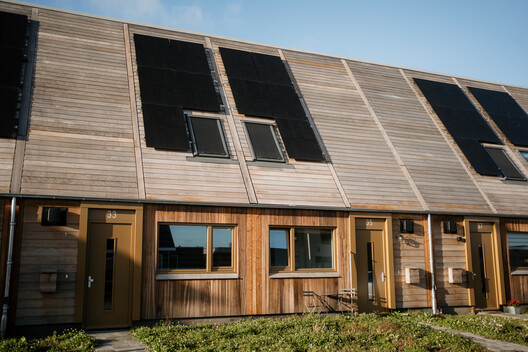
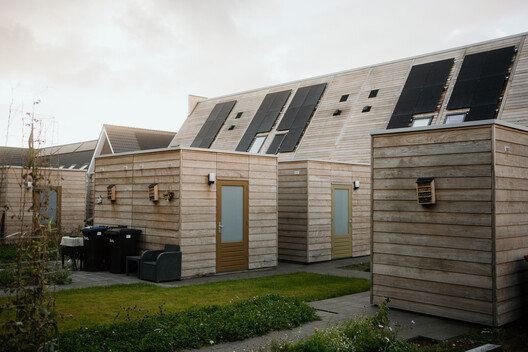
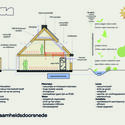
From a technical standpoint, the project achieves a notably high share of renewable and circular raw materials, reaching 76%. Only the foundations are made of concrete, while the entire above-ground structure is composed primarily of natural materials, aside from essential components such as glass and fasteners. The architects selected a timber-frame construction system with natural insulation materials like wood fiber. Unlike conventional timber-frame construction, the project adopts a completely foil-free and vapor-permeable approach, allowing for more natural regulation of indoor humidity and overall comfort. The timber elements are prefabricated and efficiently assembled on-site, reducing construction time and environmental impact.
Related Article
Designing with Living Matter: 5 Installations Using Bio-Based Materials and Digital FabricationThe material lifecycle was considered not only in sourcing but across the building's full lifespan. The project includes a Madaster dossier, an online repository within the Madaster platform, that stores the building's Material Passport, along with related documents and circularity data. These records specify the precise location of materials within the building, enabling owners to track, reuse, and assess their future financial and circular value. The dossier also supports applications for MIA subsidies for circular and biobased construction. Residents are provided with clear user manuals to help maintain the sustainability of their homes, and the knowledge gained is shared with other housing associations. Additionally, leftover materials and cutting waste from the wooden façades were repurposed into mailboxes at a Salvation Army social workshop.
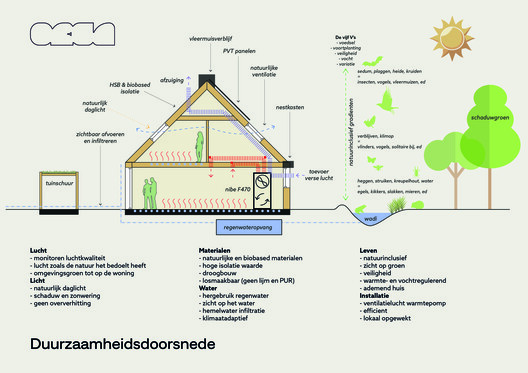
The project's success also lies in demonstrating that biobased construction can remain affordable for housing associations. Evidence from the project shows that prefabricated timber construction enables faster building times, lighter structures, and reduced failure costs compared to conventional methods. Improved insulation enhances energy efficiency, lowering housing costs over the medium and long term. Furthermore, collaboration with local stakeholders, facilitated by the project's scale, supports the regional economy. Other recent developments in sustainable construction and urban design include MVRDV obtaining a construction permit for the low-carbon Tour & Taxis Towers in Brussels, pedestrianization initiatives transforming cities such as London, New York, Houston, and Stockholm, and the opening of a new urban farm and rewilded landscapes at Parc de la Villette in Paris.


