1. ArchDaily
  2. Decarbonization

Decarbonization: The Latest Architecture and News

ORGA Completes Carbon-Negative Biobased Housing Prototype in Marknesse, Netherlands

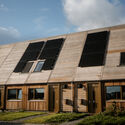
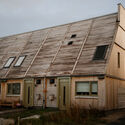
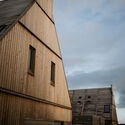
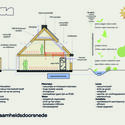
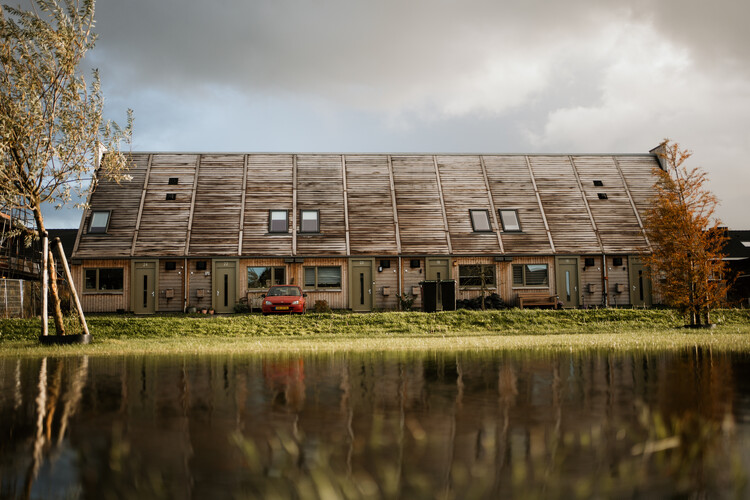
Netherlands-based, nature-inspired architecture practice ORGA has completed the design of a carbon-negative neighborhood in Marknesse, a village in the Dutch province of Flevoland. The project comprises 12 affordable rental homes built with a high percentage of biobased materials. Its main objective is to develop scalable housing solutions that minimize CO₂ emissions and reduce reliance on fossil resources. The design reinterprets the traditional Dutch brick house, known as the "Delft Red" typology, characterized by red brick facades and orange-red roof tiles, while introducing wooden chimneys that double as habitats for bats. Commissioned by housing association Mercatus, the prototype was built in the first half of 2025 and is intended for first-time buyers and low-income households.

ORGA Completes Carbon-Negative Biobased Housing Prototype in Marknesse, Netherlands - Image 1 of 4ORGA Completes Carbon-Negative Biobased Housing Prototype in Marknesse, Netherlands - Image 2 of 4ORGA Completes Carbon-Negative Biobased Housing Prototype in Marknesse, Netherlands - Image 3 of 4ORGA Completes Carbon-Negative Biobased Housing Prototype in Marknesse, Netherlands - Image 4 of 4ORGA Completes Carbon-Negative Biobased Housing Prototype in Marknesse, Netherlands - More Images+ 6

Henning Larsen Launches OpenDetail as Digital Platforms Expand Carbon-Focused Tools for the Built Environment

As the building industry continues to account for a significant share of global carbon emissions, digital platforms are increasingly being developed to support carbon reduction across different stages of the design and construction process. These initiatives range from material-focused knowledge databases to project life-cycle guidance and early-stage embodied carbon assessment tools. While differing in scope and methodology, they commonly aim to improve access to technical knowledge, clarify responsibilities across the value chain, and facilitate more informed decision-making in the built environment. Recently, Henning Larsen launched OpenDetail, joining related efforts by Grimshaw and MVRDV to address decarbonization through shared digital infrastructure.

Henning Larsen Launches OpenDetail as Digital Platforms Expand Carbon-Focused Tools for the Built Environment - Image 1 of 4Henning Larsen Launches OpenDetail as Digital Platforms Expand Carbon-Focused Tools for the Built Environment - Image 2 of 4Henning Larsen Launches OpenDetail as Digital Platforms Expand Carbon-Focused Tools for the Built Environment - Image 3 of 4Henning Larsen Launches OpenDetail as Digital Platforms Expand Carbon-Focused Tools for the Built Environment - Image 4 of 4Henning Larsen Launches OpenDetail as Digital Platforms Expand Carbon-Focused Tools for the Built Environment - More Images+ 10

September Editorial Topic: Architecture Without Limits

Architects today work across many worlds: from designing furniture, landscapes, and urban blocks to creating film sets, photographs, and videos. They restore and retrofit old buildings rather than build anew, while also writing, researching, and publishing. Some design virtual spaces for video games or speculate on habitats in outer space and underwater. Others engage directly with society through politics, activism, or community projects. Many experiment with biology, test new materials, and step into the role of scientist. Architects are decolonizing old narratives and decarbonizing the construction industry, and by weaving together personal passions with pressing social and environmental challenges, they are pushing the limits of the profession and expanding its scope.

With so many changes in the profession, especially in recent years, one may ask: How is the role of the architect evolving in response to global crises and shifting societal needs? In what ways can interdisciplinarity expand the scope and impact of architectural practice? And what skills beyond traditional design are becoming essential for architects in today's world?

The Barcelona Method: How Climate Data is Saving Historic Architecture from Carbon Stranding

Subscriber Access | 

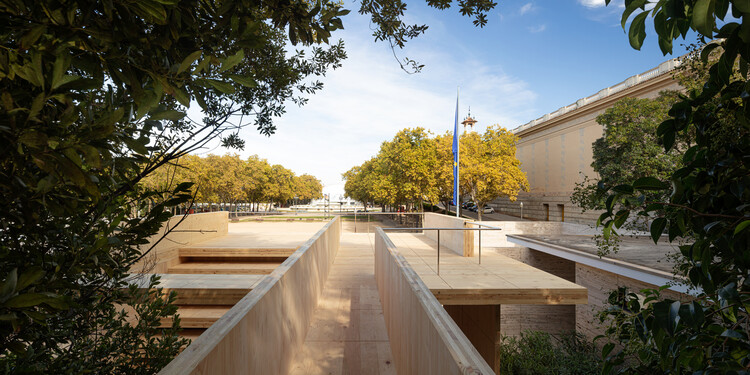
In heritage districts from Prague to Paris, a countdown has begun. Years until countless architectural treasures become, quite literally, worthless. Not through the slow erosion of time or the erratic shifts of cultural taste, but through the inevitable mathematics of atmospheric chemistry. In UrbanDecarbonisation: Destranding Cities for a Post-fossil Future, Paolo Cresci, Francesca Galeazzi, and Aurel von Richthofen introduce the concept of "carbon stranding", a scenario in which buildings become financially non-viable due to tightening carbon regulations. This threatens to render entire heritage districts financially extinct before they reach their centennials.

The Barcelona Method: How Climate Data is Saving Historic Architecture from Carbon Stranding - Image 1 of 4The Barcelona Method: How Climate Data is Saving Historic Architecture from Carbon Stranding - Image 2 of 4The Barcelona Method: How Climate Data is Saving Historic Architecture from Carbon Stranding - Image 3 of 4The Barcelona Method: How Climate Data is Saving Historic Architecture from Carbon Stranding - Image 4 of 4The Barcelona Method: How Climate Data is Saving Historic Architecture from Carbon Stranding - More Images+ 3

Buildner and Kingspan Announce the Eighth Edition of the MICROHOME Competition with a 100,000 EUR Prize Fund

 | Sponsored Content

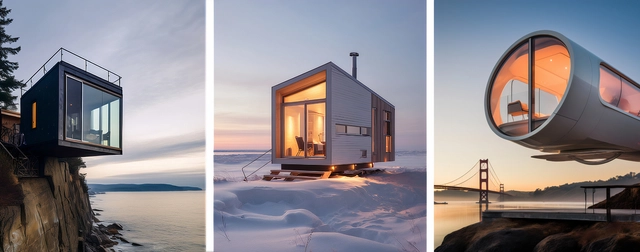
The MICROHOME 2025 Competition by Buildner is back, offering a record-breaking 100,000 EUR prize fund to celebrate cutting-edge, sustainable solutions for compact housing. Sponsored by Kingspan, this global competition invites architects, designers, and creative thinkers to redefine the concept of microhomes.

Register before the deadline on 13 February 2025.

Modular Factory Construction: Discover iHouse Estudio's Projects in Uruguay

Subscriber Access | 

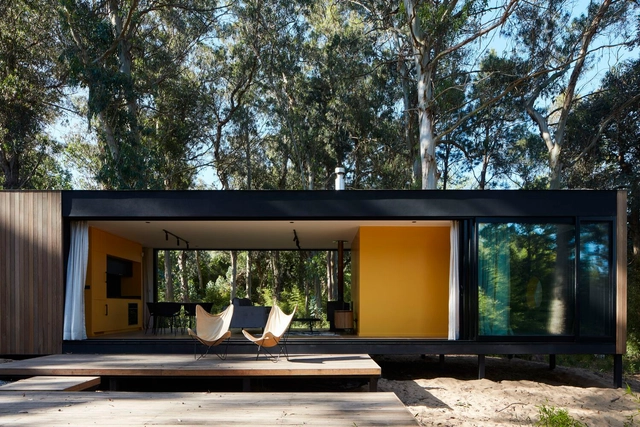
Emphasizing the enhancement of the landscape in a respectful and environmentally friendly manner, the creative and architectural process of iHouse estudio, an architecture firm based in Montevideo, Uruguay, proposes a way of living in contact with nature by integrating an industrialized construction system. With the development of a sustainable design, their objective is to contribute to environmental preservation. Additionally, by reducing energy consumption, efficiently utilizing natural resources, and properly managing water, they aim to promote the health and well-being of the inhabitants, offering significant tangible benefits in their daily lives.

Modular Factory Construction: Discover iHouse Estudio's Projects in Uruguay - Image 1 of 4Modular Factory Construction: Discover iHouse Estudio's Projects in Uruguay - Image 2 of 4Modular Factory Construction: Discover iHouse Estudio's Projects in Uruguay - Image 3 of 4Modular Factory Construction: Discover iHouse Estudio's Projects in Uruguay - Image 4 of 4Modular Factory Construction: Discover iHouse Estudio's Projects in Uruguay - More Images+ 14

Courtyards, Gardens, and Terraces for Seniors: Residences that Integrate Community Life into the Natural Environment

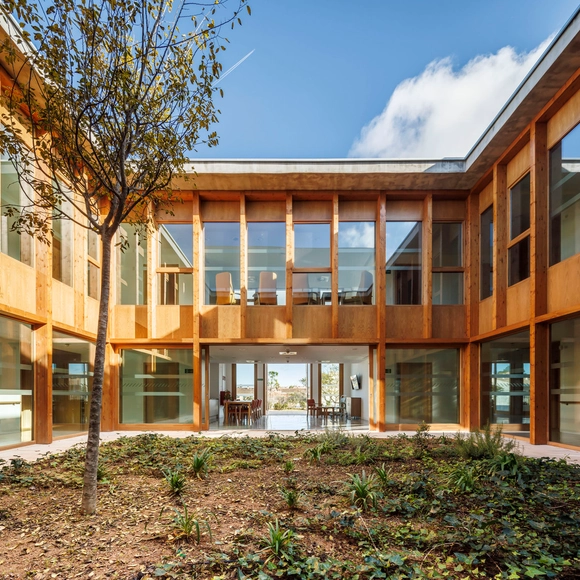
Faced with the aging of the global population, one of the most significant social transformations of the 21st century is anticipated. The design of patios, gardens, terraces, and other green areas in facilities for the elderly presents an opportunity to foster interaction, participation in various collective activities, and the establishment of gathering spaces aimed at reducing loneliness among older adults while enhancing well-being and social interaction in connection with nature. How can built environments be created to adapt to the needs of older adults?

Courtyards, Gardens, and Terraces for Seniors: Residences that Integrate Community Life into the Natural Environment - Image 1 of 4Courtyards, Gardens, and Terraces for Seniors: Residences that Integrate Community Life into the Natural Environment - Image 2 of 4Courtyards, Gardens, and Terraces for Seniors: Residences that Integrate Community Life into the Natural Environment - Image 3 of 4Courtyards, Gardens, and Terraces for Seniors: Residences that Integrate Community Life into the Natural Environment - Image 4 of 4Courtyards, Gardens, and Terraces for Seniors: Residences that Integrate Community Life into the Natural Environment - More Images+ 21

"Embodied Carbon Declared" Platform Exposes CO2 Emissions in Sweden's Construction Industry

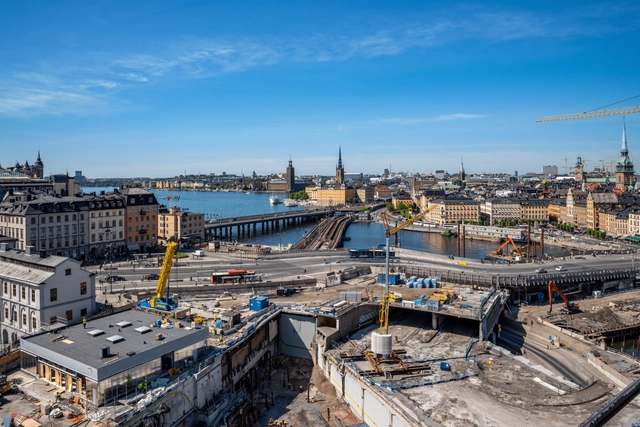
ACAN Sweden, in collaboration with Differ Agency, has launched "Embodied Carbon Declared," an online platform that actively reveals CO2 emissions data from new construction projects across Sweden. The platform categorizes and presents emissions data in four key areas: Projects, Municipalities, Developers, and Building Types. It provides detailed measurements both in total and per square meter, offering an advanced level of transparency in the construction industry.

"Embodied Carbon Declared" Platform Exposes CO2 Emissions in Sweden's Construction Industry - Image 1 of 4"Embodied Carbon Declared" Platform Exposes CO2 Emissions in Sweden's Construction Industry - Image 2 of 4"Embodied Carbon Declared" Platform Exposes CO2 Emissions in Sweden's Construction Industry - Image 3 of 4"Embodied Carbon Declared" Platform Exposes CO2 Emissions in Sweden's Construction Industry - Image 4 of 4Embodied Carbon Declared Platform Exposes CO2 Emissions in Sweden's Construction Industry - More Images

Is Mass Timber the Key Element in a Low Carbon Future?

This article was originally published on Common Edge.

Chinese temples have stood for centuries, battered by wind and earthquakes, without a crack or timber out of place. They employ an ancient technique called “bracket set construction” that requires no nails or metal parts to connect wooden structural elements. Scandinavian stave churches are nearly as durable. Unsurprisingly, there are plenty of trees in Sweden and all over China.

So what is with the hype about innovation in “mass timber” construction over the past few years? As Boyce Thompson argues in his thoughtful new book, Innovations in Mass Timber: Sequestering Carbon with Style in Commercial Buildings (Schiffer Publishing), this will be the next big thing in “green” tech for architects feeling guilty about their costly titanium skins and outsized carbon footprints. The color photos show some impressive buildings in places where the wood industry has always been healthy, such as the Pacific Northwest and Scandinavia. The Japanese build log cabins with imported material that might as well be gold.

Is Mass Timber the Key Element in a Low Carbon Future? - Image 1 of 4Is Mass Timber the Key Element in a Low Carbon Future? - Image 2 of 4Is Mass Timber the Key Element in a Low Carbon Future? - Image 3 of 4Is Mass Timber the Key Element in a Low Carbon Future? - Image 5 of 4Is Mass Timber the Key Element in a Low Carbon Future? - More Images+ 1

Harvesting Architecture: A Glimpse Into 3 Plant-Based Materials

Subscriber Access | 

For decades, our society has predominantly embraced an extractivist approach when formulating models for material manufacturing across diverse industries. While we now know that this model is unsustainable, a major question remains: So, how do we do it? We may be a while away from offering a definitive answer to this challenge. Still, it is exciting to note that, in a context marked by a challenging global and ecological horizon, the architectural community maintains a positive approach by pushing for a re-evaluation of what we make and how we make it.

This momentum may be gaining relevance due to the emergence of new, more environmentally conscious generations, such as Gen Z and Alpha. What is certain is that we are witnessing the development of new production philosophies, such as plant-based materials, which adopt practices aimed at favoring the use of resources derived from plants, reducing dependence on extractive processes, and promoting conscious and sustainable alternatives in various aspects of the manufacture and production of materials in architecture.

How Landscape Architects are Taking on Embodied Carbon

Landscape architects have started conversations about embodied carbon. There is a realization that we can no longer ignore the grey parts,” said Stephanie Carlisle, Senior Researcher, Carbon Leadership Forum and the University of Washington, during the first in a series of webinars organized by the ASLA Biodiversity and Climate Action Committee.

The grey parts are concrete, steel, and other manufactured products in projects. And the conversations happening are laying the foundation for a shift away from using these materials. The landscape architect climate leaders driving these conversations are offering practical ways to decarbonize projects and specify low-carbon materials.

How Landscape Architects are Taking on Embodied Carbon - Image 1 of 4How Landscape Architects are Taking on Embodied Carbon - Image 2 of 4How Landscape Architects are Taking on Embodied Carbon - Image 5 of 4How Landscape Architects are Taking on Embodied Carbon - Image 3 of 4How Landscape Architects are Taking on Embodied Carbon - More Images+ 1

UNStudio Designs Hybrid Building in Luxembourg for a Reduced Carbon Footprint

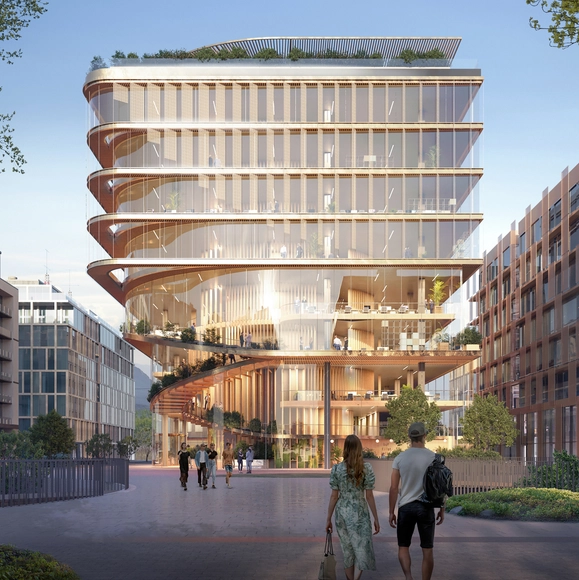
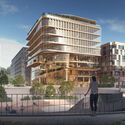
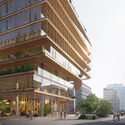
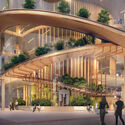
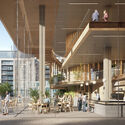
UNStudio, in collaboration with local partner HYP Architects, has won the competition for the design of the Kyklos building in Luxembourg. The project is part of Beval, a large-scale redevelopment initiative aiming to transform a former industrial site into an urban center complete with a university and technological center, in addition to residential, office, and retail spaces. When designing the Kyklos building, which will occupy a central position in the district's main square, the architects set out to find solutions to create the smallest carbon footprint for both operational and embedded metrics.

UNStudio Designs Hybrid Building in Luxembourg for a Reduced Carbon Footprint - Image 1 of 4UNStudio Designs Hybrid Building in Luxembourg for a Reduced Carbon Footprint - Image 2 of 4UNStudio Designs Hybrid Building in Luxembourg for a Reduced Carbon Footprint - Image 3 of 4UNStudio Designs Hybrid Building in Luxembourg for a Reduced Carbon Footprint - Image 4 of 4UNStudio Designs Hybrid Building in Luxembourg for a Reduced Carbon Footprint - More Images

Unites States Plans to Create A Nationwide Definition for Zero Emissions Buildings

In an effort to find effective strategies to mitigate the adverse effects of climate change, the Biden-Harris administration has released a draft of a new legislative initiative that strives to impose a National Definition for Zero Emissions Buildings. Overseen by the U.S. Department of Energy (DOE), the draft proposes a standardized and verifiable base for defining the common minimum conditions for such buildings, as well as pathways for transparent verifications by public and private entities. DOE has now launched a ‘request for information' asking for feedback from industry, academia, research laboratories, and other stakeholders before finalizing the document.

Unites States Plans to Create A Nationwide Definition for Zero Emissions Buildings - Image 1 of 4Unites States Plans to Create A Nationwide Definition for Zero Emissions Buildings - Image 2 of 4Unites States Plans to Create A Nationwide Definition for Zero Emissions Buildings - Image 3 of 4Unites States Plans to Create A Nationwide Definition for Zero Emissions Buildings - Image 4 of 4Unites States Plans to Create A Nationwide Definition for Zero Emissions Buildings - More Images+ 1

“Champion of Equity and Inclusion” Lesley Lokko Receives the 2024 RIBA Royal Gold Medal

Ghanaian-Scottish architect, academic, and curator Lesley Lokko has been announced as the recipient of the 2024 Royal Gold Medal by the Royal Institute of British Architects (RIBA), becoming the first African woman to receive the award. Lokko is not a practicing architect, but as a teacher, writer, and curator she has fought to widen access to the profession and to bring forward voices that have been disregarded for far too long. As the curator of the 2023 Venice Architecture Biennale, she has shifted the focus to Africa and its diaspora, exploring the complex themes of decolonization and decarbonization. For all her contributions to the profession, Lesley Lokko will be formally presented with the medal in May 2024 by Muyiwa Oki, RIBA’s first black president.

“Champion of Equity and Inclusion” Lesley Lokko Receives the 2024 RIBA Royal Gold Medal - Image 1 of 4“Champion of Equity and Inclusion” Lesley Lokko Receives the 2024 RIBA Royal Gold Medal - Image 2 of 4“Champion of Equity and Inclusion” Lesley Lokko Receives the 2024 RIBA Royal Gold Medal - Image 3 of 4“Champion of Equity and Inclusion” Lesley Lokko Receives the 2024 RIBA Royal Gold Medal - Image 4 of 4“Champion of Equity and Inclusion” Lesley Lokko Receives the 2024 RIBA Royal Gold Medal - More Images

From Agro-Waste to Decarbonization: The Innovative Materials Featured in 2023

Innovative materials play a crucial role in shaping the future of architecture. They offer not only novel ways to craft buildings but also sustainable and efficient solutions to address pressing environmental challenges. Architects and designers are now more than ever exploring and integrating innovative materials into their projects. By harnessing the unique properties of these materials, they create structures with new visual languages while also being environmentally friendly.

As part of our year-in-review, we reflect on the innovative materials that were featured. These materials delved into the concepts of recycling agro-waste, adapting bio-based products, transforming local materials, and decarbonizing concrete. The objective was not only to offer alternatives to traditional construction practices but also to help reduce carbon emissions and promote a more sustainable built environment. In this dynamic field, these materials demonstrate the potential to revolutionize building design and construction in diverse contexts, paving the way for a more sustainable and resilient future.

From Agro-Waste to Decarbonization: The Innovative Materials Featured in 2023  - Image 1 of 4From Agro-Waste to Decarbonization: The Innovative Materials Featured in 2023  - Image 2 of 4From Agro-Waste to Decarbonization: The Innovative Materials Featured in 2023  - Image 3 of 4From Agro-Waste to Decarbonization: The Innovative Materials Featured in 2023  - Image 4 of 4From Agro-Waste to Decarbonization: The Innovative Materials Featured in 2023  - More Images+ 5

Navigating COP28: Key Takeaways for Architects from the Dubai Summit

COP28, or the 2023 United Nations Conference of the Parties, was held in Dubai between November 30 and December 13. The annual meeting gathers representatives from 198 countries, as well as industry leaders to discuss and establish strategies to limit the extent of climate change and its adverse effects. The ultimate goal of these meetings is to find ways to limit the global temperature rise below 1.5 degrees Celsius compared to pre-industrial times. At the moment, the global temperature rise is already at 1.2 degrees Celsius. As the construction industry at large accounts for 39% of global emissions, architects and planners have a shared interest in the results of thee international summit, Read on to discover some of the key takeaways of COP28.

Navigating COP28: Key Takeaways for Architects from the Dubai Summit - Image 1 of 4Navigating COP28: Key Takeaways for Architects from the Dubai Summit - Image 2 of 4Navigating COP28: Key Takeaways for Architects from the Dubai Summit - Image 3 of 4Navigating COP28: Key Takeaways for Architects from the Dubai Summit - Image 4 of 4Navigating COP28: Key Takeaways for Architects from the Dubai Summit - More Images+ 5

8 Architectural Opinions of 2023 (for Enhanced Eco-Efficiency in Construction)

If the past few years were a perfect occasion for reflecting and debating on well-being, digitalization, and democratization in architectural design, this 2023 has been a tremendous opportunity to delve deeper and comment on other urgent topics: The climate crisis and the natural environment have unquestionably entered the global agenda of architecture and construction, alongside circularity, energy efficiency, and decarbonization. It's time to engage in dialogue about these matters to conscientiously build for the future.

Reviewing the future of wood, water, and lighting, in each of the related topics that ArchDaily developed month by month, we posed an open question for you - our dear readers - to actively contribute with your experiences and knowledge. After reading and compiling an immense amount of received messages, from construction professionals to students and architecture enthusiasts, it's time to present you with a summary of the main perspectives. Many thanks for your opinions, and we look forward to your comments for 2024!

A Look Back at the 18th Venice Architecture Biennale, the First to be Focused on the Culture of Africa

The 18th International Architecture Exhibition of La Biennale di Venezia closed on November 26th. A total of 285,000 people visited the exhibition, making it the second most highly attended Architecture Biennale in its history. Named "The Laboratory of the Future," this edition led by curator Lesley Lokko, has been the first to focus on Africa and its diaspora, exploring the “fluid and enmeshed culture of people of African descent that now straddles the globe,” in the words of the curator, with themes of decolonization and decarbonization.

This edition has attracted a wide array of visitors, 38% of whom are represented by students and young people. Visitors organized in groups represented 23% of the overall public, with a large majority of groups coming from schools and universities. The numbers denote an event centered on the transmission of knowledge and circulation of ideas.

A Look Back at the 18th Venice Architecture Biennale, the First to be Focused on the Culture of Africa - Image 1 of 4A Look Back at the 18th Venice Architecture Biennale, the First to be Focused on the Culture of Africa - Image 2 of 4A Look Back at the 18th Venice Architecture Biennale, the First to be Focused on the Culture of Africa - Image 3 of 4A Look Back at the 18th Venice Architecture Biennale, the First to be Focused on the Culture of Africa - Image 4 of 4A Look Back at the 18th Venice Architecture Biennale, the First to be Focused on the Culture of Africa - More Images+ 3