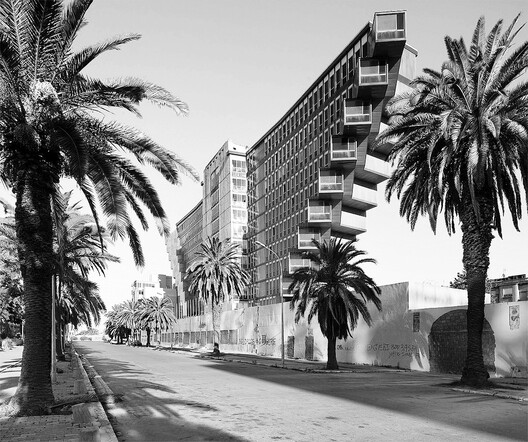
The Sharjah Architecture Triennial (SAT) has released the full documentary films from A Journey into Architecture Archives: Baghdad, Damascus, Tunis online. Curated by George Arbid, the project is part of SAT's long-term research program focused on documenting and safeguarding architectural archives across the Arab world. The three films, filmed on location in Baghdad, Damascus, and Tunis, combine archival research with fieldwork and oral histories, examining how architectural histories are constructed, preserved, and revisited over time.
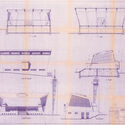
The 2026 iteration building on the 2023 edition, A Journey into Architecture Archives: Beirut, Cairo, Rabat, the project continues to expand its geographic and institutional scope while maintaining a focus on knowledge production rooted in local contexts. The broader initiative seeks to contribute to a shared archival infrastructure by connecting dispersed collections and fostering collaboration between researchers, institutions, and independent practitioners. This second iteration reflects an ongoing effort to map architectural histories from within the region, positioning archives as active sites of inquiry rather than static repositories.
Directed by George Arbid and commissioned by SAT, the three films feature contributions from architects, archivists, residents, and historians. Through archival research, fieldwork, and oral histories, they frame the archive as a dynamic and evolving medium that continues to shape how architecture is understood, remembered, and reinterpreted.
Related Article
Sharjah Architecture Triennial 2026 Announces Theme to Rethink Civic Infrastructure for Collective FuturesResponding to ongoing political and material instability across parts of the region, the 2026 iteration took the form of 'Collection Room,' an exhibition presented at the Al Qasimiyah School from May 2 to July 12, 2026. This reflects an evolving curatorial methodology that moves away from conventional exhibition display toward a more sustained and research-oriented engagement with archival material. The approach also foregrounds the precarious condition of architectural archives in the region, many of which remain fragmented, under-documented, or at risk of loss, while emphasizing their importance as repositories of collective memory and architectural knowledge.
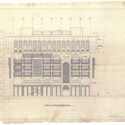
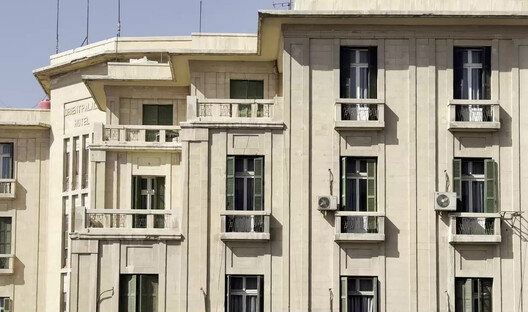
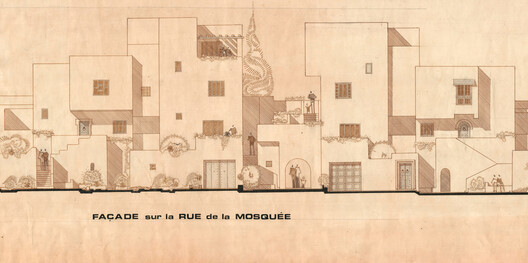
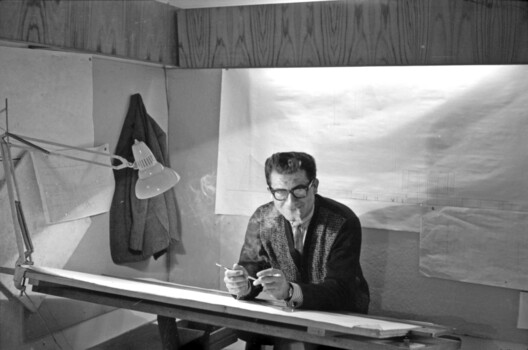
Focusing on Baghdad, Damascus, and Tunis, the exhibition displayed drawings, documents, photographs, and models, primarily dating from the 1930s to the 1980s. The materials, sourced from both private collections and institutional archives, reflect a period marked by civic ambition, experimentation, and predominantly hand-drawn design processes. Pen-and-ink drawings, textured paper documents, and newly produced 3D-printed models highlight the tactile qualities of architectural production while revealing how projects were conceived, developed, and communicated.
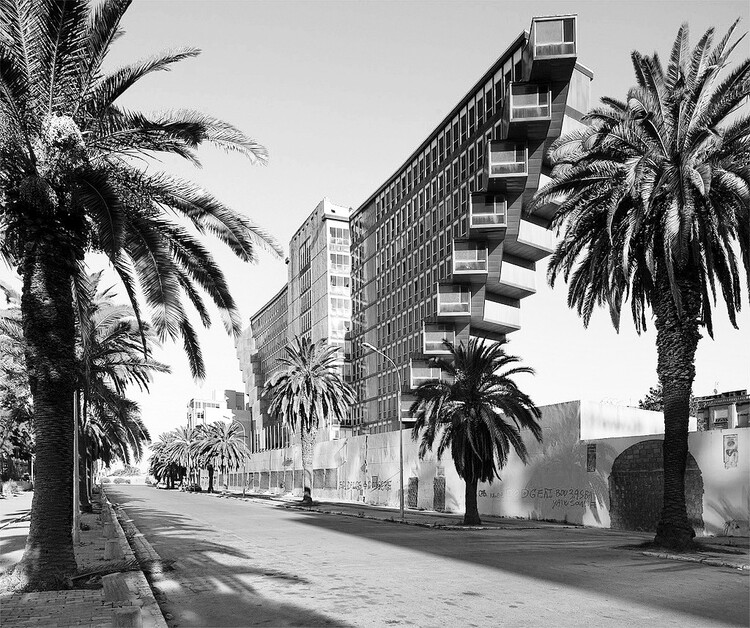
The selected works document realized buildings alongside projects that were altered, demolished, or never constructed, presenting them as part of a continuous architectural narrative. Among the materials were records of the Hôtel du Lac in Tunis by Raffaele Contigiani, currently subject to preservation debates, as well as modernist civic projects in Baghdad, such as the Mayoralty Building by Hisham Munir, developed following a 1978 competition. Documentation of experimental cinema structures in Damascus further reflects the diversity of architectural production, while also pointing to the broader socio-political and economic conditions that shaped these trajectories.
This project has a long-term vision of contributing to a comprehensive and accessible architectural archive for the region. It fosters education, research, and personal discovery, offering a layered understanding of the past, present, and possible futures of the built environment across these three cities. In moments of conflict, our role extends beyond presenting history to caring for the stories we hold. It is great that this archive is preserved, but more importantly, it should be used. — George Arbid, curator, architect, and founding director of the Arab Center for Architecture in Beirut
The project also included a public program marking its opening on May 2, during which Arbid delivered an online lecture followed by a panel discussion and Q&A connecting contributors from across the region. Participants included Salma Gharbi, Zaid Issam, Ahmad Salah, and Ola Seif, who reflected on the challenges and methodologies involved in working with architectural archives. The program formed part of SAT's broader effort to support research, foster dialogue, and ensure the continued accessibility and activation of architectural archives in the Arab world.
Through its multi-scalar approach, the project reinforces the Sharjah Architecture Triennial's broader agenda of advancing research and dialogue on architectural heritage, while resonating with other recent developments across the region. Initiatives such as the Deir ez-Zor Heritage Library in eastern Syria highlight ongoing efforts focused on documentation, preservation, and reconstruction in contexts shaped by conflict. At the same time, the impact of continued instability on cultural and everyday infrastructures has prompted renewed attention from organizations such as UNESCO, which continues to emphasize the protection of heritage under international frameworks.
Editor's Note: This article was originally published on April 21, 2026, and updated on September 18, 2026, to include the full-length films from A Journey into Architecture Archives: Baghdad, Damascus, Tunis.