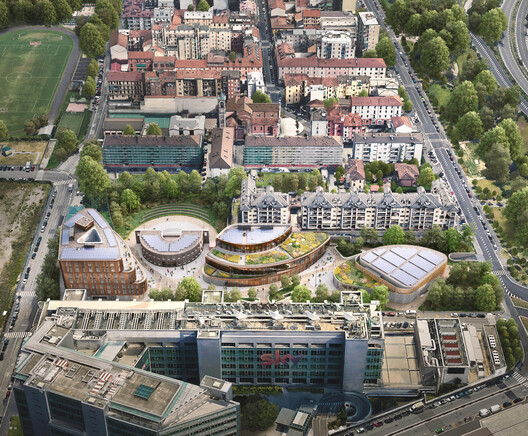
The architecture firm Settanta7 has begun the construction of Bosco della Musica, a new campus for the Conservatorio Giuseppe Verdi in Milan. The site is located in Rogoredo, a former industrial area in the southeastern part of the city, currently under scrutiny due to incidents of violence and public safety concerns. The area is therefore the focus of development initiatives by the Italian Ministry of Transport and Infrastructure, including the competition for this project, which was awarded to Settanta7 in 2022. The firm is responsible for the design and is overseeing the coordination of all disciplines as lead consultant for the construction of the entire project: a broader urban regeneration program that includes the redevelopment of the 17,400 sqm site and the adaptive reuse of the "Ex Chimici" industrial building, alongside the construction of four new buildings, three dedicated to educational activities and one intended for student housing.
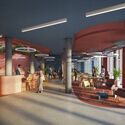
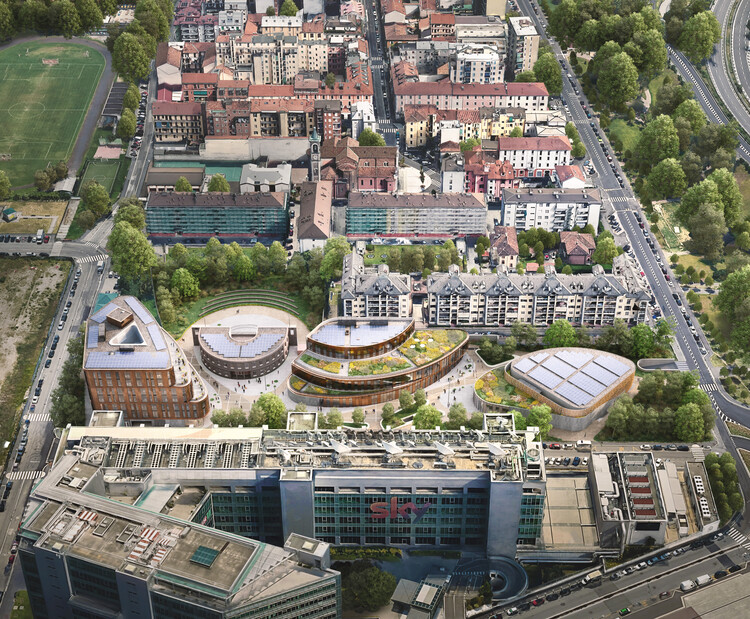
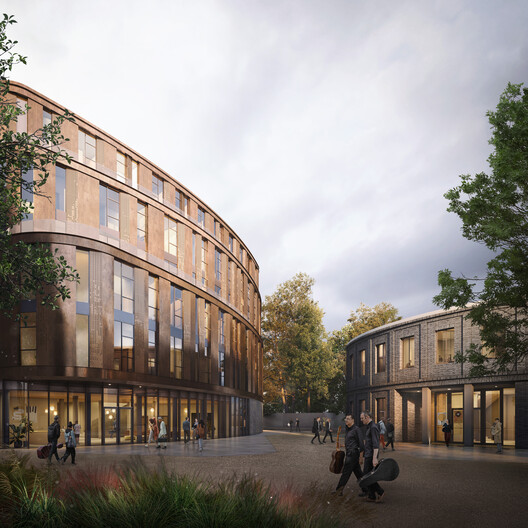
Rogoredo is a peripheral district of industrial origin, initially isolated from Milan's city center until the construction of the subway line in the 1980s. Today, the district is connected by railway and the M3 metro line and is undergoing real estate development, including the 110-hectare mixed-use Milano Santa Giulia project, expected to be completed in 2034. Despite these promising developments, the district has recently drawn attention due to complex social issues related to drug trafficking and use. The Conservatorio Giuseppe Verdi regeneration initiative emerges from this conflicted context, with the intention of embedding itself within the urban fabric while offering cultural and musical growth opportunities to all citizens. The regenerative aspect of the project thus has two dimensions: addressing a problem within the social fabric of the city, while also transforming an abandoned building from a past industrial era.
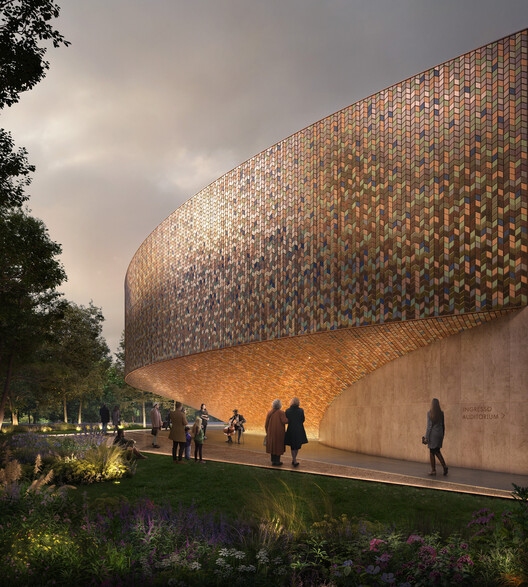
Settanta7's Bosco della Musica is an urban regeneration, adaptive reuse, and new cultural infrastructure project that has been under construction since December 2025. The Conservatory aims to offer Milan its first open campus in Italy, an "inclusive environment that promotes music as a driver of social cohesion," establishing a regeneration process centered on music and culture. The facilities will host music courses across rock, jazz, pop, and electronic genres, expanding the Conservatory's current academic program, while the historic headquarters in the city center will continue to focus on classical music. The project increases student capacity, includes engagement programs with local communities in Rogoredo and Santa Giulia, and introduces smart building technologies across the campus to sustainably support the complex's acoustic requirements while aligning with the district's focus on innovation.
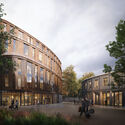
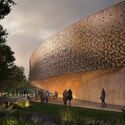
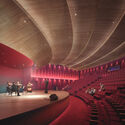
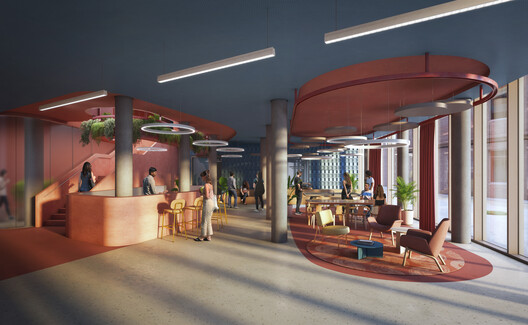
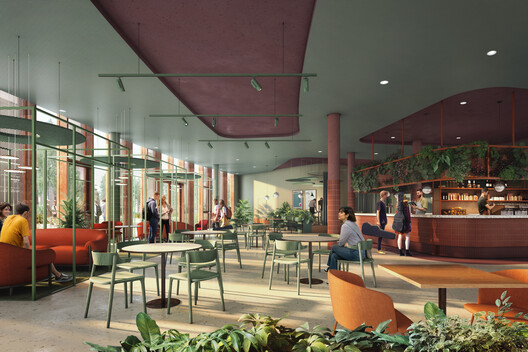
The project includes the refurbishment of the Ex Chimici building, a former chemical factory with a distinctive circular shape designed by Francesco Griffini and built in the 1940s. After the factory closed, the building housed the offices of several cooperatives and the Città 2000 company before being left to decay for more than 20 years. The refurbishment is expected to house the Conservatory's school of rock, pop, and jazz. The complex also includes three additional buildings: a 400-seat auditorium with façades clad in ceramic shingles in seven different color tones; a student residence with 200 beds; and a multifunctional building dedicated to electronic and experimental music, including a bar, restaurant, and shared spaces. Beyond these four buildings, the program for the former industrial site also includes an open-air concert arena, parking areas with electric vehicle charging stations, green roofs, and wildflower meadows.
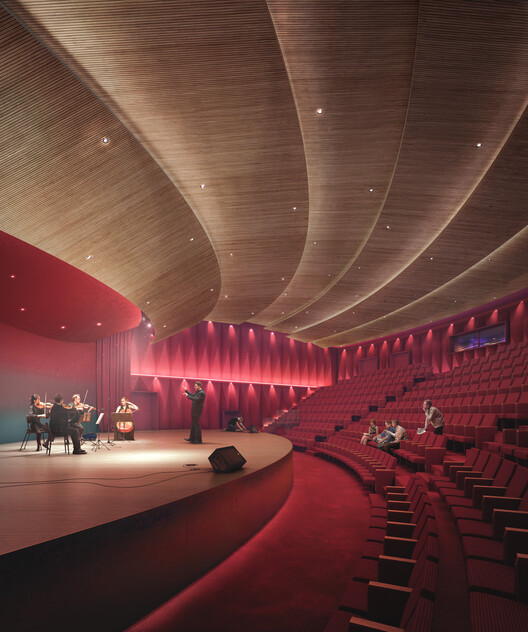
In the words of the architects, the design of the four distinct volumes is "inspired by the organic forms of a forest and the geometry of leaves," with each building evoking a different leaf type. The profiles are curvilinear, while circulation paths echo the movement of wind through continuous spatial sequences. All buildings rise vertically in a sequence of stepped terraces that function as common spaces. The building systems, engineered by STAIN Engineering, include a digital management system to optimize energy consumption in real time and minimize waste. The project also requires precise acoustic control, for which discreet and non-intrusive HVAC systems have been selected, integrating soundproofed fan coil units and radiant systems to provide thermal comfort without interfering with teaching and performance activities.
Other landmark projects from a bygone era of modernization are undergoing transformation worldwide. In London, Battersea Power Station recently announced the appointment of the strategic urban design practice Studio Egret West to evolve the original masterplan for the remaining 16 acres of its 42-acre riverside neighborhood, the site of the famous power station featured on the cover of Animals by Pink Floyd. Earlier this year, in Paris, Renzo Piano released the first images of the transformation of Montparnasse's emblematic shopping center and CIT Tower into a pedestrian-focused district. The tower is set to close on March 31 ahead of this major redevelopment. In Norwalk, United States, Manresa Island Corp. unveiled the final vision for Manresa Wilds, a 125-acre waterfront park planned on a former power plant peninsula along Long Island Sound, developed in collaboration with landscape architecture firm SCAPE and architecture studio BIG.


