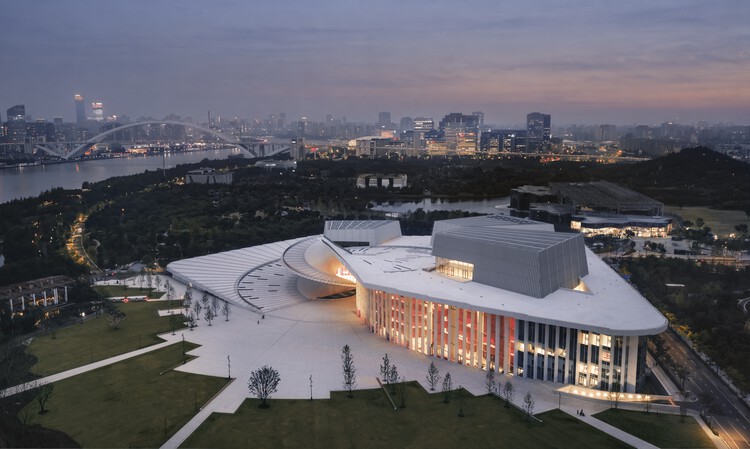
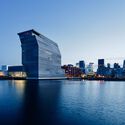
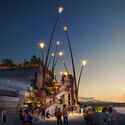
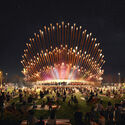
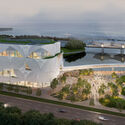
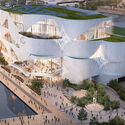
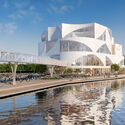
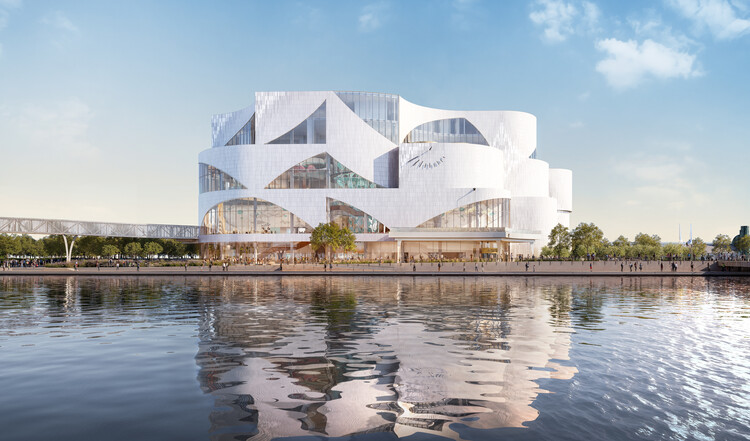
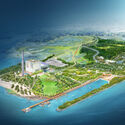
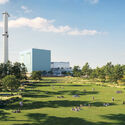
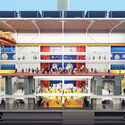
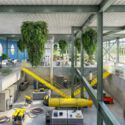
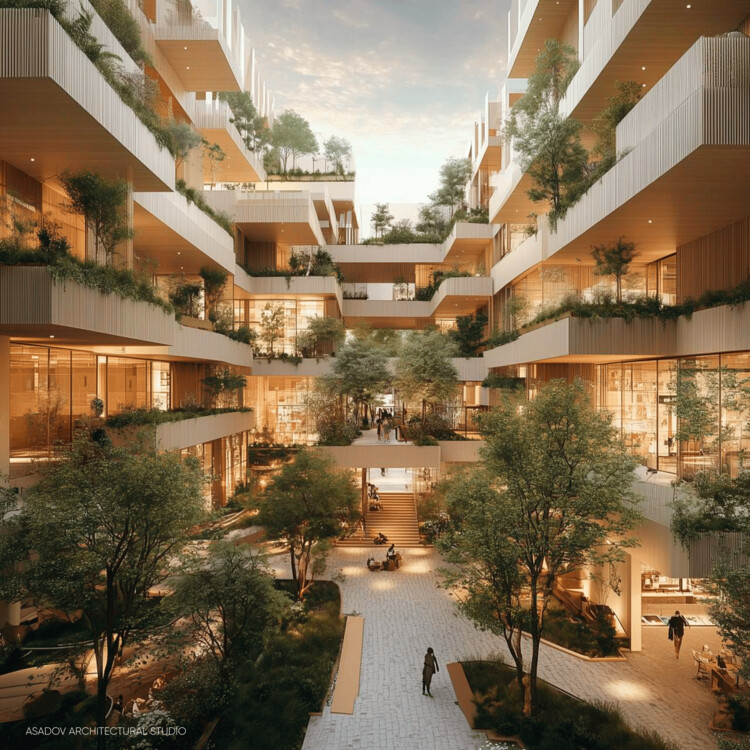
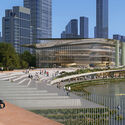
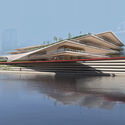
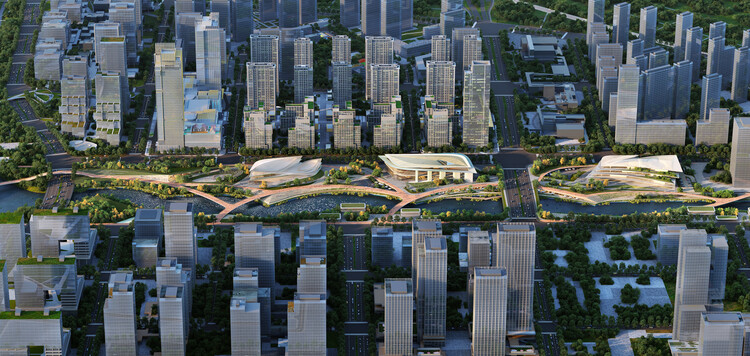
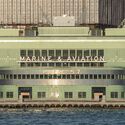
MAD, the architecture studio founded by Ma Yansong, has revealed the designs for Danshuis, a new dance center planned for Rotterdam, the Netherlands. Located on a landmark site in the city's historic docklands, adjacent to the Fenix Museum of Migration, also designed by MAD, the project is expected to open in 2030. The 9,500-square-meter center will transform an Art Deco warehouse dating from 1923 on the south bank of the River Maas. Planned as a center for the production, development, and practice of dance across different styles, Danshuis aims to bring together professional and amateur programs for different ages and levels of experience.
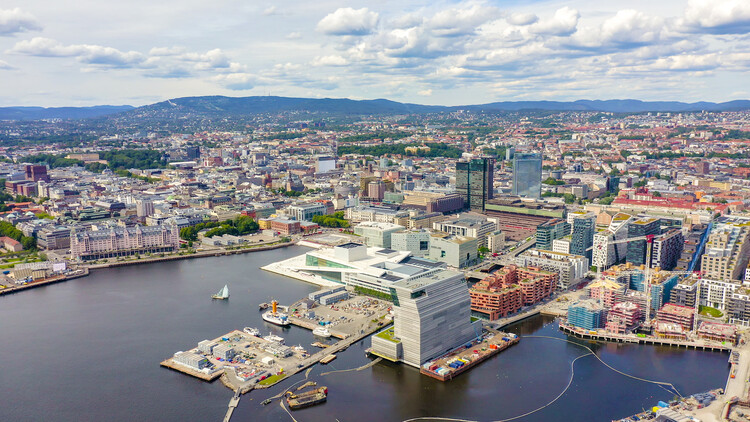
Oslo, Norway. Photo by Collection Maykova, via Shutterstock
Oslo is the capital of Norway as well as its largest city, serving as the country's political, economic, and cultural center. Nestled at the head of the Oslofjord and surrounded by forested hills, it's home to roughly 700,000 people in the city, with over a million living in the greater metropolitan area. Founded around a thousand years ago, Oslo has a long history as a trading post and administrative seat. However, much of its modern character was shaped after a major fire in the seventeenth century led to a full rebuilding under Danish rule, when it was briefly renamed Christiania. Today it consistently ranks among the world's most livable cities, prized for its blend of urban life and easy access to nature.
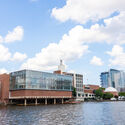
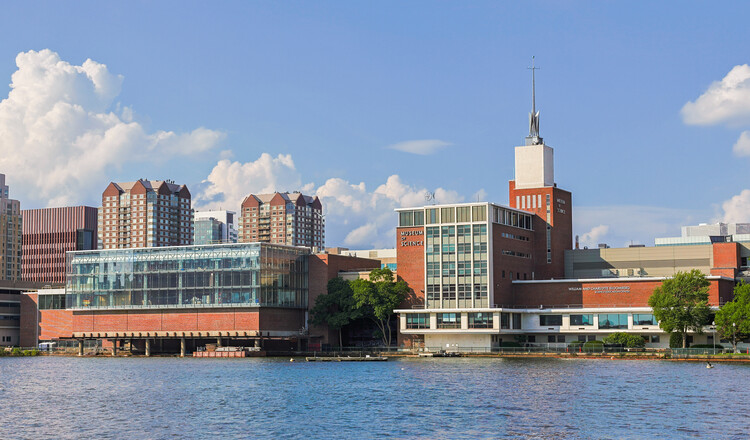
The construction of the William and Charlotte Bloomberg Public Science Common, the new venue at Boston's Museum of Science, one of the United States' oldest science institutions, is nearing completion. The 929 m² (10,000-square-foot) building, designed by William Rawn Associates, Architects, Inc., is expected to open to the public on October 10, 2026, followed by a celebratory event on October 28. The new glazed civic venue overlooks the Charles River with views of the Boston skyline, and features movable walls and retractable seating to shift between functions and programs. The space is designed to support public dialogue around the sciences, using immersive media, production, and livestreaming technology to reach audiences beyond the city.
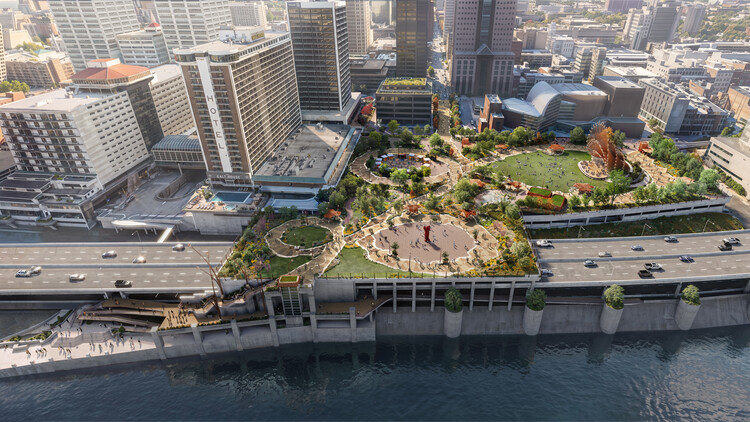
Louisville's Belvedere in Kentucky is a 53-year-old gathering place for concerts, festivals, and community events. The elevated concrete plaza was built on top of the city's largest parking structure and stands over a major highway overpass. Since 1973, it has functioned as a riverfront civic space for events and large gatherings, but its use as a casual public space is in evident decline. In its current state, the space lacks shade, greenery, and amenities, while the concrete deck has worn over the years. In February 2025, Heatherwick Studio unveiled the first images of its vision to transform the Belvedere, a project commissioned by the city's mayor and the Louisville Metro Government. This week, the firm released new images of the redesign as an open, green, and flexible space connected to downtown Louisville.
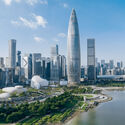
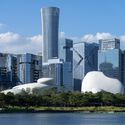
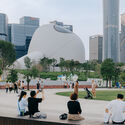
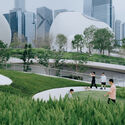
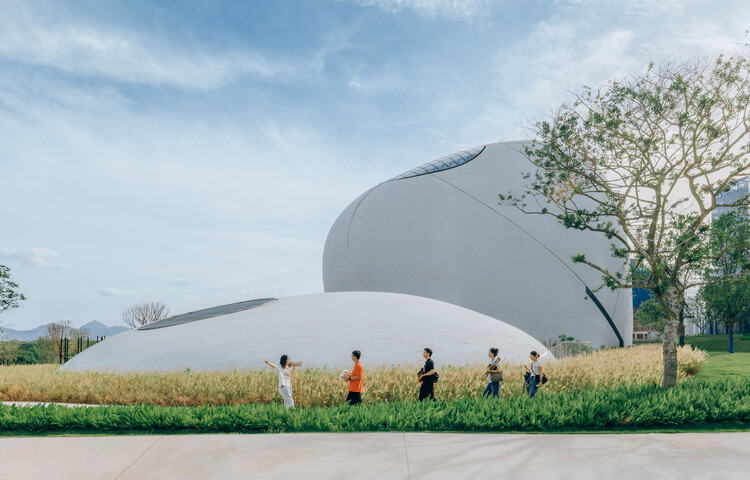
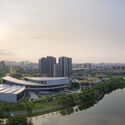
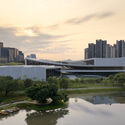
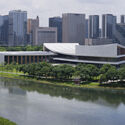
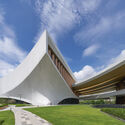
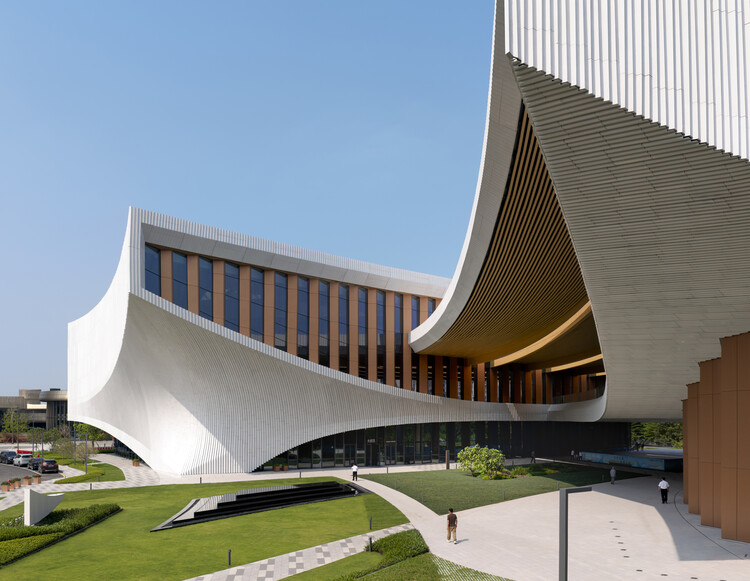
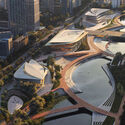
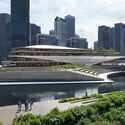
MAD / Ma Yansong's Shenzhen Bay Culture Square exhibition hall and park project began in 2018, with the project completed in 2020. The 188,000 m² building sits on a site area of approximately 51,000 m² along the city's waterfront, at the heart of Houhai, Nanshan District, the headquarters hub of Shenzhen's Greater Bay Area. The masterplan for the site, which includes the Creative Design Hall, the Shenzhen Science and Technology Museum, and a vast public green space, was announced by MAD in 2020 and was expected to be completed in 2023. After eight years, the project, led by Ma Yansong, Dang Qun, and Yosuke Hayano, is now complete and is intended to serve as a cultural facility for design and cultural exchange.
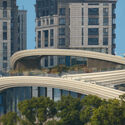
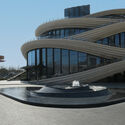
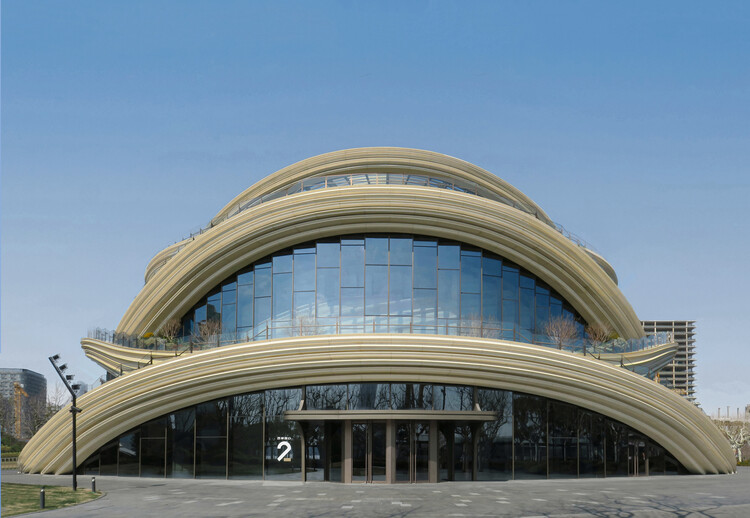
Photographer Paul Clemence has documented West Bund Orbit, Heatherwick Studio's public exhibition hall on Shanghai's West Bund waterfront, in a photo series exploring the project's evolving architectural identity. Located in Xuhui District along the Huangpu River, the building was conceived as a cultural destination within the area's emerging Financial Hub while extending the network of public spaces that define the redeveloped riverfront. Rather than focusing solely on the building as an object, Clemence's photographs examine the relationship between architecture, circulation, and landscape, revealing how the project's interconnected pathways and layered form engage both the waterfront and the surrounding city.
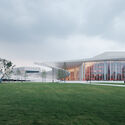
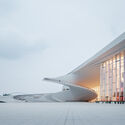
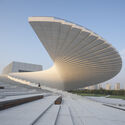
The Songshan Lake Exhibition and Performance Center, designed by ZHA in collaboration with the Beijing Institute of Architectural Design, is a new cultural and sports facility in Dongguan City, China. It's located in the city's High-Tech Industrial Development Zone, a technological innovation and science city established in 2001 as a hub for research, development, and high-tech manufacturing. Covering a total floor area of 45,000 square metres, the new cultural centre was designed to be a civic and cultural anchor for the Guangdong-Hong Kong-Macao Greater Bay Area (GBA). The construction of the riverside building started in 2021, and the complex was officially opened on March 30, 2026.
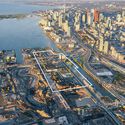
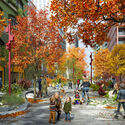
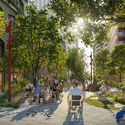
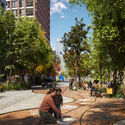
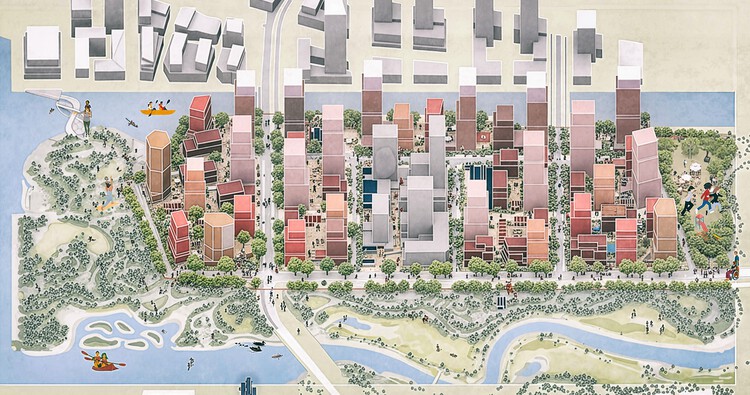
Landscape and urban design studio SLA has unveiled the design for the public realm and streetscapes of Toronto's new 39.8-hectare waterfront community. The urban landscape project "Ookwemin Minising" is located in the Port Lands, an industrial and recreational district southeast of downtown Toronto, currently undergoing urban revitalization to transform the area from a former industrial zone into a naturalized river valley, mixed-use neighbourhoods, and public parkland. The overall transformation is being led by Waterfront Toronto, a publicly funded, not-for-profit corporation established in 2001 to oversee the regeneration of the area, as part of a broader government initiative to renaturalize urban areas and increase housing density. The redevelopment of Ookwemin Minising is expected to be completed in phases between 2031 and 2040.
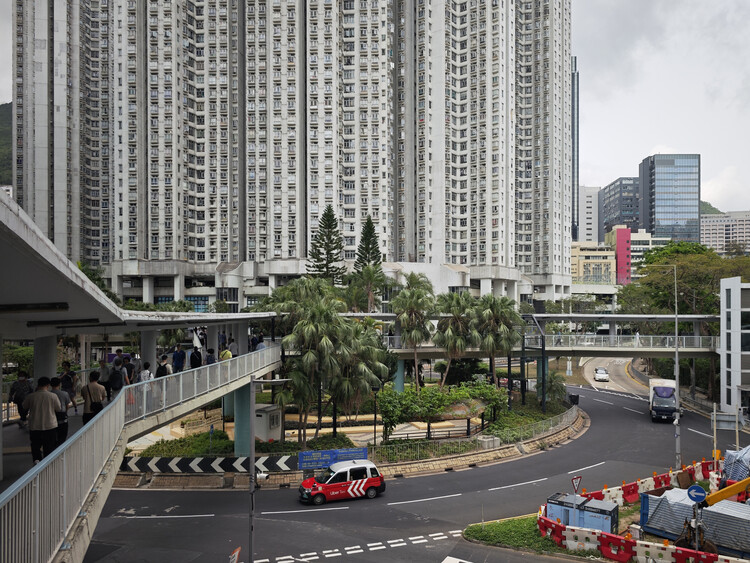
In 2012, Cities Without Ground: A Hong Kong Guidebook offered one of the clearest documentations of a condition that many residents experience intuitively but rarely name: Hong Kong's dependence on elevated, second-storey urbanism. Through drawings and careful mapping, the book captured how the city's pedestrian networks are routinely lifted above the street—separating people from traffic, extending commercial frontage beyond ground level, and negotiating a hilly topography where "flat" circulation is often an engineered achievement. Since its publication, these systems have only grown in prominence—not only for their sheer spatial complexity, but for the way they recast public space as something continuous yet selective, connective yet curated.
This fascination, however, has always carried a parallel unease. Elevated passages can be generous and effective, offering sheltered movement and reliable connectivity. Yet they also raise persistent questions: where do these routes lead, who gets to connect, and what kinds of programs are invited—or excluded—by this "privileged" level of circulation? The second-storey city does not simply bypass vehicles; it can also bypass the street as a civic stage. Over time, it risks shifting architectural attention away from ground-level public life, relieving designers from having to negotiate pedestrian scale, frontage, and the messy reciprocity of the street. In its worst moments, the result is a landscape of podium clusters and sealed megastructures—buildings that perform connectivity at Level 2 while remaining indifferent to the neighborhood at Level 0.
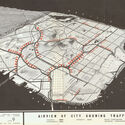
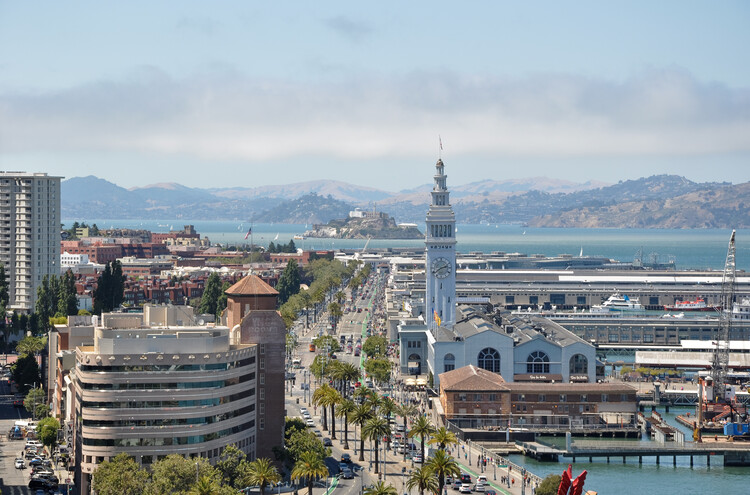
In recent decades, cities across the world have seen an increase in the demolition of elevated concrete freeways. Taipei, Seoul, Portland, and Boston, for example, have all seen the rise and fall of these infrastructures to give way to parks and new urban regeneration ideas. In other cases, like Montreal in Canada, some people opposed the freeways even before they were built, effectively rerouting viaducts, preserving heritage, and freeing waterfront views. For San Francisco, in the United States, the story of the Embarcadero Freeway is one of those narratives that serves as a case study of the city's mid-century infrastructural ambition, people's reaction to the project, and its eventual reversal in favor of urban connectivity.
Aerial view of the Port Vell area where Liceu Mar is set to be built. Image Courtesy of Gran Teatre del Liceu and Port de Barcelona
The city of Barcelona has announced the five finalist teams selected to advance in the international competition for Liceu Mar, a new cultural venue planned for the Port Vell waterfront. Promoted by the Gran Teatre del Liceu in collaboration with the Port of Barcelona, the project is conceived as a second venue for the historic institution, expanding its artistic and civic role while strengthening its international presence. Bringing together a group of internationally recognized and locally rooted practices, the shortlist underscores the project's global relevance, with the winning proposal expected to be announced in autumn 2026.
Set along the outer breakwater of Port de Cap-d'Ail, located next to Monaco, the Beach House occupies a threshold between land and sea. Surrounded by water and docked boats, the building sits in close dialogue with the harbor, exposed to the shifting light, reflections, and atmosphere of the Mediterranean. Within this setting, the house reads almost like another vessel moored along the harbor wall.
When architect Dave Rowles began work on the project, however, the residence offered little of this character internally. The former private home had been stripped back almost entirely, leaving a raw concrete shell. The renovation, therefore, began with a fundamental question: how can an interior capture the qualities of its surroundings? Rather than competing with the powerful maritime context, the design focused on creating a calm, material-driven interior that frames and amplifies the beauty and experience of the surrounding landscape crafted from oak, cedar, marble, and stainless steel details. In collaboration with barth, a company specializing in interior craftsmanship, Rowles transformed the concrete structure into a cohesive interior, where natural materials, light, and refined detailing define both the interior and exterior spaces.
Ontario Science Centre Exterior South View. Image Courtesy of Snøhetta and Hariri Pontarini Architects
Hariri Pontarini Architects and Snøhetta have been selected to design the new Ontario Science Centre in Toronto. Announced in February 2026, the 400,000-square-foot facility will anchor the site's ongoing transformation through a 220,000-square-foot building defined by a series of scalloped, modular volumes. A central component of the proposal is the physical integration of the existing Pods and the historic Cinesphere via elevated connections and a continuous public promenade. Construction is expected to begin in Spring 2026, with completion anticipated in 2029 as part of a broader waterfrontredevelopment strategy.
Manresa Wilds Zoomed Aerial. Image Courtesy of BIG
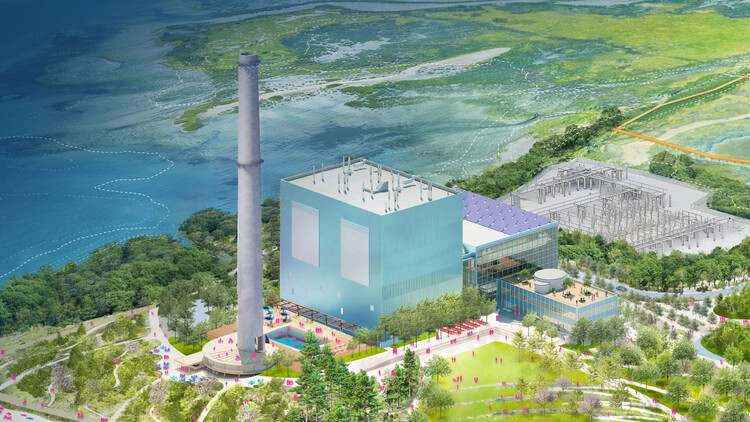
ManresaIsland Corp. has unveiled the final vision for Manresa Wilds, a 125-acre waterfront park planned on a former power plant peninsula along Long Island Sound in Norwalk, United States. Developed in collaboration with landscape architecture firm SCAPE and architecture studioBIG, the proposal outlines the transformation of a polluted and long-inaccessible industrial shoreline into a publicly accessible coastal landscape. Following the receipt of a stewardship permit from Connecticut's Department of Energy and Environmental Protection in December 2025, the project will move forward in phases, beginning with the opening of the 28-acre Northern Forest in spring 2027. Subsequent phases, extending into the early 2030s, will deliver the majority of the restored landscape and the adaptive reuse of the 1960s-era power plant as a year-round civic and educational hub, opening nearly two miles of coastline that have been closed to the public for decades.
Urban masterplans remain an exploratory ground for unbuilt speculation, offering insight into how cities might recalibrate mobility, ecology, and collective life in response to accelerating environmental and social pressures. In this Unbuilt edition, submitted by the ArchDaily community, the selected projects bring together a range of large-scale proposals that examine urban centers, waterfront districts, infrastructural corridors, and cultural landscapes as spatial frameworks for reconnection and resilience. Rather than treating the masterplan as a rigid blueprint, these projects approach urbanism as an adaptive system shaped by climate, topography, infrastructure, and public space.
Across varied geographies, from Northern European town centers and Mediterranean coastal districts to Central Asian polycentric hubs and Gulf megacities, the proposals explore diverse architectural and urban strategies. They range from park-led civic transformations built over highway tunnels to elevated pedestrian networks above active transport systems, mixed-use blocks structured by historic planning logics, marina developments integrating environmental stewardship, and research-driven models for equitable landscape urbanization.
Zaha Hadid Architects has released images of its design for the redevelopment of the waterfront along the Zhedong Canal in Hangzhou's Xiaoshan District, China. The Qiantang Bay Central Water Axis project envisions a sequence of landscaped parklands, terraces, and gardens along the canal basin, proposing the transformation of former industrial areas into a green corridor extending toward the city center. The proposal adds to other recent design initiatives in the area, including Snøhetta's Qiantang Bay Art Museum, planned at the confluence of the Qiantang River and the Central Water Axis, as well as Zaha Hadid Architects' Grand Canal Gateway Bridge, a pedestrian bridge intended to connect the firm's 800,000-square-meter Seamless City masterplan on the east and west banks of the Grand Canal.
Coastal development in major cities has long been a terrain of opportunity and contention—shaped at once by the pursuit of capital (premium views, scarce land, and the promise of reclamation), by civic demands for public access and collective waterfront life, and by contemporary aspirations for sustainability and place-defining urban identity. Precisely because these agendas rarely align, extracting the full potential of waterfront sites is never straightforward.
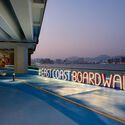
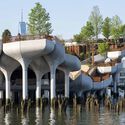
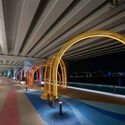
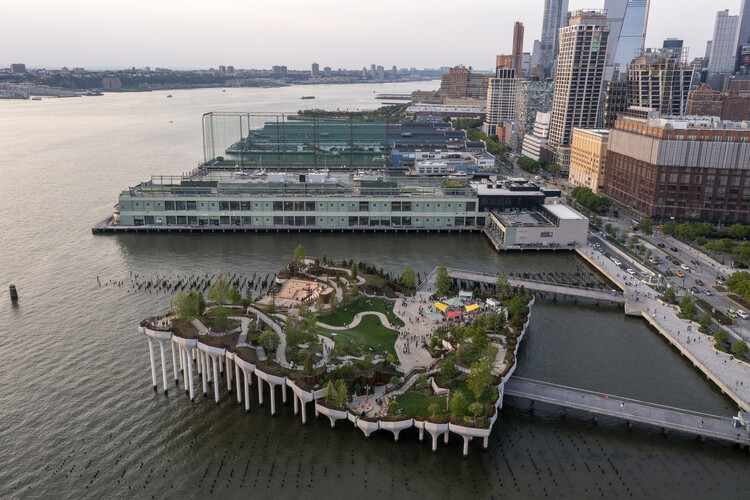
Yet in New York City and Hong Kong, we can trace each city's ambitions—despite differing strategies, priorities, and political logics—through a set of keystone projects that anchor their coastlines. Read together, these projects reveal not only what each city chooses to value, but also what it is willing to trade off in order to build at the edge.