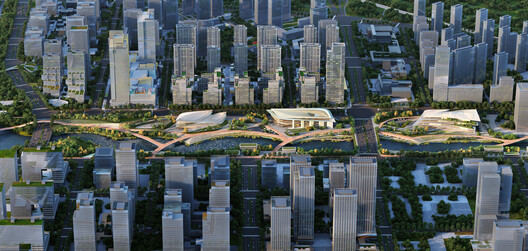
Zaha Hadid Architects has released images of its design for the redevelopment of the waterfront along the Zhedong Canal in Hangzhou's Xiaoshan District, China. The Qiantang Bay Central Water Axis project envisions a sequence of landscaped parklands, terraces, and gardens along the canal basin, proposing the transformation of former industrial areas into a green corridor extending toward the city center. The proposal adds to other recent design initiatives in the area, including Snøhetta's Qiantang Bay Art Museum, planned at the confluence of the Qiantang River and the Central Water Axis, as well as Zaha Hadid Architects' Grand Canal Gateway Bridge, a pedestrian bridge intended to connect the firm's 800,000-square-meter Seamless City masterplan on the east and west banks of the Grand Canal.
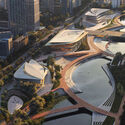
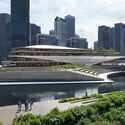
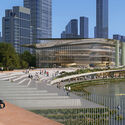
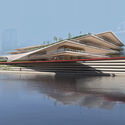
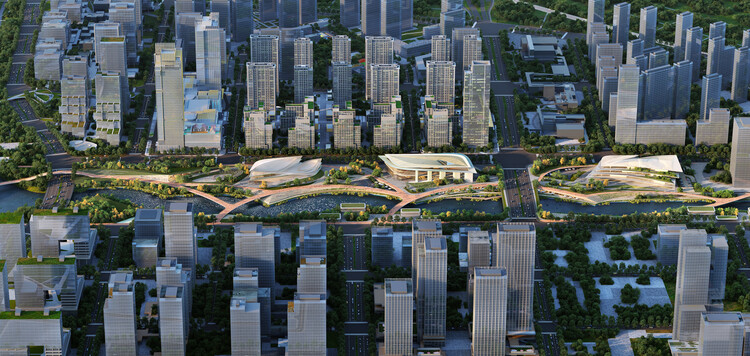
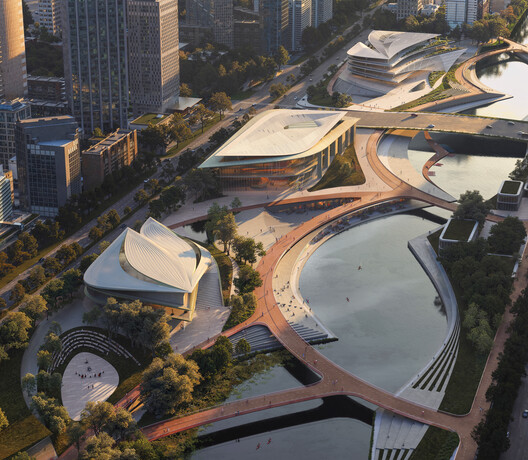
The Central Water Axis proposal outlines new waterside landscapes alongside cultural and educational buildings arranged along the canal. These structures are oriented to engage with proposed civic spaces, including plazas, promenades, and performance areas designed for recreation, relaxation, and public gatherings. Together, these elements would form a new district defined by public landmarks connected through a network of bridges and pathways linking both sides of the canal. In addition to the public realm, the proposal includes two cultural buildings designed by Zaha Hadid Architects, shaped by the site's natural terrain and panoramic views. Integrated into Hangzhou's sponge-city infrastructure, developed to mitigate flooding risks, the landscape design incorporates permeable surfaces, planted swales, and water-retention features to support stormwater management.
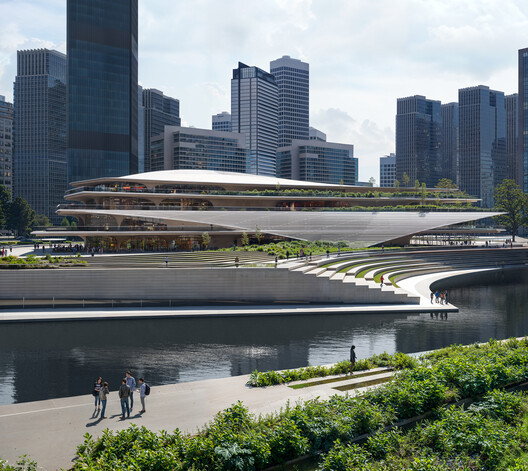
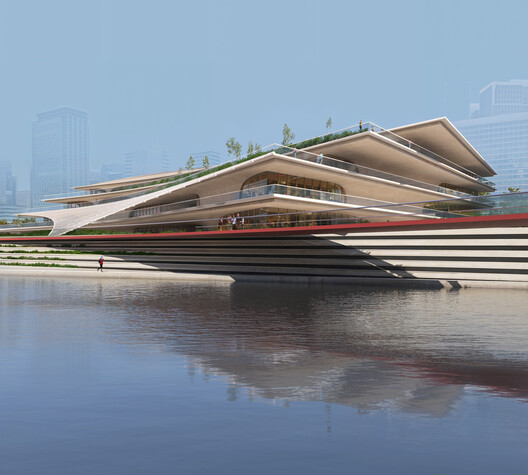
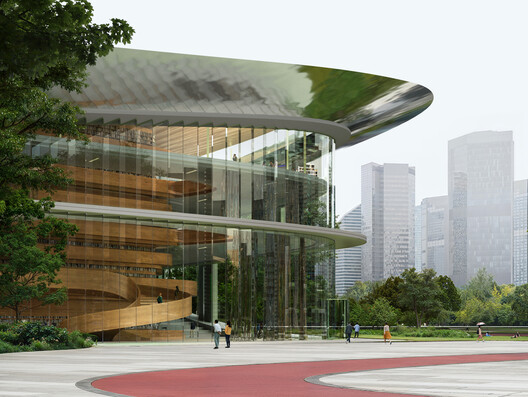
Within the proposed canal-side cultural district, a library designed by Zaha Hadid Architects features a sequence of inhabitable architectural columns. Conceived as both structural elements and spatial organizers, these columns are intended to house the library's literary collections and archives, as well as reading rooms and community spaces. Drawing on the region's 5,000-year history of jade craftsmanship, the proposed façade is composed of masonry tiles inspired by the tonal qualities of the local stone. Folded glass elements integrated into the façade would diffuse natural light throughout the interior spaces, creating conditions suited to reading and study.
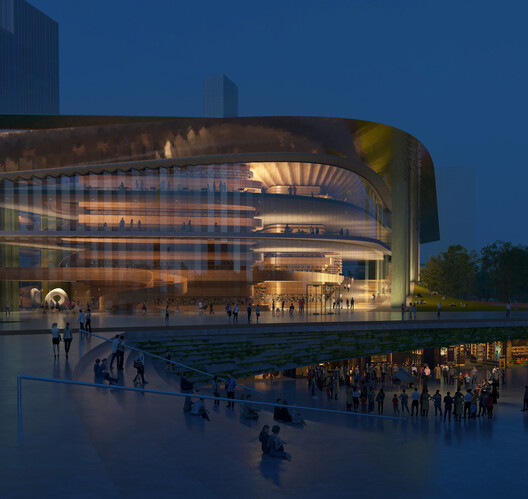
Complementing the library, the firm's proposed International Youth Centre is envisioned as a venue for students and visitors to meet and collaborate. The building's form responds to its waterfront location, with geometries that extend into the interior through a series of interconnected auditoriums and studios. The program includes spaces intended for seminars, conferences, exhibitions, and performances, with terraces overlooking the canal extending activities outdoors. According to the architects, the proposals incorporate energy-efficient systems and on-site power generation strategies as part of their environmental approach.
Other recent architectural announcements include the selection of Sordo Madaleno, építész stúdió, and Buro Happold to design the New Debrecen Collection Center for the Hungarian Museum of Natural History; the appointment of OMA to develop the Salone Contract Master Plan for the 64th edition of Salone del Mobile.Milano, scheduled for April 21–26, 2026, at Fiera Milano, Rho; Foster + Partners' masterplan proposal for the Icolo e Bengo Aerotropolis, a large-scale development planned around Angola's recently completed Dr. Antonio Agostinho Neto International Airport; and Renzo Piano Building Workshop's design proposal for the transformation of Montparnasse's shopping center and CIT Tower into a pedestrian-focused district in Paris.


