The American architect, designer, and futurist Buckminster Fuller once defined the Dymaxion principle as “constructing ever more with ever less weight, time, and ergs per each given level of functional performance.”


The American architect, designer, and futurist Buckminster Fuller once defined the Dymaxion principle as “constructing ever more with ever less weight, time, and ergs per each given level of functional performance.”
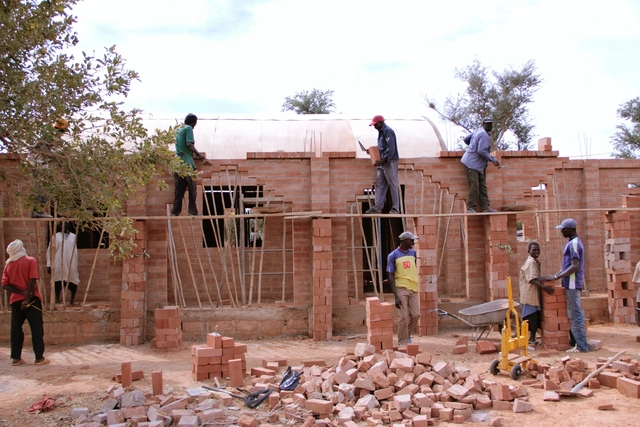
Around the world, a new generation of architects are challenging “business-as-usual” and bringing change to populations who had formerly no access to their professional services. This article is the first in a series to introduce this new practice that brings transactional client relations into more profound, trust-based collaborations. We call it Do-It-Together architecture.
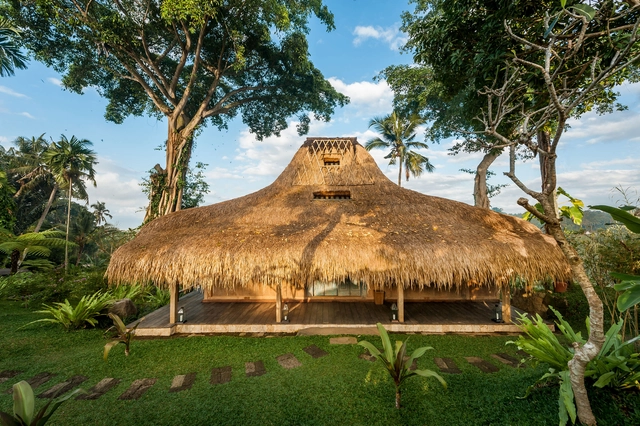
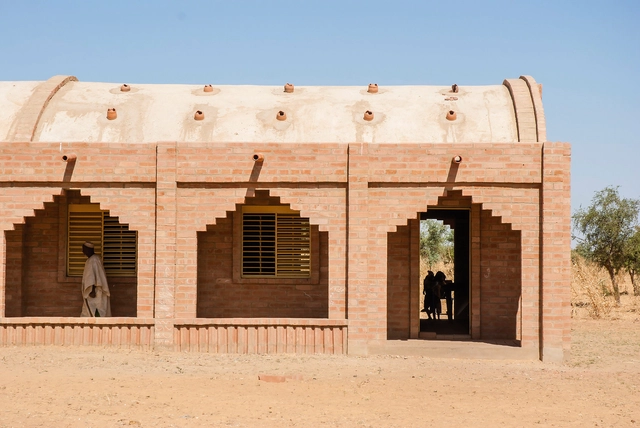
Vernacular architecture can be defined as a type of local or regional construction, using traditional materials and resources from the area where the building is located. Consequently, this architecture is closely related to its context and is aware of the specific geographic features and cultural aspects of its surroundings, being strongly influenced by them. For this reason, they are unique to different places in the world, becoming even a means of reaffirming an identity.
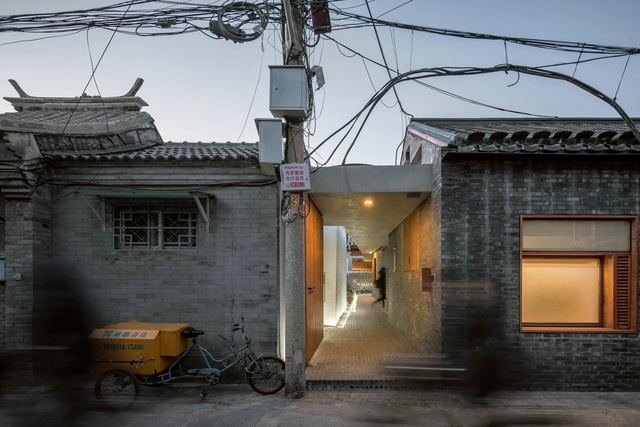
For centuries, Hutongs have been recognized as one of the most treasured types of vernacular housing in China. Witnessing the cultural and historical transformation in Beijing ever since the Yuan Dynasty (1271 – 1368), the name Hutong is derived from a Mongolian word that means ‘water well’. In fact, this term was given to small streets that originated during the Yuan Dynasty when the emperor attempted to organize the urban fabric in a grid-like pattern in order to manage properly property ownership and to form an efficient transit system.
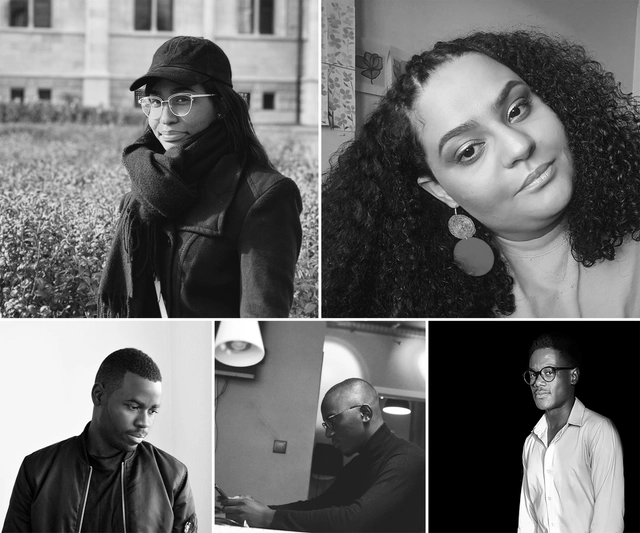
Investing in virtual projects has probably never been more timely, after all, we have been partially deprived of contact with the concrete world. Exploring the singularities of the present moment and the power of online engagement, a group of architects from Angola started an ambitious work: pursuing a new identity for Angolan architecture.
Formed by Yolana Lemos, Kátia Mendes, Mamona Duca, Elsimar de Freitas, and Gilson Menses, Grupo BANGA is responsible for the project Cabana de Arte (Art Hut), which combines the efforts of young architects and artists from Angola in virtual works that seek to bring visibility to emerging professionals and bring architecture closer to people's daily lives.
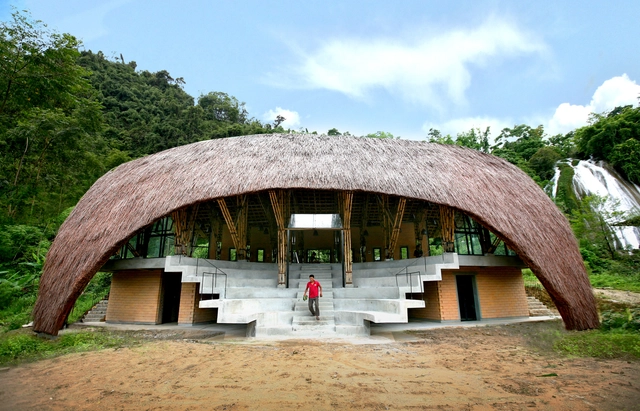
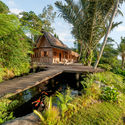
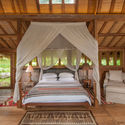
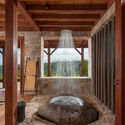
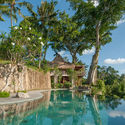
This year the United Nations World Tourism Organization (UNWTO) has been looking at tourism as a way to create jobs and opportunities in rural areas under the banner of Tourism and Rural Development.
Rural based Architecture and traditional edifices play an important role in showcasing local heritage building and craftsmanship. It can also offer jobs and prospects outside of big cities particularly for the communities that might otherwise be left behind.
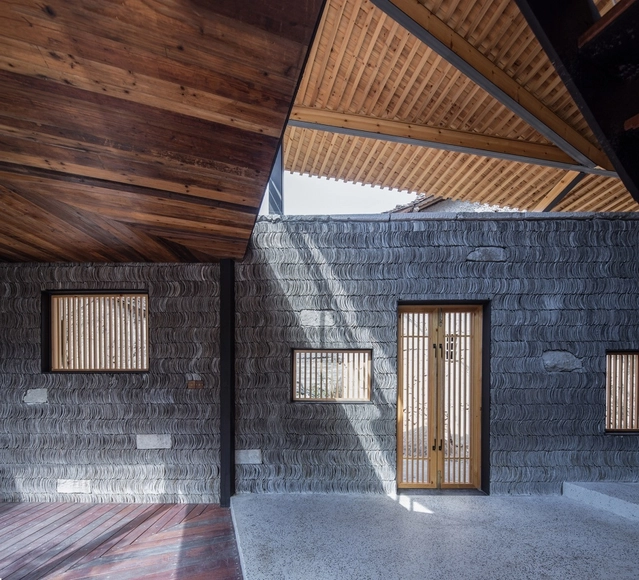
Constrained by a lack of transportation and resources, vernacular architecture has started adapting the distinct strategy of utilizing local materials. By analyzing projects which have successfully incorporated these features into their design, this article gives an overview of how traditional materials, such as tiles, metal, rocks, bamboo, wooden sticks, timber, rammed earth and bricks are being transformed through vernacular architecture in China.
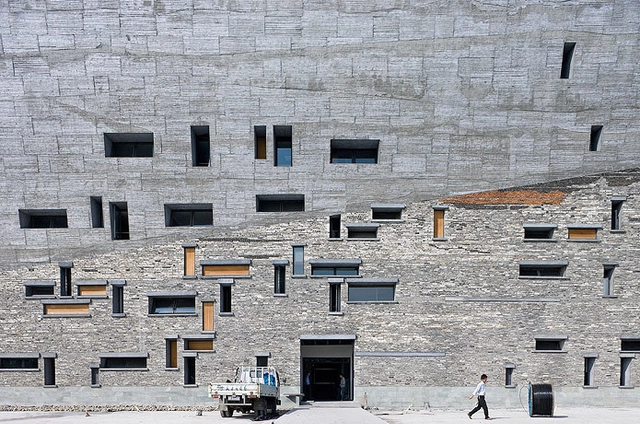
Over the past two centuries, cities in China have multiplied and expanded on a large scale, under accelerated urbanization. Mass demolition of the old city fabric, occurring everywhere, is leaving industrial debris and fragmented cultural artifacts buried forever, under shiny new skyscrapers. As old Chinese cities are collapsing and new urban centers are outspreading, a part of the city was lost, the old demolished landscape. Wang Shu and Lu Wenyu, the first Chinese citizens to win the Pritzker Architecture Prize, responded to this past-present relation by working with recycled materials and traditional know-how. In the following, we explore some of this couple's renowned works such as Ningbo History Museum, Ningbo (2008), Xiangshan Campus of China Academy of Art, Hangzhou (2004), and Ningbo Contemporary Art Museum (2005), to examine his humanistic approach to the city.
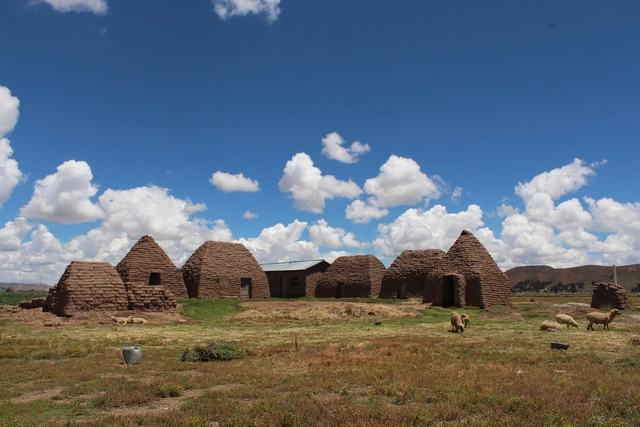
As a part of the XV Taller Social Latinoamericano architectural conference that took place in Puno, Peru, we visited the Iruito Tupi zone in Huancané province alongside Francisco Mariscal, Director of the Puno Cultural Center. For the conference, Mariscal gave a presentation on the history of putucos, pre-Columbian houses made with a mixture of earth and grass.
History has the habit of repeating itself; using the same script, just with different names, figures, and places. Some 10,000 years ago, the Altiplano and the Titicaca lake basin, wedged between modern day Peru and Bolivia, became home to hunters and gatherers who subsisted on the herds of llamas and vicuñas as well as the bounty of birds and fish.
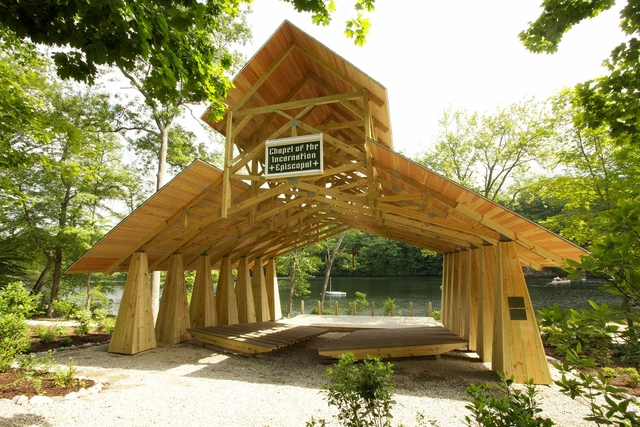
As the Great Philosopher, Mike Tyson said, “Everybody has a plan until they get punched in the mouth”.
The COVID-19 pandemic will deeply impact the world of aesthetics. For the first time since League of Nations was founded, a future of universal aesthetics may cease to be the academically sanctioned Architectural Canon. As Markus Breitschmid defines it, in his article “In Defense of the Validity of the 'Canon' in Architecture,” the Canon in Architecture is a way to divorce architecture from the rest of the world:
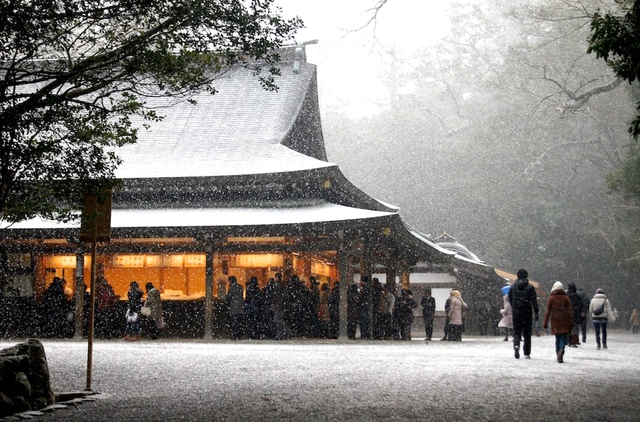
A new online course offered by the University of Hong Kong (UHK) through knowledge-sharing platform edX will probe the relationship between Asian culture and the continent’s vernacular architecture. Free and open to anyone, the introductory course entitled “Interpreting Vernacular Architecture in Asia” has an inclusive mission: to make the often alienating world of art and architectural history accessible to the general public by removing barriers to entry.

Hungarian architects Paradigma Ariadné push the concepts of progression and growth to a literal spatial extreme in their proposal for a new sport complex for the MTK Football Academy. Drawing inspiration from the diagram of traditional European peasant houses, the design stretches into a kind of visual infinity, stacking all the rooms in the building along a single horizontal axis.
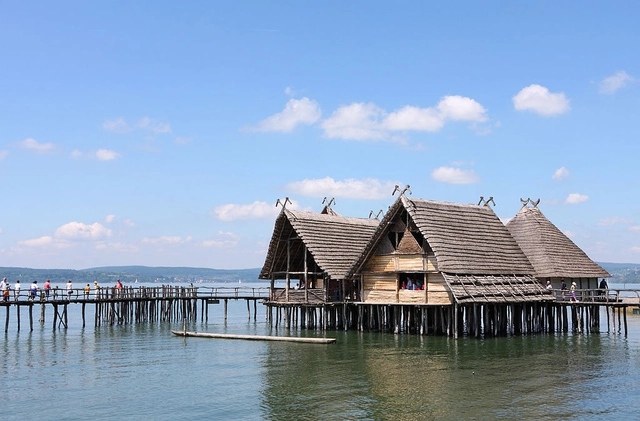
Where do people live around the world? It seems self-evident that most residential architecture is not as focused on aesthetics as the pristine, minimalist villas that cover the pages of design magazines (and, admittedly, websites like this one). As entertaining as it is to look at those kinds of houses, they’re not representative of what houses look like more generally. Most people live in structures built in the style of their region’s vernacular—that is, the normal, traditional style that has evolved in accordance with that area’s climate or culture. While strict definitions of residential vernacular architecture often exclude buildings built by professional architects, for many people the term has come to encompass any kind of house that is considered average, typical, or characteristic of a region or city. Check out our list below to broaden your lexicon of residential architecture.

Climate change is the biggest challenge facing our planet. There has never been a more important time to understand how to make the best use of local natural resources and to produce buildings that connect to ecosystems and livelihoods and do not rely on stripping the environment or transporting materials across the globe.
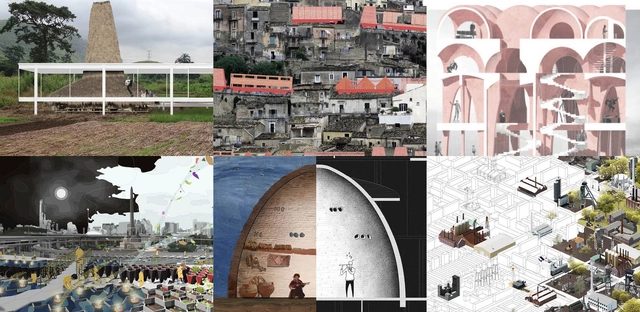
The Association of Siamese Architects (ASA) has announced the winners of the 2018 VEX: Agitated Vernacular Competition. This year’s ASA International Design Competition aimed to "upend the typical associations of vernacular architecture and design," what vernacular should or should not be. The goal was to re-think vernacular as something that can "assume performative roles and possess generative potentials."
The winning designs challenge the notion that vernacular design is opposed to modernity, thus it is "static and unimprovable," and opposed to technology. Selected from over 230 applications from nearly 30 countries worldwide, the six winning projects are from The Netherlands, India, China, Poland, and Thailand.

This article was originally published on Common Edge as "Making a Case for the Renaissance of Traditional African Architecture."
Last September, Nigerian Afrobeat musician Wizkid played to a sold-out house at the Royal Albert Hall in London, joining a growing list of illustrious African musicians, such as Selif Kaita, Youssou Ndour, Miriam Makeba and others, that have performed at that prestigious venue. This event affirmed the unfolding cultural renaissance across the continent, but it also signified the rising global influence of African music, movies, fashion, cuisine and the arts.
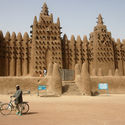
Sadly, traditional African architecture, especially in Sub-Saharan Africa, has not profited from this renaissance and has instead steadily lost its appeal across the continent. In spite of its towering influence in the pre-colonial era, it has largely failed to develop beyond the crude earthen walls and thatch roof architecture; for this reason it has remained unattractive to homeowners who often associate it with poverty. Consequently, the neglect of indigenous architecture has resulted in the dearth of skilled craftsmen knowledgeable in the art of traditional building, a reality that has further dimmed hopes for a revival of this architectural style.

.jpg?1608807858&format=webp&width=640&height=580)
.jpg?1608807690 "© Tommaso Riva")
.jpg?1608808167 "© Tommaso Riva")
.jpg?1608808560 "© Tommaso Riva")
.jpg?1608807820 "© Tommaso Riva")
.jpg?1608807858)



_-_Vista_da_Pra%C3%A7a.jpg?1601059705 "Projeto arquitetônico virtual para a exposição \"Tchitundu-Hulu, a história resgatada\". Image Cortesia de Grupo BANGA")
_-_Planta_de_Cobertura.jpg?1601059767 "Planta do projeto para a exposição \"Mfwanana, Dialetos da Terra\". Image Cortesia de Grupo BANGA")
_Eu_sou_o_sol_-_as_marcas_perpetuadas_em_mim_(2)_-_Sala_de_Exposi%C3%A7%C3%A3o.jpg?1601059792 "Projeto arquitetônico virtual para a exposição \"Eu sou o sol - as marcas perpetuadas em mim\". Image Cortesia de Grupo BANGA")