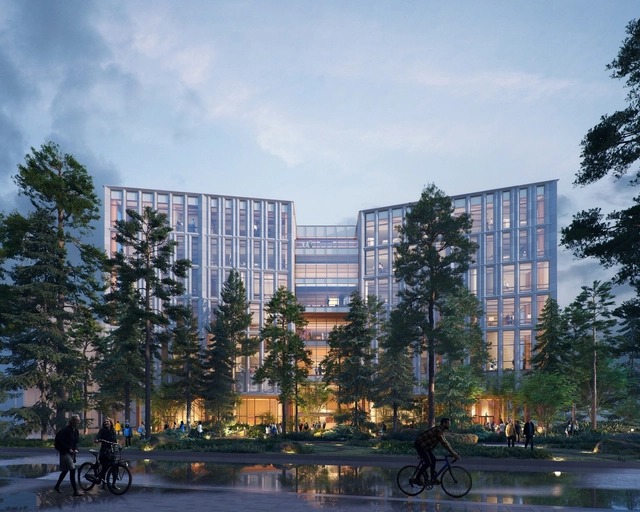
Perkins & Will has just begun construction on the Gateway Project for the University of British Columbia. The project will serve as the primary entrance point to the campus, as well as the new hub for the Nursing, Kinesiology, Language Science, and the university's health clinics. This project is inspired by the surrounding landscape and is informed by the Musqueam people, who have been occupying these territories for generations.
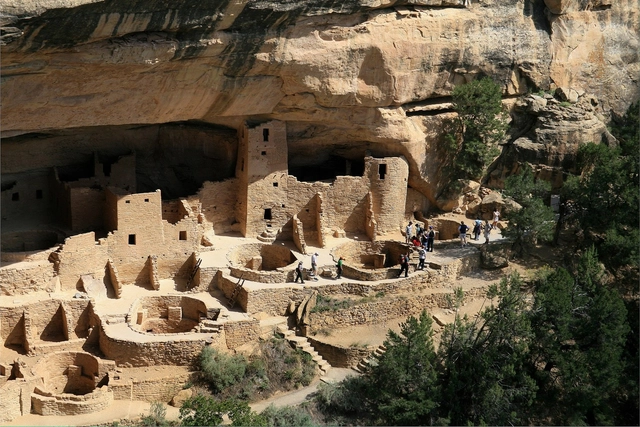
Archaeological endeavors aimed at exploring the civilizations of the past have revealed a commonality across the world. A form of architecture developed independently on every continent. Evidence shows that Neolithic communities used fertile soils and alluvial clay to construct humble abodes, creating humankind’s first durable and solid building material. Earth architecture was born at a very early age in human history. The techniques soon suffered a gradual decline as lifestyles changed, cities grew, and industrialized materials flourished. Does earth architecture have a place in the 21st-century world?
Cities are inseparable from fast-paced lifestyles. Rising rents and “not-that-small” apartments characterize urban environments, perpetuating the chase for “bigger, faster, and more”. As economies develop and human needs grow, buildings are erected at alarming rates to rush toward progress. The risks of urban living are gradually being exposed, raising questions about more intentionally-driven actions. One way to return to slower lifestyles is by returning to slow architecture.
Aranya Community Housing / Vastu-Shilpa Consultants . Image Courtesy of Vitra Design Museum
In almost every Indian language, a colloquial term for “family” - ghar wale in Hindi, for example - literally translates to “the ones in (my) house”. Traditionally, Indian homes would shelter generations of a family together under one roof, forming close-knit neighborhoods of relatives and friends. The residential architecture was therefore influenced by the needs of the joint family system. Spaces for social interaction are pivotal in collective housing, apart from structures that adapt to the changing needs of each family. The nuanced relationship between culture, traditions, and architecture beautifully manifests in the spatial syntax of Indian housing.
An ancient Indian folktale narrates the story of a demigod, Hiranyakashipu, who was granted a boon of indestructibility. He wished for his death to never be brought about by any weapon, human or animal, not at day or night, and neither inside nor outside his residence. To cease his wrathful ways, Lord Vishnu took the form of a half-human-half-animal to slay the demigod at twilight at the threshold of his house.
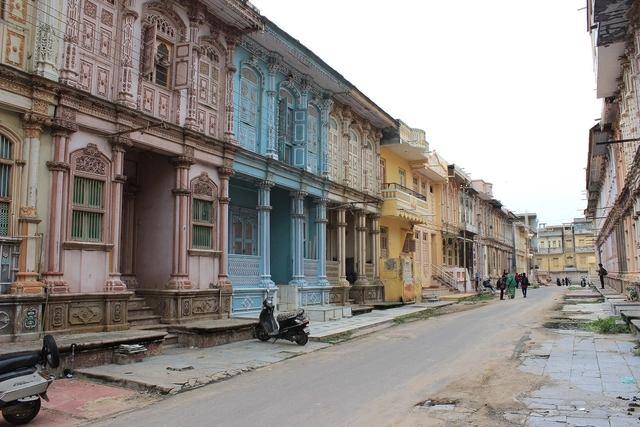
Threshold architectural spaces have always held deep cultural meaning to the people of India. In-between spaces are found in the midst of daily activities as courtyards, stairways, and verandas. The entrance to the house is revered by Indians of all social backgrounds. Throughout the country’s varied landscape, transitional entry spaces are flanked by distinctive front verandas that merge the street with the house.
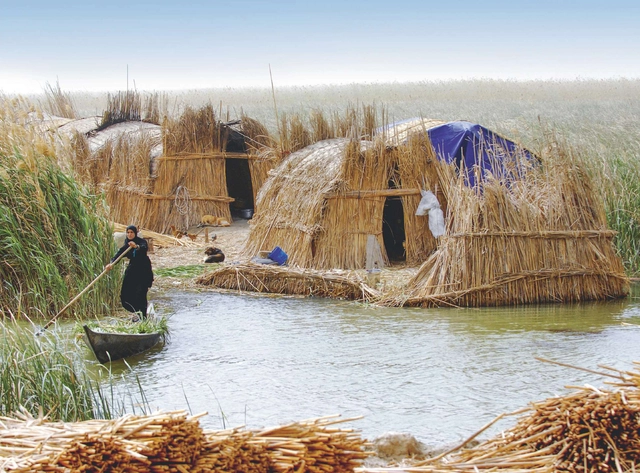
"Indigenous technologies are not lost or forgotten, only hidden by the shadow of progress in the most remote places on Earth". In her book Lo-TEK: design by radical indigenism, Julia Watson proposes to revalue the techniques of construction, production, cultivation and extraction carried out by diverse remote populations who, generation after generation, have managed to keep alive ancestral cultural practices integrated with nature, with a low environmental cost and simple execution. While modern societies tried to conquer nature in the name of progress, these indigenous cultures worked in collaboration with nature, understanding ecosystems and species cycles to articulate their architecture into an integrated and symbiotically interconnected whole.
Upon becoming a sovereign country, free from British Rule, the people of India found themselves faced with questions they had never needed to answer before. Coming from different cultures and origins, the citizens began to wonder what post-independence India would stand for. The nation-builders now had the choice to carve out their own future, along with the responsibility to reclaim its identity - but what was India's identity? Was it the temples and huts of the indigenous folk, the lofty palaces of the Mughal era, or the debris of British rule? There began a search for a contemporary Indian sensibility that would carry the collective histories of citizens towards a future of hope.
The 22nd of March 2022 saw the twenty-ninth commemoration of World Water Day – as a worldwide water crisis continues to leave populations vulnerable. It is an extremely multi-faceted issue. Governance sadly determines water accessibility, with marginalized people disproportionally affected. Urban typologies are another factor. The over-pumping of groundwater sources to meet the water demands of Hanoi, for instance, has resulted in arsenic being drawn into Vietnam’s village wells.
For centuries and centuries we’ve built – and the diversity in our global built environment is a testament to that. The many different cultures around the globe have had different ways of building throughout history, adapting locally found materials to construct their structures. Today, in our globalized present, building materials are transported across the globe far from their origins, a situation that means two buildings on completely opposites sides of the world can be more or less identical.
The election of Kéré is not only symbolic in a time of identity demands, where the institutions that make up the mainstream are required to more faithfully represent the social, cultural, and sexual realities that make up our societies, but it also confirms the recent approach of the Pritzker Prize jury.
‘’We’re in a seismic area. Beirut has been buried seven times, so it has to resist any earthquake, and that’s why it also resisted the explosion in the port,’’ expresses Lina Ghotmeh in conversation with Louisiana Channel, in regards to the Stone Garden. A building constructed with resilience in mind, in a city that has been buried within rubble and rebuilt multiple times.
Lina Ghotmeh was interviewed by Marc-Christoph Wagner at her studio in Paris in November 2021. Renowned for her Humanist approach to Architecture, the Stone Garden offers a very personal relationship as the first building to be constructed in Ghotmeh’s hometown of Beirut. Positioned on the edge of the city center, it is very much a form of vernacular architecture echoing the lives of the people who reside here.
The year 2021 has been a turbulent one –coronavirus rages on, and the design and construction industries have been forced to keep adapting two years into a global pandemic. As virtual methods of working and communicating continue to be tweaked and honed, a plethora of virtual events has meant that architectural discourse outside the western canon and Eurocentric gaze, in a small way, has been able to claim space front and center in the global architectural conversation.
What’s so great about the oldest continuously inhabited cities in the world? Probably the fact that their societies have been evolving in one unbroken series of eras, with ever-changing values and styles that have, among other things, given rise to architectural memories of their long histories. These cities aren’t like the archeological sites we visit to see how people lived thousands of years ago; they are the exact places people lived thousands of years ago, places where people are still living today, with their rich histories buried under layers of paint and concrete instead of earth.
With ancient cities found in regions around the world, the variety of architectural treasures that can be found in these cities is vast. To give you a taste of their diversity, here is a selection of 18 of the oldest continually inhabited cities from various regions of the world, ranging from youngest to oldest, with a small snippet of their various architectural puzzles.
Vernacular techniques and local materials are becoming more and more relevant in architecture, but is it possible to bring these concepts to large urban areas?
In 1984, the Amazonian architect Severiano Porto had already pointed out the need to make architecture more connected to its location. Using local materials and techniques is becoming more important each day, considering the impacts of the commodity chain of building construction on the planet. Not surprisingly, the number of projects that use this approach is growing every day, as Severiano has already mentioned in his work since the 1980s.
The world is home to thousands and thousands of national parks – spaces allocated for conservation, hosting land usually left in its natural state for people to visit. The term “national park” itself differs in meaning around the world. In the United Kingdom, for example, the phrase simply describes a relatively undeveloped area that attracts tourists. In the United States, this terminology is a lot more rigid, describing 63 protected areas operated by the United States National Park service.
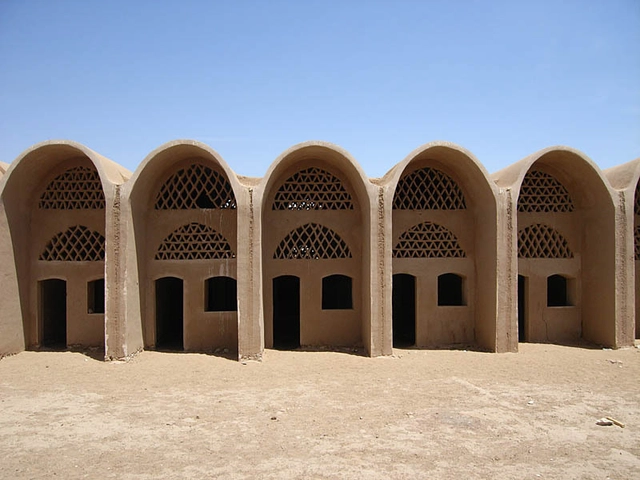
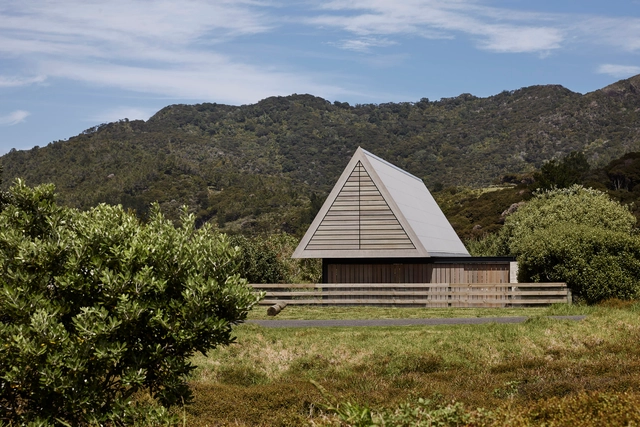
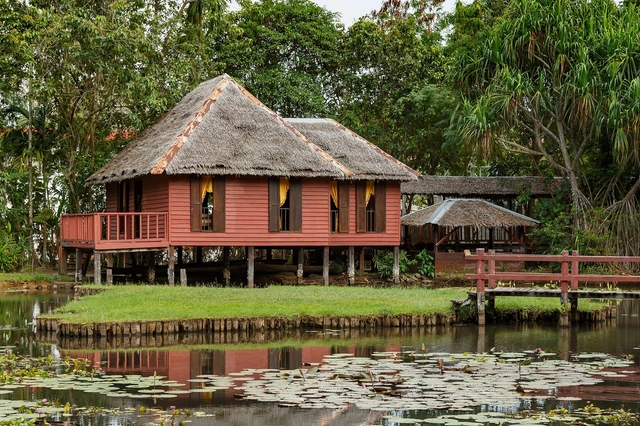
When we talk about vernacular architecture, we’re talking about an architectural style specific to a region – architecture that relies on the use of local knowledge and materials to construct buildings. It’s the Beehive Houses of Harran in Turkey, to the traditional Malay Houses found throughout southeast Asia. The vernacular architecture of various places continues to be a source of inspiration for contemporary architects, as they look to create sustainable architectural responses well-suited for their context.
Every year, in the hot, dry town of Djenné in Central Mali, something special takes place – La Fête de Crépissage. Roughly translated to the “Day of Plastering”, this day sees the entire community of Djenné collaborate to reinforce the mud walls of the Great Mosque of Djenné – a UNESCO World Heritage Site and one of the African continent’s most distinctive architectural landmarks.




















.jpg?1647823485 "Gando Primary School Extension / Kéré Architecture. Image © Erik Jan Ouwerkerk")
.jpg?1647822667 "Serpentine Pavilion / Kéré Architecture. Image")
.jpg?1647822697 "Startup Lions Campus / Kéré Architecture. Image")
.jpg?1647823274)












.jpg?1628253352&format=webp&width=640&height=580)



.jpg?1628253352)