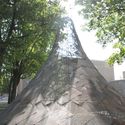
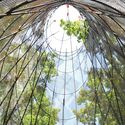
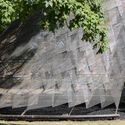
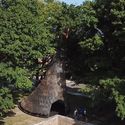
In this video, Spirit of Space visits Exhibit Columbus to see Wiikiaami, a parametrically designed structure by studio:indigenous. Beginning in 2016, Exhibit Columbus is an annual event which invites people to travel to the small, but architecturally fascinating Midwestern town of Columbus, Indiana. Free and open to the public through November 26th, Exhibit Columbus displays 18 unique, site-responsive architectural installations.
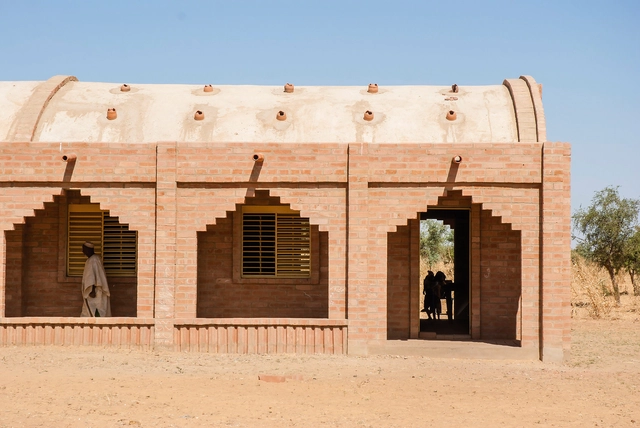
Primary School Tanouan Ibi. Image Courtesy of LEVS Architecten
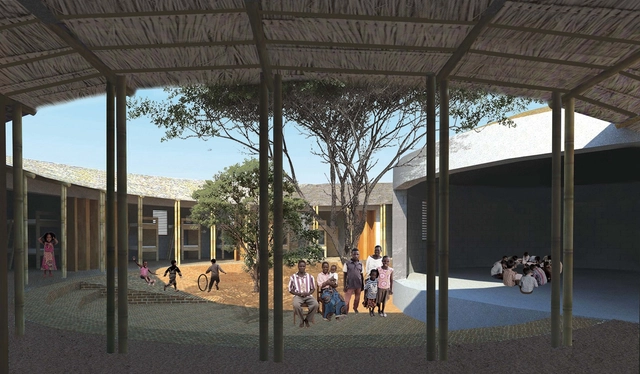
In our article in February, "11 Vernacular Building Techniques That Are Disappearing," we discussed vernacular techniques that, through the introduction of modern building and the waning prevalence of traditional lifestyles, were slowly becoming lost forms of knowledge. What we didn't discuss, though, was that few of the techniques were disappearing without some form of resistance. After the article was published we were contacted by Dutch architecture firm LEVS Architecten, who highlighted their efforts work in the Dogon region of Mali, where they work with local communities to continue--and improve--the vernacular Dogon tradition.
Despite the fact that LEVS Architecten has worked extensively within this tradition, they still consider themselves modern architects who are simply looking for responsible, alternative solutions, and have even found opportunities to utilize this knowledge for architecture projects back in the Netherlands. As Jurriaan van Stigt, partner at LEVS Architecten and chairman of Partners Pays-Dogon, explained in an interview with ArchDaily, vernacular architecture is “in the undercurrent of our thinking and approach to the tasks that lay behind every project.”
"Vernacular architecture can be said to be 'the architectural language of the people' with its ethnic, regional and local 'dialects,'" writes Paul Oliver, author of The Encyclopaedia of Vernacular Architecture of The World’. Unfortunately, there has been a growing disregard for traditional architectural language around the world due to modern building technology quickly spreading a “loss of identity and cultural vibrancy” through what the Architectural Review recently described as “a global pandemic of generic buildings.” People have come to see steel, concrete and glass as architecture of high quality, whereas a lot of vernacular methods including adobe, reed or peat moss are often associated with underdevelopment. Ironically, these local methods are far more sustainable and contextually aware than much contemporary architecture seen today, despite ongoing talks and debates about the importance of sustainability. As a result of these trends, a tremendous amount of architectural and cultural knowledge is being lost.
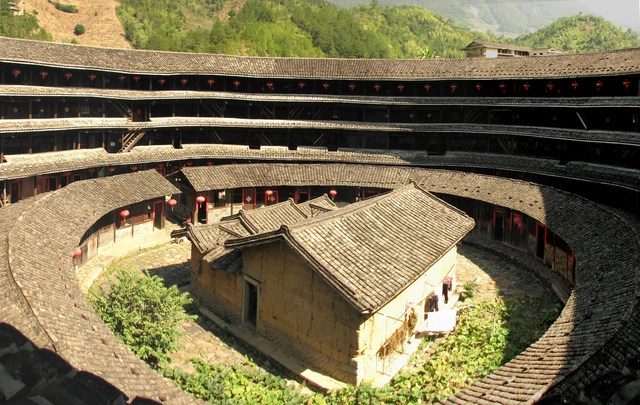
Vernacular architecture refers to designs which find their primary influence in local conditions: in climate, in materials, and in tradition. In a country as diverse as China, with 55 state-recognized ethnic minority groups and widely varying climates and topographies, many different vernacular dwelling styles have evolved as pragmatic solutions that accommodate the unique needs and limitations of their sites.
Rapid urbanization in China has favored high-rise apartment towers over traditional housing because of their ease of construction and the population density they enable, making vernacular dwellings increasingly rare throughout the country. Some firms, like MVRDV and Ben Wood’s Studio Shanghai, have taken note of the many benefits that vernacular dwellings provide, and have created projects that attempt to reconcile tradition with urbanization. Even if you aren't planning on building in China any time soon, the following housing styles have much to teach about what it means to live in a particular time and place. This is by no means an exhaustive list, but it does encompass the main types of vernacular dwellings seen throughout China.
Visitors to Bermuda are likely to notice one key feature about its architecture: across the islands, the pastel-painted houses all share a distinctive white, stepped roof style. A recent article on BBC News Magazine explores the original reason for, and subsequent history of, this unique roof design, showing how vernacular architectural elements often fit into a larger narrative of culture and geography.
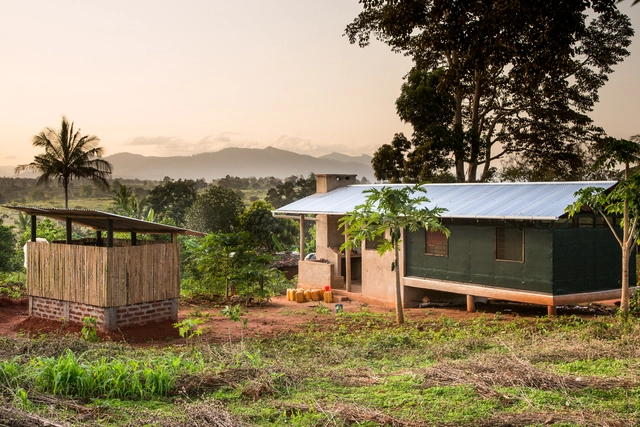
Architecture firm Ingvartsen Architects has turned their gaze towards “cultural exchange architecture”—not with the aim of exploring identity or experimenting with aesthetics, but with a practical purpose in mind: to minimize the spread of diseases. The Magoda Project combines Asian elements with traditional rural African building methods in the village of Magoda, in the Tanga region of Tanzania, taking shape in the form of eight prototype homes. The design goes to show that cultural exchanges in design and architecture can make great contributions towards problem solving for a humanitarian purposes, not only to improve health and hygiene, but also comfort and happiness.
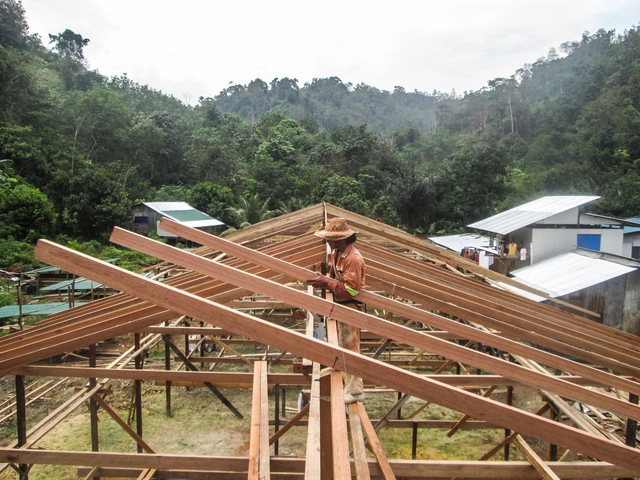
A version of this essay, originally titled "Rumah in the woods: Resurrection of the Nanga Sumpa Longhouse," reached the top 8 in this year's Berkeley Prize. It was shared with ArchDaily by the authors.
These bodies are perishable, but the dwellers in these are indestructible and impenetrable.
This verse from Bhagavad Gita (a Hindu religious scripture) speaks about the human body and soul. For me, even a piece of architecture has a soul which rests in its place. We can feel its presence even when the building is no longer there.
Architecture is a unique component of a country's culture just as much as its language, music, art, literature or food. Architecture is also the most visual of those cultural components; the pyramids in Egypt, skyscrapers in New York, a temple in Japan, and onion domes in Russia all convey a unique image. This is called “genius loci,” the “spirit of a place”. Every country has its own genius loci, its own uniqueness. Vernacular architecture is composed of local materials and derived from local customs, techniques that have been passed on from generation to generation. But vernacular architecture in most (if not all) African countries is disappearing, being abandoned for western materials and techniques.
Window in Osaka, Japan. Image Courtesy of VELUX Group
Before computer daylight simulations were used to optimize the atmosphere and energy in buildings, generations of builders developed simple principles to create the best windows for their site. Two lighting experts have studied these traditional openings in buildings to find inspiration for more sustainable designs today. Francesco Anselmo, a lighting designer at Arup, and John Mardaljevic, Professor of Building Daylight Modelling at the School of Civil & Building Engineering of Loughborough University, have analysed the sun and skylight variations from northern regions like Stockholm down to the equator in cities like Haiti or Abu Dhabi.
Read on to learn more about the variety of traditional windows.
Vernacular architecture, the simplest form of addressing human needs, is seemingly forgotten in modern architecture. However, due to recent rises in energy costs, the trend has sensibly swung the other way. Architects are embracing regionalism and cultural building traditions, given that these structures have proven to be energy efficient and altogether sustainable. In this time of rapid technological advancement and urbanization, there is still much to be learned from the traditional knowledge of vernacular construction. These low-tech methods of creating housing which is perfectly adapted to its locale are brilliant, for the reason that these are the principles which are more often ignored by prevailing architects.





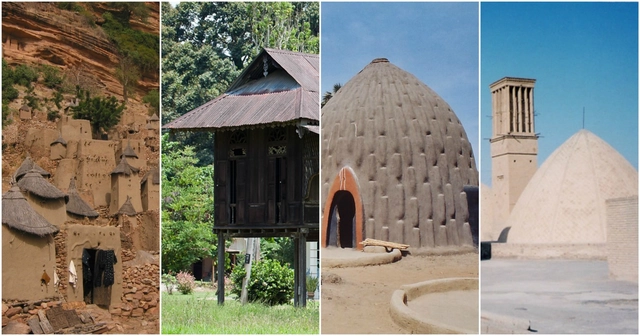


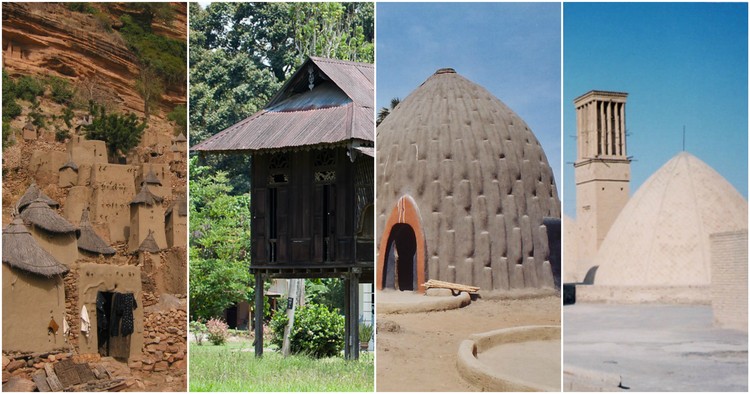






_of_one_of_the_big_families_of_Niongono_(submitted_by_Daniel_Schumann).jpg?1433337453&format=webp&width=640&height=580)
.jpg?1433337502 "Rwanda - Kings Hut interior. Image © Larsen Payá")
.jpg?1433337430 "Ethiopia - chicken coop constructed with woven reeds. Image © Abby Morris")
.jpg?1433337423 "Benin - a Tata Somba. Image © Lafia Yarou")
.jpg?1433337546 "Zambia - thatch stored in bundles being applied to roof. Image © Jon Sojkowski via Zambia Architecture")
_of_one_of_the_big_families_of_Niongono_(submitted_by_Daniel_Schumann).jpg?1433337453)