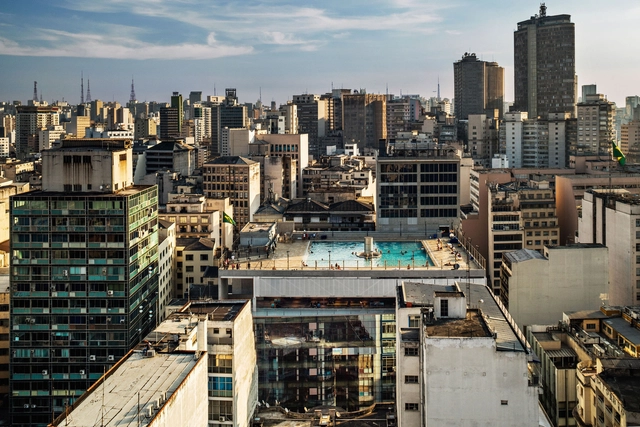
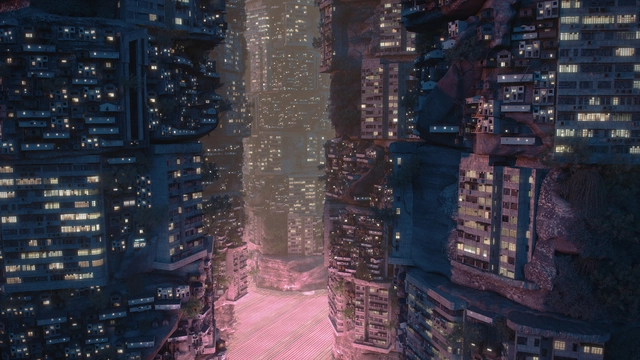
Liam Young is a speculative architect, product designer, and director who operates in the spaces between design, fiction, and futures. Young specializes in designing environments for the film and television industry, harboring the belief that creating imaginary worlds grants us the ability to connect emotionally to the ideas and challenges of our future.
Following the centuries of colonization, globalization, and never-ending economic extraction and expansionism, humans have remade the world from the scale of the cell to the tectonic plate. Young suggests in a TED Talk, “What if we radically reversed this planetary sprawl? What if we, as humans, reached a global consensus to retreat from our vast network of cities and entangled supply chains into one hyper-dense metropolis housing the entirety of the earth’s population?"
Manga is an umbrella term for a wide variety of comic books and graphic novels originally produced and published in Japan, and unlike western comic books that we may be more familiar with seeing printed in full color, are primarily published in black and white. Manga is the Japanese word for comics published in Japan, with the word itself comprising of two kanji characters: man (漫) meaning 'whimsical' and ga (画) meaning 'pictures'.
Not to be confused with the popular Japanese medium of anime, manga is print media whilst anime stands as visual media that is either hand-drawn or computer-produced, combining graphic art, characterization, cinematography, and other forms of creative and individualistic techniques. It is most notable that a lot of anime is developed as a result of a successful franchise that began as mere manga novels, but what continually unites the medium of manga and anime is the use of diverse art styles throughout various narratives that have been constructed for us consumers to follow.
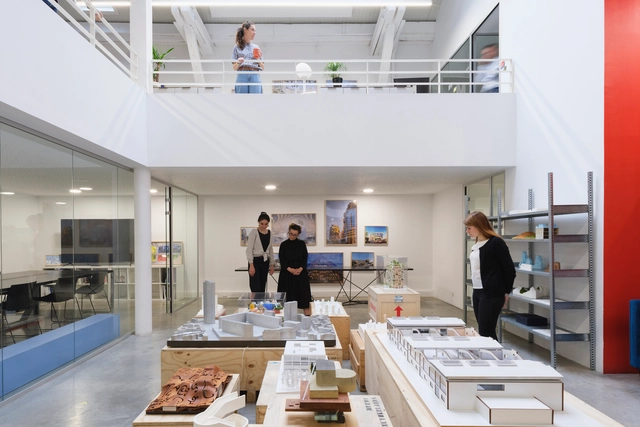
MVRDV and The Why Factory's have collaborated on an exhibition that explores the principles of "architecture and urbanism calls to action”. Titled "Agir", the exhibition is open to the public since June 9th, in the connected spaces of the ArchiLib Gallery and MVRDV’s Paris office. The exhibition takes its name from the French verb meaning “act”, and examines the activist works of MVRDV and The Why Factory, revealing its capacity to address a wide variety of environmental and social challenges.
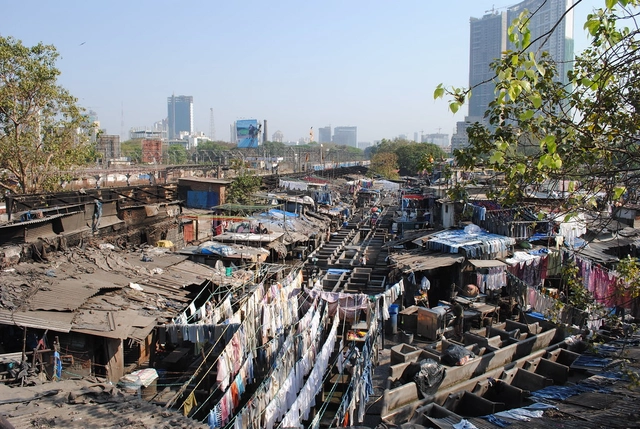
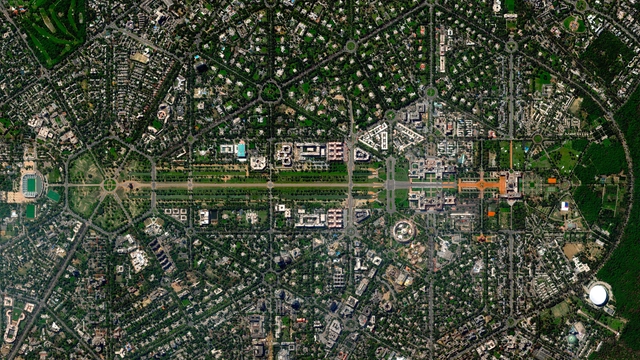
Built environments are a reflection of the social order and dynamic ideals of society. Neighborhoods and cities are cultural relics shaped by diverse communities, some of whose voices are heard louder than others. In the past few decades, Indian metropolitans have been booming with urbanization. Holding cities back from being Utopian hubs of growth is spatial inequality. The residential segregation that patterns the cities of India can be understood through the caste system. The issue, however, is largely intersectional. Forces rooted in class, religion, and gender also structure the country's social landscape.
An online search away from any computer are eye-level views of many of the world’s cities. This technology is powerful – allowing people to have an in-depth look at the cities they might one day visit, live in, or work in. It’s a useful tool for understanding buildings on a more comprehensive level than photographs. This technology is, of course, Google Street View – which recently turned fifteen years old.
The topic of cannabis can be rather taboo in some instances, as countries around the world have differing views on the legalization of marijuana products based on their cultural and religious beliefs. In the United States specifically, it’s been a long contended issue that each state has, for now, been left to decide on how they want to handle. Each year, more and more states (now totaling 18 and the District of Columbia out of 50), have legalized the recreational sale and use of a limited amount of cannabis, but it remains illegal on a federal level.
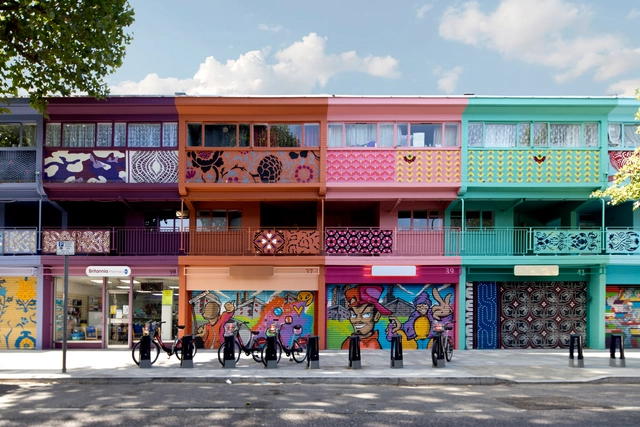
The award-winning firm based in London, England, Jan Kattein Architects, works to realize the civic and spatial opportunities that architecture presents’ with their projects establishing a social and physical legacy, achieved by embracing an open, interactive design process that responds positively to the needs and aspirations of the clients.
Allowing the process to drive each individual project, their method stimulates innovative design, seeking to add benefits through education, economic growth, cultural activity, and greater community coherence.
Neighborhood Next / 15 Minute City by Gehl Architects. Image Courtesy of 3XN
The planning and design of mixed-use neighborhoods and individual mixed-use developments are on the rise. Many of the places we frequent most feature a variety of programs, bringing many of life's daily conveniences to one place. But mixed-use spaces do more than just create a diverse array of experiences in cities- they might also help contribute to lower crime rates.
There’s something magical about seeing a city from the very top. To have a new vantage point, and look across a skyline instead of looking up at it is one of the most powerful and awe-inspiring feelings. Observation decks are not just architectural marvels, but also a sort of civic icon and sense of pride for a city. In the present day, it’s not just their height that draws people in, but the additional programming of sky-high bars, rides, and bungee jumping as well.
Today, one of the most popular initiatives regarding public space, participatory design and activism in the city is the so-called citizen urbanism or tactical urbanism. The approach proposes to trigger, through limited and low-cost interventions, long-term changes in public space, i.e. short-term action, long-term change (Street Plans, 2013).
The strategy used is to create temporary scenarios that make visible a specific problem and the formation of specific interventions to solve it, seeking to incorporate the community to give it relevance and promote its sustainability over time and, in this way, raise the discussion about the benefits of the projects for the quality of life in the context in which they are inserted.
In most countries around the world, value is placed on older buildings. There’s something about the history, originality, and charm of an older home that causes their value to sometimes be higher than newly constructed projects. But in Japan, the opposite is almost always the preference. Newly-built homes are the crux of a housing market where homes are almost never sold and the obsession with razing and rebuilding is as much a cultural thing as it is a safety concern, bringing 30-year-old homes to a valueless market.
The stage is set in one of the most iconic “end of the world” movie scenes: Citizens of New York City are scrambling on top of taxis, quickly attempting to escape the slow-moving giant tsunami heading their way. In the rear-view mirror of a bus, a giant wave can be seen rushing up the narrow city grid. Searching for higher ground, the main characters, Sam and Laura, run up the famed stairs into the famed New York Public Library, and just as the revolving doors shut behind them, the pressure of the water smashes the windows, and water begins to rise. Without seeing it, we know that New York City and its iconic architecture will soon be destroyed.
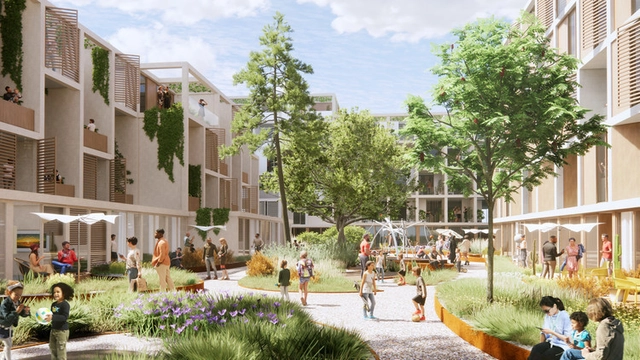
15-minute cities are a trending urban planning topic that has long been discussed academically and is now slowly being implemented across existing cities in Europe. But now, the first 15-minute city is being designed and built from scratch in Utah. Dubbed “The Point”, the new 600-acre city will be located just outside Salt Lake City, and will be a redeveloped former state prison site where new jobs, housing, public spaces, amenities, and transportation will serve almost 15,000 people in an attempt to explore a prototype for how innovative urban planning concepts can improve the public health and wellness.
Still from 'Spirited Away' (2001). Image Courtesy of Studio Ghibli
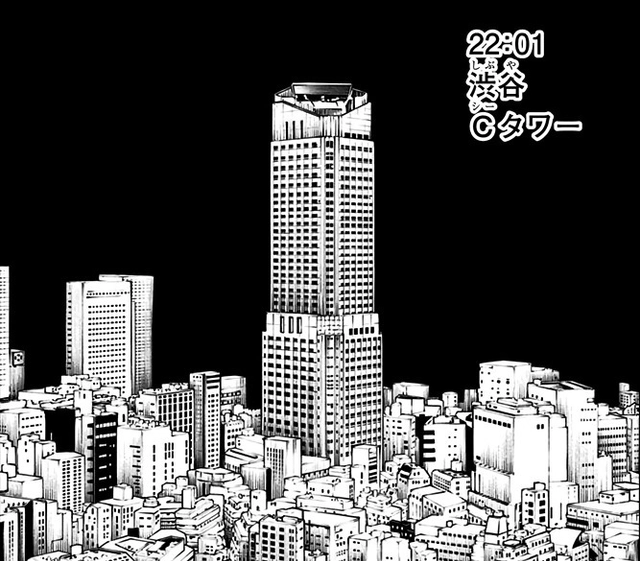
Writers in film and animation, specifically pertaining to the genre of anime, endeavor to incorporate varied architectural backdrops to assist them in telling their stories, with influences ranging from medieval villages to futuristic metropolises. Architecture as a subject includes a wide array of elements to study, with each architectural era further inferring its context and history through its design alone. However, in film and anime, all of the contexts behind a building’s design can be condensed into a single frame, powerful enough to tell a thousand stories.
In the early 1980s, when I first saw the film The Social Life of Small Urban Spaces and then read the book, both by William H. Whyte, I was enthralled. I had met Holly, as he was affectionately known, while I was still a reporter at the New York Post in the 1970s, and we had great discussions about New York City, what planners got wrong, what developers didn’t care about. By the 1980s I was at work on my first book, The Living City: Thinking Small in a Big Way, and having conversations with Jane Jacobs, who would become my good friend and mentor. Jacobs had validated the small, bottom-up community efforts around New York City that I was observing and that would be the too-often-unacknowledged sparks to jumpstart the slow, steady rebirth of the city. My observations were resoundingly dismissed—even laughed at—by professional planners and urban designers, but they were cheered and encouraged by both Whyte and Jacobs, and today they are mainstream.
Paris has been making headlines for years with its aggressive steps to anti-car, pro-pedestrian urban improvements. Faced with increasing issues around air pollution and an attempt to reclaim streets for alternate modes of transit, as outlined in their proposed plan for a 15-minute city, the French capital is seen as a leader in future-forward urbanist strategies. Recently, their department of transportation set a deadline for their lofty goals of eliminating traffic from its roads. In just two years from now, in time for the French capital to host the Olympics, Paris plans to ban non-essential traffic from its city center, effectively eliminating around 50% of vehicular mobility. What does this plan look like? And how might other cities use this strategy to eliminate their own urban issues?
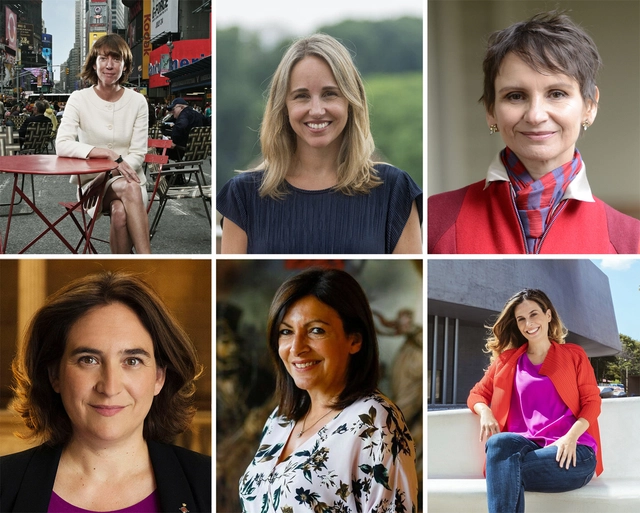
In different parts of the world, women are transforming cities and taking up spaces in urban planning and management as never before. Paris, Barcelona and Rome, for example, in addition to being cities where almost anyone would like to live, are now cities managed by women for the first time in their history, all in their second term. Major changes and currently celebrated plans, such as the “15-minute city” in Paris, the opening of Times Square to the people in New York, and the urban digitization of Barcelona as a smart city, were led by women.
Artificial intelligence systems endeavor to replicate or mimic human intelligence by combining datasets with iterative processing algorithms to learn from patterns and experience. From Siri, Alexa and other smart assistants to conversational bots and email spam filters, what once seemed like a technology pulled from science fiction has become ubiquitous in our daily lives.







.jpg?1655725729 "© Juan Jerez")

.jpg?1655725498 "© Juan Jerez")







.jpg?1653161266&format=webp&width=640&height=580)


_Credit_Santiago_Calatrava.jpg?1652412911&format=webp&width=640&height=580)