1. ArchDaily
  2. Urban renovation

Urban renovation: The Latest Architecture and News

Reconsidering the Shotgun House: Between Preservation, Experimentation, and Displacement

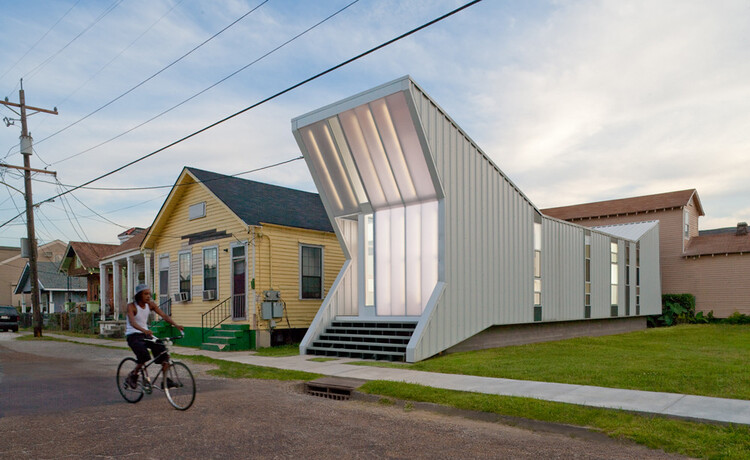
Emerging in port cities and working-class neighborhoods throughout the nineteenth century, the shotgun house became a durable response to density, climate, and constrained urban parcels, becoming one of the defining domestic forms of the Southern United States. Its narrow footprint, sequential plan, and deeply shaded porches produced a spatial logic that was economical and environmentally responsive before either term became central to architectural discourse. From New Orleans and Mobile to Houston and Louisville, shotgun houses formed the physical fabric of neighborhoods shaped by migration, labor, community, and cultural life. Though often dismissed as ordinary, vernacular construction, the housing typology has long embodied sophisticated ideas about climate adaptation, social adjacency, and incremental urban growth, making it one of the most influential domestic forms in the history of the American city.

Reconsidering the Shotgun House: Between Preservation, Experimentation, and Displacement - Image 1 of 4Reconsidering the Shotgun House: Between Preservation, Experimentation, and Displacement - Image 2 of 4Reconsidering the Shotgun House: Between Preservation, Experimentation, and Displacement - Image 3 of 4Reconsidering the Shotgun House: Between Preservation, Experimentation, and Displacement - Image 4 of 4Reconsidering the Shotgun House: Between Preservation, Experimentation, and Displacement - More Images+ 20

Urban Transformation of San Salvador: Contemporary Placemaking in Central America

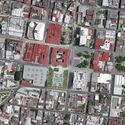
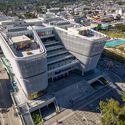
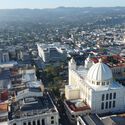
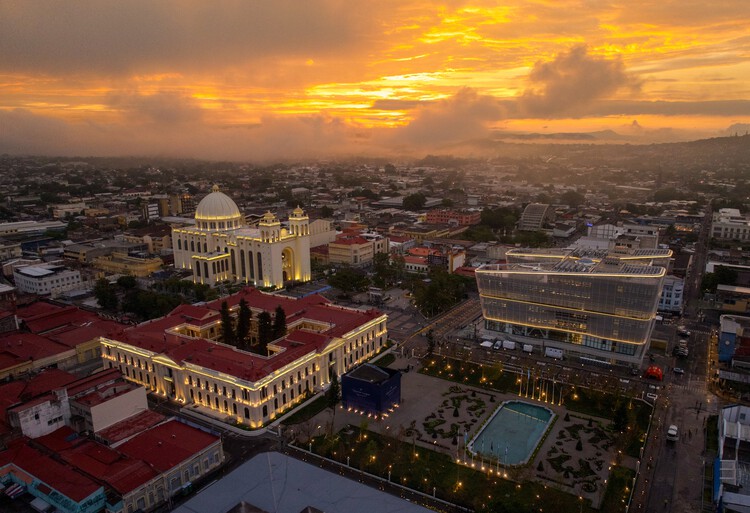
Historic center renewal has become a recurring strategy in Central American cities seeking to reassert the symbolic, economic, and functional relevance of their traditional cores. These processes often combine physical rehabilitation, institutional investment, and stricter control over public space. San Salvador offers a recent and instructive case, which allows for understanding of how interventions in inherited civic spaces balance infrastructure improvement with heritage conservation and social regulation. It also enables the assessment of how these choices resonate within broader debates on urban transformation in the region.

Urban Transformation of San Salvador: Contemporary Placemaking in Central America - Image 1 of 4Urban Transformation of San Salvador: Contemporary Placemaking in Central America - Image 2 of 4Urban Transformation of San Salvador: Contemporary Placemaking in Central America - Image 3 of 4Urban Transformation of San Salvador: Contemporary Placemaking in Central America - Image 4 of 4Urban Transformation of San Salvador: Contemporary Placemaking in Central America - More Images+ 5

Studioninedots Transforms a Former Tobacco Factory into a Mixed-Use Urban Complex in Groningen, Netherlands

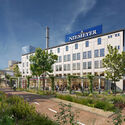
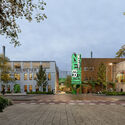
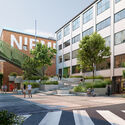
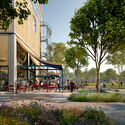
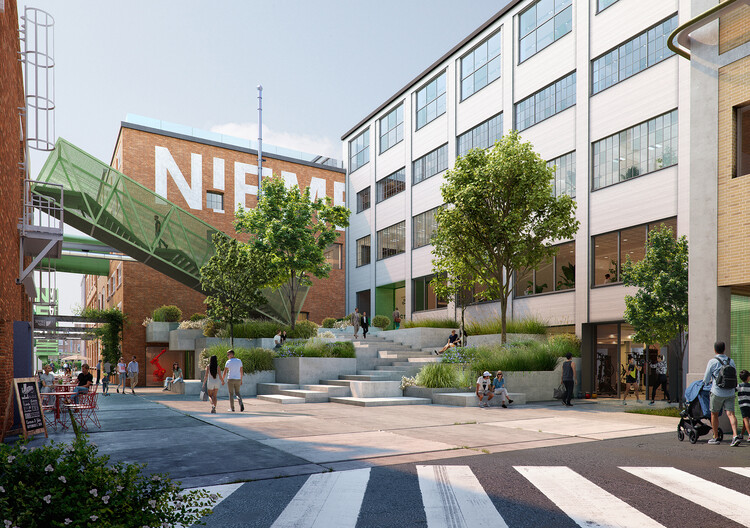
Studioninedots is leading the transformation of a 200-year-old tobacco factory site into Niemeyer, a mixed-use urban complex accommodating digital innovation, cultural venues, hospitality, education, and manufacturing within the existing industrial buildings. Located on Paterswoldseweg in Groningen, the Netherlands, the 38,000 m² project is commissioned by MWPO, with MWPO and Campus Groningen jointly acting as clients for the Shared Facilities. Currently in the design phase (2023–2025), the project's provisional timelines indicate a phased construction start beginning with the factory's southern section in 2026, followed by the northern section in 2027. The Amsterdam-based office's proposal opens the formerly closed industrial ensemble to the public, introducing cafés, galleries, workshops, and shared workspaces distributed across interior streets and adjacent park areas.

Studioninedots Transforms a Former Tobacco Factory into a Mixed-Use Urban Complex in Groningen, Netherlands - Image 1 of 4Studioninedots Transforms a Former Tobacco Factory into a Mixed-Use Urban Complex in Groningen, Netherlands - Image 2 of 4Studioninedots Transforms a Former Tobacco Factory into a Mixed-Use Urban Complex in Groningen, Netherlands - Featured ImageStudioninedots Transforms a Former Tobacco Factory into a Mixed-Use Urban Complex in Groningen, Netherlands - Image 3 of 4Studioninedots Transforms a Former Tobacco Factory into a Mixed-Use Urban Complex in Groningen, Netherlands - More Images+ 11

Shifting Urban Perspectives: Beimen's Journey from Obstacle to Urban Anchor in Taipei

Subscriber Access | 

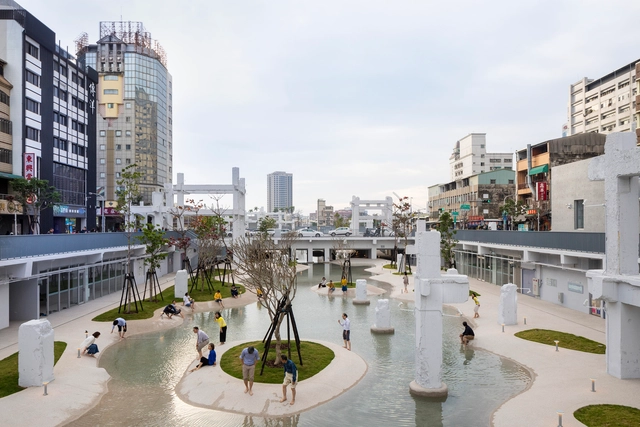
The North Gate of Taipei, also known as Beimen, stands not only as a reminder of the city's complex history but also as a witness to the changing urban landscape around it, and its shifting attitudes towards the urban spaces bordering heritage buildings. Initially a Chinese imperial frontier, spared from demolition during the Japanese colonial dominion, crowded by overpasses and highways in the postwar modernization efforts, it has recently regained its prominent status through the development of the plaza that now frames it. The gate's resilience through shifting urban priorities and architectural policies tells a story of heritage preservation not only through the built form, but also through the open spaces framing it.

Shifting Urban Perspectives: Beimen's Journey from Obstacle to Urban Anchor in Taipei - Image 1 of 4Shifting Urban Perspectives: Beimen's Journey from Obstacle to Urban Anchor in Taipei - Image 6 of 4Shifting Urban Perspectives: Beimen's Journey from Obstacle to Urban Anchor in Taipei - Image 2 of 4Shifting Urban Perspectives: Beimen's Journey from Obstacle to Urban Anchor in Taipei - Image 3 of 4Shifting Urban Perspectives: Beimen's Journey from Obstacle to Urban Anchor in Taipei - More Images+ 9

Foster+Partners Unveils Urban Regeneration Masterplan for Shanghai’s Putuo District

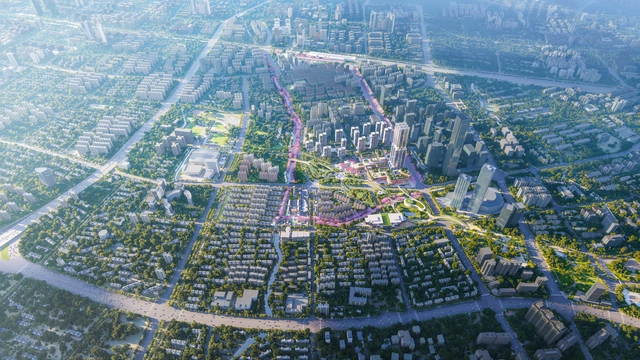
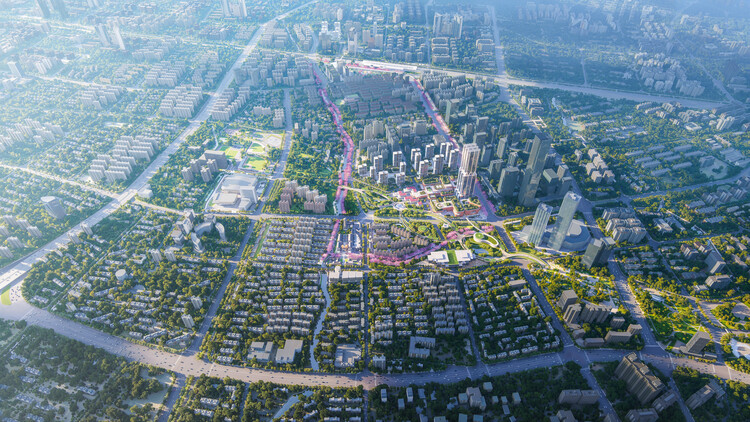
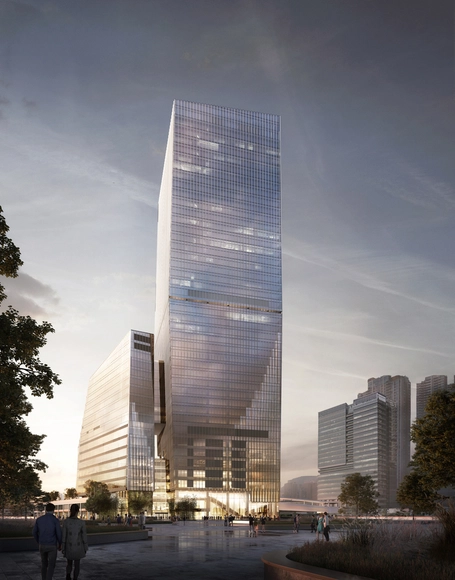
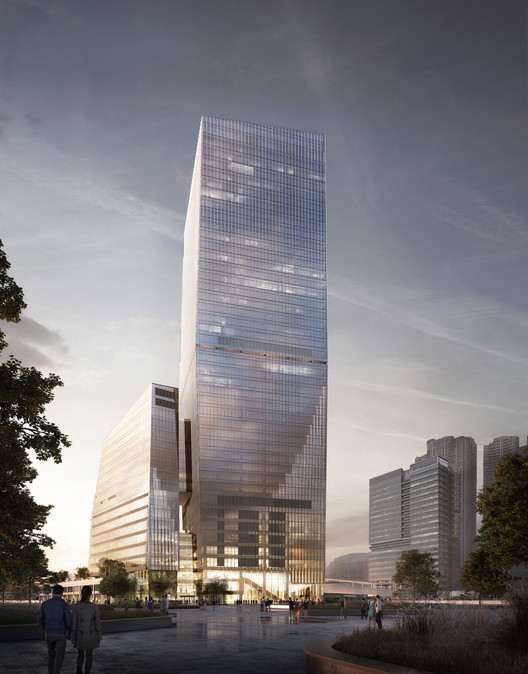
Foster + Partners has won a competition to transform Shanghai's Putuo District. The 3.2-square-kilometre masterplan focuses on the urban regeneration of the area surrounding Shanghai West Railway Station, creating a new gateway to China's most populous city. Structured around key transportation modes, the project includes two parallel pedestrian corridors that connect the station to Zhenru Temple and a new urban center planned on a currently undeveloped site. The masterplan follows the 2024 proposals for the Changfeng mixed-use development within Putuo District's Shanghai Science and Technology Finance cluster, part of the broader Shanghai 2035 Masterplan.

Foster+Partners Unveils Urban Regeneration Masterplan for Shanghai’s Putuo District - Image 1 of 4Foster+Partners Unveils Urban Regeneration Masterplan for Shanghai’s Putuo District - Image 2 of 4Foster+Partners Unveils Urban Regeneration Masterplan for Shanghai’s Putuo District - Image 3 of 4Foster+Partners Unveils Urban Regeneration Masterplan for Shanghai’s Putuo District - Image 4 of 4Foster+Partners Unveils Urban Regeneration Masterplan for Shanghai’s Putuo District - More Images

Revitalizing Urban Ecosystems: 4 Projects Reconnecting Cities with Their Water Heritage

Water architecture has always been important throughout human history. From the aqueducts in ancient Rome to the grand canals of Venice, water has not only sustained life but also played an important role in shaping the urban environment. It has facilitated trade, nourished agricultural lands, and provided a sense of place and identity to different communities. Despite water's historical role, during the 20th century, many cities chose to bury their waterways underground, primarily for safety and hygiene reasons, as these channels often served as open sewers.

In today's rapidly urbanizing world, where cities dominate the landscape, water is being rediscovered as a means of ecological regeneration. There is a growing movement to reopen and re-naturalize urban waterways to restore them as vital ecological corridors within the city. More and more cities are now looking towards the water in an attempt to reconnect with nature and create spaces where urban life and natural ecosystems can coexist harmoniously. This growing trend reflects a deeper understanding of water not just as a resource, but as a bridge to a more sustainable and resilient future for our cities.

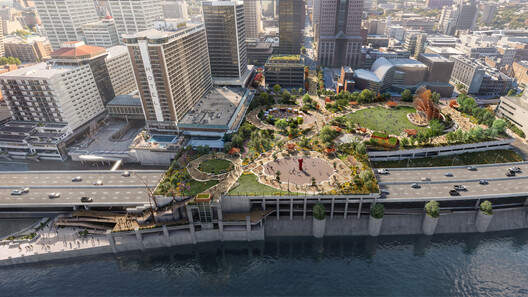
Revitalizing Urban Ecosystems: 4 Projects Reconnecting Cities with Their Water Heritage - Image 1 of 4Revitalizing Urban Ecosystems: 4 Projects Reconnecting Cities with Their Water Heritage - Image 2 of 4Revitalizing Urban Ecosystems: 4 Projects Reconnecting Cities with Their Water Heritage - Image 3 of 4Revitalizing Urban Ecosystems: 4 Projects Reconnecting Cities with Their Water Heritage - Image 4 of 4Revitalizing Urban Ecosystems: 4 Projects Reconnecting Cities with Their Water Heritage - More Images

Preserving Local Identity with Urban Renewal and Innovation in São Paulo

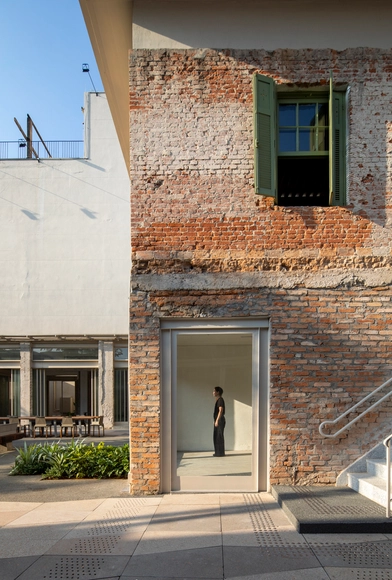
Urban renewal projects generally involve large-scale demolitions, resulting in the erasure of local historical identity and generating a massive amount of waste, along with the transportation of new materials for construction. Some projects, however, bring new perspectives and showcase different ways of doing things. This is the case of LAPI—an abbreviation for "Largo" and "Pinheiros"—, an example of urban occupation and requalification that respects local identity and promotes a new experience of urban space occupation by rethinking it based on its pre-existing elements. With architecture by SuperLimão and master planning by Spol, the project occupies an area of 20,000 m² and encompasses 29 properties distributed across three blocks in a traditional neighborhood in the West Zone of São Paulo. It is located at a strategic point where the city's main roads intersect, offering views of the thousands of people that circulate around it on a daily basis. We spoke with Thiago Rodrigues, architect and partner at the firm, about the challenges and opportunities of working on a project of this type.

A Reflection on Prostitution and Spatial Segregation in the Cities

Subscriber Access | 

Sex Day is an unofficial holiday created by marketers celebrated on September 6th in Brazil, highlighting one of the greatest taboos in modern society: sexuality. From an architectural and urban point of view, the immorality associated with sexual activities, especially in exchange for payment, deeply impacts our society and also affects the territory.

While sometimes considered morally wrong, sinful, forbidden, and impure, sex, sexuality, and pleasure are all inherent to human physiology. Prostitution is sometimes referred to as "the world's oldest profession," playing a fundamental role in our societies, as well as in our territory, in the spatial organization and dynamics of cities. This practice is at the margins of modern society and therefore has ended up occupying segregated spaces in the cities.

KCAP Reveals Updated Designs for Mixed-Use Development in Seoul

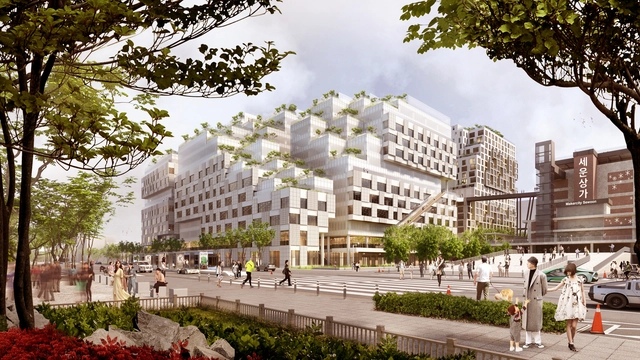
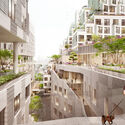
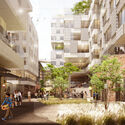
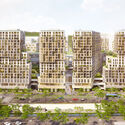
KCAP revealed an updated design for the Sewoon Grounds project in Seoul, a redevelopment plan to transform the district into a sustainable mixed-use area. The winning design of an international competition in 2017, intended to regenerate the 'Sewoon District 4' area of the city, the project aims to enhance the urban fabric while also integrating the existing built heritage and urban industry. KCAP's proposal generates a multi-layered scheme that builds on the successive layers of architecture and culture accumulated in time.

KCAP Reveals Updated Designs for Mixed-Use Development in Seoul - Image 1 of 4KCAP Reveals Updated Designs for Mixed-Use Development in Seoul - Image 2 of 4KCAP Reveals Updated Designs for Mixed-Use Development in Seoul - Image 3 of 4KCAP Reveals Updated Designs for Mixed-Use Development in Seoul - Image 4 of 4KCAP Reveals Updated Designs for Mixed-Use Development in Seoul - More Images+ 3

Miralles Tagliabue EMBT Wins Competition to Renovate 'Century Square' on East Nanjing Road in Shanghai, China

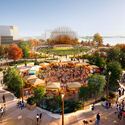
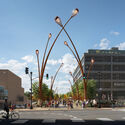
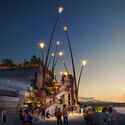
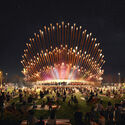
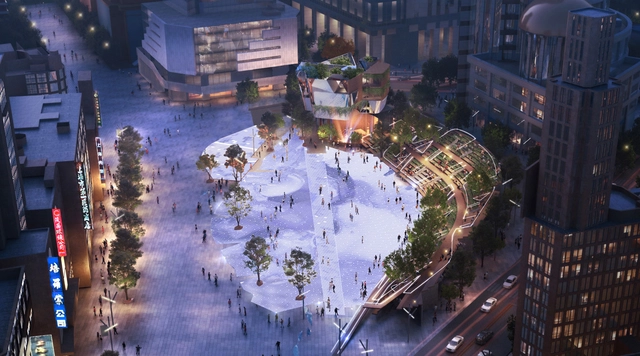
Miralles Tagliabue EMBT studio, led by Benedetta Tagliabue, has won an international competition to transform Century Square into a new green landmark in Shanghai, China. The first prize proposal, won against David Chipperfield Architects, offers to renovate the plaza located in one of the busiest commercial areas in the world, “re-naturalizing” the city center and introducing green spaces to improve the urban microclimate.

Miralles Tagliabue EMBT Wins Competition to Renovate 'Century Square' on East Nanjing Road in Shanghai, China - Image 1 of 4Miralles Tagliabue EMBT Wins Competition to Renovate 'Century Square' on East Nanjing Road in Shanghai, China - Image 2 of 4Miralles Tagliabue EMBT Wins Competition to Renovate 'Century Square' on East Nanjing Road in Shanghai, China - Image 3 of 4Miralles Tagliabue EMBT Wins Competition to Renovate 'Century Square' on East Nanjing Road in Shanghai, China - Image 4 of 4Miralles Tagliabue EMBT Wins Competition to Renovate 'Century Square' on East Nanjing Road in Shanghai, China - More Images+ 4

Snøhetta Designs Airside, a Mixed-Use Building on a Former Airport Site in Hong Kong

Snøhetta has revealed its first built project in Hong Kong, Airside, a 176,000 square meters mixed-use building. Located in the center of the former Kai Tak airport, the project commissioned by Nan Fung Group comprises a 200-meter tower merged seamlessly with its base.

Snøhetta Designs Airside, a Mixed-Use Building on a Former Airport Site in Hong Kong - Image 1 of 4Snøhetta Designs Airside, a Mixed-Use Building on a Former Airport Site in Hong Kong - Image 2 of 4Snøhetta Designs Airside, a Mixed-Use Building on a Former Airport Site in Hong Kong - Image 3 of 4Snøhetta Designs Airside, a Mixed-Use Building on a Former Airport Site in Hong Kong - Image 4 of 4Snøhetta Designs Airside, a Mixed-Use Building on a Former Airport Site in Hong Kong - More Images+ 10