In anticipation of the 2018 Conscious Cities Festival this October, we are delighted to announce an open call for submissions to its official publication - showcasing the diverse and impactful thinking by Conscious Cities practitioners.


In anticipation of the 2018 Conscious Cities Festival this October, we are delighted to announce an open call for submissions to its official publication - showcasing the diverse and impactful thinking by Conscious Cities practitioners.

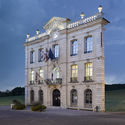
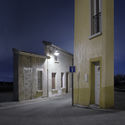
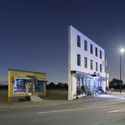
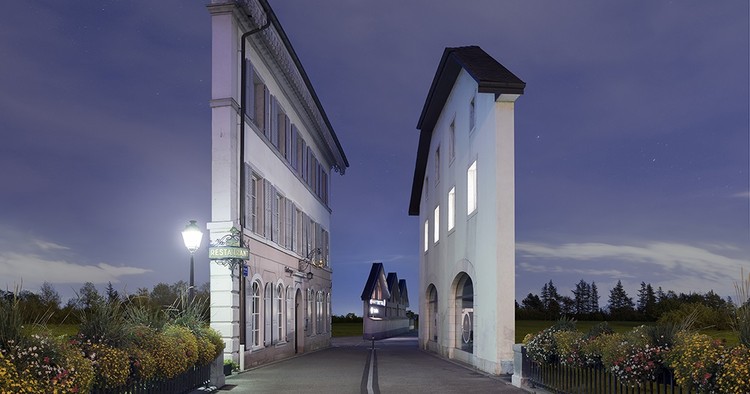
In his ongoing photo-series "Façades," French photographer Zacharie Gaudrillot-Roy a series of images in which he removes the mass and depth of buildings, and leaves behind the mere fragments of exterior skin. The photos, which resemble deserted Hollywood sets, illustrate roadways, towns, apartment complexes, and other environments without giving away the ideas of anything beyond the superficial image of the facade—leaving much to the imagination.
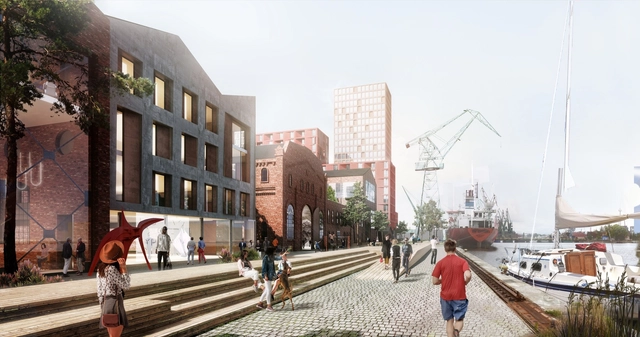
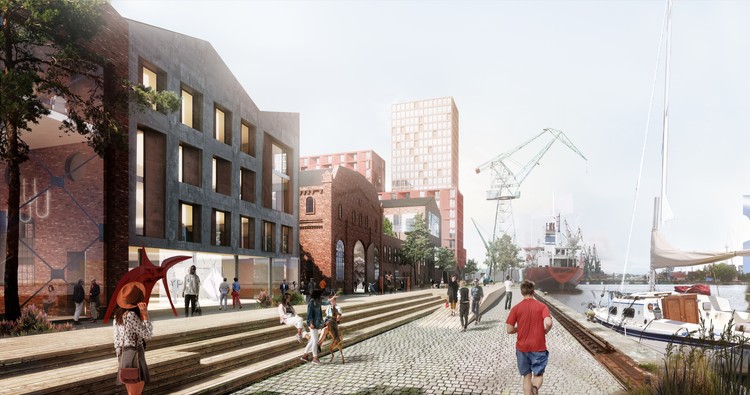
Henning Larsen has released images of their proposed urban development for the historic Imperial Shipyard at Gdansk, Poland. The 4.3million-square foot (400,000-square-meter) development seeks to transform the shipyard, built in 1844, into a “powerful financial and social engine building a thriving, mixed-use, inner-city neighborhood by the waterfront that is alive around the clock.”
The old industrial site has played a central role in the economic development of both Gdansk and Poland, serving as a key shipbuilding hub on the Baltic Coast. Through creating spines of public life centered on pedestrian/bicycle-friendly streets, Henning Larsen seeks to maintain the shipyard’s strong presence through waterfront living, work, and recreation.
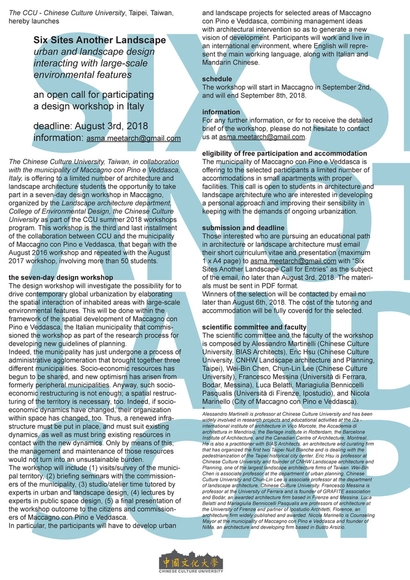
The Chinese Culture University, Taiwan, in collaboration with the municipality of Maccagno con Pino e Veddasca, Italy, is offering to a limited number of architecture and landscape architecture students the opportunity to take part in a seven-day design workshop in Maccagno, organized by the Landscape architecture department, College of Environmental Design, the Chinese Culture University as part of the CCU summer 2018 workshops program. This workshop is the third and last installment of the collaboration between CCU and the municipality of Maccagno con Pino e Veddasca, that began with the August 2016 workshop and repeated with the August 2017 workshop, involving more than 50 students.
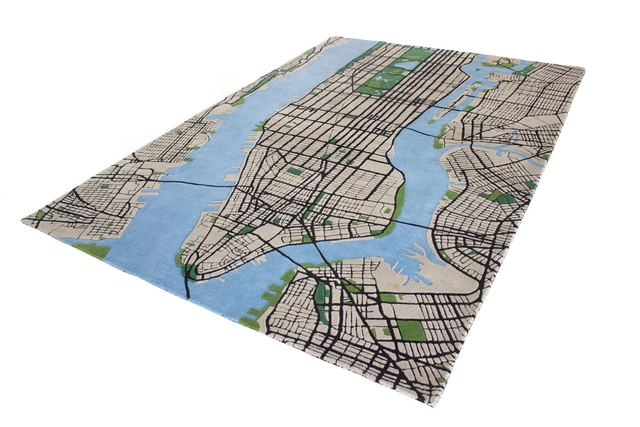
Have you ever dreamed of crossing from Midtown Manhattan to Brooklyn in just a few leisurely steps? These lofty ambitions are made possible on the New York City Carpet from South African studio Shift Perspective. Not literally though, unfortunately.
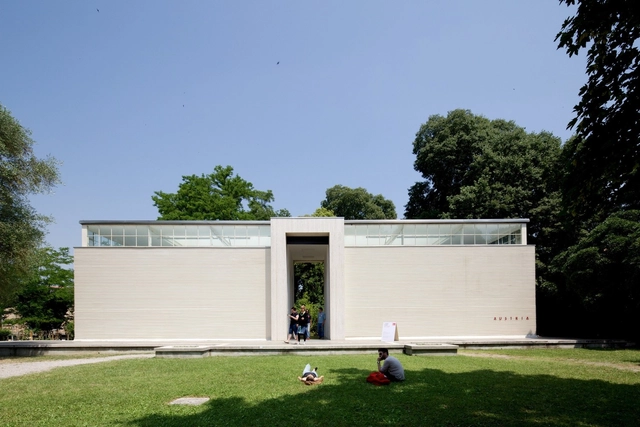
As part of our 2018 Venice Architecture Biennale coverage we present the proposal for the Austrian Pavilion. Below, the participants describe their contribution in their own words.
Cities are largely defined by their public spaces. It is here that a range of user expectations come together. The aim of urban design is to find a balance, to act with an eye to the future and cities are largely defined by their public spaces. It is here that a range of user expectations come together. The aim of urban design is to find a balance, to act with an eye to the future and to increase the attention given to public space. Public space is social space. And this is precisely why design is so important. In terms of architectural language, the quality of public space is defined by the balance between space and place, by convincing materials and by major urban design signals as much as by spontaneous and informal gestures. And, always, by high aesthetic aspirations.

France-based Hamonic + Masson Architects has been selected as one of the winners for the Imagine Angers Competition, which asked teams to propose innovative designs to be built on one of six different sites in the town of Angers, France. The winning teams were announced by the mayor of Angers at MIPIM, a real estate conference, held in Cannes. Other participating architects include Manuelle Gautrand, Steven Holl, Duncan Lewis, XTU, Sou FUJIMOTO and OXO architects.
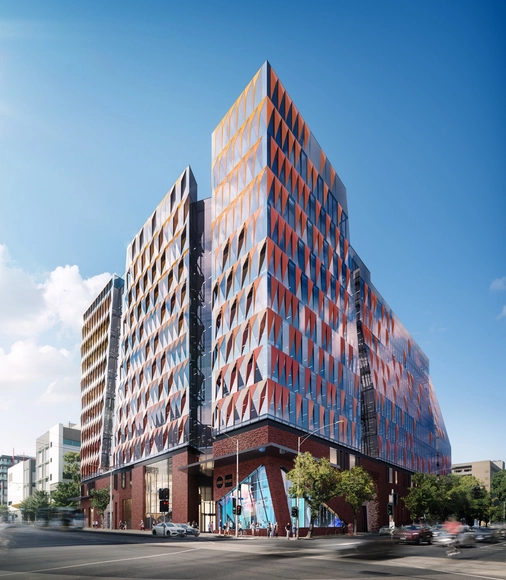
In partnership with Lendlease and the University of Melboure, Woods Bagot designed an architectural reflection of the university itself. Named the Carlton Connect Initiative, this masterplan will be a mixed-use precinct where not only university students and staff, but also international business professionals, researchers, and start-ups can come participate in idea exchange. In order to attract the best and brightest for the university, Woods Bagot is pursuing the highest standard of cutting-edge, sustainable design.

How can the future design and configuration of cities promote greater sustainability in the conditions of urban life? Dust to Dust: Redesigning Urban Life in Healthy Soils is an urban design ideas competition, supporting the UN Sustainable Development Goals.
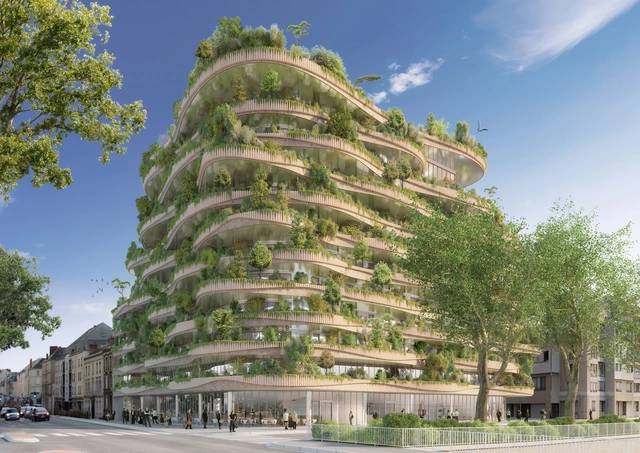
For the "Imagine Angers" international design competition, Vincent Callebaut Architectures worked in collaboration with Bouygues Immobilier group to submit a proposal for the French city at the intersection of social and technological innovation, with a focus on ecology and hospitality. Named Arboricole, meaning “tree” and “cultivation,” this live-work-play environment gives back as much to the environment as it does its users. Although WY-TO prevailed in the competition, the Callebaut scheme succeeded in winning the public vote.
AIRSTUDIO.jpg?1521515633&format=webp&width=640&height=580)
International architecture competition, Imagine Angers, asked designers to create an innovative solution for one of six sites in Angers, France. Paris-based architecture firm WY-TO and Crespy & Aumont Architectes interlaced the natural landscape with a contemporary lifestyle for all ages in their winning design, Arborescence.

Recently, long-standing architecture critic for the LA Times Christopher Hawthorne announced that he was stepping down to take up the position of chief design officer for the City of Los Angeles in Mayor Eric Garcetti’s administration. According to Hawthorne, the role will involve raising “the quality of public architecture and urban design across the city — and the level of civic conversation about those subjects.” This dramatic shift from the question: what is the role of the critic and architecture criticism in shaping civic architecture?

A bounty of technological innovations in the 21st century have led to the theorization and implementation of so-called "Smart Cities," urban environments driven by data, and designed for efficiency. Although most smart technology focuses on infrastructure, a new tech startup named UNSense has been launched with adopts a human-centric approach, focusing on health and wellbeing.
Founded by Ben van Berkel, Principal Architect of Dutch firm UNStudio, and based in an Amsterdam innovation hub, UNSense aims to use technical interventions in the urban realm to improve people’s physical, mental and social health. As an independent, sister company of UNStudio, UNSense will specialize in sensor-driven technology for user-focused architecture – a "software" approach offering a counterpoint to the "hardware" of UNStudio.




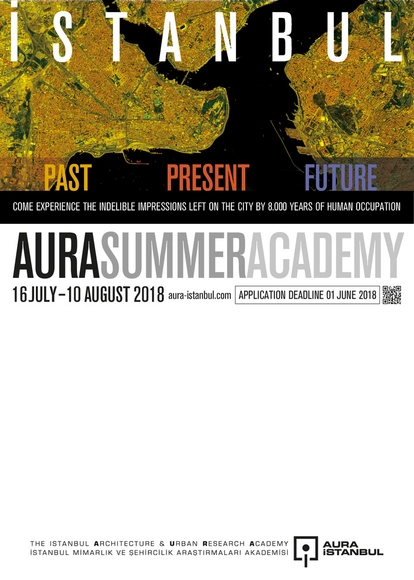
Architecture and Urbanism Research Academy (AURA) Istanbul would like to invite you to join its inspiring Summer Academy, "Istanbul: Past, Present, and Future".

Landezine is calling all offices practicing landscape architecture to submit entries for the third edition of LILA – Landezine International Landscape Award by March 31st, 2018. This year, we have 4 categories and 7 awards.

The Building Brooklyn Awards is the Brooklyn Chamber of Commerce's annual architectural competition celebrating the best built and renovation projects in the borough for the prior year, with substantial completion by December 31.
In its 18th year, the competition is open to only projects within Brooklyn, NY and applications may be self-nominated or nominated by another entity. The annual award ceremony is held every July.
Mumbai stands as the wealthiest city in India and is well-known for its diverse culture and is considered a melting pot of several cultures and communities. Traffic congestion remains a major apprehension despite the progress in technological fields concerning public transportation. With a present population of over 21 million, the city generates more than 17 million trips in a day. Majority of Mumbaikars depend on local trains and buses as their means of egress.
![Call for Submissions / 2018 Summer [IN]STITUTE in Environmental Design - Featured Image](https://snoopy.archdaily.com/images/archdaily/media/images/5a9d/9db2/f197/ccf8/6c00/012c/slideshow/open-uri20180305-14309-k3t69r.jpg?1520278953&format=webp&width=640&height=580)
UC Berkeley's College of Environmental Design is now accepting applications for the 2018 Summer [IN]STITUTE in Environmental Design!