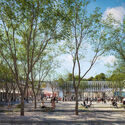
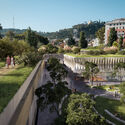
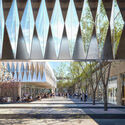
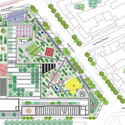
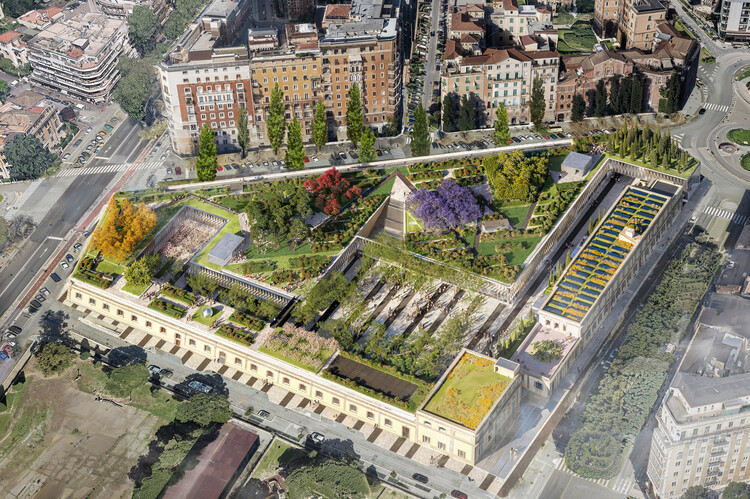
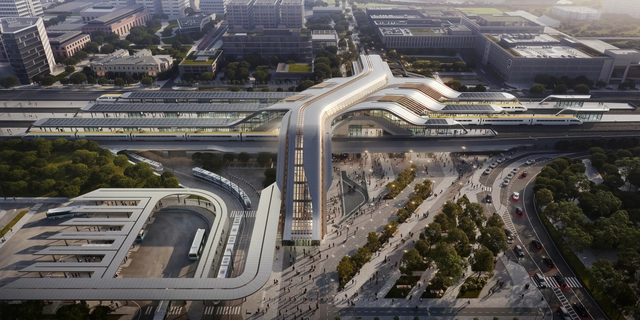
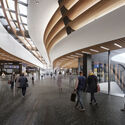
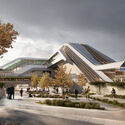
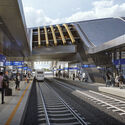
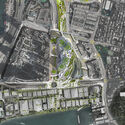
Stefano Boeri Architetti, Depositi Delle Vittorie Render. Image Courtesy of Stefano Boeri Architetti
The Rome City Council has approved a Memorandum for the urban regeneration of the Depositi delle Vittorie in Piazza Bainsizza, a former ATAC depot in Rome dating back to the early 1900s. Abandoned for nearly two decades and now privately owned, the site is set to be transformed into a multifunctional complex designed by Stefano Boeri Architetti. The project envisions the adaptive reuse of the former transportation infrastructure through the introduction of cultural, educational, commercial, co-working, and leisure functions, alongside new public spaces and extensive landscaped areas.
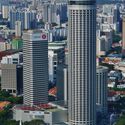
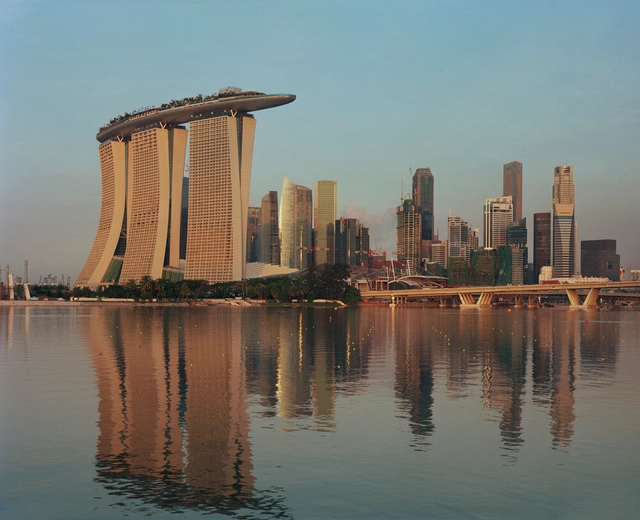
Southeast Asia is often narrated as a kind of architectural playground—an arena where modern and contemporary ideals have been tested at full scale through singular, iconic buildings. One can trace an easy lineage through names that have helped shape the region's skyline imagination: Paul Rudolph's Lippo Centre in Hong Kong and The Concourse in Singapore, I.M. Pei's OCBC Centre and Hong Kong's Bank of China Tower, Norman Foster's Supreme Court of Singapore and the HSBC Main Building in Hong Kong, Ron Phillips' Hong Kong City Hall, Moshe Safdie's Marina Bay Sands. Yet this familiar history—told through objects, colonialism, authorship, and signature forms—risks missing a deeper, more consequential layer of influence: the planning logics and infrastructural frameworks that have quietly structured how these cities expand, densify, and distribute everyday life.
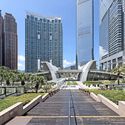
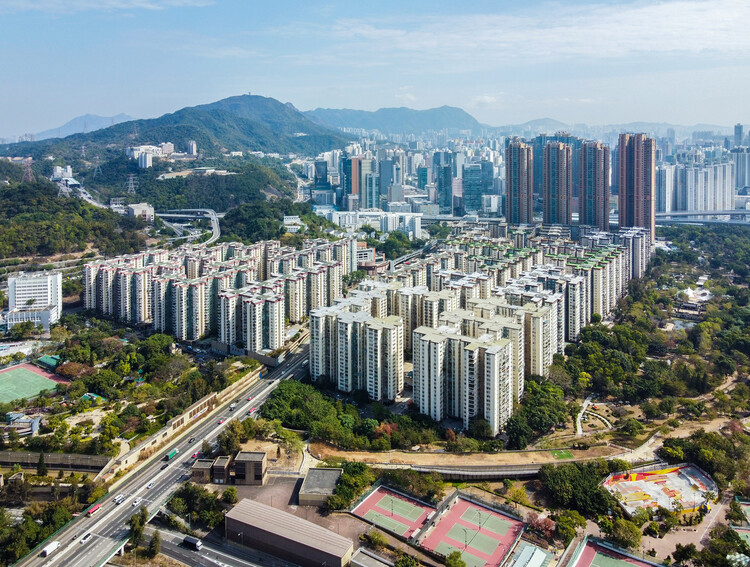
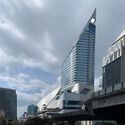
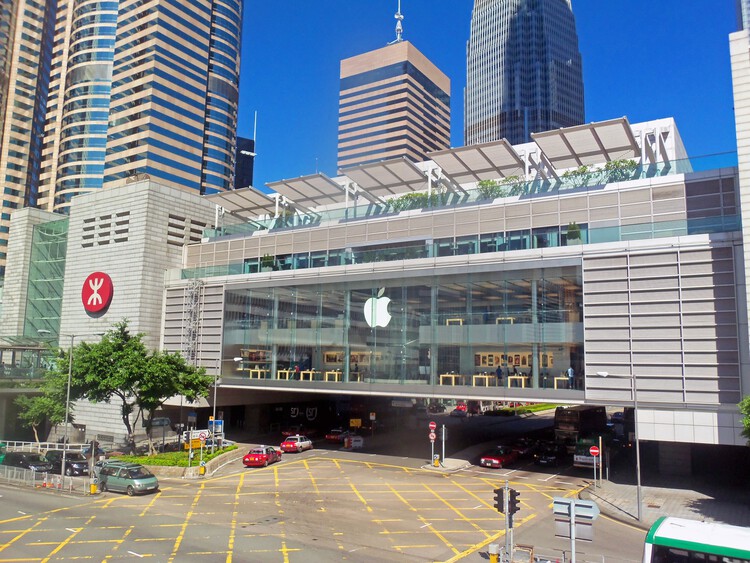
If elevated networks reveal a city that increasingly walks above the street, the podium–tower is the typology that often makes that condition feel inevitable. Across Southeast Asia, podium–tower projects have become one of the dominant languages of metropolitan growth: a system that concentrates housing, jobs, retail, and transit connections into highly legible and managed parcels. From an urban planning perspective, the model can be remarkably effective—absorbing congestion, formalizing circulation, and delivering density quickly. Yet as it spreads, the typology also raises a quieter question: what does it optimize for, and what does it erode—especially at the level of the street, where urban life is meant to be negotiated rather than curated?
At its simplest, the podium–tower is a hybrid structure consisting of a high-coverage, low-rise podium supporting one or more slender vertical towers. The podium typically carries the logistical and commercial weight of the development—retail, parking, loading, drop-offs, back-of-house services, and often amenity decks—while the tower stacks private programs above, whether residential, office, hotel, or mixed use. The promise is twofold: maximize urban density while maintaining a "human-scaled" street wall, and separate the messy logistics of city life from the quieter domain of living and work.
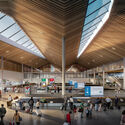
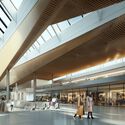
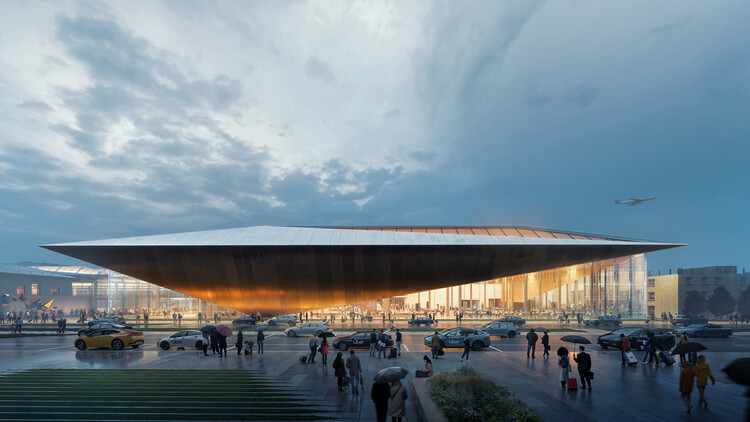
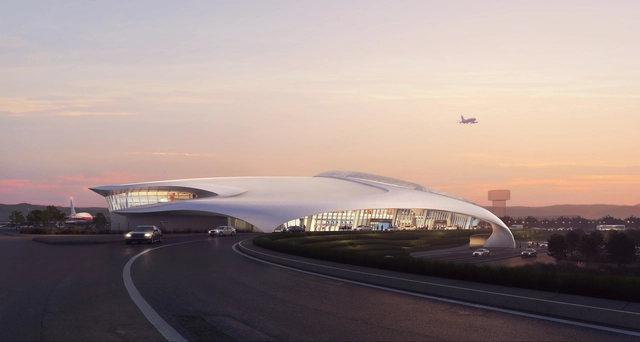
Construction has begun on the new Bishoftu International Airport (BIA), designed by Zaha Hadid Architects for Ethiopian Airlines Group. Ethiopia's Prime Minister, Abiy Ahmed Ali, laid the cornerstone at the airport's groundbreaking ceremony on Saturday, January 10, 2026. The new airport will be located approximately 40 kilometers south of the Ethiopian capital, Addis Ababa, and is planned to become Africa's largest airport. Phase One of the project is designed to serve 60 million passengers per year. Subsequent phases are expected to increase capacity to up to 110 million passengers annually, supported by four runways and parking for 270 aircraft, more than four times the capacity of Ethiopia's current main airport, according to statements by the Prime Minister.
Toronto Paramedic Services Multi-function Station 02. Image Courtesy of Diamond Schmitt Architects
As cities and infrastructures evolve to meet shifting cultural, environmental, and social demands, new architectural projects are redefining how public spaces and civic institutions operate. This edition of Architecture Nowbrings together proposals spanning different contexts and scales: on Yakushima Island, Jean Nouvel embeds a boutique retreat for NOT A HOTEL into a UNESCO-listed forest landscape; in New York City, Rossetti and WSP are preparing a major renovation of Arthur Ashe Stadium to expand capacity and enhance the visitor experience; in Toronto, Diamond Schmitt and gh3* have broken ground on a mass-timber, net-zero paramedic station; and across the English Channel, Hollaway Studio is leading a transformation of LeShuttle's UK and French terminals into more seamless and sustainable gateways. Together, these projects reflect how design is being used to adapt existing systems and landscapes to new forms of public life.
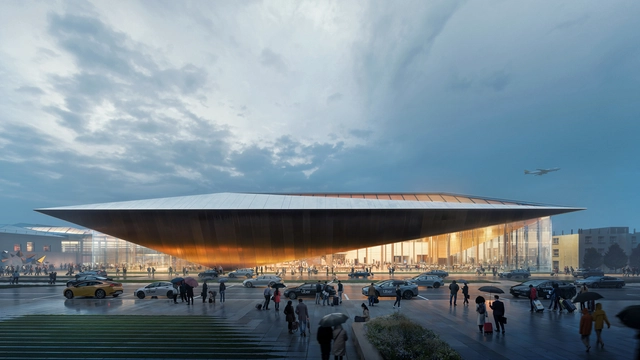
Lithuanian Airports has announced Zaha Hadid Architects as the winner of the international competition to design the new arrivals terminal at Vilnius Airport. Conceived as an integral part of the airport's evolving infrastructure, the new terminal will complement the recently completed departure terminal, enabling Vilnius Airport to accommodate up to 10.6 million passengers annually. The project marks a significant step in the airport's long-term development strategy, addressing future growth in passenger demand while enhancing Lithuania's role as a key gateway in the Baltic region.
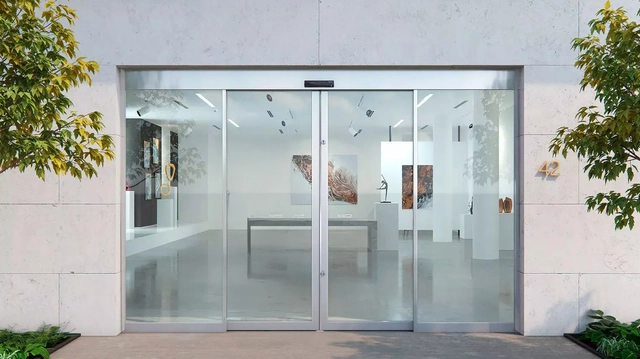
SL500 Sliding Door System. Image Courtesy of ASSA ABLOY
Throughout history, doors—and later automatic doors—have served a far greater purpose than merely marking an entrance or exit. They define thresholds, guide the flow of movement, and subtly shape the way people interact within a space. We can trace their evolution back to the 1st century, when Heron of Alexandria devised a steam-powered door—an early example of technology merging with architecture. Since then, contactless automatic door systems have incorporated technological advancements that enhance operation and redefine their role within buildings. Today, they are integrated across a range of building types and scales, acting as transitional elements that enhance comfort, energy efficiency, and the overall quality of indoor spaces.
https://www.archdaily.com/1029498/the-greener-future-of-automatic-door-systems-a-shift-in-design-and-performanceEnrique Tovar
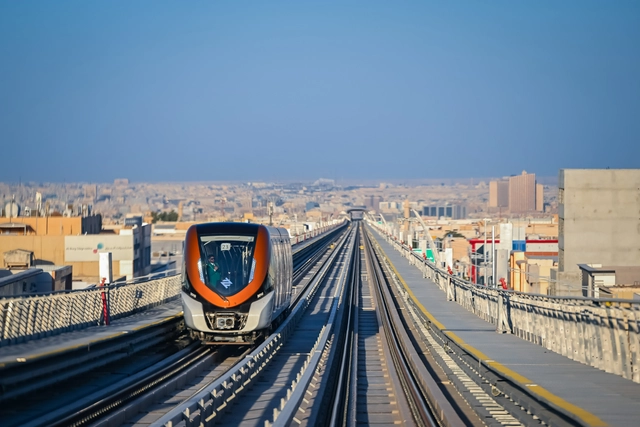
The Royal Commission for Riyadh City (RCRC) has confirmed that the Orange Line of the Riyadh Metro, also known as the Al Madinah Al Munawwarah Axis, began operations on Sunday, January 5, 2025. Spanning 41 kilometers, the Orange Line runs east to west, connecting Jeddah Road in the west to the Second Eastern Ring Road near Khashm Al Aan in the east in Saudi Arabia. This newly operational line is a key component of the city's metro system, designed to enhance urban mobility and connectivity.
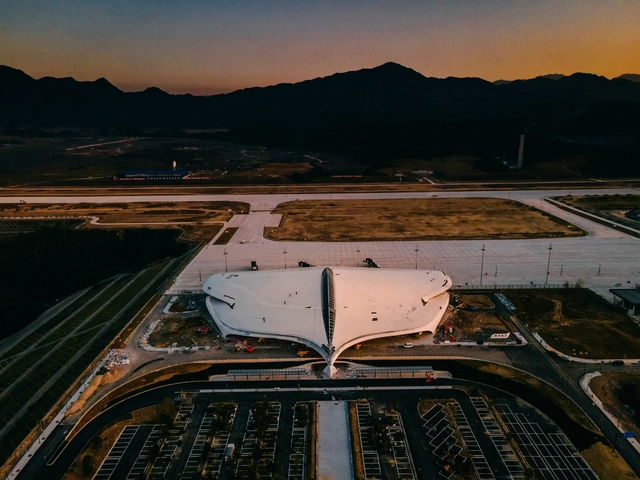
MAD Architects has provided an exciting update on the construction of Lishui (LIJ) Airport in China, now in its final stages. The project, which emphasizes harmony with nature, is scheduled to open by the end of 2024. Nestled within the foothill valleys of Lishui, the airport is designed to embody the city's reputation as a "forest city."
Courtesy of Safdie Architects | Marina Bay Islands
Nestled in the heart of Southeast Asia, Singapore stands as a beacon of sustainable urbanization. According to the 2016 Green City Index, the city-state of Singapore was the greenest city in Asia at one point. Renowned as the "City in a Garden," Singapore has intertwined lush greenery, verdant parks, and new environmental policies into its urban fabric/ After gaining independence in 1965, the city-state stands as a testament to how urban life can integrate with nature.
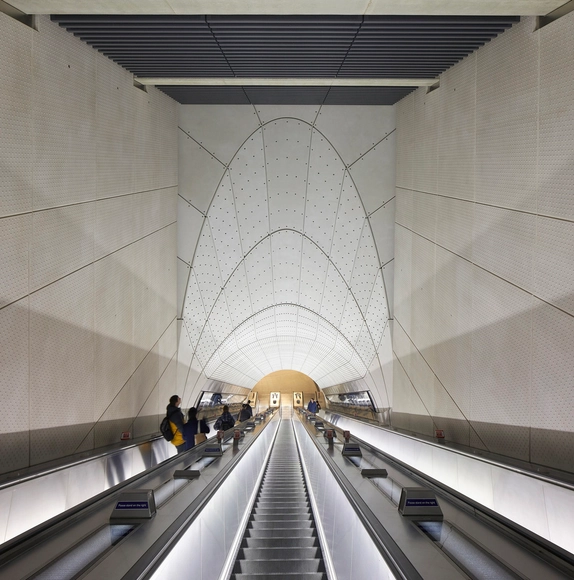
The Royal Institute of British Architects (RIBA) has announced the Elizabeth Line, designed by Grimshaw, Maynard, Equation, and AtkinsRéalis, as the winner of the 2024 RIBA Stirling Prize. Since its inception in 1996, the prestigious annual award sets out to recognize UK's best new architecture. Named in honor of Queen Elizabeth II, the Elizabeth Line represents an important development for London's transportation network. Connecting Reading and Heathrow to Essex and South East London, the development spans 62 miles of track and 26 miles of tunnels, a complex and expansive undertaking accommodating 700,000 passengers every weekday.
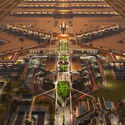
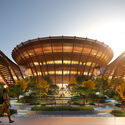
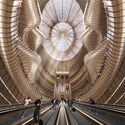
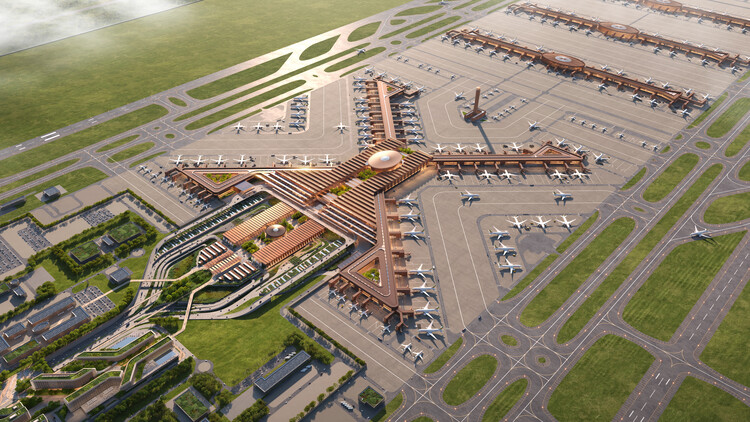
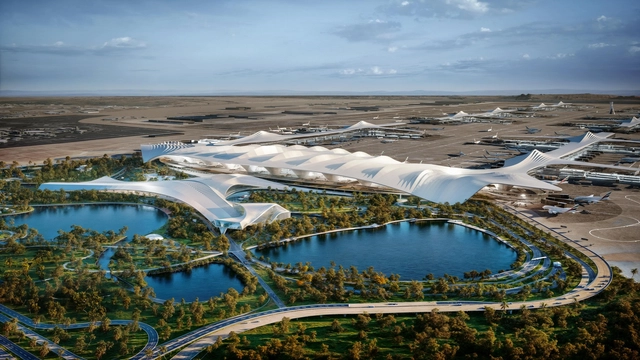
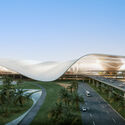
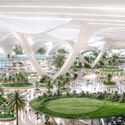
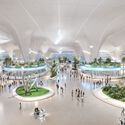
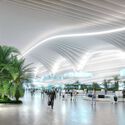
Courtesy of COOP HIMMELB(L)AU | Al Maktoum International Airport
Coop Himmelb(l)au has been selected to lead the architectural design for the new Al Maktoum International Airport in Dubai, United Arab Emirates. Working in collaboration with Dubai Aviation Engineering Projects (DAEP) and Dar Al-Handasah, the design integrates advanced structural solutions, energy efficiency, and modern technologies to create a facility of global significance.
Today, the first cornerstone has been laid at Zaha Hadid Architects' new terminal, marking the start of construction works for the Ülemiste Passenger Terminal in Tallinn, Estonia. Zaha Hadid Architects won the competition in 2019 to design this transport hub, serving as a multi-modal transport hub for city commuters, international rail passengers, and air travelers using the adjacent Tallinn Airport. Set to open in 2028, the hub has been designed to unite various districts of the city, currently divided by railway tracks, and will act as a connecting bridge for the city.
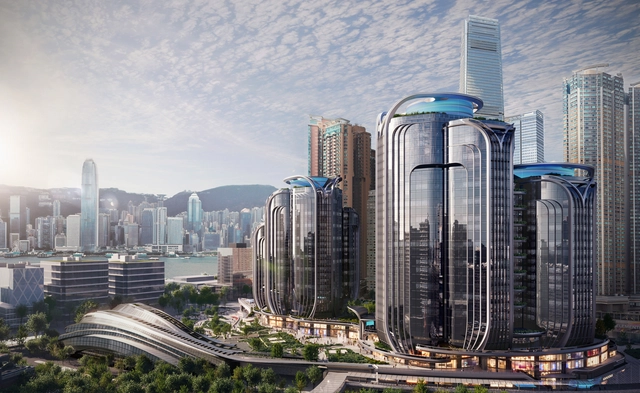
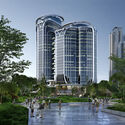
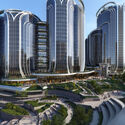
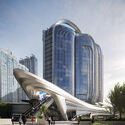
Construction has reached the roof level in Zaha Hadid Architect’s development above Hong Kong High-Speed Rail West Kowloon Terminus. Adjacent to the West Kowloon Cultural District, this development connects established and emerging neighborhoods with a network of public gardens and landscaped plazas. Designed by Zaha Hadid Architects (ZHA), it seeks to integrate seamlessly with the surrounding station and rooftop park, offering civic, office, and retail spaces.
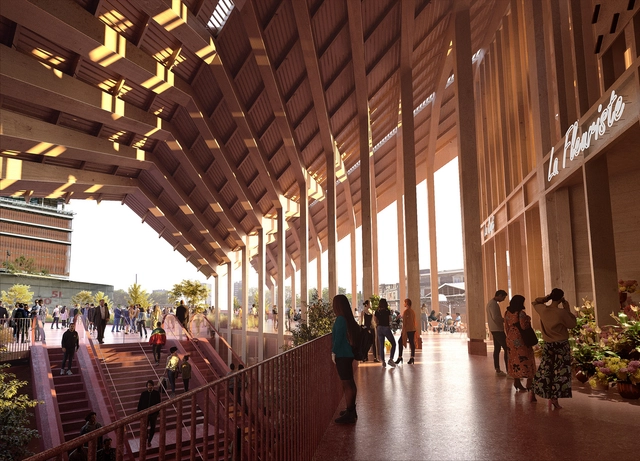
Bjarke Ingels Group and A+Architecture have revealed the design for the 12,000-square-meter Marengo Multimodal Transport Hub in Toulouse, France. The project will expand the functionality of the city’s central station, Gare Matabiau, strengthening the area’s public transport networks by creating a hub for bus, railway, and metro, all connected under one roof. The design of the new hub takes cues from the city’s distinctive roofscape and the traditional use of the rose-colored “foraine” brick, employing a mass timber structure and low-carbon concrete to ensure a sustainable intervention adapted to its environment. The Hub is set to begin construction in 2026.
MAD Architects has just unveiled the design for LishuiAirport in China. Dubbed the "forest city,” Lishui is known for its green landscapes and valleys in the Southwest Zhejiang Province. Situated amidst hilly terrain, approximately 15 kilometers southwest of the city, the airport is envisioned as a domestic, regional transportation hub seeking to harmonize with the natural surroundings.