1. ArchDaily
  2. Transit-Oriented Development

Transit-Oriented Development: The Latest Architecture and News

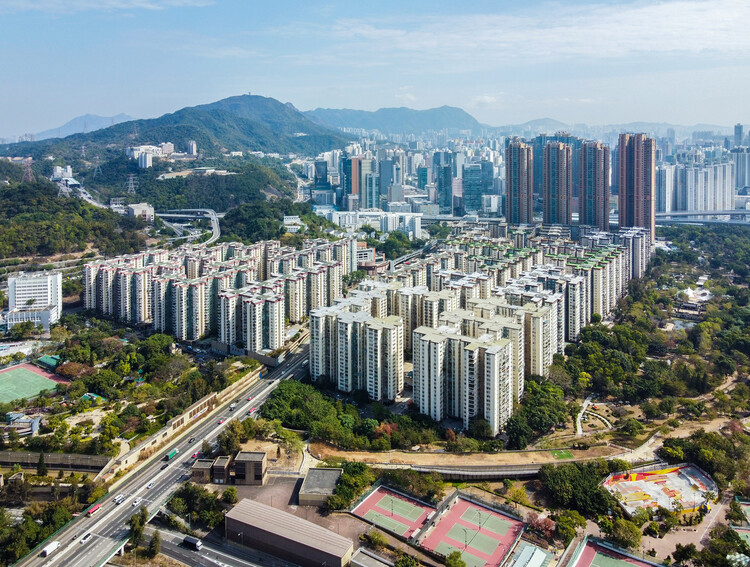
After Le Corbusier: How Southeast Asia Turned the Satellite City Into a Transit Megaproject

Southeast Asia is often narrated as a kind of architectural playground—an arena where modern and contemporary ideals have been tested at full scale through singular, iconic buildings. One can trace an easy lineage through names that have helped shape the region's skyline imagination: Paul Rudolph's Lippo Centre in Hong Kong and The Concourse in Singapore, I.M. Pei's OCBC Centre and Hong Kong's Bank of China Tower, Norman Foster's Supreme Court of Singapore and the HSBC Main Building in Hong Kong, Ron Phillips' Hong Kong City Hall, Moshe Safdie's Marina Bay Sands. Yet this familiar history—told through objects, colonialism, authorship, and signature forms—risks missing a deeper, more consequential layer of influence: the planning logics and infrastructural frameworks that have quietly structured how these cities expand, densify, and distribute everyday life.

After Le Corbusier: How Southeast Asia Turned the Satellite City Into a Transit Megaproject - Image 1 of 4After Le Corbusier: How Southeast Asia Turned the Satellite City Into a Transit Megaproject - Image 2 of 4After Le Corbusier: How Southeast Asia Turned the Satellite City Into a Transit Megaproject - Image 3 of 4After Le Corbusier: How Southeast Asia Turned the Satellite City Into a Transit Megaproject - Image 4 of 4After Le Corbusier: How Southeast Asia Turned the Satellite City Into a Transit Megaproject - More Images+ 12

Mobility Justice: Urban Equity in an Era of Innovation

Subscriber Access | 

Every city contains two transportation systems. One is the visible network of roads, rail lines, sidewalks, and bus routes mapped in planning documents. The other is the invisible geography of privilege and exclusion embedded within it: the neighborhoods that received highways instead of parks, the communities whose bus routes were cut, the sidewalks that abruptly end at the edge of a district. For many years, built-environment professionals have treated infrastructure as a technical challenge. Mobility justice insists it is, fundamentally, a political one.

Mobility Justice: Urban Equity in an Era of Innovation - Image 1 of 4Mobility Justice: Urban Equity in an Era of Innovation - Image 2 of 4Mobility Justice: Urban Equity in an Era of Innovation - Image 3 of 4Mobility Justice: Urban Equity in an Era of Innovation - Image 4 of 4Mobility Justice: Urban Equity in an Era of Innovation - More Images+ 25

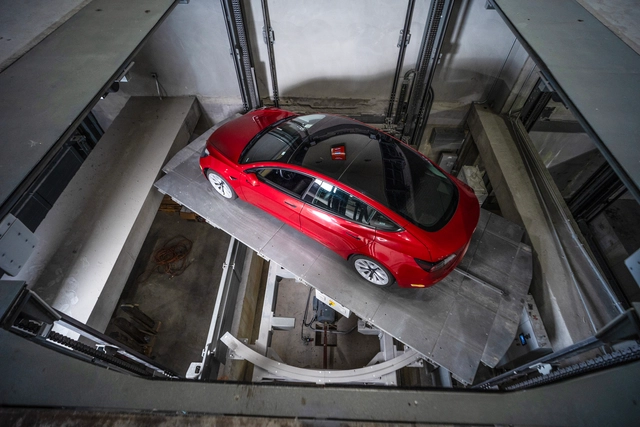
How Automated Parking Systems Reclaim Urban Space

 | Sponsored Content

Cities are slowly reshaping themselves. Walkable streets, bike-friendly networks, and mixed-use neighborhoods are becoming planning priorities as climate goals, changing lifestyles, and remote work reshape daily patterns. Yet even as these people-centered ideas gain momentum, most cities still rely heavily on private cars, creating a tension between the urban futures we're designing for and the mobility habits that persist today.

This tension has pushed architects and developers to rethink one of the hardest pieces of the urban puzzle: parking. Mixed-use buildings are multiplying, stacking homes, workplaces, and services into tighter footprints, and every square foot has to work harder. The challenge is no longer simply where to put the cars, but how to integrate parking in ways that support density, livability, and long-term adaptability—allowing cities to evolve without letting vehicles dominate their form.

Courtyardism: A Vision for a More Balanced Urban Future in the Greater Bay Area by Wang Weijen Architecture

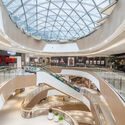
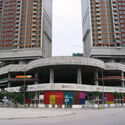
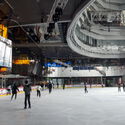
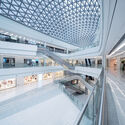
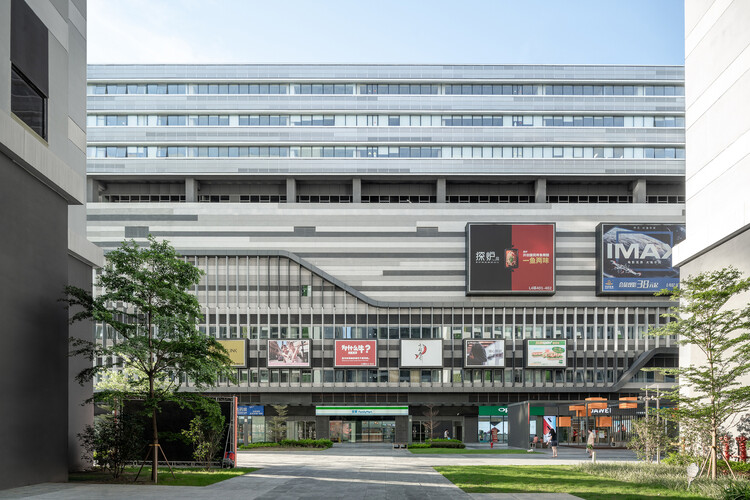
Situated in one of the fastest-developing regions over the past decade—the southern part of China, including Hong Kong and the Greater Bay Area—urban growth has been driven by an overwhelming wave of commercial ambition. Projects here are often designed for maximum density, height, and efficiency, resulting in developments of enormous scale that can easily span several acres. Prioritizing transit-oriented development, these complexes frequently take the form of sprawling malls built directly above major transportation hubs. Designed to disorient and prolong foot traffic to encourage economic activities, these mega-structures have become commonplace in cities like Hong Kong and Shenzhen.

While this typology of megastructures offers clear advantages—economic efficiency, high development returns, and convenience for transit users—it almost invariably ignores its urban context and environment. These developments often turn a blind eye, deliberately so, to their environmental footprint and the city's walkability. At such overwhelming scales, the human walking experience is diminished, if not outright neglected. Pedestrians become interiorized—trapped within the insulated world of these complexes.

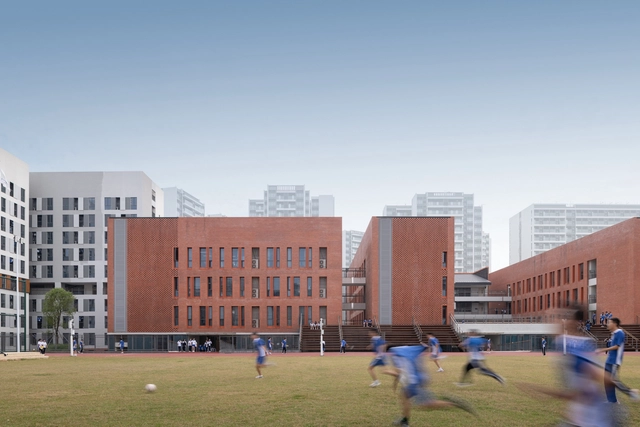
Courtyardism: A Vision for a More Balanced Urban Future in the Greater Bay Area by Wang Weijen Architecture - Image 1 of 4Courtyardism: A Vision for a More Balanced Urban Future in the Greater Bay Area by Wang Weijen Architecture - Image 2 of 4Courtyardism: A Vision for a More Balanced Urban Future in the Greater Bay Area by Wang Weijen Architecture - Image 3 of 4Courtyardism: A Vision for a More Balanced Urban Future in the Greater Bay Area by Wang Weijen Architecture - Image 4 of 4Courtyardism: A Vision for a More Balanced Urban Future in the Greater Bay Area by Wang Weijen Architecture - More Images+ 26

UNStudio, HKS, and Gehl Reveal First Images of the Design Framework for the Austin Light Rail in Texas, United States

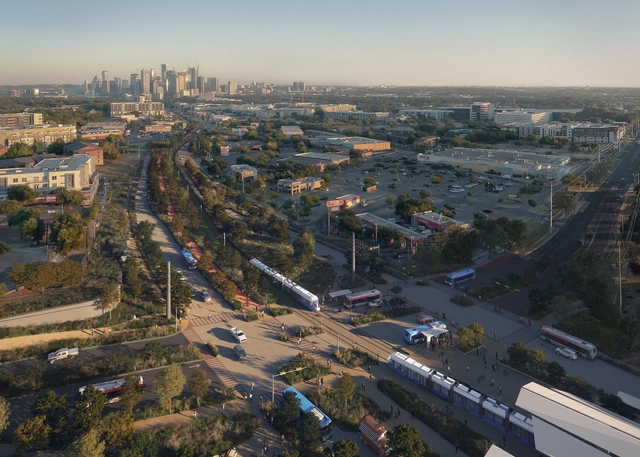
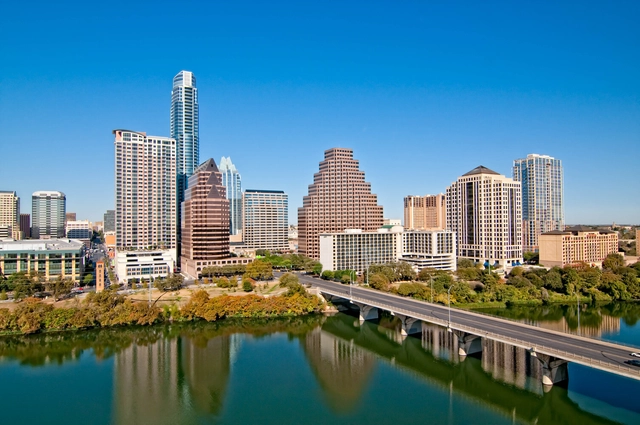
In March 2023, the Austin Transit Partnership (ATP) announced the selection of UNStudio, HKS, and Gehl to lead the architecture and urban design of Project Connect, an expansion of Austin's public transportation system in Texas, United States. Led by ATP, the system aims to connect communities, enhance public spaces, and integrate with the city's evolving urban fabric. The design framework, developed by the four entities, establishes the foundation for how the light rail will interact with Austin's neighborhoods. The design team states that the project's priorities are in people-first infrastructure and the creation of dynamic public spaces, which they seek to reflect in the newly unveiled images. As a voter-approved initiative, Project Connect actively encourages public participation, allowing Austin residents to provide feedback throughout its development.

UNStudio, HKS, and Gehl Reveal First Images of the Design Framework for the Austin Light Rail in Texas, United States - Image 1 of 4UNStudio, HKS, and Gehl Reveal First Images of the Design Framework for the Austin Light Rail in Texas, United States - Image 2 of 4UNStudio, HKS, and Gehl Reveal First Images of the Design Framework for the Austin Light Rail in Texas, United States - Image 3 of 4UNStudio, HKS, and Gehl Reveal First Images of the Design Framework for the Austin Light Rail in Texas, United States - Image 4 of 4UNStudio, HKS, and Gehl Reveal First Images of the Design Framework for the Austin Light Rail in Texas, United States - More Images

Not Just a Train Stop: The Evolution of Transit-Oriented Developments in East Asia

Subscriber Access | 

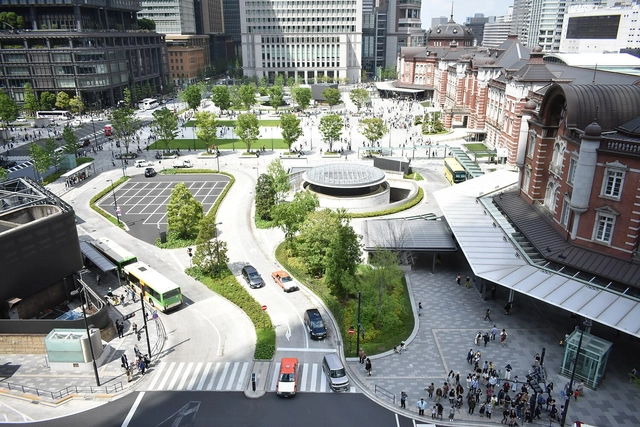
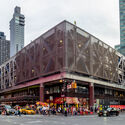
Transit-Oriented Development (TOD) is a comprehensive urban planning strategy aimed at creating dense, walkable, and vibrant neighborhoods centered around public transportation hubs. By seamlessly integrating residential, commercial, and recreational facilities within close proximity to transit nodes, TODs seek to reduce automobile dependency, increase public transit ridership, and stimulate local economic development. Government agencies play a pivotal role in supporting these developments through zoning reforms, easing floor area ratios (FARs), selling air rights, and facilitating public-private partnerships to secure capital for public infrastructure. While TODs have gained global traction, East Asia boasts some of the most successful examples. Conversely, efforts to replicate these models in different contexts—such as New York City—highlight the importance of adapting TOD principles to local conditions, geographical characteristics, and community needs.

Not Just a Train Stop: The Evolution of Transit-Oriented Developments in East Asia - Image 1 of 4Not Just a Train Stop: The Evolution of Transit-Oriented Developments in East Asia - Image 2 of 4Not Just a Train Stop: The Evolution of Transit-Oriented Developments in East Asia - Image 3 of 4Not Just a Train Stop: The Evolution of Transit-Oriented Developments in East Asia - Image 4 of 4Not Just a Train Stop: The Evolution of Transit-Oriented Developments in East Asia - More Images+ 17

Zaha Hadid Architects Reveals Climate-Resilient Design for Al Khuwair Waterfront in Oman

Zaha Hadid Architects have unveiled a large-scale project for the redevelopment of the Al Khuwair waterfront in downtown Muscat, the capital of Oman. The $1.3bn project covers an area of 3.3 million square meters. It aims to revitalize the area through sustainability-led design principles to accommodate the expected population growth, which is expected to almost double by 2040. The plans are developed in collaboration with Buro Happold to incorporate and transform the existing buildings on site, introduce coastal and climate resilience measures, and create an efficient transit-oriented infrastructure.
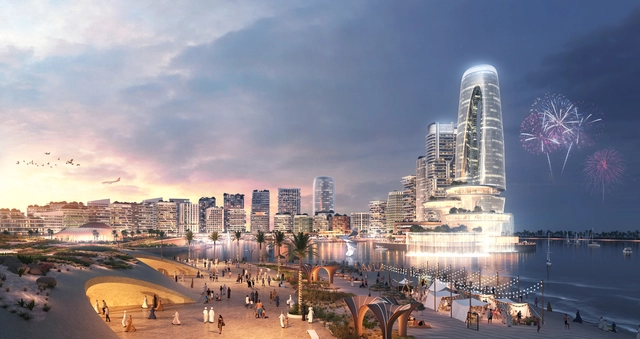
Zaha Hadid Architects Reveals Climate-Resilient Design for Al Khuwair Waterfront in Oman - Image 1 of 4Zaha Hadid Architects Reveals Climate-Resilient Design for Al Khuwair Waterfront in Oman - Image 2 of 4Zaha Hadid Architects Reveals Climate-Resilient Design for Al Khuwair Waterfront in Oman - Image 3 of 4Zaha Hadid Architects Reveals Climate-Resilient Design for Al Khuwair Waterfront in Oman - Image 4 of 4Zaha Hadid Architects Reveals Climate-Resilient Design for Al Khuwair Waterfront in Oman - More Images+ 1

Foster + Partners Reveal Updated Designs for Manhattan’s Port Authority Bus Terminal

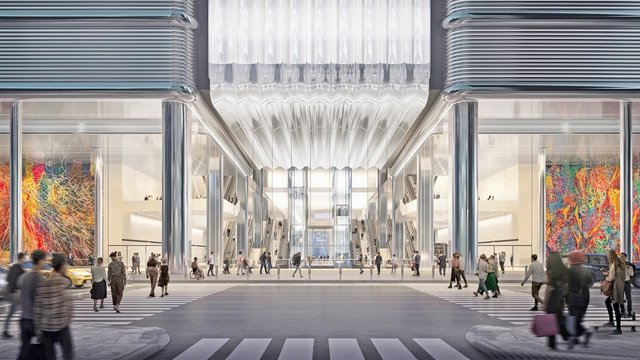
The Port Authority of New York and New Jersey has released a revised proposal for the Midtown Bus Terminal, designed by Foster + Partners and A. Epstein and Sons International Inc. After the first version of the redesign was released in 2022, now the authorities announced the publication of the revised project plans that take into account feedback from key stakeholders including commuters and the larger community. The $10 billion facility is designed to accommodate the projected 2040-2050 commuter growth and provide a better experience for one of the world’s busiest bus terminals.

Foster + Partners Reveal Updated Designs for Manhattan’s Port Authority Bus Terminal - Image 1 of 4Foster + Partners Reveal Updated Designs for Manhattan’s Port Authority Bus Terminal - Image 2 of 4Foster + Partners Reveal Updated Designs for Manhattan’s Port Authority Bus Terminal - Image 3 of 4Foster + Partners Reveal Updated Designs for Manhattan’s Port Authority Bus Terminal - Image 4 of 4Foster + Partners Reveal Updated Designs for Manhattan’s Port Authority Bus Terminal - More Images

UNStudio, HKS, and Gehl Selected to Lead a Major Expansion of the Public Transit System in Austin, Texas

The Austin Transit Partnership has selected UNStudio, HKS, and Gehl to lead the architecture and urban design of Project Connect, a major expansion of the public transportation system in Austin, Texas, in the United States. The project is set to become a transformative investment, including and integrating the light rail system, expanded bus routes, and connectivity with more services across the city. The initiative is also voter-approved. In November 2020, Austin citizens approved Project Connect, leading to the creation of the independent entity Austin Transit Partnership charged with implementing the project. The citizens of Austin are invited to continue to get involved and provide feedback.

UNStudio, HKS, and Gehl Selected to Lead a Major Expansion of the Public Transit System in Austin, Texas - Image 1 of 4UNStudio, HKS, and Gehl Selected to Lead a Major Expansion of the Public Transit System in Austin, Texas - Image 2 of 4UNStudio, HKS, and Gehl Selected to Lead a Major Expansion of the Public Transit System in Austin, Texas - Image 3 of 4UNStudio, HKS, and Gehl Selected to Lead a Major Expansion of the Public Transit System in Austin, Texas - Image 4 of 4UNStudio, HKS, and Gehl Selected to Lead a Major Expansion of the Public Transit System in Austin, Texas - More Images

"Transform the City into a Highly Complex Block System": SOM on TOD Projects

Subscriber Access | 

Archdaily had the chance to speak to SOM regarding the Transit-oriented development (TOD) projects. SOM has extensive engagement in planning, design and engineering on various means of conveyance, and TOD is definitely one of the speciality the SOM team has to offer. Through the interview, we will walk through the design strategies and their changes over the years of TOD Development, the challenges and new area of focus of TOD development, and most importantly, the interview will focus on the design strategy in developing TOD in China, where SOM has participated in many TOD projects, including the South Gateway of Guangzhou Central Axis, Guangzhou Nansha Pearl Bay and Xiong'an District Planing.

Future of Urbanism in China: How Can We Build a Livable City?

As we are entering 2021 after a year of anxiety and uncertainties, what are your expectation for our future? The UN75 survey reports that most people around the world hold greater optimism for the future: “Globally, many more respondents believe people will be better off in 2045 than today (49%) compared to those who believe people will be worse off (32%).”

Foster + Partners Wins Competition to Design Guangming Hub, a New Transport Oriented Development in China

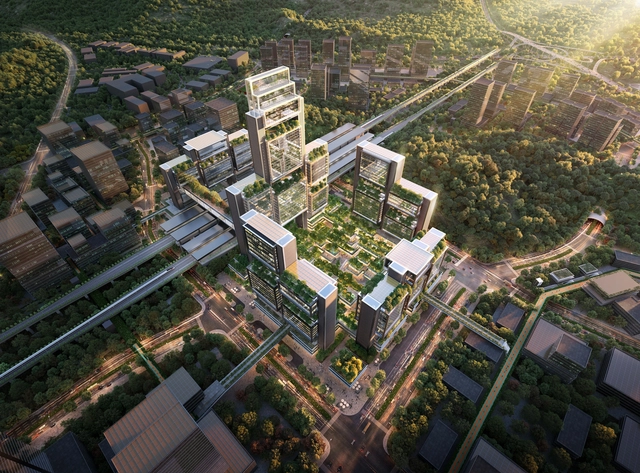
Foster + Partners has just unveiled its winning design scheme for a new urban destination in China, the Guangming Hub located on the high-speed rail connecting Hong Kong, Shenzhen, and Guangzhou. In fact, the Transport Oriented Development proposal generates a “smart city that supports the flow of people and goods with robust infrastructure, effective transport networks, reliable public services, and lush greenery”.

Foster + Partners Wins Competition to Design Guangming Hub, a New Transport Oriented Development in China - Image 1 of 4Foster + Partners Wins Competition to Design Guangming Hub, a New Transport Oriented Development in China - Image 2 of 4Foster + Partners Wins Competition to Design Guangming Hub, a New Transport Oriented Development in China - Image 3 of 4Foster + Partners Wins Competition to Design Guangming Hub, a New Transport Oriented Development in China - Image 4 of 4Foster + Partners Wins Competition to Design Guangming Hub, a New Transport Oriented Development in China - More Images+ 2

Ronald Lu & Partners Showcases Upgraded Concept for a Transit-Oriented Development

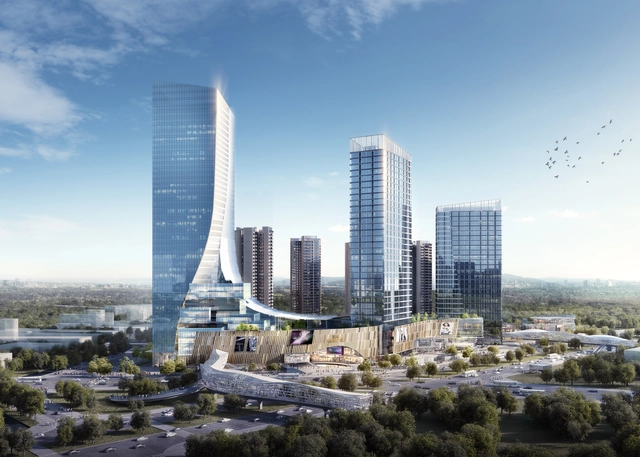
Ronald Lu & Partners, the leading TOD expert with over 60 TOD projects across China, is currently developing flagship Shunde ICC Country Garden Sanlonghui. Showcasing an upgraded TOD4.0 design concept, the mixed-use project generates “a harmonious relationship between people and the environment”.

Ronald Lu & Partners Showcases Upgraded Concept for a Transit-Oriented Development - Image 1 of 4Ronald Lu & Partners Showcases Upgraded Concept for a Transit-Oriented Development - Image 2 of 4Ronald Lu & Partners Showcases Upgraded Concept for a Transit-Oriented Development - Image 3 of 4Ronald Lu & Partners Showcases Upgraded Concept for a Transit-Oriented Development - Image 4 of 4Ronald Lu & Partners Showcases Upgraded Concept for a Transit-Oriented Development - More Images+ 2

Ronald Lu & Partners Completes Phase One of China’s First Transit-Oriented Development

Ronald Lu & Partners has announced the completion of phase one of Tianhui TODTOWN: China’s first transit-oriented development, after 13 years of collective effort. The project promoting sustainability, mass transit, and community in Shanghai, takes the concept of public transit-oriented development (TOD) important in the development of China’s urban areas to the next level.