1. ArchDaily
  2. Theory

Theory: The Latest Architecture and News

Rethinking Architecture at the Scale of Planetary Systems

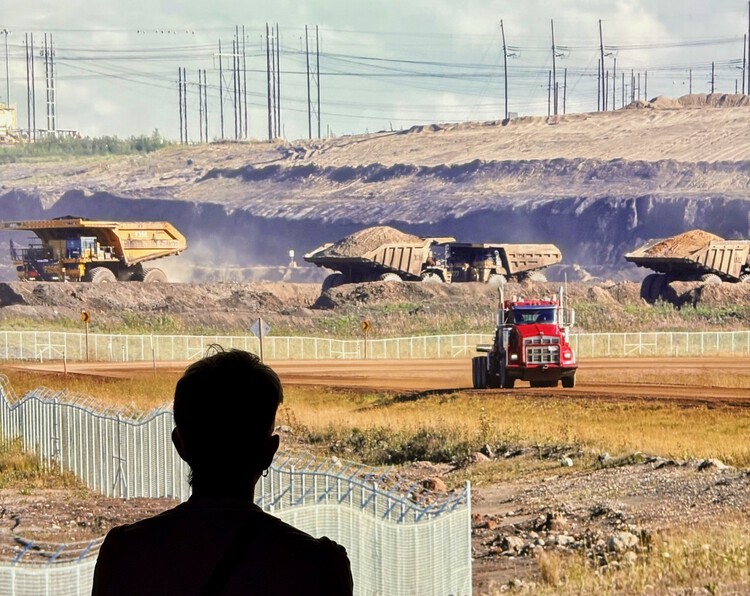
Architecture has traditionally been described as a discipline concerned with space, form, and material presence. Yet this understanding becomes increasingly limited when confronted with the conditions that shape contemporary construction. Buildings no longer emerge from a stable relationship between site, program, and material. Instead, they are produced within a dense web of technological systems that operate across territorial, ecological, and temporal scales. Energy networks, data infrastructures, extraction processes, and global logistics shape architecture as decisively as climate or urban context.

Seen from this angle, architecture is less a discrete object than a moment within a larger technical field. Supply chains, data systems, automated maintenance, and energy grids do not sit "behind" the built environment. In a certain way, they influence what can be built, what is affordable, how buildings perform over time, and what kinds of waste they produce. When architecture is assessed primarily through form, it risks overlooking the systems that condition its production and afterlife.

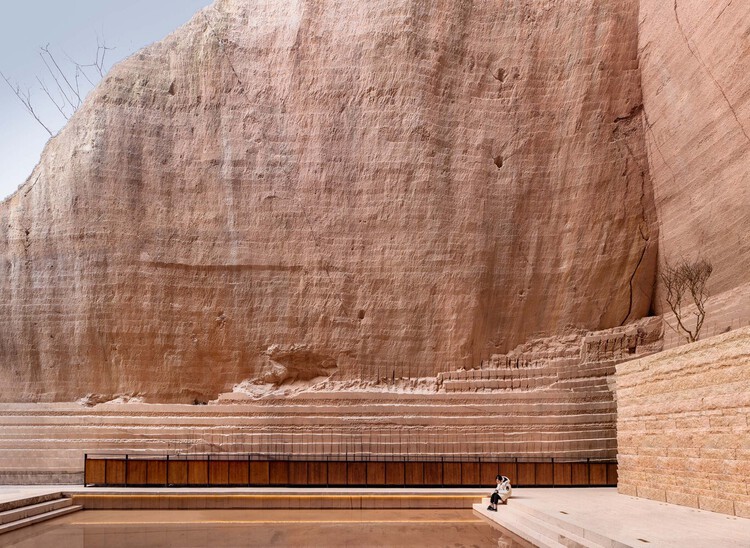
Rethinking Architecture at the Scale of Planetary Systems - Image 1 of 4Rethinking Architecture at the Scale of Planetary Systems - Image 2 of 4Rethinking Architecture at the Scale of Planetary Systems - Image 3 of 4Rethinking Architecture at the Scale of Planetary Systems - Image 4 of 4Rethinking Architecture at the Scale of Planetary Systems - More Images+ 30

Lisbon Architecture Triennale 2025 Examines the Technosphere and Human Impact on Earth

Subscriber Access | 

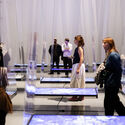
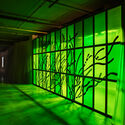
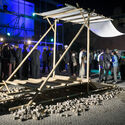
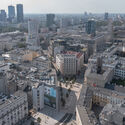
Thirty trillion tons. This is the estimated mass of all human-made matter on Earth, and the starting point for the 7th edition of the Lisbon Architecture Triennale. Curated by Ann-Sofi Rönnskog and John Palmesino, founders of Territorial Agency, the event asks a deceptively simple question: How heavy is a city? To answer it requires more than data. It demands a shift in perception: from the scale of the city to the planetary technosphere.

The technosphere, a term borrowed from Earth sciences, defines the vast system of infrastructures, technologies, and materials that sustain human life while reshaping the planet. Cities, in this view, are not only territories but dense nodes within this planetary metabolism. From October to December 2025, Lisbon becomes a lens to examine that magnitude, hosting three main exhibitions (Fluxes, Spectres, Lighter), a book of essays, a talks program, and more than twenty independent projects across the city.

Lisbon Architecture Triennale 2025 Examines the Technosphere and Human Impact on Earth - Image 1 of 4Lisbon Architecture Triennale 2025 Examines the Technosphere and Human Impact on Earth - Image 2 of 4Lisbon Architecture Triennale 2025 Examines the Technosphere and Human Impact on Earth - Image 3 of 4Lisbon Architecture Triennale 2025 Examines the Technosphere and Human Impact on Earth - Image 4 of 4Lisbon Architecture Triennale 2025 Examines the Technosphere and Human Impact on Earth - More Images+ 8

Safe by Design: How Architects and Forensics Rethink Security across Scales

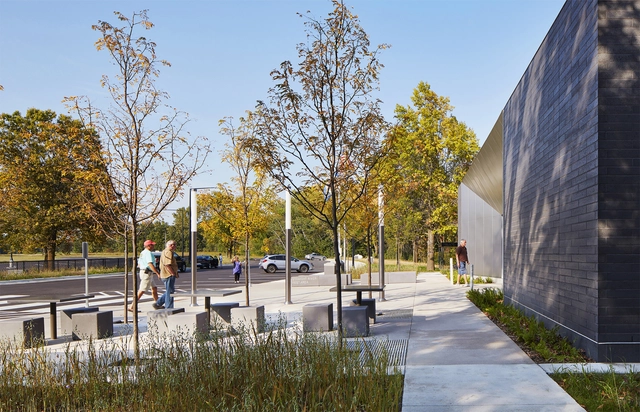
"The public square and civic infrastructure are the front lines against this kind of attack", proclaimed then-President of the American Institute of Architects, Thomas Vonier. The decades since 9/11 and mass violence have pressured cities, in the United States and globally, to reconsider what "safety" means. Is it about barriers, bollards, surveillance? Or is it about trust, visibility, evidence, resilience? Several projects confront these questions at various scales to demonstrate how architecture and forensic thinking can collectively protect communities and civic life.

Safe by Design: How Architects and Forensics Rethink Security across Scales - Image 1 of 4Safe by Design: How Architects and Forensics Rethink Security across Scales - Image 2 of 4Safe by Design: How Architects and Forensics Rethink Security across Scales - Image 3 of 4Safe by Design: How Architects and Forensics Rethink Security across Scales - Image 4 of 4Safe by Design: How Architects and Forensics Rethink Security across Scales - More Images

Exploring the History of the Ideal Renaissance Cities

Subscriber Access | 

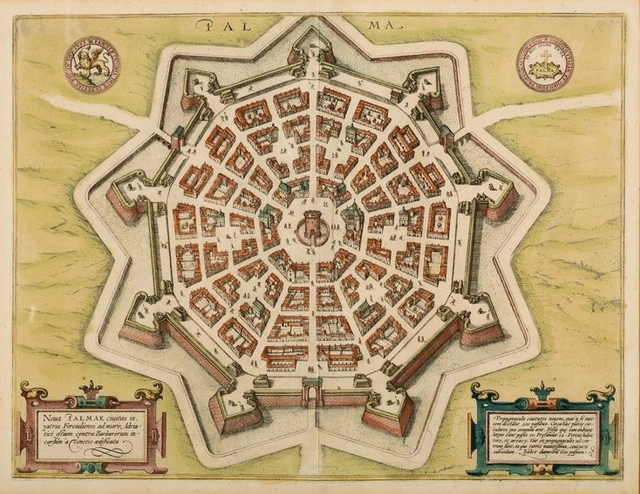
The concept of an “ideal city” is something that is often talked about today, as we look towards the future and think about what aspects of urban life we feel are most important for residents to thrive in a healthy community. However, ideal cities were conceived during the Italian Renaissance, as planners and architects prioritized rationale in their designs focusing on human values, urban capacities, and the recursive waves of cultural and artistic revolutions that influenced large-scale planning schemes.
"As Long as There Are Human Beings and their Challenges, There Will Be Architecture": In Conversation with Ole Bouman

Subscriber Access | 

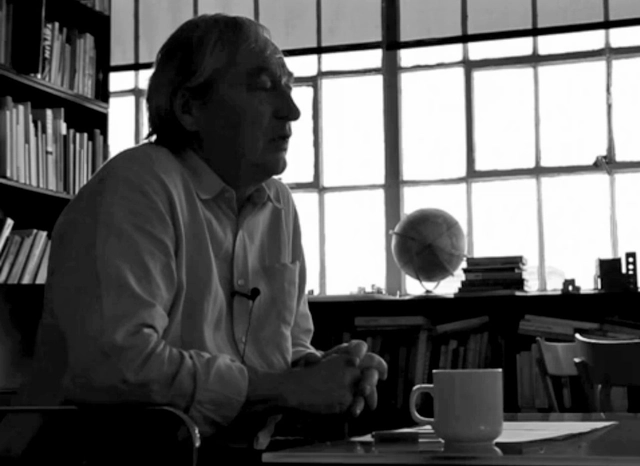
Believing firmly that "architecture is [...] too important to leave solely to architects", Ole Bouman embarked on diverse activities throughout his three decades of work, reflecting on “architecture, not so much as the art or technique of making buildings, but architecture as the intelligent way to organize our lives on earth, and infuse it with purpose”.

After having shared Bouman's essay Finding Measure, ArchDaily had the chance to discuss with Design Society’s founding director his thoughts on the role of architecture, the current challenges of the world, the digital revolution, and many other thought-provoking topics.

"As Long as There Are Human Beings and their Challenges, There Will Be Architecture": In Conversation with Ole Bouman - Image 1 of 4"As Long as There Are Human Beings and their Challenges, There Will Be Architecture": In Conversation with Ole Bouman - Image 2 of 4"As Long as There Are Human Beings and their Challenges, There Will Be Architecture": In Conversation with Ole Bouman - Image 3 of 4"As Long as There Are Human Beings and their Challenges, There Will Be Architecture": In Conversation with Ole Bouman - Image 4 of 4As Long as There Are Human Beings and their Challenges, There Will Be Architecture: In Conversation with Ole Bouman - More Images+ 17

"Architecture not Exclusively for Architects": Ole Bouman on Finding Measure

Subscriber Access | 

“We can all be designers” states Ole Bouman, one of the most influential figures in the world of Architecture. Implicated in the contemporary architectural discourse, the founding director of Design Society, in Shenzhen, China has introduced, since the 1990s, many design concepts, founded culture brands, and took on institutional roles all over the world.

Previously the director of the NAi - Netherlands Architecture Institute and the creative director of the Urbanism/Architecture Bi-City Biennale of Shenzhen/Hong Kong, the Dutch-German historian, writer, publisher, photographer, curator, lecturer, and practitioner in design and architecture, has gathered three decades of work in a platform, highlighting the interaction “between a life and history unfolding”. Read on to discover Ole Bouman’s Finding Measure essay, extracted from his website, and stay tuned for ArchDaily’s exclusive interview with Design Society’s founding director, discussing present and future, and tackling the role of architecture, the current challenges of the world, the digital revolution and many other thought-provoking topics.

Carmen Espegel: "The History of Modern Movement Must Be Reread, It Still Contains Hidden Information"

Subscriber Access | 

Spanish architect, Carmen Espegel's work is embodied in three complementary areas: academic, research, and professional activity. Espegel was part of espegel-fisac arquitectos studio for twenty years as a founding partner and currently leads espegel arquitectos. Her research approach has focused mainly on housing, women in architecture, and architectural criticism.

'Body Absent', a Temporary Memorial to Raise Awareness About Human Rights

Subscriber Access | 

Human Rights Day is celebrated every year on the 10th of December. After visiting numerous sites that commemorate the scenes of regrettable crimes against humanity and violence, one common observation can be made: the place of memory is not only a building. In fact, it is more about the encounter, the appropriation, and the gesture.

Children's Scale: A Brief History of Kid's Furniture

Children's Scale: A Brief History of Kid's Furniture - Image 1 of 4Children's Scale: A Brief History of Kid's Furniture - Image 2 of 4Children's Scale: A Brief History of Kid's Furniture - Image 3 of 4Children's Scale: A Brief History of Kid's Furniture - Image 4 of 4Children's Scale: A Brief History of Kid's Furniture - More Images+ 48

Children's furniture is all furniture –fixed or mobile– that is designed according to the ergonomic guidelines and anatomical dimensions of children specifically. Following this definition, we can identify two types of furniture: (1) those that facilitate a relationship between the caregiver and the child, and (2) those that allow the child to use them independently.

The big difference between these two types is that the first has dimensions that mainly adapt to the ergonomics of the adult, while the second is designed to meet the ergonomic needs of the child at each stage of their development. Since the growth of children occurs relatively quickly, it is common for the furniture of this second group to be multifunctional or even extendable.

What Can Design do in Chile's Social Crisis? Nothing.

Subscriber Access | 

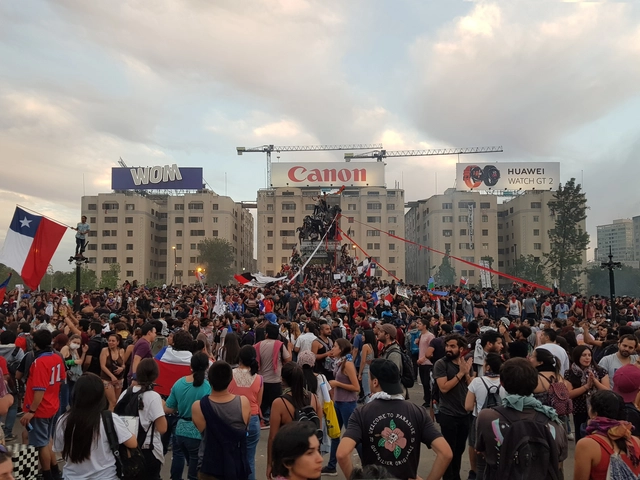
This article was originally published in ArchDaily en Español last October 30, twelve days after the social crisis in Chile escalated. Some ideas of the analysis may feel outdated since some structural reforms were recently announced, but the author decided to keep the original spirit of the piece.

A 4 cent fair increase for the Metro in Santiago sparked mass fare-dodging protests in Chile starting on October 6. Alongside spontaneous street demonstrations, the protests spilled into widespread violence across Santiago during the following days until October 18. That day, the Metro network collapsed, the riots multiplied across the city, and looting and fires were out of control. That night, President Sebastian Piñera declared a state of emergency.

What Can Design do in Chile's Social Crisis? Nothing. - Image 1 of 4What Can Design do in Chile's Social Crisis? Nothing. - Image 2 of 4What Can Design do in Chile's Social Crisis? Nothing. - Image 3 of 4What Can Design do in Chile's Social Crisis? Nothing. - Image 4 of 4What Can Design do in Chile's Social Crisis? Nothing. - More Images

SPACE10 Explores the Future of Digital Design in Architecture

New digital advancements and technologies are redefining how we design. Looking at how these tools are becoming more ubiquitous and pervasive, IKEA's research and design lab SPACE10 published The Digital in Architecture report to explore the impact of digital technology and its larger movements. Authored by architecture theorist Mollie Claypool, the report illustrates these changes through data research, concepts, and visualisation by Pentagram.

SPACE10 Explores the Future of Digital Design in Architecture - Image 1 of 4SPACE10 Explores the Future of Digital Design in Architecture - Image 2 of 4SPACE10 Explores the Future of Digital Design in Architecture - Image 3 of 4SPACE10 Explores the Future of Digital Design in Architecture - Image 4 of 4SPACE10 Explores the Future of Digital Design in Architecture - More Images+ 6

Call for Submissions: Dennis Sharp CICA Awards for Architectural Criticism 2020

The International Committee of Architectural Critics CICA is pleased to announce an invitation to publishers, editors, curators and authors to submit their publications for consideration for the 10th CICA Awards 2020 by 30th November 2019. Award winners will be announced during the UIA XXVII World Congress of Architecture to be held in Rio de Janeiro from July 19th to 23rd, 2020.

Layered Landscapes Lofoten: Understanding of Complexity, Otherness and Change

Layered Landscapes Lofoten — Understanding of Complexity, Otherness and Change adresses today’s most urgent issues about living together in landscapes and territories under severe pressure and transformation. The landscape holds essential information about our common history, ecology and social behavior — both rational and cognitive experience, and even hidden enigmas. The authors suggest how an open and unbiased approach to the landscape enables us to understand and operationalize knowledge and theory into valid proposals and projects for the future — not primarily through the traditional and habitual idea of the architectural object, but rather in contact with a global, collective and spatial territorial reality.

Open Call - Critical Discourses Essay Contest - Home|any|more|?

For more than 20 years, The Arhitext Design Foundation has been developing editorial and cultural projects that raise awareness of the national and international state of architecture, urbanism, design and visual arts. The most important projects of the Foundation are the Arhitext Magazine and the Bucharest Triennale, dedicated to the Central and Eastern European region. In October 2019, the Foundation, in partnership with the Romanian Order of Architects and the "Ion Mincu" University of Architecture and Urbanism will organize the third edition of the Bucharest Triennale East Centric Architecture. The main topic of this edition, HOME|any|more|?, proposes an interrogative approach of the possibility of being at home in today's world.

Why Nature Should be a Co-Author in Architectural Projects

Subscriber Access | 

Dealing with the context of a project’s site is an essential part of architecture, be it by denying or incorporating preexisting elements and the environment’s conditions in the design. However, understanding what lies around as an active agent of the decisions and space organization goes beyond simply considering the good views, natural ventilation, solar orientation, etc; it is about seeing these conditions as co-authors.

These cases are most notable when practices think of the architecture's surrounding environment as an active agent. 

On the Dislocation of the Body in Architecture: Le Corbusier's Modulor

Subscriber Access | 

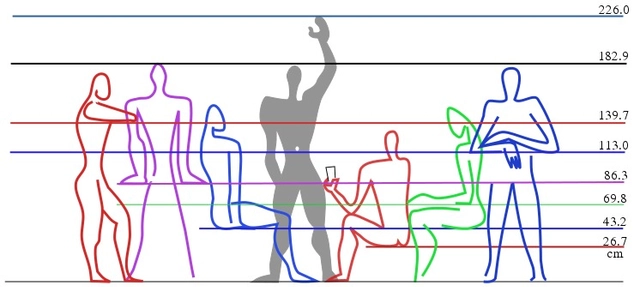
In 1948, the architect Charles-Édouard Jeanneret-Gris, better known as Le Corbusier, released one of his most famous publications titled Modular, followed by Modular 2 (1953). In these texts, Le Corbusier expressed his support of the research that Vitrubio, DaVinci, and Leon Battista Alberti started centuries before: to find the mathematical relationship between human dimensions and nature.

The research of the previously mentioned authors also represents the search to explain the Parthenon, the temples, and cathedrals built according to exact measurements that reference a code of essentiality. Knowing what instruments were used in finding the essence of these buildings was the starting point, instruments that at first glance seemed to bypass time and space. It wouldn't be farfetched to say that the measurements came from essence: parts of the body such as the elbow, the finger, thumb, foot, arm, palm, etc. In fact, there are instruments and measurements that carry names alluding to parts of the human body, an indication of architecture's proximity to it. 

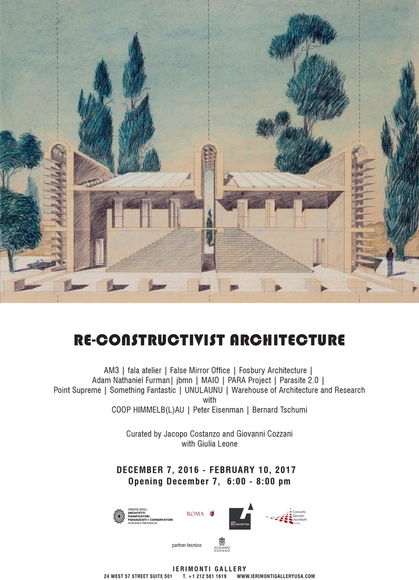
Re-Constructivist Architecture

Their theoretical, critical and historical approach attempts to rediscover a thoughtful dimension behind the architectural subject. Each firm will present a residential project for the Roman countryside, a design exercise meant as a typological investigation, or, more generally, as a meditation on the autonomy of the architectural discipline. The thirteen projects for thirteen houses showcased in the exhibit are intended as a homage to the city of Rome and its countryside.

Call for Submissions: RM 1005: Timeless

Timeless | Adjective | org. 1550

: staying beautiful or fashionable as time passes
: lasting forever
: having no beginning or end, eternal.
: not affectetd by time
: referring or restricted to no particular time
: untimely, ill-timed
: without time