1. ArchDaily
  2. Serie Architects

Serie Architects: The Latest Architecture and News

ArchDaily's Best Architectural Projects of 2025

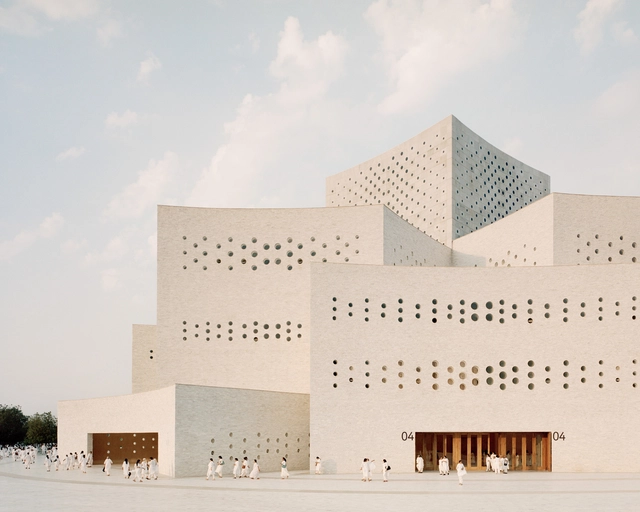
As the year culminates, it's once again time for the ArchDaily team of curators to reflect on the best-performing projects of 2025 and consider what readers were most interested in. Through this diverse overview, we assess the cross-continental similarities and differences in trends and construction development. This year brought us many grand cultural and public spaces by Lina Ghotmeh, BIG, Zaha Hadid Architects, DnA, and Serie Architects, who populated events like Expo Osaka and the Venice Biennale, as well as a surprising number of museums and public or landscape works in China and the rest of the Asian continent. However, while these were sought-after projects, the leading works remained, unsurprisingly, residential projects.

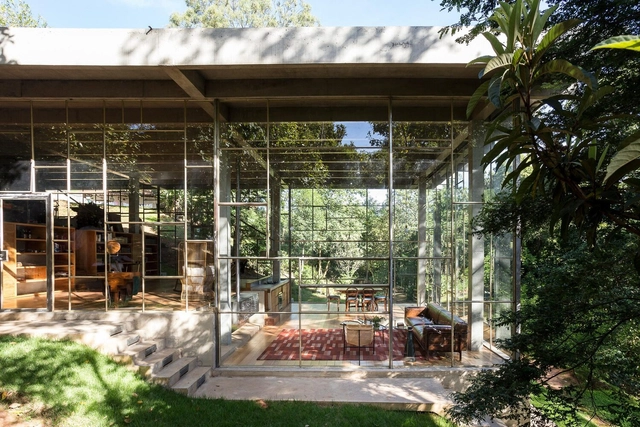
More specifically, the houses that were most viewed on the ArchDaily global site were concrete houses that bore considerable injections of greenery and landscape focus. They propose layouts highlighting voids and double heights, as well as inner courtyards or large openings to the exterior. While some references did suggest traditional or vernacular elements, modernist revivals were still predominant. Material trends are much more tame, with a recurrence of raw concrete use, as wood and stone were common accent elements. Still, the more interesting thing about the works this year is the efforts brought by architects in situating and setting the projects within their surroundings, bringing special attention to landscape and how projects merged with nature.
ArchDaily's Best Architectural Projects of 2025 - SustainabilityArchDaily's Best Architectural Projects of 2025 - SustainabilityArchDaily's Best Architectural Projects of 2025 - SustainabilityArchDaily's Best Architectural Projects of 2025 - SustainabilityArchDaily's Best Architectural Projects of 2025 - More Images+ 96

Singapore Architecture City Guide: 18 Projects to Explore in the "Garden City"

Subscriber Access | 

Nestled in the heart of Southeast Asia, Singapore stands as a beacon of sustainable urbanization. According to the 2016 Green City Index, the city-state of Singapore was the greenest city in Asia at one point. Renowned as the "City in a Garden," Singapore has intertwined lush greenery, verdant parks, and new environmental policies into its urban fabric/ After gaining independence in 1965, the city-state stands as a testament to how urban life can integrate with nature.

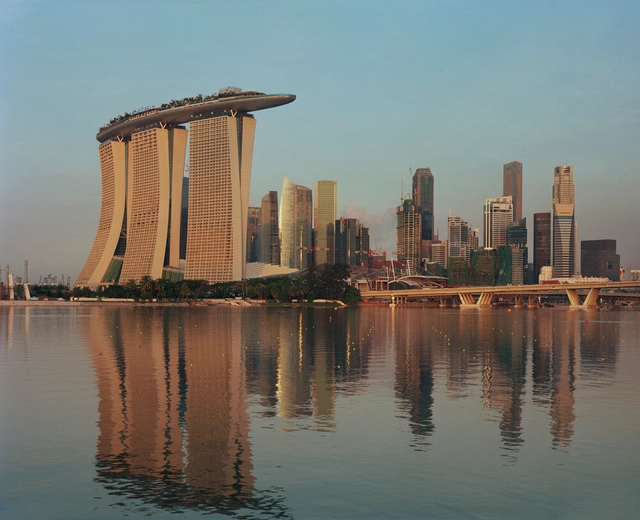
From the futuristic marvels of the infamous Marina Bay Sands and Jewel Changi Airport by Safdie Architects to the iconic heritage of the former Supreme Court, now the National Gallery Singapore, the city showcases a rich tapestry of styles and influences. The city has also adopted its version of modernism, such as the Colonnade Condominiums, designed by architect Paul Rudolph, and the Pearl Bank Apartments by Tan Cheng Siong. Renowned architects such as Moshe Safdie, Norman Foster, and WOHA, have each left an indelible mark on the city with their innovative designs.

Singapore Architecture City Guide: 18 Projects to Explore in the "Garden City" - Image 1 of 4Singapore Architecture City Guide: 18 Projects to Explore in the "Garden City" - Image 2 of 4Singapore Architecture City Guide: 18 Projects to Explore in the "Garden City" - Image 3 of 4Singapore Architecture City Guide: 18 Projects to Explore in the "Garden City" - Image 4 of 4Singapore Architecture City Guide: 18 Projects to Explore in the Garden City - More Images+ 14

International High-Rise Award 2022/23 Announces the 5 World's Best Finalists

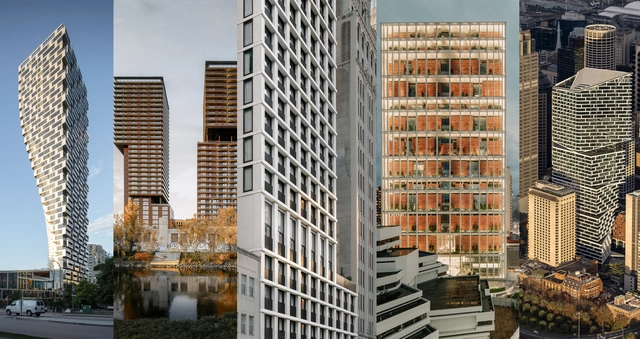
High-Rise Award (IHA) selected five buildings from Asia, Australia, Europe, and North America from 34 nominated high-rise buildings from 13 countries. Vancouver House by BIG, TrIIIple Towers in Vienna by Henke Schreieck Architekten, The Bryant in New York by David Chipperfield Architects, Singapore State Courts by Serie Architects+ Multiply Architects, and Quay Quarter Tower in Sydney by 3XN, are the 2022/23 finalist for exemplifying sustainability, and social aspects in a high-rise building.

The IHA has aimed at architects and developers whose buildings are at least 100 meters high and have been completed in the past two years. Previous recipients include Norra Tornen by OMA (2020), Torre Reforma by LBR&A Arquitectos (2018), and Torre Agbar by Ateliers Jean Nouvel (2006).

International High-Rise Award 2022/23 Announces the 5 World's Best Finalists - Image 1 of 4International High-Rise Award 2022/23 Announces the 5 World's Best Finalists - Image 2 of 4International High-Rise Award 2022/23 Announces the 5 World's Best Finalists - Image 3 of 4International High-Rise Award 2022/23 Announces the 5 World's Best Finalists - Image 4 of 4International High-Rise Award 2022/23 Announces the 5 World's Best Finalists - More Images+ 11

The 5 Points of Modern Architecture in Contemporary Projects

In 1926, Le Corbusier developed the five points that would become the foundations for modern architecture. Once materialized in 1929 in the iconic Villa Savoye project, Le Corbusier's principles - pilotis, free design of the ground plan, free design of the facade, horizontal window, and roof garden - have been extensively explored in modern architecture and continue to influence the most diverse contemporary architectural projects to this day.

The five points became a kind of guideline for the New Architecture, as Corbusier used to call it. Even after decades, new technologies, materials, and demands of society have continued to update those architectural solutions, announced almost a century ago as the basis for a new architecture.

The 5 Points of Modern Architecture in Contemporary Projects - Image 1 of 4The 5 Points of Modern Architecture in Contemporary Projects - Image 6 of 4The 5 Points of Modern Architecture in Contemporary Projects - Image 21 of 4The 5 Points of Modern Architecture in Contemporary Projects - Image 24 of 4The 5 Points of Modern Architecture in Contemporary Projects - More Images+ 26

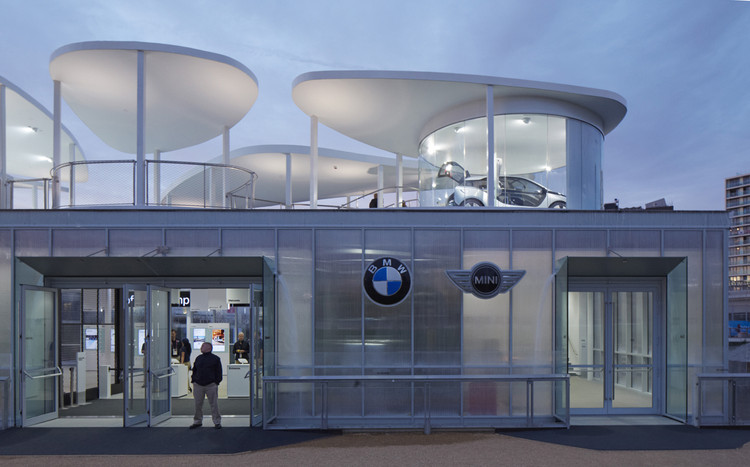
2012 Olympic Pavilion for BMW / Serie Architects

Subscriber Access | 
2012 Olympic Pavilion for BMW / Serie Architects - Image 1 of 4
Courtesy of Serie Architects

Serie Architects‘ proposal was recently selected as the design for the 2012 Olympic Pavilion for BMW following a sustainable design competition. Their cutting-edge design will represent a significant architectural addition to the Olympic Park, while reflecting the company’s deep commitment to sustainability. BMW’s pavilion, which has a floor space of 800m2, will be built on an elevated site above the Waterworks River, situated between the Olympic Stadium and the Aquatics Center. More images and architects’ description after the break.

Wuxi Civic Centre / Serie Architects

Subscriber Access | 
Wuxi Civic Centre / Serie Architects - Image 2 of 4
Courtesy of Serie Architects

Serie Architects has been awarded first prize by the competition Technical Committee for the Wuxi Xishan Civic Centre in China. Serie saw off strong competition from a high-powered international shortlist which included NihonSekkei, GMP Architekten, AS Architecture-Studio, and Arte Charpentier.

The scheme is oriented around a large public plaza which is intended to form the centre of public life and expression within the Civic Centre. This unadorned open space hosts public gatherings and events, government displays and temporary exhibitions. The importance of symmetry within the composition of the plan is expressed in the strong axial relationship to the main entrance. More images and architects’ description after the break.

Yan ZhenQing Calligraphy Museum / Serie Architects

Subscriber Access | 
Yan ZhenQing Calligraphy Museum / Serie Architects - Image 5 of 4
Courtesy of Serie Architects

Yan ZhenQing Museum, designed by Serie Architects, displays works from the important calligrapher of the same name who lived in Shandong Province in China during the 8th century. His work introduced an element of vertical rhythm into the calligraphic script, and set up a style that was simpler and bolder. Situated in the beautiful landscape near the city of Linyi, the museum also strikes a bold stance in relation to its landscape. Rather than merge into the landscape the museum is placed on a series of three terraces that rise slightly above the topography. On these plateaus the museum takes on the qualities of a type of traditional Chinese garden known as the scholars’ garden. More images and architects’ description after the break.