1. ArchDaily
  2. Seagram Building

Seagram Building: The Latest Architecture and News

Modernism Reconsidered: Revisiting the Movement’s Complex Relationship with Sustainability

Modernism emerged in the early 20th century as a revolutionary movement that rejected historical styles, prioritizing functionality, innovation, and rationality. Grounded in the promise of industrial progress, architects like Walter Gropius, Le Corbusier, and Ludwig Mies van der Rohe championed using new materials and construction methods, striving for a universal architectural language. Their work introduced radical ideas: open floor plans, expansive glazing for natural light, and pilotis that elevated structures, symbolizing a new architectural era. However, alongside its groundbreaking ideas, modernism's relationship with sustainability has sparked ongoing debates.

While modernist architects sought to address social and economic challenges through affordable housing and efficient design, their reliance on energy-intensive materials like concrete and steel created unintended environmental consequences. The large-scale industrialization celebrated by modernists often disregarded local climates and ecological systems, leading to inefficiencies. Yet, the principles of functionality and adaptability embedded in modernist architecture laid the groundwork for what we now recognize as sustainable practices. From Le Corbusier's rooftop gardens to Frank Lloyd Wright's integration of nature, the seeds of environmentally conscious design were undeniably present, albeit limited in their execution.


Modernism Reconsidered: Revisiting the Movement’s Complex Relationship with Sustainability - Image 1 of 4Modernism Reconsidered: Revisiting the Movement’s Complex Relationship with Sustainability - Image 2 of 4Modernism Reconsidered: Revisiting the Movement’s Complex Relationship with Sustainability - Image 3 of 4Modernism Reconsidered: Revisiting the Movement’s Complex Relationship with Sustainability - Image 4 of 4Modernism Reconsidered: Revisiting the Movement’s Complex Relationship with Sustainability - More Images+ 25

Saving Montreal’s Architectural Heritage: Phyllis Lambert’s Legacy of Community-Driven Change

Subscriber Access | 

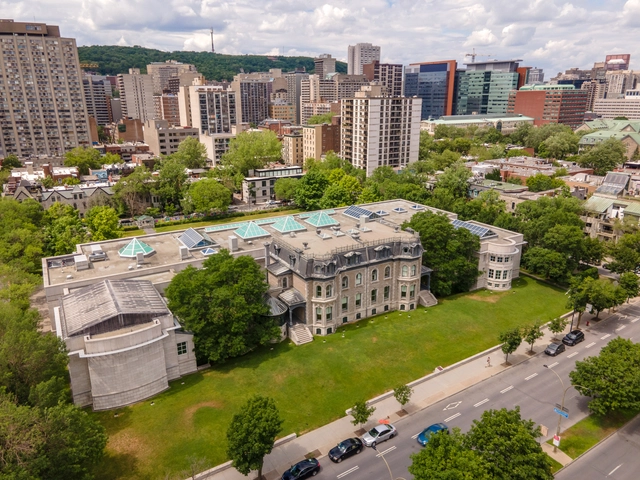
Phyllis Lambert has been a key figure in the preservation of Canada's cultural heritage. As an architect and advocate for heritage conservation, Lambert has left an indelible mark in Montreal and other cities worldwide. Her contributions to Montreal's architectural scene can't really be judged in terms of individual buildings, but rather in terms of the city as a whole. She not only cofounded the Canadian Center for Architecture (CCA), but also helped reshape the way cities like Montreal think about heritage and the importance of community voices in urban planning.

Saving Montreal’s Architectural Heritage: Phyllis Lambert’s Legacy of Community-Driven Change - Image 3 of 4Saving Montreal’s Architectural Heritage: Phyllis Lambert’s Legacy of Community-Driven Change - Image 1 of 4Saving Montreal’s Architectural Heritage: Phyllis Lambert’s Legacy of Community-Driven Change - Image 4 of 4Saving Montreal’s Architectural Heritage: Phyllis Lambert’s Legacy of Community-Driven Change - Featured ImageSaving Montreal’s Architectural Heritage: Phyllis Lambert’s Legacy of Community-Driven Change - More Images+ 5

New York City Architecture Guide: Discover 10 Must-See Landmarks and 20 Contemporary Attractions

Subscriber Access | 

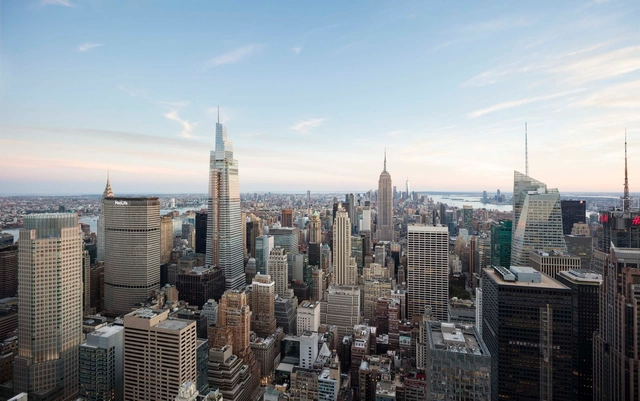
As the largest city in the United States, New York City is one of the most diverse and vibrant cities in the world, recognized by many as the center for global media, culture, fashion art, and finance. The city was founded in 1624 by settlers from the Dutch Republic and has since grown into “the city that never sleeps”.

While almost every style of architecture exists in New York City, the metropolis is most well known for its skyscrapers, both in historical styles such as Neoclassical and Art Deco and in their varied contemporary expressions. The first building to bring the world's tallest title to New York was the New York World Building, in 1890. Later, New York City was home to the world's tallest building for 75 continuous years, starting with the Park Row Building in 1899.

New York City Architecture Guide: Discover 10 Must-See Landmarks and 20 Contemporary Attractions - Image 1 of 4New York City Architecture Guide: Discover 10 Must-See Landmarks and 20 Contemporary Attractions - Image 2 of 4New York City Architecture Guide: Discover 10 Must-See Landmarks and 20 Contemporary Attractions - Image 3 of 4New York City Architecture Guide: Discover 10 Must-See Landmarks and 20 Contemporary Attractions - Image 4 of 4New York City Architecture Guide: Discover 10 Must-See Landmarks and 20 Contemporary Attractions - More Images+ 26

The Second Studio Podcast: Interview with Phyllis Lambert

The Second Studio (formerly The Midnight Charette) is an explicit podcast about design, architecture, and the everyday. Hosted by Architects David Lee and Marina Bourderonnet, it features different creative professionals in unscripted conversations that allow for thoughtful takes and personal discussions.

A variety of subjects are covered with honesty and humor: some episodes are interviews, while others are tips for fellow designers, reviews of buildings and other projects, or casual explorations of everyday life and design. The Second Studio is also available on iTunes, Spotify, and YouTube.

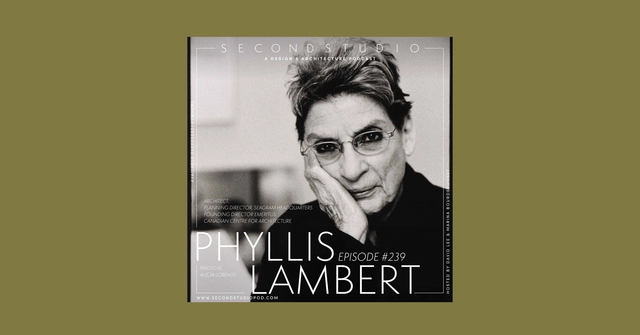
This week David and Marina are joined by Phyllis Lambert, an architect, the Planning Director of the Seagram Headquarters, and the Founding Director Emeritus of the Canadian Centre for Architecture in Montréal.

The Second Studio Podcast: Interview with Phyllis Lambert - Image 1 of 4The Second Studio Podcast: Interview with Phyllis Lambert - Image 2 of 4The Second Studio Podcast: Interview with Phyllis Lambert - Image 3 of 4The Second Studio Podcast: Interview with Phyllis Lambert - Image 4 of 4The Second Studio Podcast: Interview with Phyllis Lambert - More Images+ 7

Interview: Phyllis Lambert on Winning the Golden Lion for Lifetime Achievement

Interview: Phyllis Lambert on Winning the Golden Lion for Lifetime Achievement - Featured Image
Phyllis Lambert, 1959, during her studies at the Illinois Institute of Technology. Image Courtesy of Ed Duckett

“Architects make architecture; Phyllis Lambert made architects,” Rem Koolhaas said of his decision to award Phyllis Lambert with this year’s Golden Lion for Lifetime Achievement at the Venice Biennale. In an interview published on iconeye.com, the website for Icon Magazine, the 87-year-old founding director of the Canadian Centre for Architecture (CCA) discusses her career, Mies van der Rohe, and the state of contemporary architecture with the editor of Icon, Christopher Turner. Read on to learn about her influential life in architecture.

Congratulations on your Golden Lion for Lifetime Achievement. How did you learn that you'd been awarded the honour?

Thank you very much. I got a phone call from the curator, Rem Koolhaas, telling me and I had to wait for weeks as it went before the board, unable to tell anybody – then I got an official letter. Isn't it wonderful?