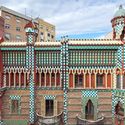
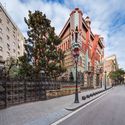
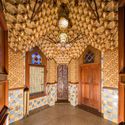
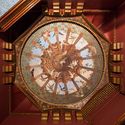
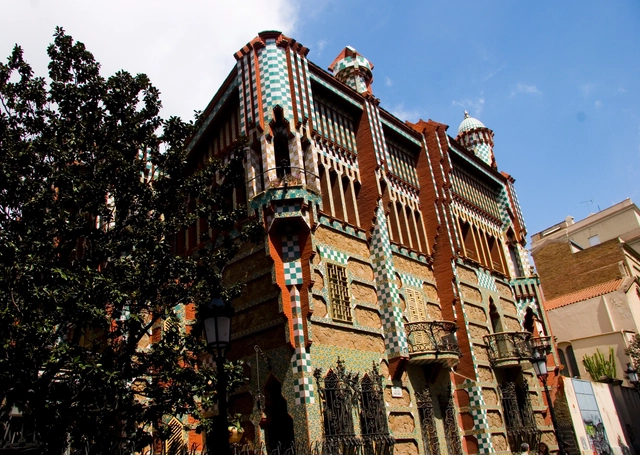
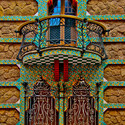
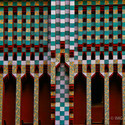
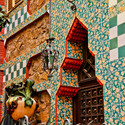
Antoni Gaudí’s first ever house, Casa Vicens, is set to open to the public this autumn following a major restoration effort. Located in the Barcelona neighborhood of Gràcia, the house was originally built for broker Manuel Vicens from 1883 to 1885 – helping to define Gaudí’s signature style and helping to usher in the era of Art Nouveau architecture in Catalonia.
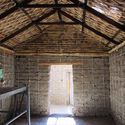
In the city of Belén, Chile, as a part of the second phase of a Training Program for the Restoration of Facades in Belén, two historically important structures were recently completely restored. The project was financed by the Regional Government of Arica and Parinacota and SUBDERE (Undersecretariat of Regional and Administrative Development), in partnership with the Altiplano Foundation.
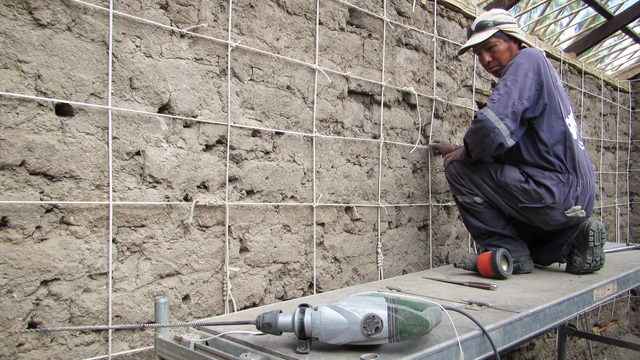
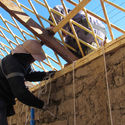
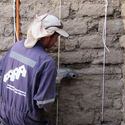
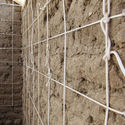
In both houses, the foundations and, where necessary, the walls were reinforced, and the traditional Andean roof and existing carpentry was restored. Notably, the structural reinforcement of the adobe walls used a rope mesh system, which was first seen in Chile in 2014 as part of the restoration of a church in San Pedro de Atacama.
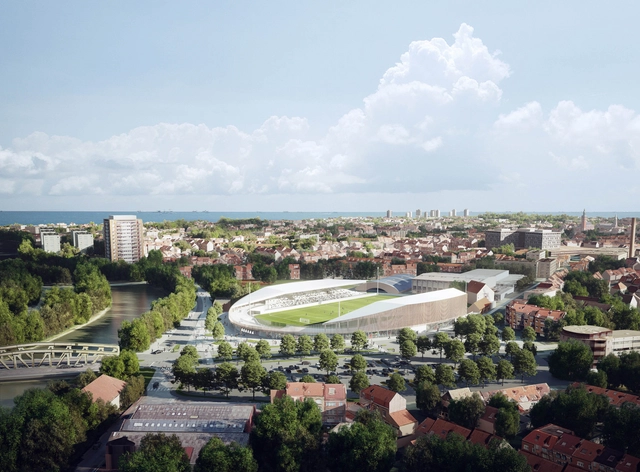
The stadium is located in the heart of Dunkirk. Image Courtesy of Viktor Fretyán
The SOCKEEL + OLGGA consortium have won a competition to design the new Tribut Stadium in Dunkirk, France. The historic stadium, in a prominent location on a canal bank in central Dunkirk, will be transformed into a 5,000 seat stadium seeking to maximize inclusiveness and accessibility.
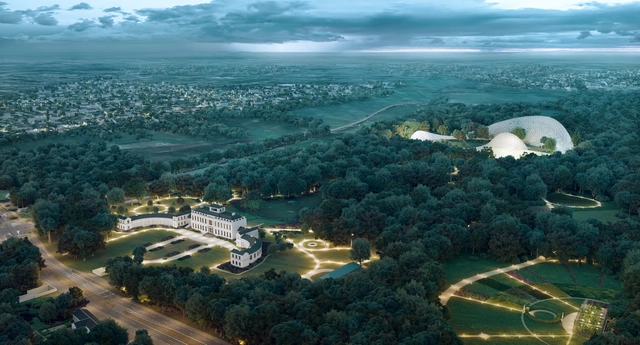
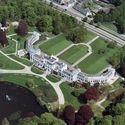
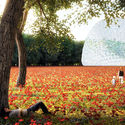
Mecanoo has unveiled its design to transform The Soestdijk Estate into Eden Soestdijk, “an experimental garden for a sustainable society and a paradise destination for all” in The Netherlands. In an effort to become an educational tool for environmental awareness, the project aims to make a significant contribution to meeting the UN’s Sustainable Development Goals.
“The world is facing pressure from increasingly larger and more complex problems when it comes to water, food, climate and energy,” said Anton Valk, chairman of the Eden Soestdijk foundation. “Eden Soestdijk wants to tackle these problems and contribute to a more sustainable society by stimulating and inspiring visitors to change their behaviour in a positive way.”
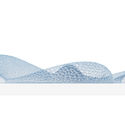
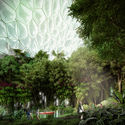
An architectural greenhouse behind the palace gardens will be the centerpiece of the project, and will house an interactive exhibition focusing on topics like circularity, ecological balance, and social aspects of sustainability.
In the practice of historic preservation, there is often a temptation to turn a building into an object on display—meticulously restored, unchanging, physically isolated—in order to remove it from the flow of history. The multidisciplinary Amsterdam-based studio Rietveld-Architecture-Art-Affordances (RAAAF) situates itself in opposition to this method of dealing with architectural remnants. Instead, it proposes to make history tangible by altering these decaying structures in a way that makes their stories plainly visible. The practice has a name for this approach—"hardcore heritage."
"Part of war and conflict has always been the collateral damage. Buildings have fallen in the path of military objectives, but, [...] in this war, buildings aren't destroyed because they're in the way of a target. The buildings are the target." As the narrator of The Destruction of Memory so eloquently explains, the destruction of culture—of buildings, books, and art—is often not an accidental consequence of conflict. As we can see by the actions of ISIS in Iraq and Syria today, the destruction of cultural artifacts is part and parcel of a conscientious strategy to target and destroy the collective memory, history, and identity of a people.
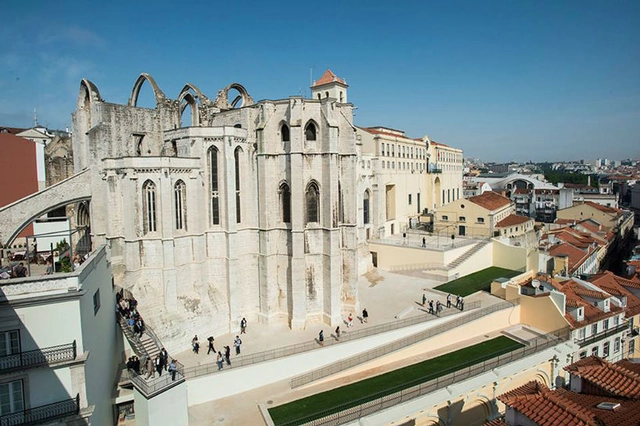
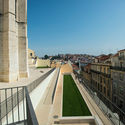
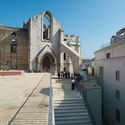
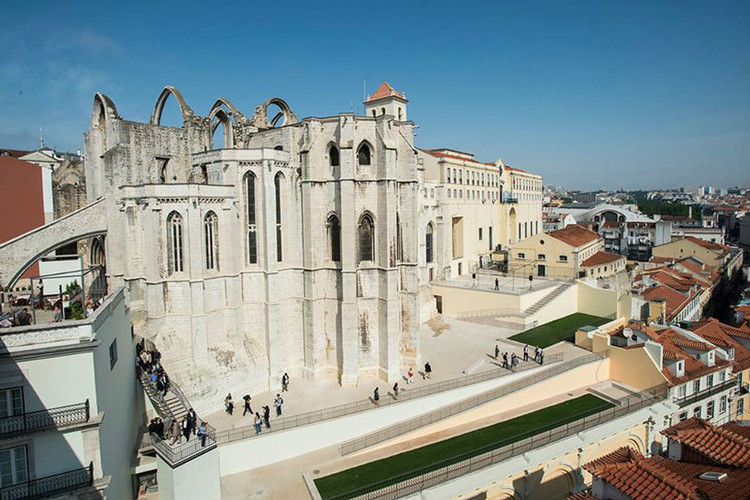
Due to a fire in 1988, the Chiado district of Lisbon had many of its buildings damaged or partially destroyed by the flames, and an intense restoration and recovery project led by Álvaro Siza has been going on for over a decade.
Among the strategies employed by the Portuguese architect (and winner of the 1989 Pritzker Prize) is the reorganization of routes and walkways, creating elevated walkways to facilitate access to the area and the flow of locals and visitors. According to the Municipal Council of Lisbon, Siza has recently completed the connection between one of the courtyards of the Carmo Convent (Patio B) to the Largo do Carmo square and the Carmo Terraces with a pedestrian path.
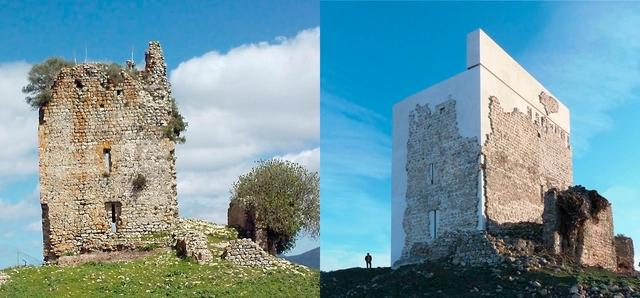
Before and After. Image via Leandro Cabello | Carquero Arquitectura
In 2011, after the partial collapse of the Matrera Castle in Cádiz, Spain (dating back to the 9th century) the city decided to restore the remaining tower, with the aim of preventing its collapse and protecting the few elements that were still standing.
The challenge fell into the hands of Spanish architect Carlos Quevedo Rojas, whose design received the approval of the Regional Government of Andalucía, in compliance with the Historical Heritage law 13/2007, which prohibits mimetic reconstructions and requires the use of materials that are distinct from the originals.
In the words of the architect: “This intervention sought to achieve three basic objectives: to structurally consolidate the elements that were at risk; to differentiate the additions from the original structure (avoiding the mimetic reconstructions that our law prohibits) and to recover the volume, texture and tonality that the tower originally had. The essence of the project is not intended to be, therefore, an image of the future, but rather a reflection of its own past, its own origin.”
Why has a restoration based on the anastylosis technique – which exists around the world – caused so much controversy? It is it really a “heritage massacre” as the media has said? Do you think it could have been carried out in a better way?
Join the debate and leave your comments after the break.
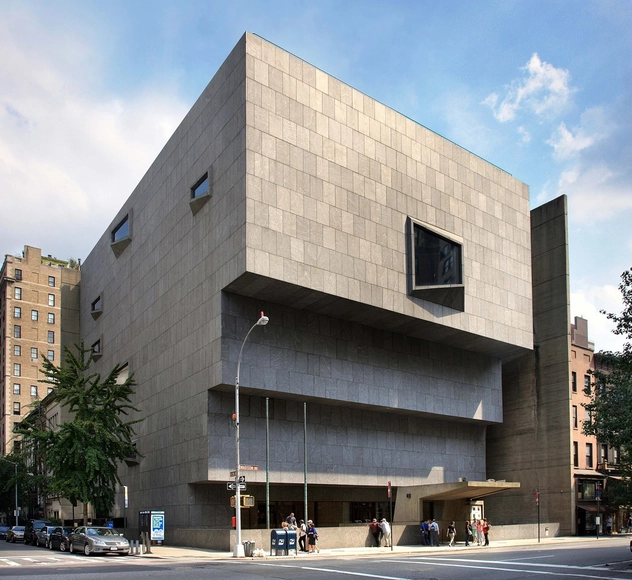
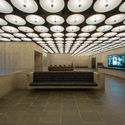
Now, thanks to a restoration led by New York City firm Beyer Blinder Belle, the iconic building has been transformed into the Met Breuer—the bold new showcase for the Metropolitan Museum of Art's renewed embrace of modernist and contemporary art. It will open to the public on March 18, 2016, and as the crowds ready to descend, the curators and architects are no doubt anxious to see whether, by faithfully adhering to Breuer's original vision, the restored building will succeed in both delighting museum-goers and helping redefine the Met's public image.
Let yourself be silently drawn by the stronger pull of what you really love.
To the bewilderment of many friends, this quote by Rumi adorns the cover of my portfolio. It justifies my pursuit of a career in architecture instead of a more stable field. Although I teasingly explain that “architecture is chronic,” the quote still holds some truth.
As an architect, I thought I did my due diligence: working long, underpaid hours and late nights to build a solid portfolio. But, despite the recognition one’s work may receive, underpayment and employment uncertainty are considered part of the job. On the other hand, the diversity inherent to the profession promotes creative thinking and an aspiration to incite meaningful change; thus, it continues to ignite the imagination.
That’s why, when the opportunity presented itself in the summer of 2014, I took leave from work to visit the Middle East. Yes, that is correct. Having the opportunity to grow up in the East and then to live in the West, I know better than to submit to the media’s fear-inspiring propaganda. I figured that speaking the language and being a seasoned traveler would come in handy. So I set out on an expedition that not only reconnected me to architecture, but also led to one of the most meaningful projects I have worked on.
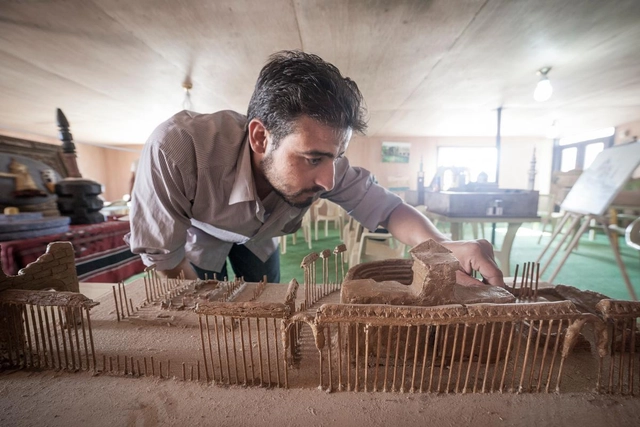
Mahmoud Hariri building a model of Palmyra using clay and wooden kebab skewers. Image Courtesy of UNHCR Tracks
Throughout Syria’s four-year war, many of the country’s ancient monuments and artifacts have been demolished by ISIS and Syrian bombs targeted at Islamic militants. In August, ISIS destroyed Palmyra, one of the most important cultural centers in the world.
Yet a group of Syrian refugee artists in Jordan, with the support of the United Nations and Internal Relief and Development, have been salvaging some memories of their country’s destroyed artifacts. Since November 2014, these artists have been constructing miniature models of Syria’s ancient architecture through a project called Syria History and Civilization, according to a reporty by Buzzfeed News.
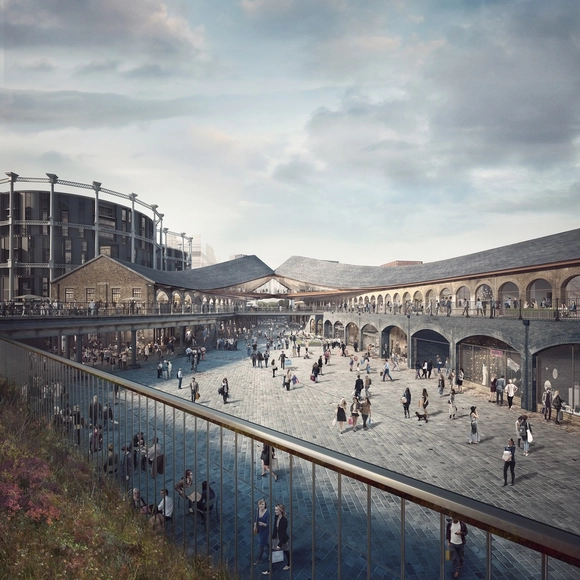
Heatherwick Studio has received approval to realize a new shopping area at King's Cross in London. By 2018, the practice will transform the city's 1850 historic Coal Drops Yard buildings intoan "eclectic mix" of 65 boutique and destination shops and restaurants.
"Over a two-year restoration and build process, Londoners will see the existing Victorian buildings – the East and West Coal Drops and Wharf Road Arches – refurbished and re-purposed in a way that creates a stunning new upper level and improves connectivity, whilst allowing the original forms and functions to be read," says the architects.
In 2015 Critical Concrete was founded with the ambition of promoting a new model: the refurbishment of abandoned places for social housing and cultural initiatives through summer camp programs centered around sustainable architecture and art in context. In this sense, we want to conceptually reconnect the artist to the amateur and foster the sharing of skills and knowledge between experienced practitioners and surrounding communities, material reuse and sustainable, ecological constructions.
Videos
Sergio Sebastian Architects, Archeological Space in Daroca, Spain
The Prize conceived and promoted by the Department of Architecture at Ferrara University and Fassa Bortolo company gives visibility to contemporary restoration and recovery projects (in this fifth edition of the competition only for professionals) of interest with a total prize money of 13.000 euros.
Designed by Antonio Gaudí in Barcelona when he was 30, and designated a World Heritage Site by UNESCO in 2005, Casa Vicens will be converted into a museum and open its doors to the public during the second half of 2016.
Built between 1883 and 1889, Casa Vicens was the first house designed by Gaudí. The building’s current owner, a subsidiary of the financial group Mora Banc Grup, is currently working on its restoration and the museum planning. “The mission of Casa Vicens as a house museum is to present the first Gaudí house, presenting it as an essential work to understand his unique architectural language and the development of Art Nouveau in Barcelona,” explained the executive manager of the project, Mercedes Mora, in a recent interview with Iconic Houses.
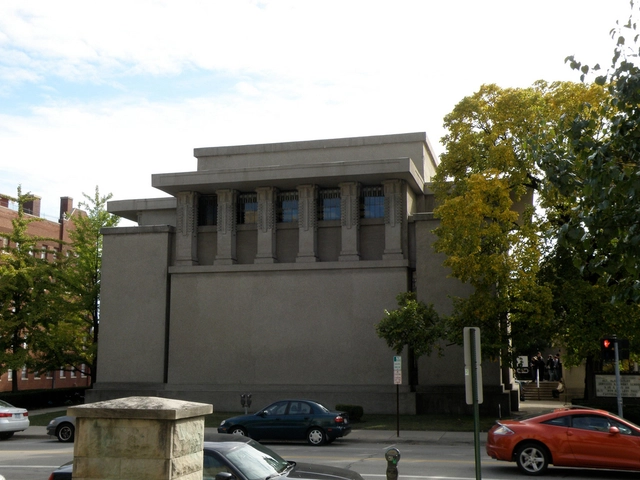
Frank Lloyd Wrights's Unity Temple is undergoing a much needed $23 million restoration. As the Chicago Tribune reports, the Oak Park temple's integrity was first called into question when a large piece of the ceiling fell above the pulpit in 2008 (thankfully no one was hurt).
The comprehensive overhaul is going beyond restoring the building's to its original beauty; a geothermal heating system and air conditioning will be integrated into the building and site for the first time, allowing the uninterrupted services year-round.