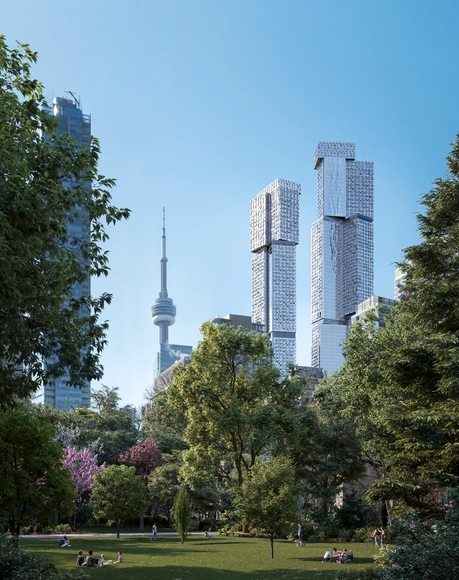
Great Gulf Group, Dream, and Westdale Properties, have unveiled renders of Frank Gehry's newest architecture in Toronto, Canada. Set to leave a mark on the city's skyline, Forma, the architect’s first residential tower in Canada and his tallest building yet rises 73 storeys and features a thoughtfully-appointed Gehry-designed lobby along with a striking custom art installation that reflects his visionary approach, as well as interiors by international design studio Paolo Ferrari.
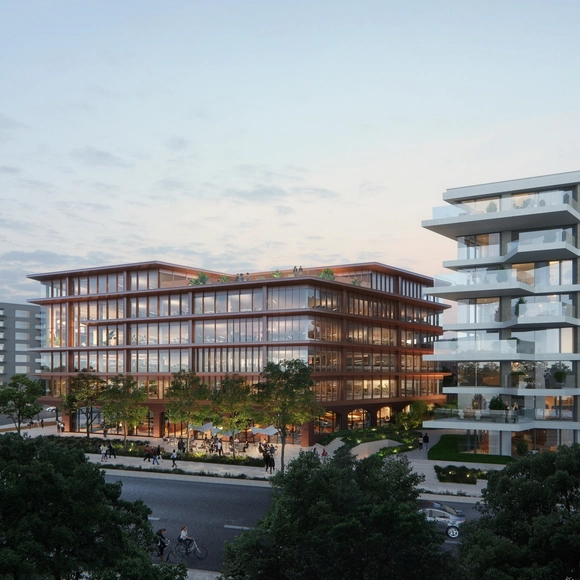
Powerhouse Company has revealed a new design for THIS., a new mixed-use development in Amsterdam’s North District. Overlooking the waterfront of the IJ river, the complex offers the necessary amenities for both working and living in an area close to the city center. The ensemble includes a new office building, two waterfront private sector residential buildings, and two social housing blocks containing a total of 2017 homes. A Hidden Garden, designed by Delva Landscape Architecture and Urbanism, connects the residential and office buildings, creating a space for leisure and social activities.
Manhattan's dense landscape has just received another skyscraper, this time designed by a Portuguese Pritzker Prize Winner. At 137 meters high and with 35 floors, 611 West 56th Street, Álvaro Siza's first building in New York, was just completed, on the outside. The luxury apartment complex, which is also Siza's first work in the United States, has several facilities for its residents, such as a swimming pool, a spa, a gym, a playground for children and rooms for events.
It’s an essential architectural element, one we tend to immediately take note of when we look at buildings new to us – the roof. The roofs that shelter the buildings we see in our cities today are diverse in their typology. Flat roofs are a common sight in the city centers of urban metropolises, hip roofs are a popular choice for dwellings around the world, and the gable roof is arguably the most common of all, a roof type popular in stylized depictions of what a standard house looks like.
MVRDV has revealed the design for its first project in South America. The Hills is a residential project located on the Guayas riverfront in Guayaquil, Ecuador, comprised of six residential towers displayed atop a mixed-use plinth, creating the image of a valley. The towers range in height from 92 to 143 meters, raising taller the further away they are from the riverfront. The whole composition is inspired by the local landscape that merges the natural and the urban environment.
This week’s curated selection of Best Unbuilt Architecture highlights residential projects submitted by the ArchDaily community. From a small community-dwelling in Ghana to a villa tucked under a hillside in Portugal, this roundup of unbuilt projects explores how architects react to various site topographies, cultures, and material availability when designing spaces that provide more than shelter to their users. The article also includes projects from India, Iran, Ireland, Latvia, Georgia, and Saudi Arabia.
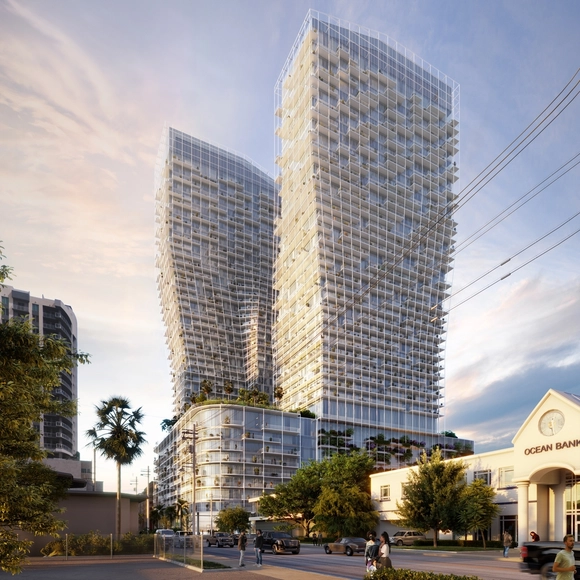
New York-based architecture studio ODA has revealed the design of Ombelle, a duo of residential towers in Fort Lauderdale, Florida. The two 43-story buildings will accommodate 1,100 rental units, completed with amenities and retail spaces. At the base of the building, an urban plaza connects the development to its neighboring area and Flanger Village. The Ombelle complex is ODA's second large-scale residential project in Fort Lauderdale. The first one, the Kushner tower, is located in the same district.
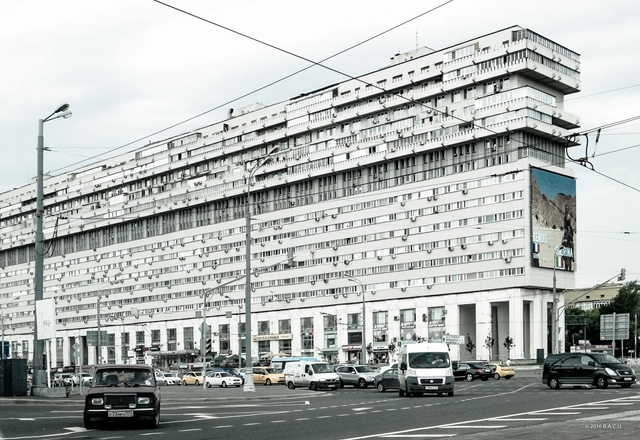
When cities grow, fuelled by an expanding population, housing becomes an essential component of the urban character of a metropolis. Across the world, housing experiments have been propagated by governments and states, with mixed results, and undoubtedly mixed opinions. The Soviet-era housing estates of Central and Eastern Europe are particularly interesting in that regard. These mass housing projects have been dismissed as eyesores and viewed as unimaginative monolithic structures. The legacy of these developments, however, is a lot more complicated than that.
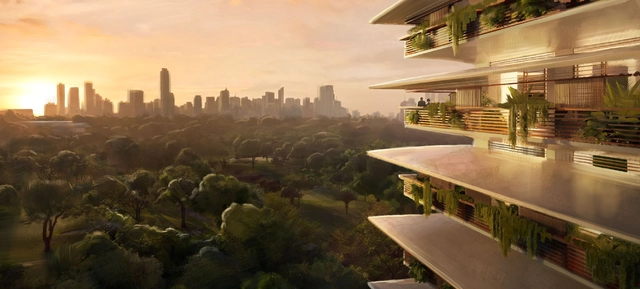
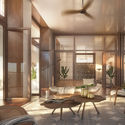
Foster + Partners has revealed the design of the BWDC Residential Tower, a luxury apartment building in Manila, the Philippines. The new tower combines the city’s vernacular architecture and traditional veranda lifestyle with modern high-rise living. The project is the firm's latest in the tropics which responds to the regions’ intense weather systems, mitigating high temperatures and humidity through passive design strategies.
Housing will always be a theme and challenge for architects. Thinking about it in a way that serves the entire population, including the most precarious contexts, is one of the most complex, and perhaps impossible, tasks to be fully consolidated. Each place and family will always place different priority points on a project, which is why resorting to a standard solution is not ideal. However, several proposals present intervention possibilities that create an intricate seam between the most different factors: basic infrastructure, program, self desires, aesthetics, budget. For this reason, we have gathered here some Brazilian examples of affordable housing, ranging from a single-family house to large residential blocks.
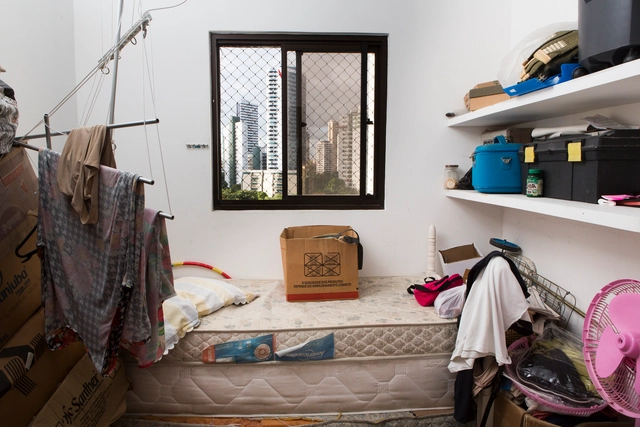
The maid's quarters are "with their days numbered", although they still find a place in the new luxury apartments. The information is from a report published in Folha de S. Paulo in March of this year, which says that in 2018 less than 1% of domestic workers, mostly black women, lived on the premises of their employers - a low number when compared to the 12% of 1995. With the decrease in the number of professionals residing in the employers' homes, the "maid's room" would gradually be no longer part of the architectural plans of Brazilian housing buildings.
The end of the 19th century in the Americas is marked by a wave of historical disputes and political transformations that have as a backdrop the search for a national identity. The period records a series of conflicts and disputes for the independence of what we now know as sovereign countries and republics. In this context, the Pan-American or Spanish-American movements emerged, which, despite having different political influences, aimed at the unification of all the territories of the American continent.
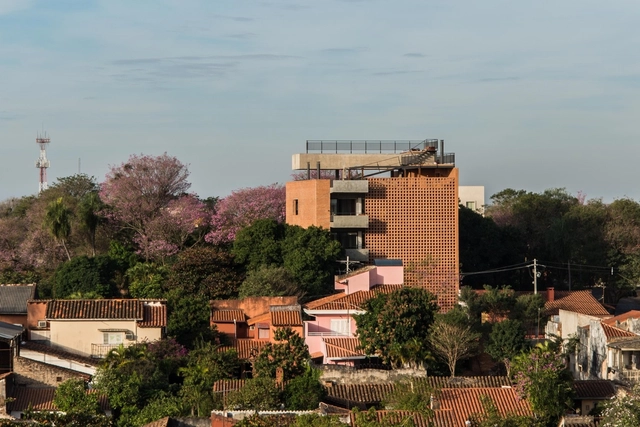
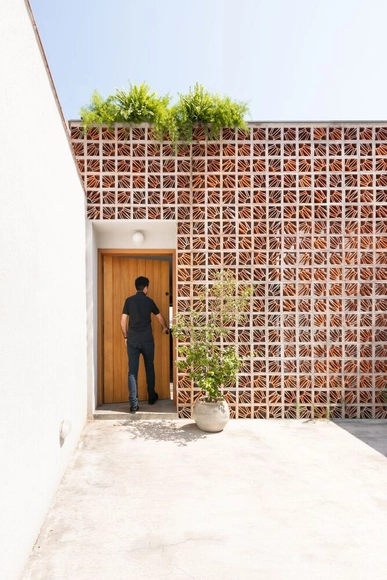
Visual permeability, ventilation and a strong identity appeal, the hollow elements have increasingly found their place in contemporary architecture. Whether in large buildings or small residences, they appear in different shapes, materials and compositions, helping to determine the degree of interaction between interior and exterior space. This artifice in a residential construction is an important tool to ensure privacy and intimacy, without losing the possibility of connections to the outside and natural ventilation.
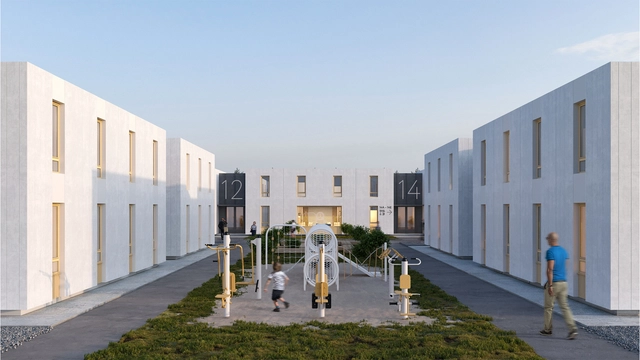
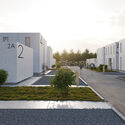
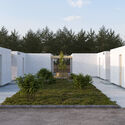
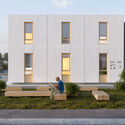
Since the beginning of the war, over 7.1 million people have been internally displaced within Ukraine. In response to this growing humanitarian crisis, Kyiv-based practice Balbek Bureau has developed a modular temporary housing system that aims to provide a dignified dwelling to internally displaced Ukrainians. RE:Ukraine is designed to adapt to different types of terrain and settlement density while being deployed in a short time frame. While the project was intended for areas of Ukraine that are not under fire, the framework can also accommodate refugees abroad.
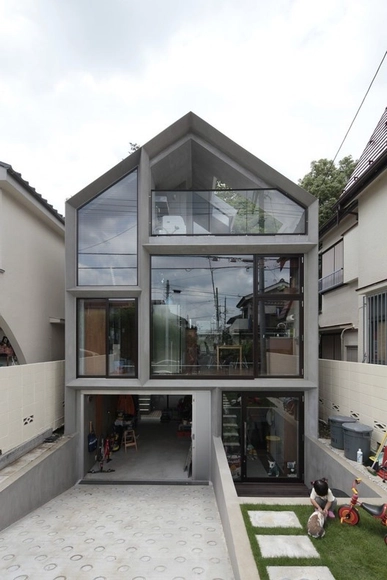
In most countries around the world, value is placed on older buildings. There’s something about the history, originality, and charm of an older home that causes their value to sometimes be higher than newly constructed projects. But in Japan, the opposite is almost always the preference. Newly-built homes are the crux of a housing market where homes are almost never sold and the obsession with razing and rebuilding is as much a cultural thing as it is a safety concern, bringing 30-year-old homes to a valueless market.
Furniture has a direct impact on the quality of interior design projects. Among other features, its presence blends with the function of the spaces, setting a boundary between them.
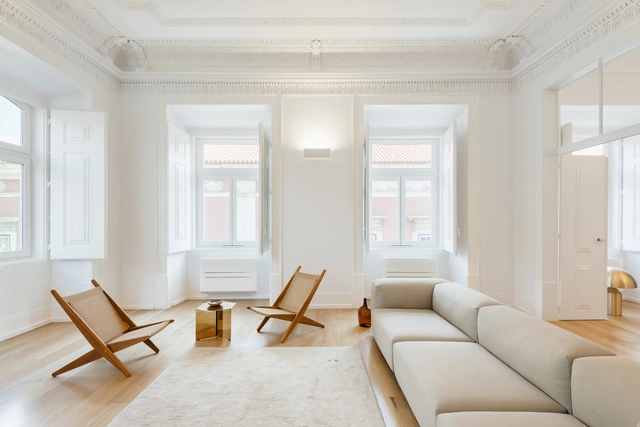
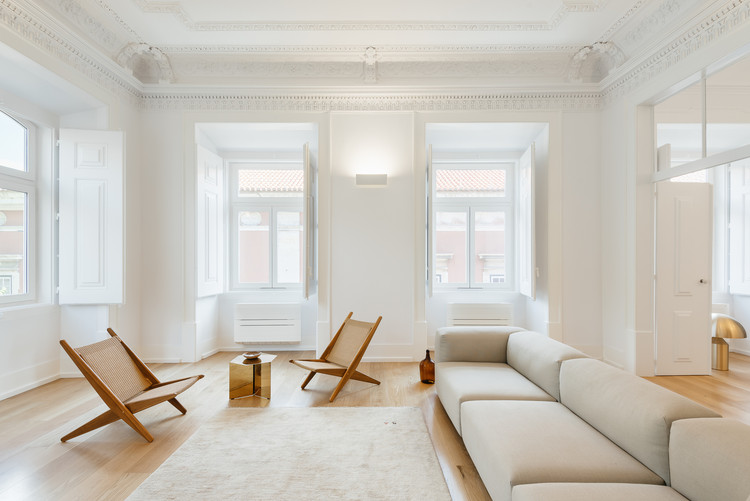
An internal space with neutral colors, for example, might highlight certain furniture that, beyond fulfilling their function, also assumes a contemplative profile. These pieces of furniture have become iconic by their design, which, in some cases, were created by great names of architecture that explored this field and drew pieces that represented their style.
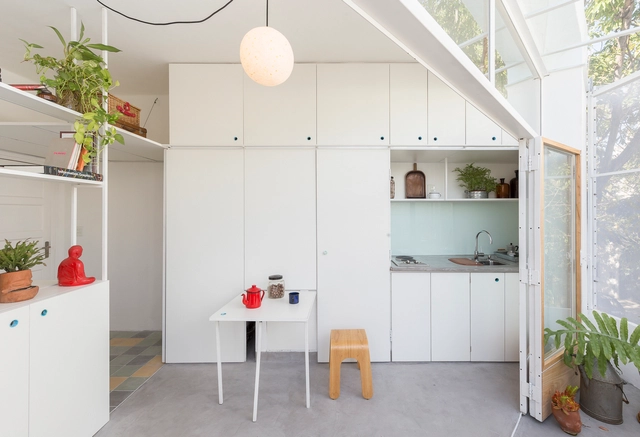
Regardless of the design adopted for kitchen spaces, for some years now and with increasing frequency, many architects have been deciding to design kitchens by integrating them into other rooms in the home. Free of dividing walls or joinery, integrated kitchens are implemented with the aim of leaving the activities that take place there in full view of everyone, encouraging interaction and communication between the inhabitants.
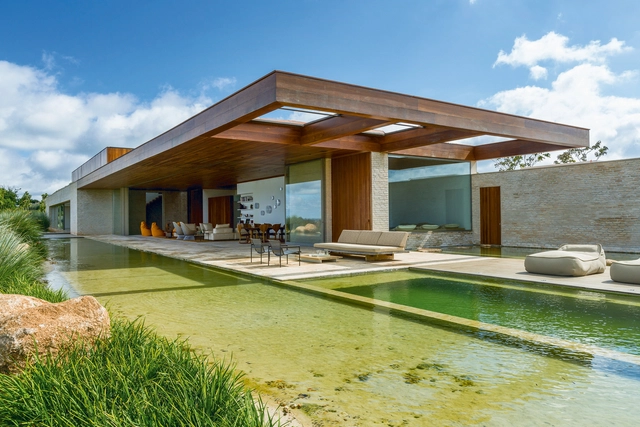
At a time when biophilia is highly valued in architecture, natural pools become another element capable of increasing the connection with nature, enabling the creation of a recreational and contemplative space at the same time. Also known as ecological or biological pools, they reproduce an ecosystem composed of plants, rocks and even some species of fish.






.jpg?1653990029 "Khayelitsha Township - Cape Town. Image © Olga Ernst under the Creative Commons Attribution-Share Alike 4.0 International license.")


.jpg?1653955037&format=webp&width=640&height=580)

.jpg?1653955060 "Courtesy of MVRDV")


.jpg?1653955037)