1. ArchDaily
  2. Repair

Repair: The Latest Architecture and News

Art Paris 2026 Returns to the Grand Palais, Framing Language and Reparation Within an Architectural Landmark

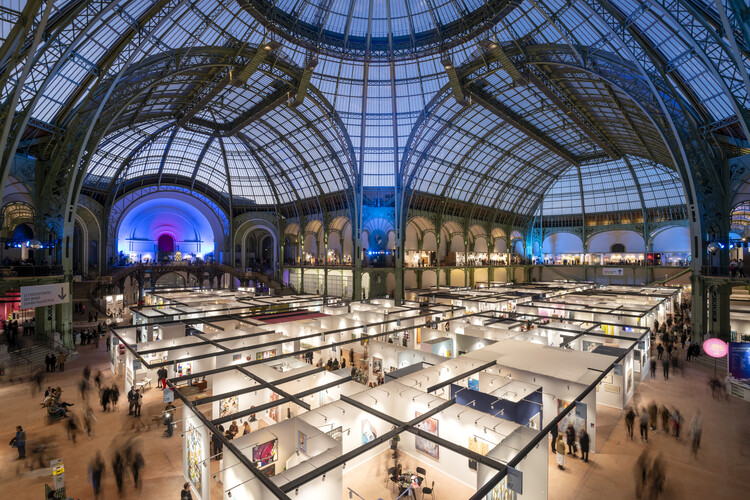
Art Paris will return to the Grand Palais from 9-12 April 2026, marking the 28th edition of the fair at the recently renovated landmark. Reopened following its most extensive restoration in over a century, the 77,000-square-meter building, transformed under the direction of Chatillon Architectes, now accommodates large-scale cultural events across its nave and balcony spaces. Bringing together approximately 165 galleries from around twenty countries, the fair is structured around two curatorial themes, language and reparation, presented within an updated spatial framework defined by improved circulation and expanded exhibition areas.


Art Paris 2026 Returns to the Grand Palais, Framing Language and Reparation Within an Architectural Landmark - Image 1 of 4Art Paris 2026 Returns to the Grand Palais, Framing Language and Reparation Within an Architectural Landmark - Image 2 of 4Art Paris 2026 Returns to the Grand Palais, Framing Language and Reparation Within an Architectural Landmark - Image 3 of 4Art Paris 2026 Returns to the Grand Palais, Framing Language and Reparation Within an Architectural Landmark - Image 4 of 4Art Paris 2026 Returns to the Grand Palais, Framing Language and Reparation Within an Architectural Landmark - More Images+ 2

Lu Wenyu: Quiet Radicalism and the Practice of Repair

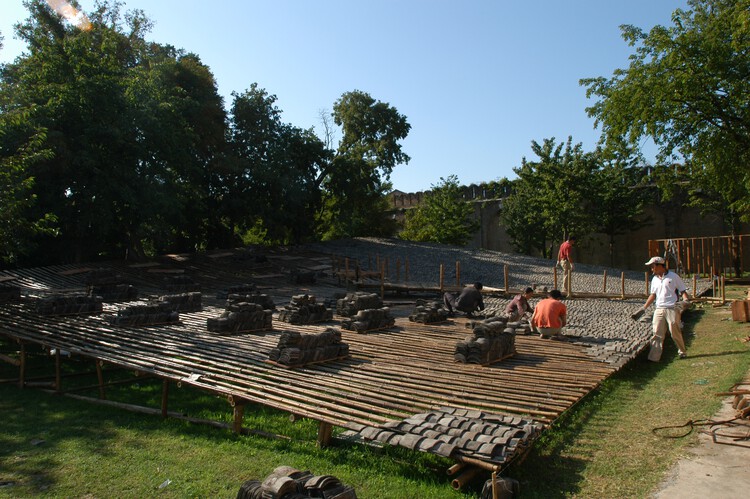
Lu Wenyu—co-founder of Amateur Architecture Studio with Pritzker laureate Wang Shu—has shaped many of the practice's most emblematic works across China, including the Ningbo History Museum and the Xiangshan Campus of the China Academy of Art in Hangzhou. Often working outside the spotlight, her leadership is unmistakable in the discipline of execution and the roles she has assumed: in 2003, together with Wang Shu, she established the Architecture Department at the China Academy of Art, where she also serves as Director of the Sustainable Construction Center. Her practice and teaching form a reciprocal loop: research conducted in studios at the China Academy of Art continually folds back into construction strategies on site, while lessons learned in the field return to the classroom as material intelligence rather than abstract theory.

Lu Wenyu: Quiet Radicalism and the Practice of Repair - Image 1 of 4Lu Wenyu: Quiet Radicalism and the Practice of Repair - Image 2 of 4Lu Wenyu: Quiet Radicalism and the Practice of Repair - Image 3 of 4Lu Wenyu: Quiet Radicalism and the Practice of Repair - Image 4 of 4Lu Wenyu: Quiet Radicalism and the Practice of Repair - More Images+ 12

Architectural Acts of Repair: Critical Themes from the 2025 ECC "Time Space Existence" Exhibition

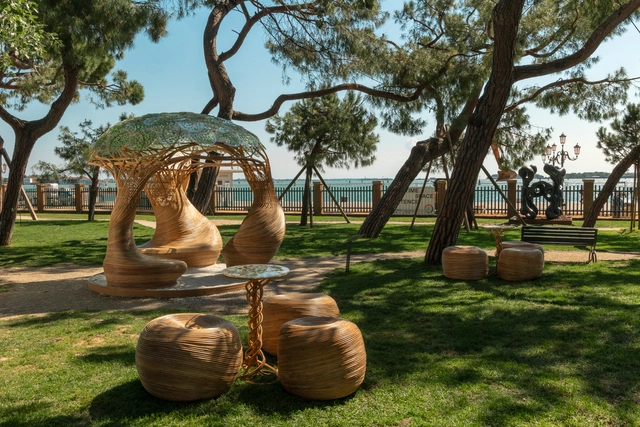
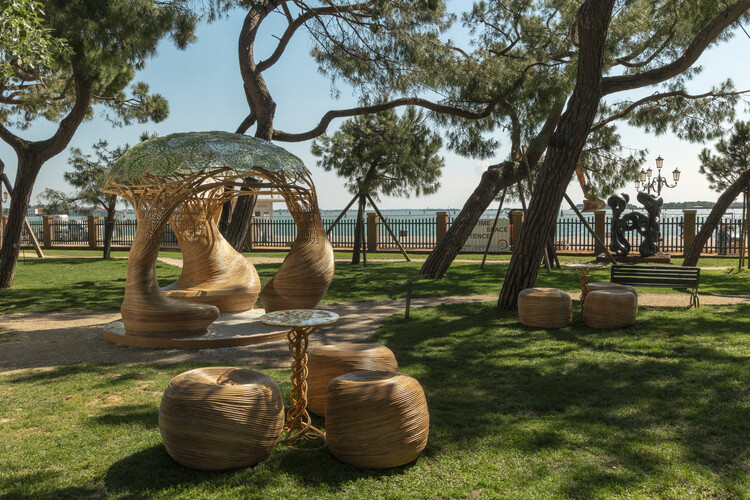
The 2025 edition of the European Cultural Centre's (ECC) Time Space Existence exhibition in Venice is guided by the mandate to "Repair, Regenerate, and Reuse." Aiming to move beyond surface-level solutions and overused terminology, the exhibition showcases a cohort of practitioners who interpret architecture as an active agent of repair. The most compelling works presented in Venice demonstrate that "repair" is a multifaceted practice, operating across material, social, and historical registers. The varied approaches showcase a shift in the role of the architect, from a master builder and designer of physical objects, to that of a mender, able to combine technology, community, and material intelligence to restore narratives and build stronger cultural systems.

Architectural Acts of Repair: Critical Themes from the 2025 ECC "Time Space Existence" Exhibition - Image 2 of 4Architectural Acts of Repair: Critical Themes from the 2025 ECC "Time Space Existence" Exhibition - Image 7 of 4Architectural Acts of Repair: Critical Themes from the 2025 ECC "Time Space Existence" Exhibition - Image 18 of 4Architectural Acts of Repair: Critical Themes from the 2025 ECC "Time Space Existence" Exhibition - Image 16 of 4Architectural Acts of Repair: Critical Themes from the 2025 ECC Time Space Existence Exhibition - More Images+ 14

“A Site of Destruction, a Site of Opportunity”: In Conversation With Kabage Karanja and Kathryn Yusoff, Curators of the British Pavilion

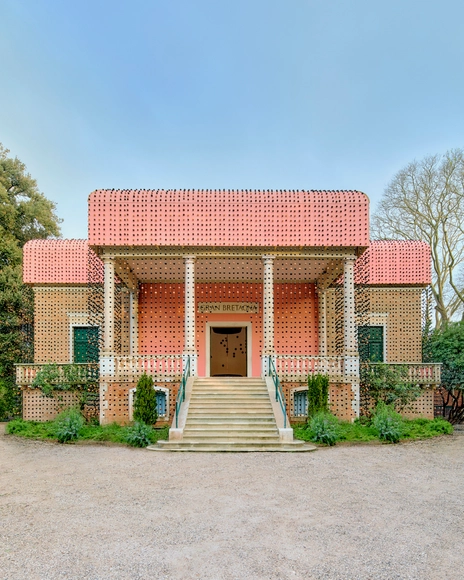
Kabage Karanja, co-founder and director of Cave_bureau based in Nairobi, Kenya, and Kathyrn Yusoff, professor of Inhuman Geography at the University of London, are the curators of the British Pavilion at the 19th Venice Architecture Biennale. Together, they form the UK-Kenya curatorial team behind GBR – Geology of Britannic Repair, an exhibition that rethinks the Pavilion as both a symbolic and material site. Their approach reflects on Britain's architectural legacy and its entanglement with histories of colonialism, geological extraction, and the urgency of the climate crisis. In recognition of their exploration of the relationship between Great Britain and Kenya, focusing on themes of reparation and renewal, the Pavilion curators and commissioner were awarded a Special Mention for National Participation by the Biennale jury. While on site in Venice, ArchDaily's editors had a chance to discuss with the curators about the ideas that shaped the British Pavilion.

“A Site of Destruction, a Site of Opportunity”: In Conversation With Kabage Karanja and Kathryn Yusoff, Curators of the British Pavilion - Image 1 of 4“A Site of Destruction, a Site of Opportunity”: In Conversation With Kabage Karanja and Kathryn Yusoff, Curators of the British Pavilion - Image 2 of 4“A Site of Destruction, a Site of Opportunity”: In Conversation With Kabage Karanja and Kathryn Yusoff, Curators of the British Pavilion - Image 3 of 4“A Site of Destruction, a Site of Opportunity”: In Conversation With Kabage Karanja and Kathryn Yusoff, Curators of the British Pavilion - Image 4 of 4“A Site of Destruction, a Site of Opportunity”: In Conversation With Kabage Karanja and Kathryn Yusoff, Curators of the British Pavilion - More Images+ 3

Geology of Britannic Repair: UK Pavilion Explores Reparation and Renewal at Venice Architecture Biennale 2025

The British Pavilion, commissioned by The British Council, features the exhibition title GBR – Geology of Britannic Repair to represent the United Kingdom at the 19th International Architecture Exhibition – La Biennale di Venezia 2025. The exhibition is a collaboration between a multi-disciplinary team of curators, Kabage Karanja and Stella Mutegi of Nairobi-based architecture studio Cave_bureau, UK-based curator and writer Owen Hopkins, and academic Professor Kathryn Yusoff. The Pavilion curators and commissioner have been awarded a Special Mention for National Participation by the jury in recognition of their exploration of the relationship between Great Britain and Kenya, focusing on themes of reparation and renewal.

Geology of Britannic Repair: UK Pavilion Explores Reparation and Renewal at Venice Architecture Biennale 2025 - Image 1 of 4Geology of Britannic Repair: UK Pavilion Explores Reparation and Renewal at Venice Architecture Biennale 2025 - Image 2 of 4Geology of Britannic Repair: UK Pavilion Explores Reparation and Renewal at Venice Architecture Biennale 2025 - Image 3 of 4Geology of Britannic Repair: UK Pavilion Explores Reparation and Renewal at Venice Architecture Biennale 2025 - Image 4 of 4Geology of Britannic Repair: UK Pavilion Explores Reparation and Renewal at Venice Architecture Biennale 2025 - More Images+ 13

Social Rehabilitation: Exploring Community Involvement in Architectural Restoration

Subscriber Access | 

Rehabilitation involves repairing, renovating, altering, or reconstructing any building or structure. It addresses the need to significantly improve a building's failing features, primarily through strengthening or replacing elements to restore the structure's optimal performance. The impact of building rehabilitation on the physical environment is significant. It is a sustainable strategy for preserving the built environment and mitigating the construction industry's impact on climate change.

However, its social impact is also considerable when viewed as a fundamental framework for sustainable outcomes. Rehabilitation can serve as a model that brings community members together for inclusive repair and restoration of structures. This positively affects communal life quality, social integration, environmental sustainability, and community perception of local architecture.

Social Rehabilitation: Exploring Community Involvement in Architectural Restoration  - Image 1 of 4Social Rehabilitation: Exploring Community Involvement in Architectural Restoration  - Image 2 of 4Social Rehabilitation: Exploring Community Involvement in Architectural Restoration  - Image 3 of 4Social Rehabilitation: Exploring Community Involvement in Architectural Restoration  - Image 4 of 4Social Rehabilitation: Exploring Community Involvement in Architectural Restoration  - More Images+ 7

Rethinking the Biennale: In Conversation with Anh-Linh Ngo, Curator of the German Pavilion at the 2023 Venice Biennale

The German Pavilion Open for Maintenance / Wegen Umbau geöffnet at this years 18th International Architecture Exhibition – La Biennale di Venezia was curated by ARCH+ and Summacumfemmer Büro Juliane Greb. At its core, the exhibition addresses the resource problem and the material cycles of the biennale. Inside the pavilion is a functioning workshop dedicated to applying these concepts of care, repair, and maintenance to Venice onsite. In Venice, ArchDaily had the chance to speak with the co-curator Anh-Linh Ngo, where he discussed the different aspects of the German Pavilion.

Rethinking the Biennale: In Conversation with Anh-Linh Ngo, Curator of the German Pavilion at the 2023 Venice Biennale - Image 8 of 4Rethinking the Biennale: In Conversation with Anh-Linh Ngo, Curator of the German Pavilion at the 2023 Venice Biennale - Image 7 of 4Rethinking the Biennale: In Conversation with Anh-Linh Ngo, Curator of the German Pavilion at the 2023 Venice Biennale - Image 6 of 4Rethinking the Biennale: In Conversation with Anh-Linh Ngo, Curator of the German Pavilion at the 2023 Venice Biennale - Image 5 of 4Rethinking the Biennale: In Conversation with Anh-Linh Ngo, Curator of the German Pavilion at the 2023 Venice Biennale - More Images+ 16

Australian Pavilion at 2018 Venice Biennale to Explore Architecture's Relation to Endangered Plants

As part of our 2018 Venice Architecture Biennale coverage we present the proposal for the Australian Pavilion. Below, the participants describe their contribution in their own words.

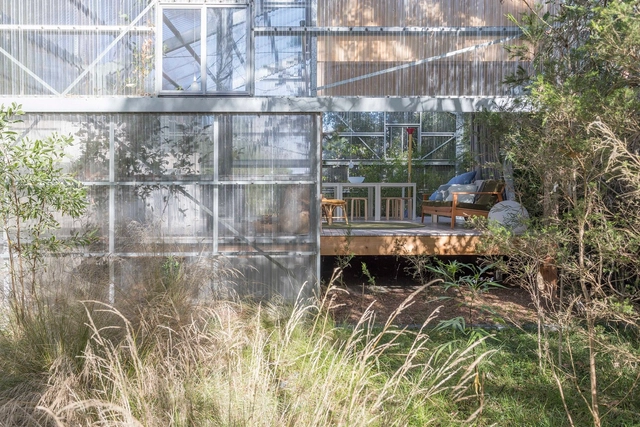
The Royal Australian Institute of Architects (RAIA) will present Repair at the Australian Pavilion during the 16th International Architecture Exhibition – La Biennale di Venezia. Creative Directors Mauro Baracco and Louise Wright of Baracco+Wright Architects, in collaboration with artist Linda Tegg, have curated a multi-sensory living installation for the Pavilion, designed to disrupt the viewing conditions through which architecture is usually understood.