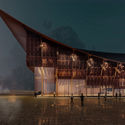
Sou Fujimoto. Image Courtesy of Sou Fujimoto Architects
After MAD’s Wormhole Library, the city of Haikou revealed a pavilion by Sou Fujimoto Architects. Scheduled for the end of spring, the ribbon-like white pavilion with an accessible roof will be one of the first public waterfront interventions to be completed in the spring of 2021. Shaping the future of Haikou city and Hainan Free Trade Port, the master plan of 16 permanent destinations re-imagines the future of coastal living.
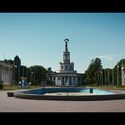
FOUN’TA’SY. Image Courtesy of Public Housing Enterprise J.S.C
Looking at the urban environment, this week’s curated selection of the Best Unbuilt Architecture highlights interventions in public spaces, submitted by the ArchDaily Community. Suitable for this monthly topic, the article underlines worldwide approaches that tackle the challenges of these areas through the introduction of innovative solutions.
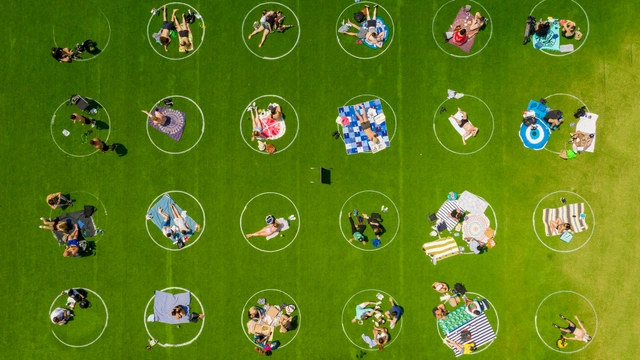
Exploring a multitude of methods fitting for different contexts, this feature presents a tactical urban strategy implemented in a neighborhood in Kosovo and micro-mobility measures in Italy. Other projects evoke public approaches in private developments and enhanced historical and cultural connections between parks, buildings, and cities. In addition, this roundup showcases conceptual interventions that tackle social distancing and the challenges of the pandemic, in order to allow people to move freely and safely across space.
Understanding what drives economic, social, and educational disparities between communities is one of urbanism’s most critical and highly-discussed topics. It’s an increasingly complex issue, with many factors at play- one of them being the design and location of desirable urban green spaces. While sometimes they are a tool that helps to bolster underserved communities in terms of health and economic benefits, safety, and climate resistance, other times they can actually drive out the residents that they are created to serve. Now, the challenge lies in how to design these recreational sites to create better futures for all.
Public art is an innate cultural privilege for New Yorkers. Top-notch art can be found across the city’s boroughs everywhere from parks, squares, alleys, and rooftops—sometimes to the jaded disdain of passerby. While permanent staples, such as Robert Indiana’s Love on 6th Avenue or George Segal’s Gay Liberation at the Stonewall National Monument are ingrained in the urban texture, others are more ephemeral. Public art has the power to swiftly take over Instagram feeds but also has a history of sparking polarizing interpretations at town hall hearings.
https://www.archdaily.com/956185/has-the-pandemic-changed-the-experience-of-encountering-art-in-publicOsman Can Yerebakan
Courtesy of MIT’s Senseable City Lab and the city of Laval
The city of Laval, Québec’s 3rd largest city, and the Massachusetts Institute of Technology (MIT) Senseable City Lab (SCL) have released six preliminary concepts exploring the “park of the future”. Investigating new experiences, the publication entitled “Senseable City Guide to Laval” is part of an on-going work “to develop a human-centered, innovative and resilient downtown area” located in the Carré Laval, a former quarry to be transformed into a mixed-use innovation district.
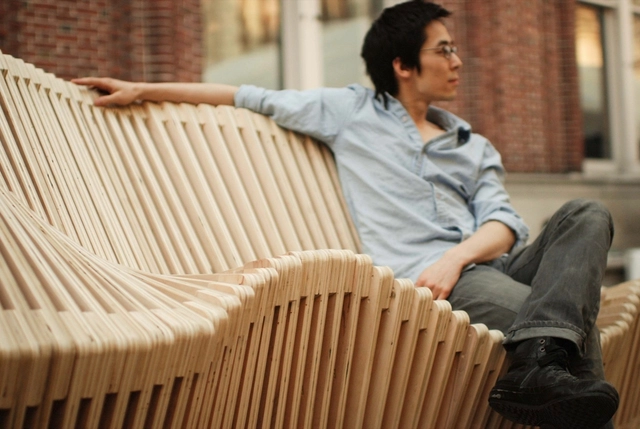
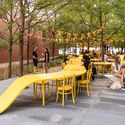
In order to create vibrant public spaces, people need to have a constant presence in these locations, whether they are on their own or in groups. In fact, they need to linger in these places and establish social interactions. To do so, one major element has to be incorporated into the urban setting: the bench.
This seating feature, simple or high tech, insures firstly the comfort of the passersby and animates the area consequently, through the addition of the missing human aspect. Sometimes, this is all it takes to revive a space that became a dull passage. The most basic urban design component can take many forms and can be created from different materials, always generating a statement and serving its purpose.
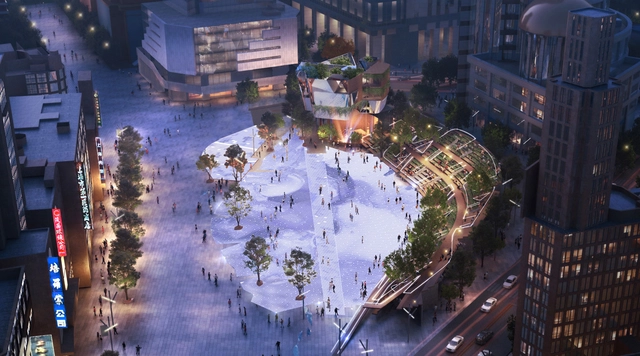
Miralles Tagliabue EMBT studio, led by Benedetta Tagliabue, has won an international competition to transform Century Square into a new green landmark in Shanghai, China. The first prize proposal, won against David Chipperfield Architects, offers to renovate the plaza located in one of the busiest commercial areas in the world, “re-naturalizing” the city center and introducing green spaces to improve the urban microclimate.
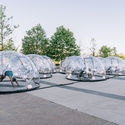
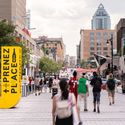
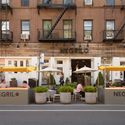
The pandemic provided a unique circumstance for city-scale experiments regarding mobility, while immediate responses showed the transformative power of tactical urbanism. In many cities, the measures meant to ensure social distancing are to be kept in place post-pandemic, paving the path towards recovery with less traffic and more outdoor activities. How did the pressure of rethinking streets, functions, and transportation systems transform public space in 2020?
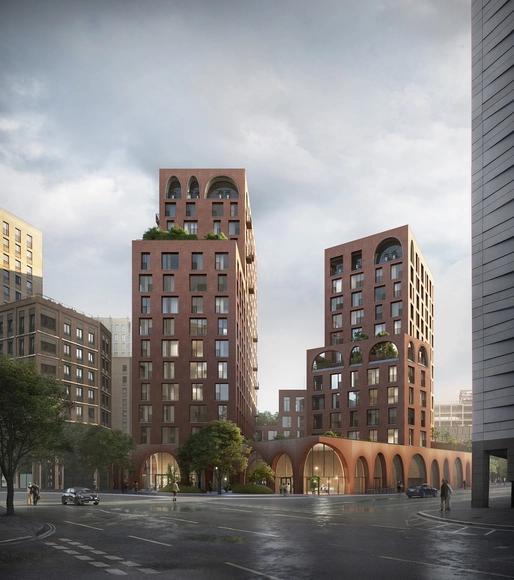
Alison Brooks Architects has created a landmark structure in the emerging area of Kings Cross in London, part of its Central Masterplan. The proposed mixed-use urban block containing 158 dwellings will reinforce the neighborhood’s “unique sense of place and celebrate its emerging and historic contexts”.
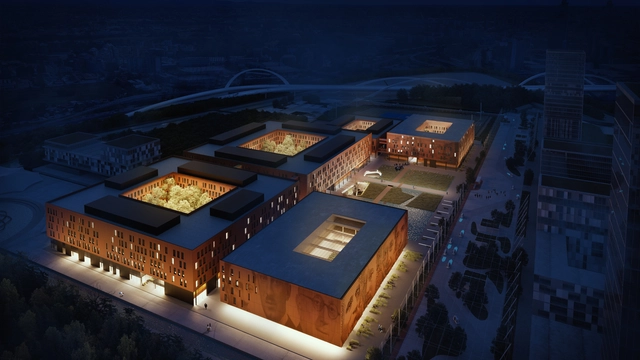
CRA-Carlo Ratti Associati and a team led by Australian real estate group Lendlease have imagined the new science campus of the University of Milan. The proposed project, a winning entry from the international competition will extend over 190,000 square meters and is due to open in 2025.
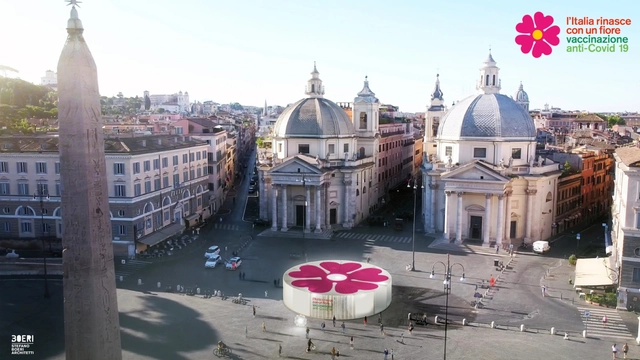
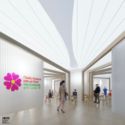
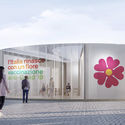
Stefano Boeri, together with a team of consultants, has created the architectural and communicative concept behind the anti-Covid-19 vaccination campaign. Under the slogan "With a flower, Italy comes back to life", the approved proposal, requested by the Italian Special Commissioner for the Covid-19 emergency Domenico Arcuri, includes the campaign logo, the temporary pavilions, and mobile information totem in public spaces.
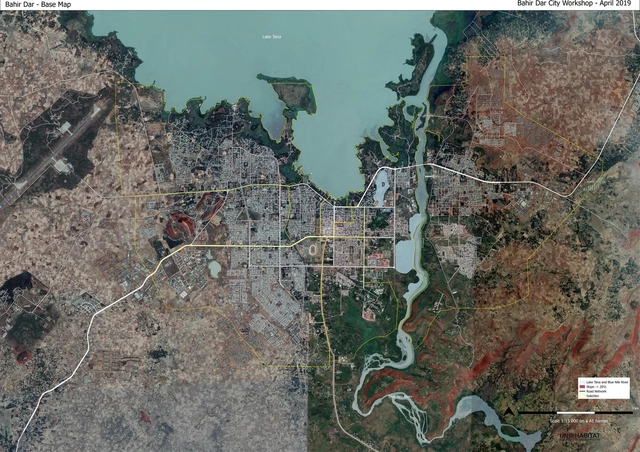
Satellite image of Bahir Dar (Ethiopia) Support of the Sustainable Structure Plan of Bahir Dar. Image Courtesy of UN-Habitat
The Un-Habitat or the United Nations agency for human settlements and sustainable urban development, whose primary focus is to deal with the challenges of rapid urbanization, has been developing innovative approaches in the urban design field, centered on the active participation of the community. ArchDaily has teamed up with UN-Habitat to bring you weekly news, article, and interviews that highlight this work, with content straight from the source, developed by our editors.
In order to support local governments in developing countries to implement the New Urban Agenda and the Sustainable Development Goals, UN-Habitat has created the Participatory Incremental Urban Planning Toolbox, “a step-by-step methodology to assess, design, operationalize and implement urban planning processes”. The guideline proposes a timeline of phases, blocks, and activities, helping city leaders, stakeholders, and the community to have a comprehensive and strategic overview of the whole strategy.
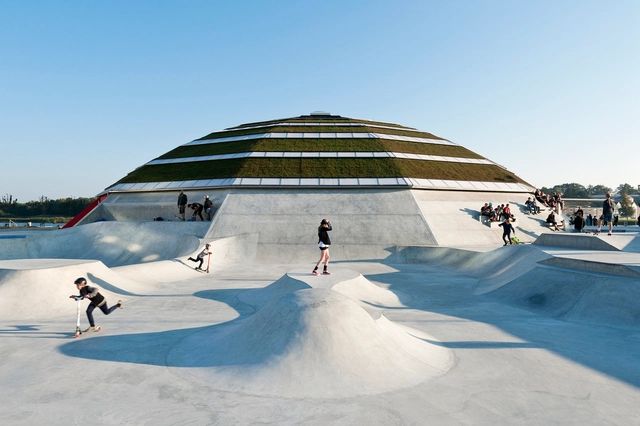
Skateboarding is often associated with the use of public spaces such as streets, squares, and sidewalks and has become a sport that blends into everyday life in the cities. Although skateboarding is sometimes considered marginalized, because of the dispute over public spaces, it allows underused places such as areas under or near overpasses to be revamped for practicing sports. Many sports centers have been incorporating skate parks into their programs, showcasing very unique designs.
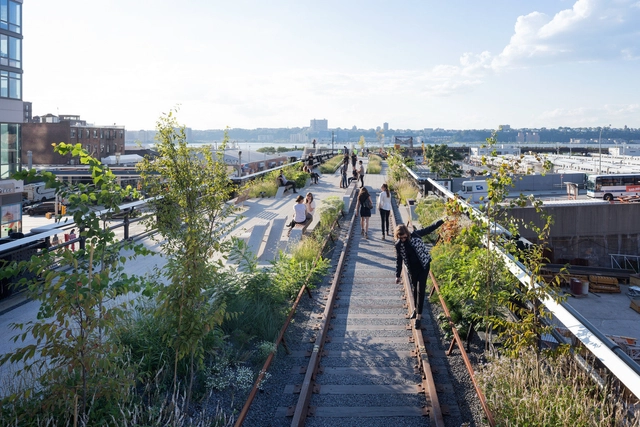
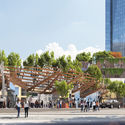
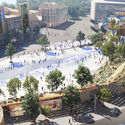
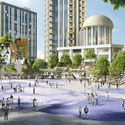
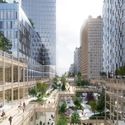
Henning Larsen’s proposal for Seoul Valley was selected as the winner of the Central Seoul Development Competition. Seeking to become a new home for the public in the center of the city, the mixed-use development “merges Seoul’s global commercial profile with an ecological return to downtown pedestrian life”. Other entries included schemes by MVRDV and SOM.
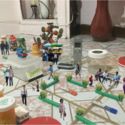
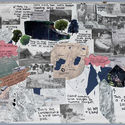
Final Project by Khalya. Image Courtesy of PennPraxis x Fresh Air Fund
This past summer, the nonprofit design practice, PennPraxis, in partnership with The Fresh Air Fund, piloted a new program, Virtual Design Studio, that sparked the imaginations of nearly 150 students to show how design has the power to change the built environment. Their courses, which were taught by University of Pennsylvania Stuart Weitzman School of Design graduate students, generated multiple designs for a nature center operated by The Fresh Air Fund and public spaces in New York City and offered children an introduction to explore future careers in design that could have a lasting impact on their communities and the design professions for years to come. Over the course of seven weeks, these students committed over 150 hours to the program while also receiving a stipend.
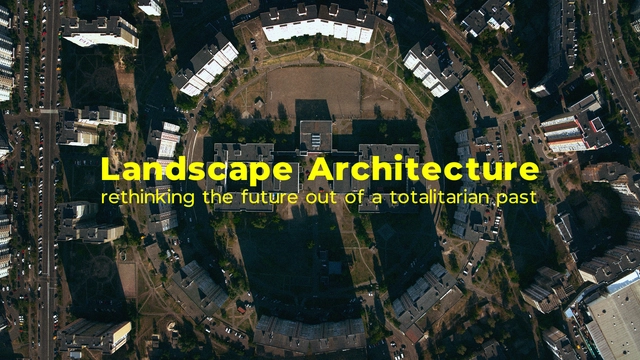
The built manifestation of an ideology, the urban landscape left behind by the socialist regimes around Europe are removed from the aspirations of contemporary urban living, thus trigger a unique process of re-appropriation of the post-soviet landscapes. The short film Landscape Architecture: Rethinking The Future out of a Totalitarian Past created by Minimal Movie invites a conversation around urban planning, cultural identity, and community building relating to the urbanism and architecture of Ukraine's Socialist Era.
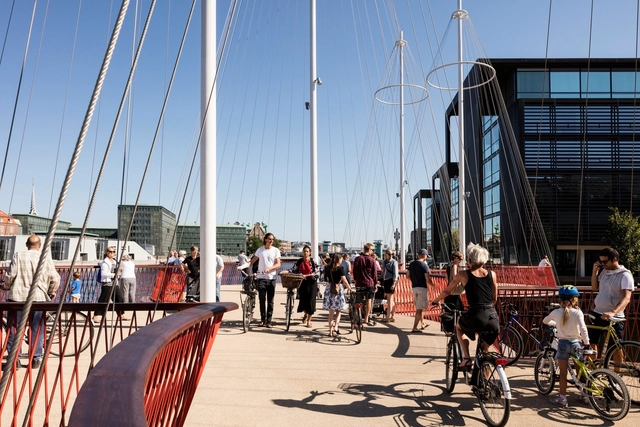
I spent four glorious days in Copenhagen in 2017 and left with an acute case of urban envy. (I kept thinking: It’s like..an American Portland—except better.) Why can’t we do cities like this in the United States? That’s the question an urban nerd like me asks while strolling the famously pedestrian-friendly streets, as hordes of impossibly blond and fit Danes bicycle briskly past.
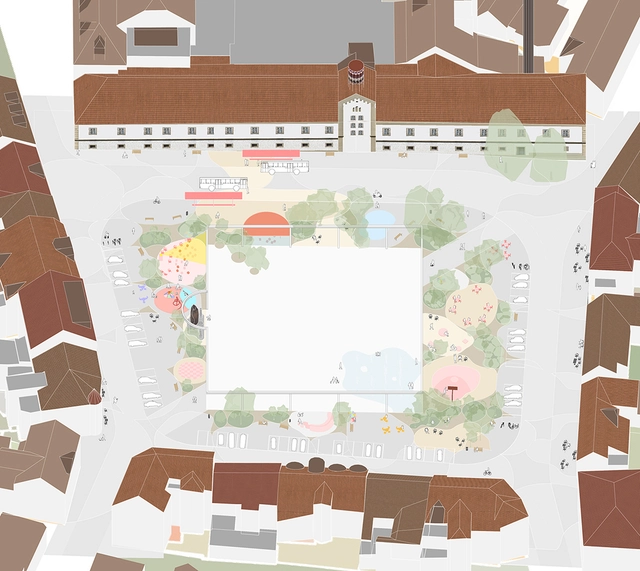
Zbraslav Square . Image Courtesy of Architects for Urbanity
Recognizing the importance of international contests in pushing forward inventive concepts and design, ArchDaily has put together a curated selection of Best Unbuilt Architecture featuring competition entries from around the globe. Submitted by our readers, these projects include winning proposals, honorable mentions, and recognized admissions.
In this week’s article, urban interventions take the lead with multiple square designs and infrastructural elements. On the cultural level, projects underlined include Museums in Iran and Norway, a National Concert hall in Lithuania, and a Mosque in Turkey. For the civic category, the functions highlighted comprise a new city hall for a South Korean district and an Indian community development center for at-risk women. Finally, other programs involve a rural school in Haiti, a tourist center in China, and a housing complex in Prague.


.jpg?1613464686&format=webp&width=640&height=580)
.jpg?1613464615 "Sou Fujimoto. Image Courtesy of Sou Fujimoto Architects")
.jpg?1613464611 "Sou Fujimoto. Image Courtesy of Sou Fujimoto Architects")
.jpg?1613465267 "MAD- Wormhole Library. Image © SAN")
.jpg?1613465249 "MAD- Wormhole Library. Image © SAN")
.jpg?1613464686)
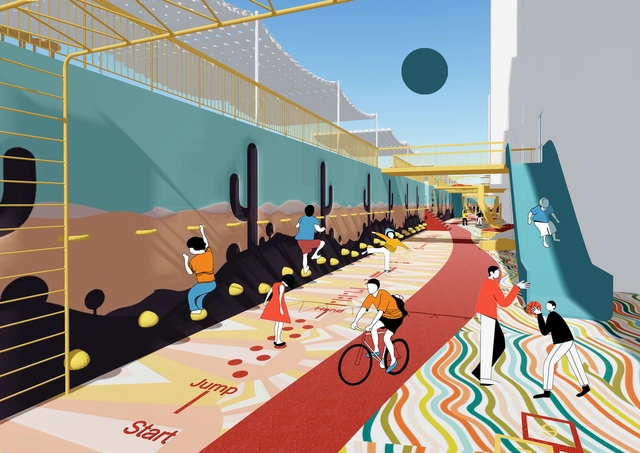
(%C2%A9minorormajor).jpg?1612954566 "Oasis-Playground. Image Courtesy of Studio Minorormajor")

















Proloog_SeoulValleyAerial-1200px.jpg?1606728853&format=webp&width=640&height=580)
Proloog_InsideOutside-1200px.jpg?1606728842 "Courtesy of Proloog")
Proloog_websize-1200px.jpg?1606728874 "Courtesy of Proloog")
HenningLarsen_OfficeRooftopTerrace-1200px.jpg?1606728811 "Courtesy of Henning Larsen")
Proloog_SeoulValleyAerial-1200px.jpg?1606728853)