1. ArchDaily
  2. Paulo Tavares

Paulo Tavares: The Latest Architecture and News

Brasília and Chandigarh: Two Modernist Utopias an Ocean Apart

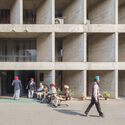
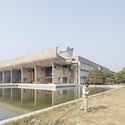
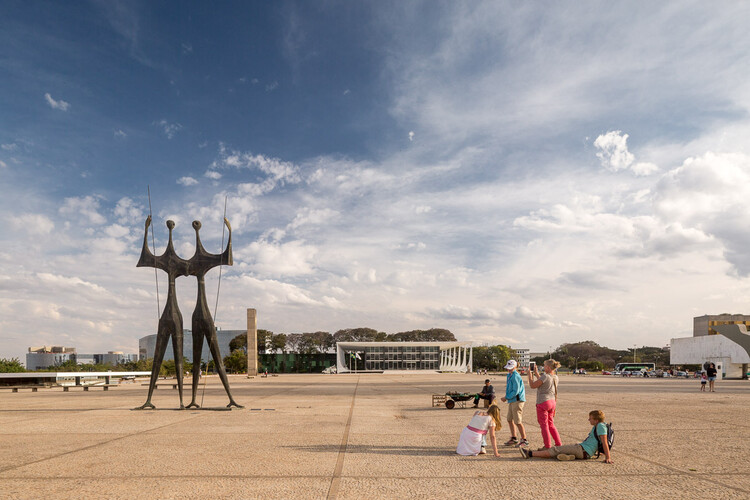
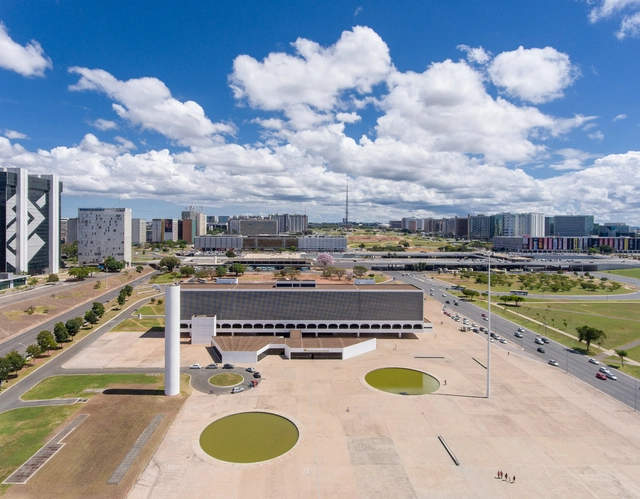
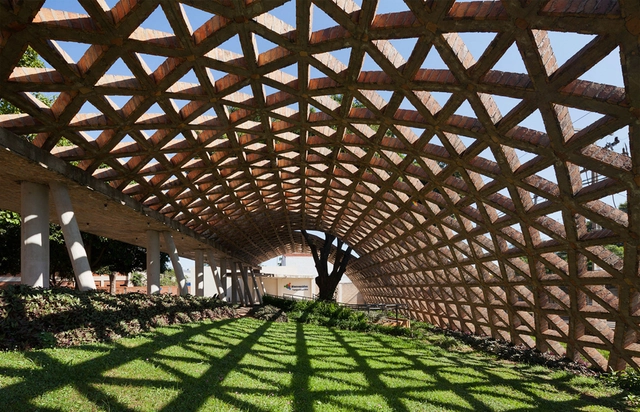
Between the 1950s and 1960s, two cities were built that would leave a lasting mark on the history of architecture and urbanism. Born from a shared vision yet separated by more than 14,000 kilometers, Brasília in Brazil and Chandigarh in India were both planned and constructed from scratch, deeply shaped by modernist principles.

Emerging during a period of profound political and social transformation, when many nations sought to redefine their capitals as symbols of progress, both cities assumed a strategic role. Through their architectural language, they reinforced ideological and national narratives closely tied to state power.

These were cities conceived in the abstract, guided by a utopian vision. They were intended to be avant-garde urban centers, free from the deficiencies that plagued mid-twentieth-century cities, embodying aesthetic principles aligned with progressive political ideals and embracing new technologies—most notably the automobile.

Yet this promise of the future also generated significant challenges. While these difficulties undoubtedly reflect the social and economic realities of their respective countries, they were also shaped by a modernist vision that is increasingly being reassessed today.

Brasília and Chandigarh: Two Modernist Utopias an Ocean Apart - Image 1 of 4Brasília and Chandigarh: Two Modernist Utopias an Ocean Apart - Image 2 of 4Brasília and Chandigarh: Two Modernist Utopias an Ocean Apart - Image 3 of 4Brasília and Chandigarh: Two Modernist Utopias an Ocean Apart - Image 4 of 4Brasília and Chandigarh: Two Modernist Utopias an Ocean Apart - More Images+ 19

Who Decides What Is Worth Preserving? Power and Heritage in Latin America

When we enter a museum, walk through a historic center, or review a country’s list of protected heritage sites, we rarely think about the process behind those choices. Who decided, on behalf of all of us, that certain objects, places, and architectures deserved to be preserved and disseminated, while others were discarded?
In most cases, the power of decision lies with specialized professionals—historians, museologists, architects, geographers. But on what basis are these decisions made? Can the complexity of history be reduced to a checklist? Or, more fundamentally, which version of history underlies these choices?
Who Decides What Is Worth Preserving? Power and Heritage in Latin America - Image 1 of 4Who Decides What Is Worth Preserving? Power and Heritage in Latin America - Image 2 of 4Who Decides What Is Worth Preserving? Power and Heritage in Latin America - Image 3 of 4Who Decides What Is Worth Preserving? Power and Heritage in Latin America - Image 4 of 4Who Decides What Is Worth Preserving? Power and Heritage in Latin America - More Images+ 13

The UIA World Congress of Architects 2026 Barcelona Unveils Program and Speakers

The UIA World Congress of Architects is an international event for architectural dialogue organised by the International Union of Architects (UIA, by its French acronym), a non-governmental organisation that unites national associations of architects from over 100 countries, representing more than one million professionals. The first UIA Congress of Architects, which also marked the institution's founding, was held in Lausanne in 1948 during the post-war reconstruction period. Since then, UIA congresses have been held every three years in a different city within a member country, serving as the organisation's main recurring event. In 2026, the Congress will be held in Barcelona, and UNESCO has consequently designated the city as the World Capital of Architecture 2026. Each Congress focuses on a key topic relevant to the profession, articulated through a central theme. Recent themes include Copenhagen 2023: "Sustainable Futures. Leave no one behind." and Rio 2020–2021: "All the worlds. Just one World." The topic for 2026 is "Becoming. Architectures for a Planet in Transition," welcoming renowned figures in contemporary architectural thought and practice for a broad and critical overview of the possible futures of architecture.

The UIA World Congress of Architects 2026 Barcelona Unveils Program and Speakers - Image 1 of 4The UIA World Congress of Architects 2026 Barcelona Unveils Program and Speakers - Image 2 of 4The UIA World Congress of Architects 2026 Barcelona Unveils Program and Speakers - Image 3 of 4The UIA World Congress of Architects 2026 Barcelona Unveils Program and Speakers - Image 4 of 4The UIA World Congress of Architects 2026 Barcelona Unveils Program and Speakers - More Images+ 7

Lisbon Architecture Triennale 2025 Examines the Technosphere and Human Impact on Earth

Subscriber Access | 

Thirty trillion tons. This is the estimated mass of all human-made matter on Earth, and the starting point for the 7th edition of the Lisbon Architecture Triennale. Curated by Ann-Sofi Rönnskog and John Palmesino, founders of Territorial Agency, the event asks a deceptively simple question: How heavy is a city? To answer it requires more than data. It demands a shift in perception: from the scale of the city to the planetary technosphere.

The technosphere, a term borrowed from Earth sciences, defines the vast system of infrastructures, technologies, and materials that sustain human life while reshaping the planet. Cities, in this view, are not only territories but dense nodes within this planetary metabolism. From October to December 2025, Lisbon becomes a lens to examine that magnitude, hosting three main exhibitions (Fluxes, Spectres, Lighter), a book of essays, a talks program, and more than twenty independent projects across the city.

Lisbon Architecture Triennale 2025 Examines the Technosphere and Human Impact on Earth - Image 1 of 4Lisbon Architecture Triennale 2025 Examines the Technosphere and Human Impact on Earth - Image 2 of 4Lisbon Architecture Triennale 2025 Examines the Technosphere and Human Impact on Earth - Image 3 of 4Lisbon Architecture Triennale 2025 Examines the Technosphere and Human Impact on Earth - Image 4 of 4Lisbon Architecture Triennale 2025 Examines the Technosphere and Human Impact on Earth - More Images+ 8

Architecture and Coloniality: Brazilian Modernism in Critical Perspective

Brazilian modern architecture is often celebrated as a landmark of innovation and national identity, projecting the country onto the international stage with iconic works and a distinctive aesthetic. However, recent research and publications have highlighted its deep entanglement with colonial narratives, both in its influences and its social impact. Although modernism emerged as an attempt to break away from European academic traditions, it remained dependent on foreign references and incorporated strategies of domination that echoed colonial logic.

Architecture and Coloniality: Brazilian Modernism in Critical Perspective  - Image 1 of 4Architecture and Coloniality: Brazilian Modernism in Critical Perspective  - Image 2 of 4Architecture and Coloniality: Brazilian Modernism in Critical Perspective  - Image 3 of 4Architecture and Coloniality: Brazilian Modernism in Critical Perspective  - Image 4 of 4Architecture and Coloniality: Brazilian Modernism in Critical Perspective  - More Images+ 7

5 Interviews to Understand the Relationship between Architecture and the Environment

Subscriber Access | 

The relationship between architecture and the environment is multifaceted. It involves a dynamic interaction between built spaces and the surrounding natural context. It shapes how buildings and cities function, impacts ecosystems, and influences the well-being of inhabitants.

Many factors link architecture and the environment. They span from practical considerations such as natural materials and renewable energy sources to broader aspects like integrating and appreciating local culture. Within this wide range of possibilities, we have selected five interviews that showcase different approaches to this theme. These interviews stimulate essential reflections on the contemporary architectural context.

“Earth as Ancestral and Future Technology”: An Interview With Gabriela de Matos and Paulo Tavares, Curators of the Brazil Pavilion and Winners of the Golden Lion at the 2023 Venice Biennale

Subscriber Access | 

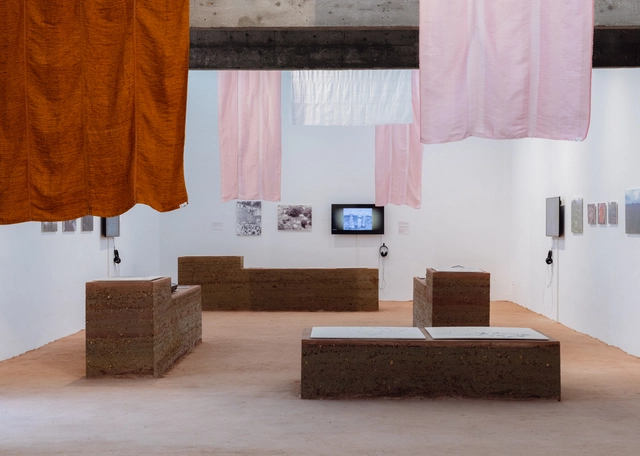
Questioning the canonical history of architecture and shedding light on long-invisible spatial practices, Gabriela de Matos and Paulo Tavares propose the exhibition “Terra” [Earth], at the Brazilian pavilion at the Venice Architecture Biennale 2023. "It's our way of shaking things up," say the curators, who turn their attention to ancestral ways of dealing with the land, aiming for more fair and complete possibilities for the present and future.

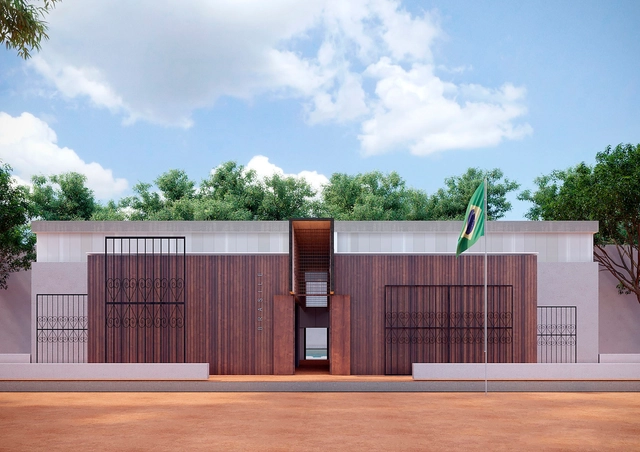
Addressing "earth" in all its meanings, the curators overlay issues related to soil and territory with the planetary problems. They propose an approach to reparations and decoloniality - emerging in Brazil - with broad topics such as decarbonization and the environment, decisive in the contemporary global debate. The Brazilian Pavilion titled Terra [Earth], won the Golden Lion for Best National Participation at the 2023 Venice Architecture Biennale, on Saturday 20th of May, selected by a jury comprising Italian architect and curator Ippolito Pestellini Laparelli as president, Nora Akawi, Thelma Golden, Tau Tavengwa, and Izabela Wieczorek.

Brazil Wins the Golden Lion for Best National Participation at the 2023 Venice Architecture Biennale

The Brazilian Pavilion titled Terra [Earth], curated by Gabriela de Matos and Paulo Tavares won the Golden Lion for Best National Participation at the 2023 Venice Architecture Biennale. Selected by a jury comprising Italian architect and curator Ippolito Pestellini Laparelli as president, Nora Akawi, Thelma Golden, Tau Tavengwa, and Izabela Wieczorek, the winning intervention at the 18th Venice Architecture Biennale "proposes to rethink the past in order to design possible futures, bringing to the fore actors forgotten by the architectural canons, in dialogue with the curatorship of the edition, Laboratory of the Future".

Broadcasted live on the Biennale’s official page, the ceremony taking place at Ca’Giustinian, the headquarters of La Biennale di Venezia, also awarded the Golden Lion for Best Participant in the International Exhibition The Laboratory of the Future", to DAAR (Alessandro Petti + Sandi Hilal), while the Silver Lion for a promising young participant in the International Exhibition The Laboratory of the Future went to Olalekan Jeyifous. Other recognitions included a special mention to Thandi Loewenson, to Wolff Architects, Ilze Wolff, and Heinrich Wolff, to Twenty Nine Studio / Sammy Baloji, and to the national pavilion of Great Britain, titled "Dancing Before the Moon" curated by Jayden Ali, Joseph Henry, Meneesha Kellay, and Sumitra Upham.

Brazil Wins the Golden Lion for Best National Participation at the 2023 Venice Architecture Biennale - Image 1 of 4Brazil Wins the Golden Lion for Best National Participation at the 2023 Venice Architecture Biennale - Image 2 of 4Brazil Wins the Golden Lion for Best National Participation at the 2023 Venice Architecture Biennale - Image 3 of 4Brazil Wins the Golden Lion for Best National Participation at the 2023 Venice Architecture Biennale - Image 4 of 4Brazil Wins the Golden Lion for Best National Participation at the 2023 Venice Architecture Biennale - More Images+ 5

Brazil Pavilion at the 2023 Venice Biennale Reveals Details About the Exhibition “Terra”

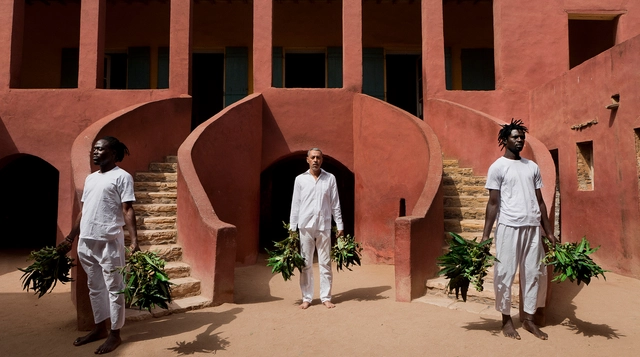
The São Paulo Biennial Foundation has just announced details of the Terra project that will occupy the Brazil Pavilion at the 18th International Architecture Exhibition, La Biennale di Venezia. With a curatorial effort by Gabriela de Matos and Paulo Tavares, the Brazilian exhibition will feature a diverse group of collaborators, comprising Mbya-Guarani indigenous peoples, Tukano, Arawak and Maku indigenous peoples, weavers from Alaká (Ilê Axé Opô Afonjá), Iyá Nassô Oká (Casa Branca do Engenho Velho), Ana Flávia Magalhães Pinto, Ayrson Heráclito, Day Rodrigues with collaboration from Vilma Patrícia Santana Silva (Etnicidades Group FAU-UFBA), Fissura Collective, Juliana Vicente, Thierry Oussou, and Vídeo nas Aldeias.

Brazil Pavilion at the 2023 Venice Biennale Reveals Details About the Exhibition “Terra” - Image 1 of 4Brazil Pavilion at the 2023 Venice Biennale Reveals Details About the Exhibition “Terra” - Image 2 of 4Brazil Pavilion at the 2023 Venice Biennale Reveals Details About the Exhibition “Terra” - Image 3 of 4Brazil Pavilion at the 2023 Venice Biennale Reveals Details About the Exhibition “Terra” - Image 4 of 4Brazil Pavilion at the 2023 Venice Biennale Reveals Details About the Exhibition “Terra” - More Images+ 4

Gabriela de Matos and Paulo Tavares Will Be the Curators of the Brazil Pavilion at the Venice Architecture Biennale 2023

The São Paulo Biennial Foundation announces the curatorship of the Brazilian Pavilion at the 18th International Architecture Exhibition - La Biennale di Venezia. Gabriela de Matos and Paulo Tavares, both architects and researchers with a cross-cutting approach that embraces race, gender, pedagogy, and visual cultures, are organizing the exhibition, which opens May 20, 2023.

ArchDaily Selects the Best New Practices of 2023

Subscriber Access | 

25 practices, sole practitioners, and startups from 5 continents and 18 countries have been chosen as part of the 2023 New Practices, the latest edition of the global annual survey by ArchDaily. Ongoing since 2020, the review detects and showcases those who are taking architecture in its new direction under unstable times and demanding challenges.

ArchDaily's New Practices has invited not only designers to apply but those practicing within the broadest definition of architecture and its exercise to share their innovative, fresh, and forward-thinking mission with us. As a result, the 2023 edition features designers, landscape architects, researchers, curators, activists, writers, and three ground-breaking startups—the modular construction U-Build, Urban Beta with their Beta Port building system, and the "Google Doc of Space Design" Rayon—thus joining previously highlighted firms: AEC-industry-oriented management software Monograph, energy transition startup Baupal, online design platform and marketplace CANOA, and 3D-printed housing company ICON.