1. ArchDaily
  2. Osvaldo Larraín

Osvaldo Larraín: The Latest Architecture and News

Environmental Comfort as an Interior Condition in South American Architecture

Subscriber Access | 

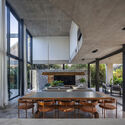
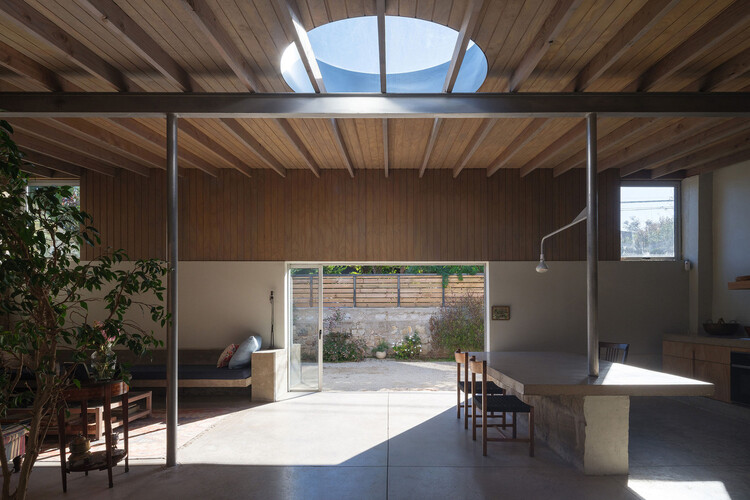
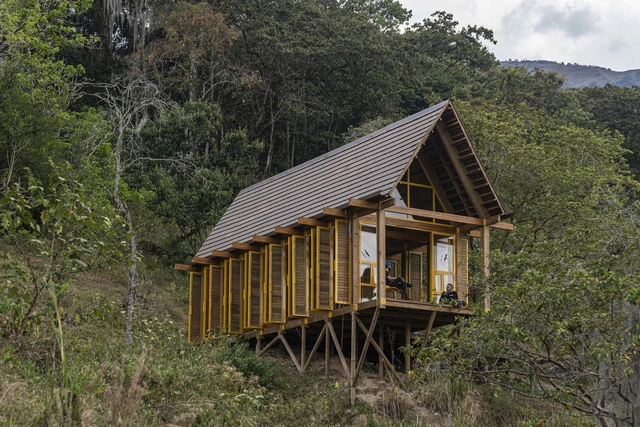
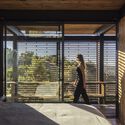
Across South America, environmental comfort is understood not as an interior condition, but as one shaped through space. In regions marked by heat, humidity, intense sunlight, and seasonal variation, architecture has long relied on spatial decisions to moderate climate and support daily life. Comfort emerges from how interiors are opened, shaded, ventilated, and inhabited over time.

Rather than isolating interior spaces from their surroundings, many contemporary projects across the region cultivate comfort through depth, porosity, and intermediate zones. Light is filtered rather than maximized, air is guided through aligned openings and voids, and thresholds become active spaces of use rather than residual edges. These strategies do not seek uniform environmental control, but produce interiors that remain temperate, adaptable, and closely attuned to changing climatic conditions. In this context, environmental comfort becomes inseparable from spatial experience.

Environmental Comfort as an Interior Condition in South American Architecture - Image 1 of 4Environmental Comfort as an Interior Condition in South American Architecture - Image 2 of 4Environmental Comfort as an Interior Condition in South American Architecture - Image 3 of 4Environmental Comfort as an Interior Condition in South American Architecture - Image 4 of 4Environmental Comfort as an Interior Condition in South American Architecture - More Images+ 12

The 100 Best Latin American Houses of 2025

Each year, the ArchDaily Curatorial team reviews the projects that resonated most with our readers, identifying the architectural trends and design approaches that captured the greatest attention throughout the year. Across our local sites – ArchDaily Brasil and ArchDaily en Español – residential architecture remains the most popular category, with projects built in Latin America standing out year after year.

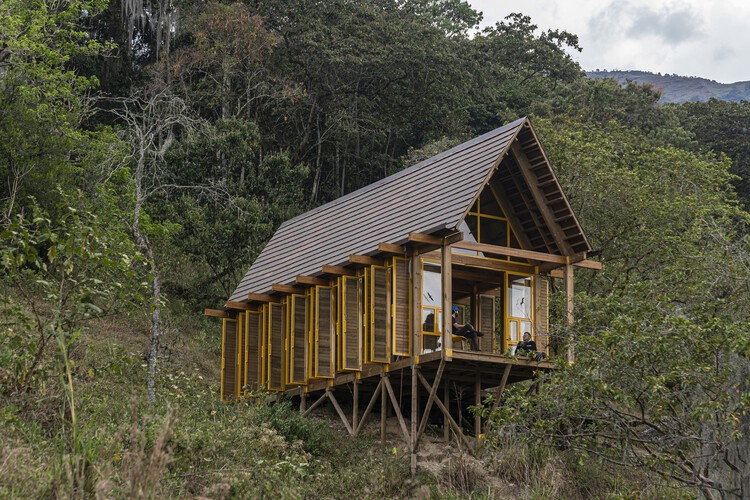
This year's selection of Best Latin American Houses brings together both renovations and ground-up projects, covering reinterpretations of local construction techniques and innovative architectural responses. The works are set in a wide range of contexts, from dense urban environments to rural and coastal landscapes.

The 100 Best Latin American Houses of 2025 - Image 1 of 4The 100 Best Latin American Houses of 2025 - Image 2 of 4The 100 Best Latin American Houses of 2025 - Image 3 of 4The 100 Best Latin American Houses of 2025 - Image 4 of 4The 100 Best Latin American Houses of 2025 - More Images+ 97

Santiago Architecture City Guide: 41 Buildings, Complexes and Parks to Visit in the Chilean Capital

Subscriber Access | 

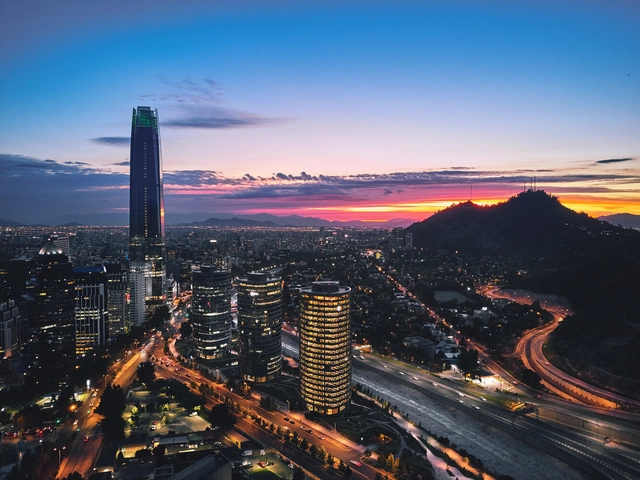
Founded in 1541 by the Spanish conquistador Pedro de Valdivia on indigenous settlements in the valley of the Mapocho River, Santiago is the capital and most populated city of Chile. This South American city is enframed by the Andes Mountains to the east and the Chilean Coast Range to the west, in addition to 26 island hills (cerros islas) scattered throughout the city. Some of these island hills have been converted into urban parks, such as Santa Lucía and San Cristóbal, while Chena, Calán, and Renca are in the process of expansion.

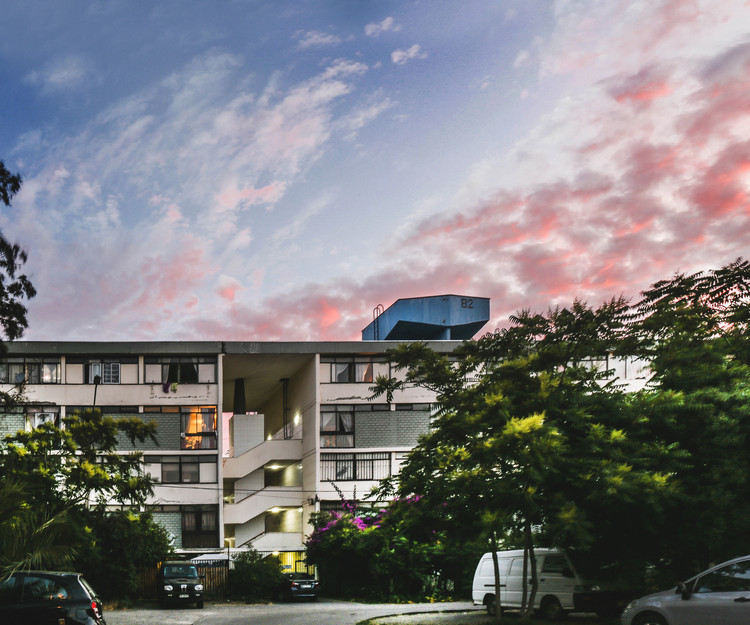
A Guide to Santiago's Modern Architecture: 20 Projects You Need to Know About

Subscriber Access | 

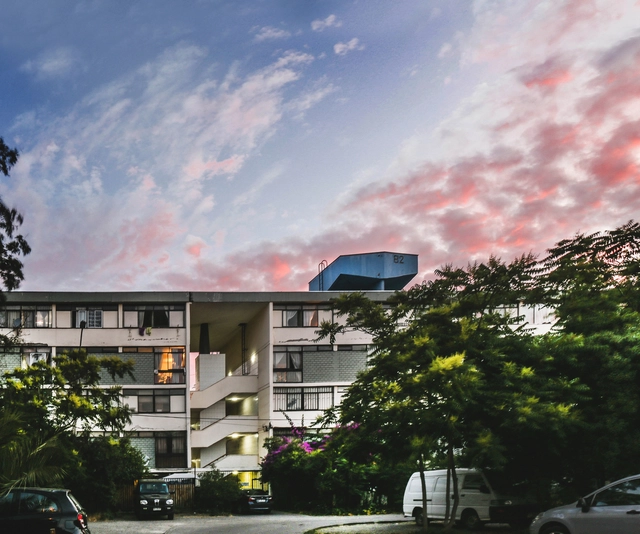
The modern movement was a key player in the cultural construction of Chile in the 20th century. Although the first projects came from the private sector, their urban and landscape principles were adopted by the modernizing project of the welfare state that began to be built after the social conflicts that exploded in the 1920s.

During chile's industrialization process, the State's housing construction incorporated concepts such as liveability, and universal access to housing and sanitation, which were put to the test early on in the reconstruction of cities such as Chillán after the 1939 earthquake. As Chile is a country that is familiar with earthquakes, it was necessary to readjust the concepts of the modern movement to national structural requirements, that is, resizing the reinforced concrete sections, which gave them a heavier visual expression than in Brazil or Argentina.

From the daring vision of Sergio Larraín García-Moreno and Jorge Arteaga in the Oberpaur building - the first of the modern movement - to the urban visions of BVCH in the Villa Portales, or the first exercises in height in the upper middle class sectors, the modern movement has left its mark on our society and in our cities. However, only one of the projects presented here is declared a historical monument.

In this edition of the architectural guides, we present you twenty chronologically ordered projects that reflect the evolution of the modern movement in Santiago, Chile.

A Guide to Santiago's Modern Architecture: 20 Projects You Need to Know About - Image 5 of 4A Guide to Santiago's Modern Architecture: 20 Projects You Need to Know About - Featured ImageA Guide to Santiago's Modern Architecture: 20 Projects You Need to Know About - Image 10 of 4A Guide to Santiago's Modern Architecture: 20 Projects You Need to Know About - Image 12 of 4A Guide to Santiago's Modern Architecture: 20 Projects You Need to Know About - More Images+ 14