Cornell University's College of Architecture, Art and Planning has unveiled a 12-piece versatile furniture series designed for the school's New York City space in Manhattan's financial district. Created by Hong Kong-based architecture office CL3 and interdisciplinary design studio Lim + Lu (founding partners of which are Cornell alumni), each piece has been inspired both by their New York context and intuitive operation by a global user.
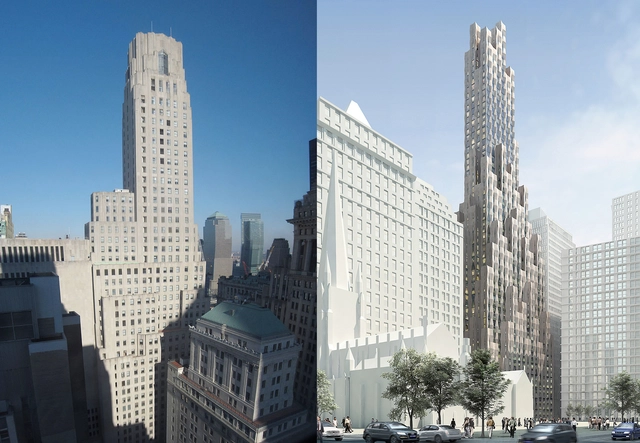
One Wall Street, before and after. Images: left, Via Wikimedia in public domain; right, Courtesy of Hollwich Kushner
The New York Timesrecently reported that over 40% of the buildings on the island of Manhattan wouldn’t be granted construction permits in 2017. Most of the culprits date back to the early 20th century when attitudes towards density, ceiling heights, column placement, and general living standards were different. This begs the question: what would modern iterations of New York’s signature structures look like today? Billed by the practice as “an obsessive-compulsive study of the city we love” HWKN’s New(er) York is a peculiar experiment that tackles this hypothetical.
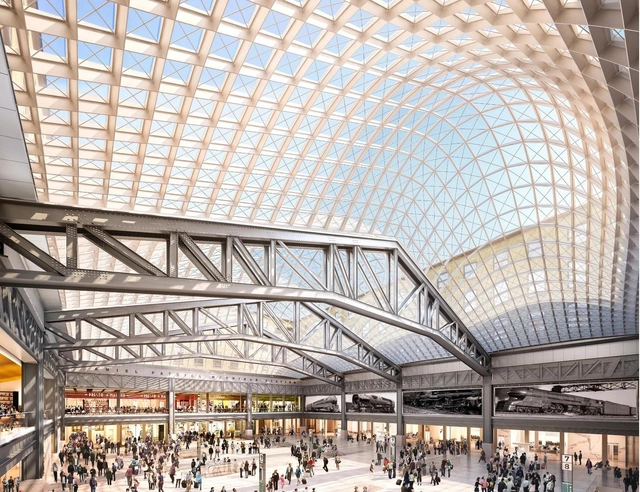
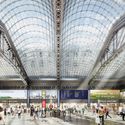
New York City’s fast-tracked Penn Station transformation project is moving forward, as Governor Andrew Cuomo has announced the closing of the $1.6 billion deal to redevelop a large section of the James A. Farley Post Office into the new “Moynihan Train Hall.”
The project will consist of a new 255,000-square-foot terminal for the Long Island Railroad and Amtrak, increasing Penn Station’s total concourse floor space by more than 50 percent, while an additional 700,000 square feet will be developed for commercial, retail and dining spaces to create a new mixed-use civic space for West Manhattan.
The lawsuit states that the 104-story One World Trade bears a “striking similarity” to his 122-story “Cityfront ‘99” tower, which also featured a glass facade of inverted triangular planes.
https://www.archdaily.com/873750/architect-sues-som-for-stealing-one-world-trade-center-designAD Editorial Team
From wonderment to disgust, the opening of Solomon R. Guggenheim Museum by Frank Lloyd Wright in 1959 was met with a wide range of reactions from the public. This profound cultural moment was distilled in a series of witty cartoons published in the New Yorker that simultaneously lampooned both the innovative architecture and its critics, which were recently shared in a blog post by the Guggenheim Museum. Through detailed sketches, cartoonist Alan Dunn represents the experience of the building, from staring into the exterior porthole windows to walking around the grand ramp. In one drawing he depicts the perspective from the first floor looking up at the dome, giving a sweeping sense of the curvature and geometries of the building.
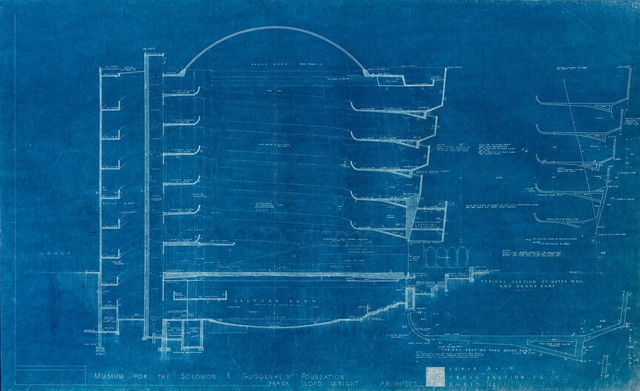
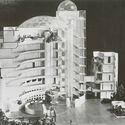
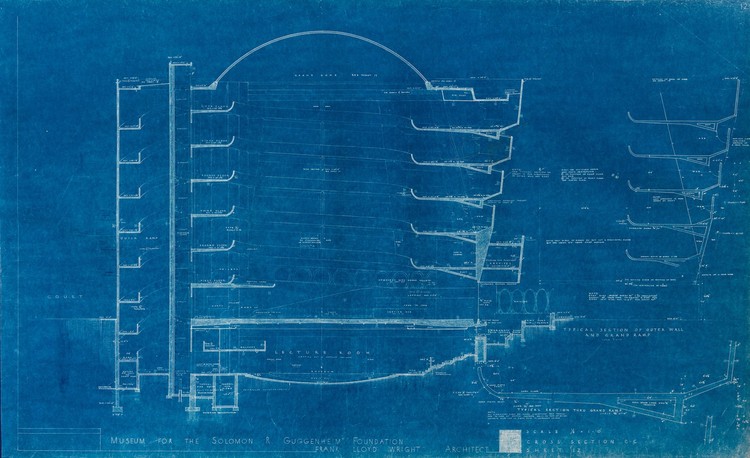
In a recent blog post from the Solomon R. Guggenheim Museum, curator Ashley Mendelsohn explores unrealized design details from Frank Lloyd Wright’s iconic design in New York City, based on blueprints and drawings from the museum’s archives. From large-scale questions of form to material choices, the 16-year period between the commission and the completion of the museum saw many design iterations. Most notable of these are the circulation paths drawn by Wright in the 1953 blueprints that include a steeper circular ramp—in addition to the "Grand Ramp"—that would allow for expedited access to the floors. Though replaced later with a triangular staircase, the "Quick Ramp" demonstrates Wright’s exploration of overlapping geometries.
James Hansen, professor of Earth and Environmental Sciences at Columbia University, former NASA scientist, and the planet’s preeminent climatologist, was among the first to sound the alarm on climate change during his 1988 testimony before Congress. Since then, he has continued to shine a light on the problem through lectures, interviews, TED talks, and his blog. He has warned that a mere 2-degree increase in temperature could result in a sea level rise of five to nine meters by the end of the century, flooding coastal cities and rendering them uninhabitable.
Inspired by Hansen, filmmakers Menilmonde have imagined Manhattan underwater. The French duo's previous videos experiment with subtle subversions of the world we experience, and their latest creation, 2°C New York City, is arguably their most powerful to date.
The 744-piece set features a new rendition of the building made from the classic plastic blocks, following a 208-piece interpretation released in 2009. The new set provides a much more realistic portrayal of the Wright's original building as well as the 10-story limestone tower added by Gwathmey Siegel & Associates Architects in 1992 (based on Wright's original sketches).
Humanity always cherishes great works of art that stand the test of time. This June, for example, marks the 50th anniversary of The Beatles’ psychedelic Sgt. Pepper's Lonely Hearts Club Band, and the 20th anniversary of Radiohead’s dystopian Ok Computer. These psychologically satisfying birthdays have generated serious appreciation and nostalgia. Similarly, we also love to praise the longevity of innovative architecture. The AIA bestows an annual “Twenty-five Year Award” to acknowledge projects that have "stood the test of time” and “exemplify design of enduring significance.” But one project a year seems stingy. Below are 15 modern classics which, though not always given the easiest start in life, we’ve come to adore:
At this morning’s press event, The Museum of Modern Art in New York (MoMA) unveiled the completed renovations to the east end of its museum campus, while also revealing for the first time the full design of their multi-year expansion project designed by Diller Scofidio + Renfro in collaboration with Gensler.
With the completion of the east wing renovation, which began in February 2016, the museum has created two spacious third-floor galleries by reconfiguring 15,000 square feet of space, allowing for better flexibility in installing the collection and temporary exhibitions.
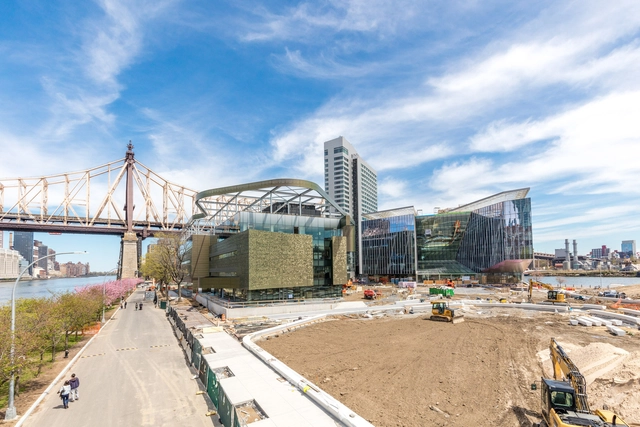
With construction nearing completion ahead of its September opening date, the first building at the new Cornell Tech campus on New York City’s Roosevelt Island has been dubbed “one of the most environmentally-friendly buildings in the world” by the university, as they revealed their aspirations for the building to reach Net Zero and LEED Platinum status.
Designed by Morphosis, The Bloomberg Center (named for Emma and Georgina Bloomberg, daughters of former New York mayor Michael Bloomberg) will employ a range of strategies including solar power; geothermal ground source heat pumps; a dynamic energy-efficient facade which balances transparency and opaqueness to maximize building insulation; and an array of smart building technologies that monitor lighting and plug load use, among other metrics.
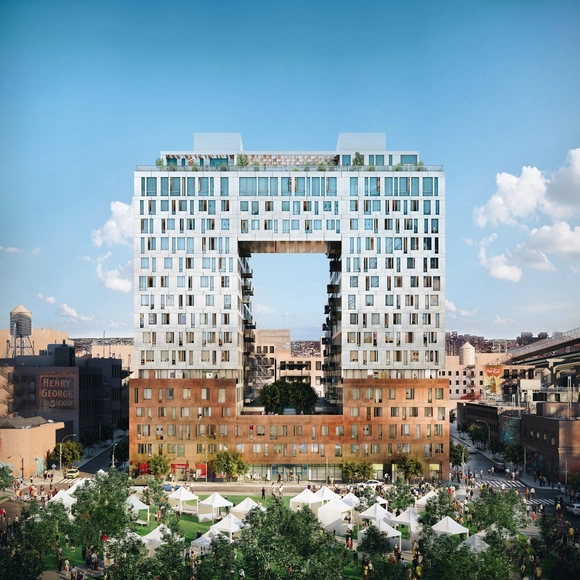
Development on the site of the former Domino Sugar factory in Williamsburg, Brooklyn is moving straight along, with today marking the launch of leasing at 325 Kent, the first building to open as part of the mega-development. Designed by SHoP Architects, the doughnut-shaped building will offer up 16-stories of modern apartment units arranged around an elevated courtyard featuring uninterrupted views of the East River and the Manhattan skyline.
Buffalo and Erie County Public Library of Buffalo, New York, has recently opened a new exhibit at their Central Library titled Building Buffalo: Buildings From Books, Books From Buildings. The exhibit will feature a large selection of rare, illustrated architectural books from the Library’s collection dating from the fifteenth century to the mid-twentieth century. The bonus for those who are geographically distant from Buffalo is that, as part of the exhibit, the Library has also made dozens of historical architecture books available online, completely digitized and free to the public.
Early design studies have been unveiled of Adjaye Associates’ first New York City skyscraper. Developed by the Lightstone Group, the 61-story, 750-foot-tall ‘Wall Street Tower’ will be located at 130 William Street in New York’s Financial District.
Uncovered by CityRealty, these initial visualizations show a gold-detailed structure featuring arched windows that expand as the building rises, and an abundance of luxury amenities including sports facilities, a swimming pool, a movie theater, lounge areas and rooftop observatory.
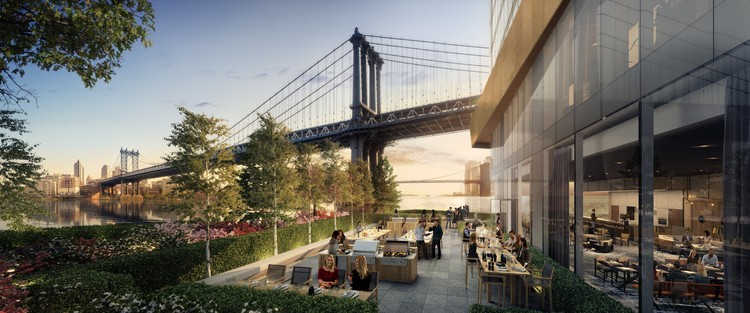
In this video, West 8 co-founder Adriaan Geuze discusses the design process behind New York City’s largest private outdoor gardens, which will be located at One Manhattan Square in the Lower East Side. Currently under construction, the 800-foot-tall glass residential tower will feature more than an acre of exterior garden space designed by West 8 Urban Design and Landscape Architecture.
Herzog & de Meuron have completed construction of their latest project, a high-rise luxury residential skyscraper on 56 Leonard Street, New York City. Conceived as a stack of individual houses resembling a Jenga tower, the building is the tallest in its Tribeca neighborhood. With its tall and slender silhouette, 56 Leonard Street is the latest in a series of contemporary skyscrapers punctuating Manhattan’s skyline.