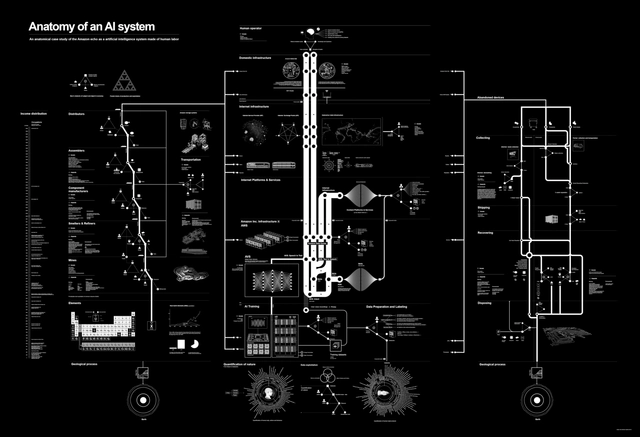
Anatomy of an AI System. Image Courtesy of Kate Crawford
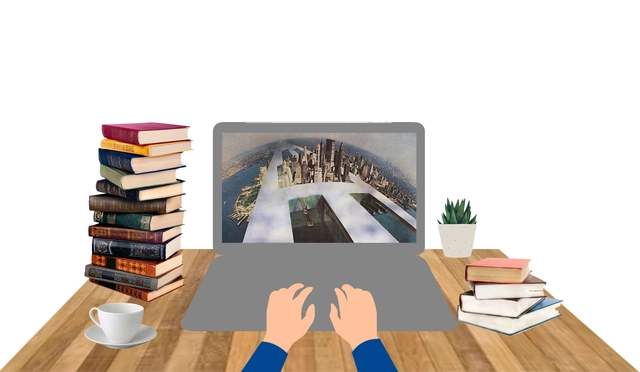
Should designers care about artificial intelligence (AI) or machine learning (ML)? There is no question that technology is adding texture to the current zeitgeist. Never could I have imagined seeing a blockbuster hit where Ryan Reynolds emerges as a conscious non-player character in a video game and a flop where Melissa McCarthy negotiates humanity’s future with a James Corden-powered superintelligence within a year of each other. But does learning AI and ML’s ins and outs really matter for the creative professions and our nebulous, invaluable way of operating?
Convivir en la Amazonía en el Siglo XXI: Guía de Planificación y Diseño Urbano para las ciudades en la selva baja peruana. Image Cortesía de Belen Desmaison
Addressing the universe of the world's largest tropical forest, the book 'Living in the Amazon in the 21st Century: A Guide to Urban Planning and Design for Cities in the Peruvian lowland rainforest', has been selected as a finalist in the category of publications at the 12th Ibero-American Biennial of Architecture and Urbanism. The issue, published in 2019 as part of the PUCP Architecture Publications, in the framework of the CASA (Self-Sustainable Amazonian Cities) project of the Climate Resilient Cities initiative of IDRC, FFLA and CDKN, focuses its research on the department of Loreto, presenting itself as "a guide for architecture and urban design, for settlements in the Amazon forest, including the social processes to be considered".
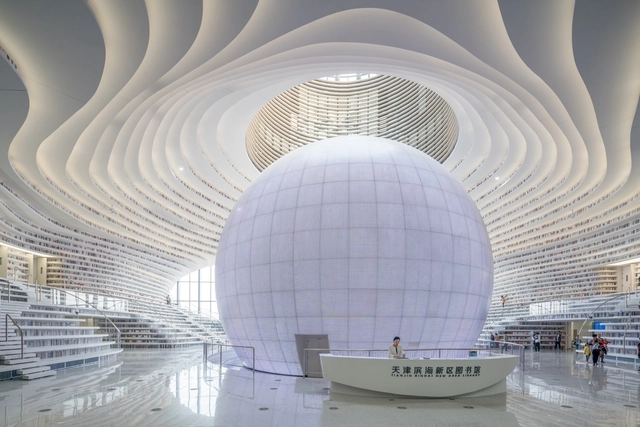
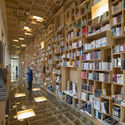
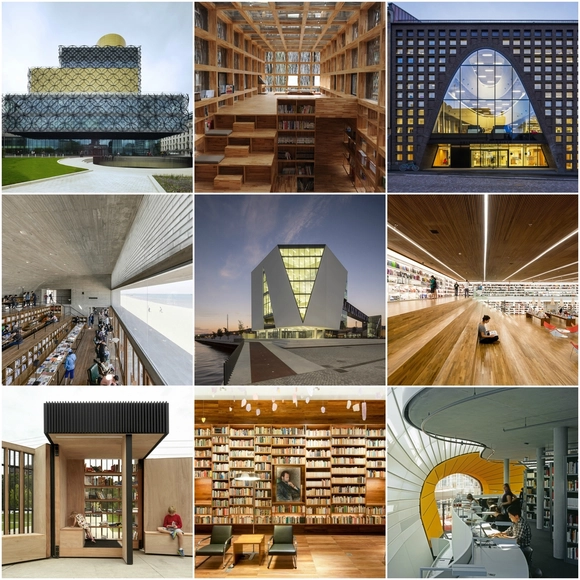
Far beyond basic training, reading is a leisure activity that is part of modern society. Whether outdoors, in squares and parks, at home or even at work, this habit, which improves reasoning ability and mental health, already had large spaces dedicated to books in palaces and mansions. We selected 15 projects that demonstrate the different ways of integrating reading at different scales and architectural programs.
A queer independent bookshop in Glasgow; an ice cream parlour in Cuba, where strawberry is the queerest choice; a cathedral in ruins in Nicaragua, occupied by the underground LGBTQIA+ community. Queer people have always found ways to exist, gather and celebrate and will always continue to. Therefore, there will always be a need for queer spaces.
Marta Minujín, Parthenon of Books, Dokumenta 14, Kassel, Germany, 2017. Image by Anne-Catrin Schultz.. Image Courtesy of Real and Fake in Architecture–Close to the Original, Far from Authenticity?
The term “fake” has been in the media frequently in the early 21st century, referring to headlines and fictional statements that are perceived as real and are influencing public opinion and action. Replacing the historically more common term “propaganda,” fake news aims at misinformation and strives to “damage an agency, entity, or person, and/or gain financially or politically, often using sensationalist, dishonest, or outright fabricated headlines.” Tracing fake news and differentiating “real” information from personal opinions and identifying intentional (or unintentional) deceit can be complicated. It is similarly complex to trace the duality of fake and real in the built world. To explore the larger context of fake statements in architecture and environmental design, a look at the definition of fake and related terms might be necessary.
In this week's reprint, Metropolis editors have selected a variety of new and forthcoming architecture and design books, rounding up a compelling reading list for the season. The following titles range from monographs and theoretical inquires to essential knowledge works, from authors like Michael Sorkin, Robert A.M. Stern or Paul Dobraszczyk.
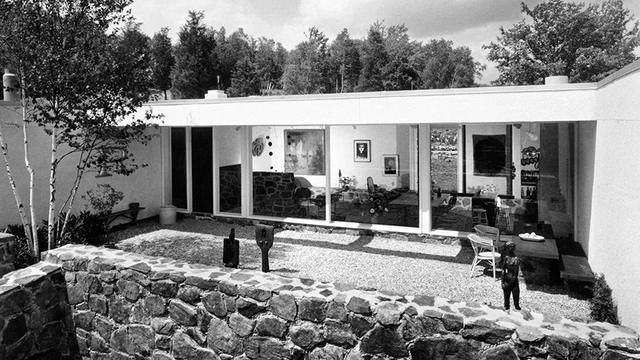
Stillman House II, courtyard with view into living area, 1966. Joseph W. Molitor. . Image Courtesy of Summitridge Pictures & Monacelli Press
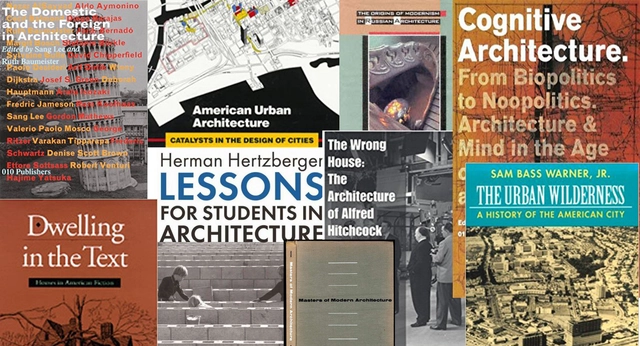
Now that we are halfway through the year, what better time to prioritize your reading list? Whether you’re interested in the history of interior design, the relationship between architecture and health, or learning more about the 20th century’s forgotten architects, Metropolis editors have selected a variety of current and forthcoming titles that will be sure to get you through 2021.
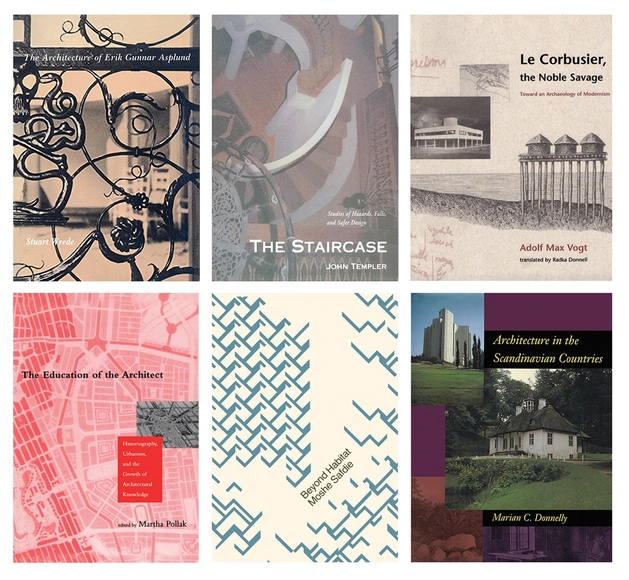
Funded by Andrew W. Mellon and the National Endowment for the Humanities foundations as part of the Open Book Program, a collection of classic books, published between 1964 and 1998 are now available online as open access e-books through the MIT Press Open Architecture and Urban Studies book collection.
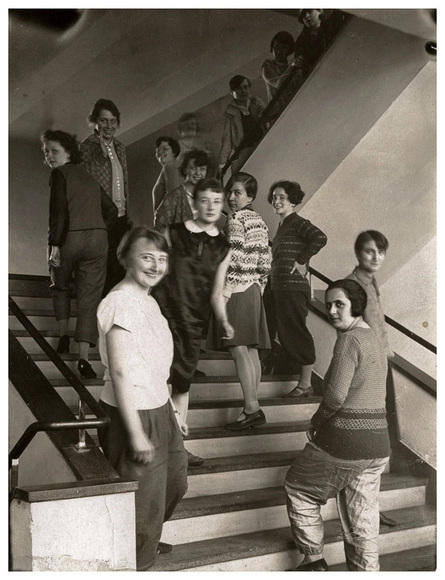
Weavers on the Bauhaus staircase, 1927. From top to bottom: Gunta Stölzl (left), Ljuba Monastirskaja (right), Grete Reichardt (left), Otti Berger, (right), Elisabeth Müller (light patterned sweater), Rosa Berger (dark sweater), Lis Beyer-Volger (center, white collar), Lena Meyer-Bergner (left), Ruth Hollós (far right) and Elisabeth Oestreicher.. ImagePhotograph by T. Lux Feininger; collection of the Bauhaus-Archiv Berlin
The Bauhaus was founded on the promise of gender equality, but women Bauhauslers had to fight for recognition. A new book recounts the achievements and talents of 45 Bauhaus women.
After the end of World War I, a spirit of optimism and a euphoric mood prevailed in Germany. Thanks to a new republican government and women’s suffrage, the war-torn nation was experiencing a radical new beginning.
As part of that convention-breaking wave, in 1919 German architect Walter Gropius assumed leadership of what would become the legendary Bauhaus. Initially, he declared that there would be “absolute equality” among male and female students.
In the mid-to-late 20th century, a secular, socialist Poland served as the backdrop for the construction of thousands of Catholic churches. In their book Day-VII Architecture, Izabela Cichonska, Karolina Popera, and Kuba Snopek analyze the paradoxical facets of this architecture born at the intersection of secularity and religion, charting how its development was influenced by liturgical reform, political movements, and the growth of postmodernism. In the excerpted introduction below, the authors unfold this history, touching on the Second Vatican Council, Solidarity, the Iron Curtain, and more in relation to the development of Day-VII Architecture's ultimately unique postmodern style. The publication has collected photographs of 100 Polish churches built after the year 1945, accompanied by interviews with their architects. To read more about the authors' original Day-VII documentation project, which served as the groundwork for this book, be sure to visit the original article "These Churches Are the Unrecognized Architecture of Poland's Anti-Communist 'Solidarity' Movement."
https://www.archdaily.com/922363/day-vii-architecture-how-the-architecture-of-polish-churches-developed-in-a-secular-socialist-stateLilly Cao
Book Review by Gioia C. Sawaya; Chemaly’s book offers a different attempt to reading war ruins in a Lebanese urban context. It suggests another perception of an architectural space, with the need for a built environment that encourages empathy with the user. He defines this space as a verb (an affording action) rather than a noun. The introduction of the book helps to locate the author’s main aim and frame his discourse.
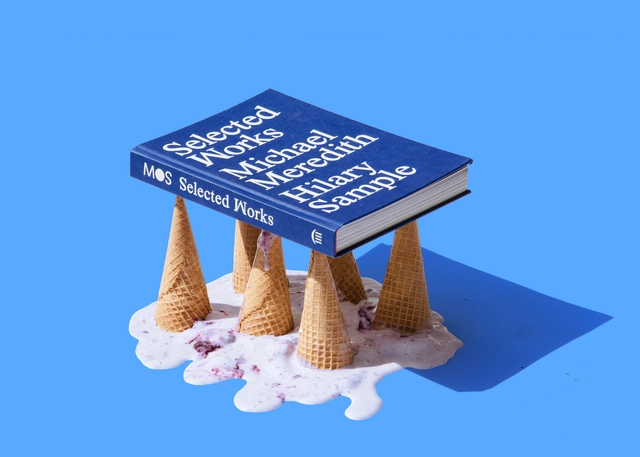
Ice Cream Books is a conceptual art project with a rather predictable, if not delightful, output: "great reads paired with frozen desserts." The work is beguilingly simple and stunningly direct – wafer cones act as columns and space frames, ziggurats and buttresses, all supporting popular tomes.
And so, for little other reason than pure gratification—and to ease you into your Monday morning—enjoy these books paired with (largely structurally sound) frozen desserts!
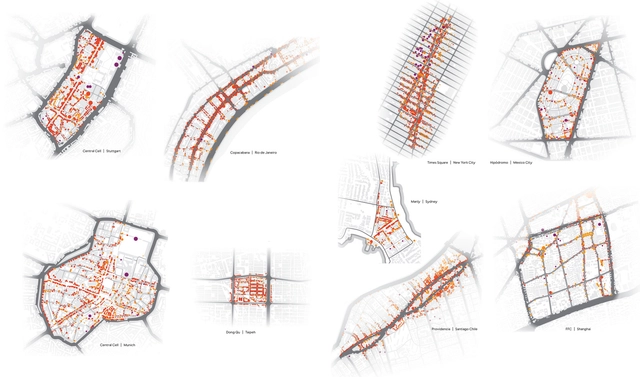
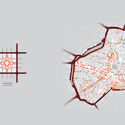
As urban areas develop, each city forms a unique structural logic. With this structure usually conceived on an ad-hoc basis, political terms such as “metropolitan area” and “neighborhood” are not always useful when analyzing and comparing the performance of cities. In a quest for new analytical tools, Robin Renner has devised an anatomically-based classification system in his new book Urban Being: Anatomy & Identity of the City. Through a thoughtful investigation of existing urban areas from around the globe using satellite images and personal experiences, Urban Being offers an insight into how transportation networks and streetscapes can be best organized to promote a healthy metropolitan environment.
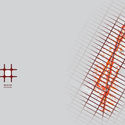
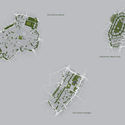
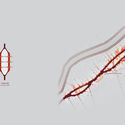
Renner’s analysis ranges from macro-regions that can even cross country borders to the defined spaces between arterial roads in cities, which he calls "urban cells." As the neighborhoods and units in which inhabitants reside, urban cells are important when examining the identity and efficiency of a city. They are defined by both their physical properties and the actions that take place inside of them. Below is a small sample of how Renner analyzes urban cells from the book.
Argentine artist Marta Minujín has created a full-scale replica of one of the world’s most famous structures, the Parthenon in Athens, constructed out of censored books as a symbol of resistance to political repression. Currently on display at the Documenta 14 art festival in Kassel, Germany, the 100,000 books that make up the monument have been sourced entirely from donations, allowing people from all over the world to contribute titles they feel a personal connection to.
Collaborating with students from Kassel University, Minujín selected more than 170 titles banned in various countries across the world. These books were then strapped to the steel structure with plastic sheeting, protecting them from the elements and allowing sunlight to filter through the building.
https://www.archdaily.com/875525/parthenon-of-books-constructed-from-100000-banned-books-rises-at-nazi-book-burning-site-in-germanyAD Editorial Team
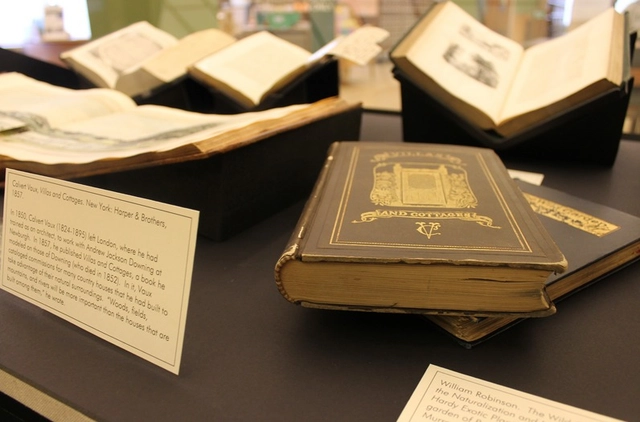
Buffalo and Erie County Public Library of Buffalo, New York, has recently opened a new exhibit at their Central Library titled Building Buffalo: Buildings From Books, Books From Buildings. The exhibit will feature a large selection of rare, illustrated architectural books from the Library’s collection dating from the fifteenth century to the mid-twentieth century. The bonus for those who are geographically distant from Buffalo is that, as part of the exhibit, the Library has also made dozens of historical architecture books available online, completely digitized and free to the public.
Great architects are like great writers. Our abilities to observe the world around us down to the tiniest details, and then make the most remarkable connections, have in time given humanity great stories and experiences - whether through imagined or real spaces. As Charles Eames put it, "Eventually everything connects - people, ideas, objects. The key to quality of the connections is the key to quality per se."
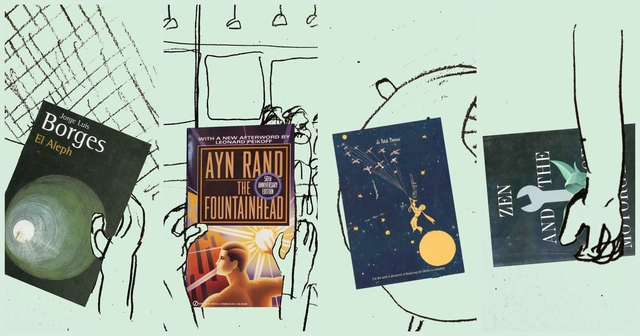
As architects, we have a nearly endless succession of connections to make, from materials, to geography, to time, to people, to experiences and statements of our own beliefs, all coming together in the design of a space. Novels are therefore a great way to remind yourself of the creative possibilities that architecture holds, encouraging you to dream about what architecture could be; and what experiences could be. These 7 non-architectural novels each have their own qualities that could open up the architectural world (and provide you with an enjoyable reading list in your time off). Enjoy!
The bookshop of the Netherlands Architecture Institute, with a space dedicated to the architectural monograph. Image via Nieuwe Instituut
It's common to find an architectural monograph (or three) on an architect's bookshelf. Within the pages of these large, heavy, often expensive tomes lie a formalised portfolio of a studio's professional output, interspersed by essays penned by influential writers, thinkers or practitioners. They are sources of both information and inspiration, bringing architecture from around the world into your personal field of vision.
Recent years have seen a vast number of these types of books published on architects and their practices, begging the question: Why a Monograph? Are they simply part and parcel of a studio's creative process, or necessary tools for communication with the wider world? Perhaps more interestingly, what role does the recording of work in this way have for architects in enabling them to take stock and move forward? It will seek to examine how the print monograph has become a staple tool for self-promotion, reflection, and criticism in a world which is leaning towards a gradual digitisation of the discourse.
https://www.archdaily.com/632117/why-has-the-monograph-become-a-default-in-architectural-publishingAD Editorial Team
Packed full of idiosyncratically meticulous and colorful illustrations, the book provides a whimsical account of Sydney's architecture and history. From icons such as Utzon'sSydney Opera House to lesser known gems like Mark Foy's building opposite Hyde Park, to the terrace houses of inner city suburbs, All the Buildings in Sydney presents each building with care, detail, and an abundance of charm.
See more images from All the Buildings in Sydney, after the break…