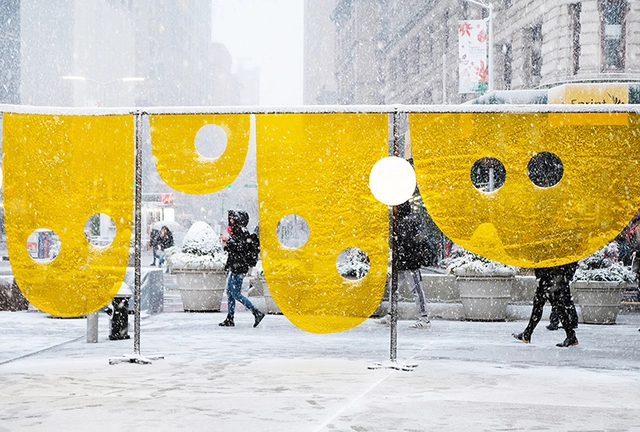
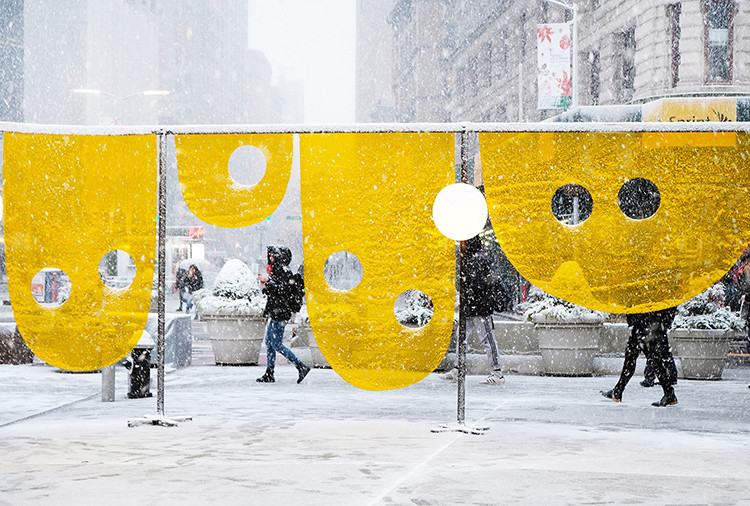
Studio Cadena’s Happy installation has been unveiled in New York's Flatiron Plaza. The project is the winner of the fifth annual Design Competition hosted by the Flatiron/23rd Street Partnership Business Improvement District (BID) and Van Alen Institute. As the centerpiece of the annual holiday program, the installation was selected by a jury with expertise across the worlds of design and public art, including representatives from the Flatiron Partnership, New York City DOT Art, and Van Alen Institute’s board of trustees.
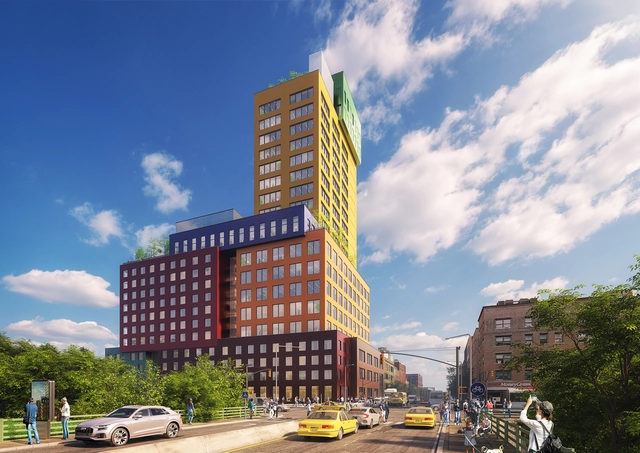
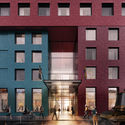
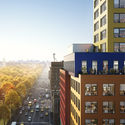
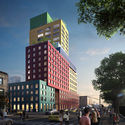
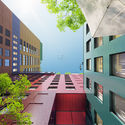
Dutch practice MVRDV has broken ground on Radio Tower & Hotel, a 21,800-square-meter mixed-use high rise located in the Washington Heights area in northern Manhattan. The 22-storey building is MVRDV’s first major project in the United States and combines hotel, retail, and office functions in vibrantly stacked blocks. The project was designed to reflecte the vivacious character of the neighborhood and set a direction for future development.
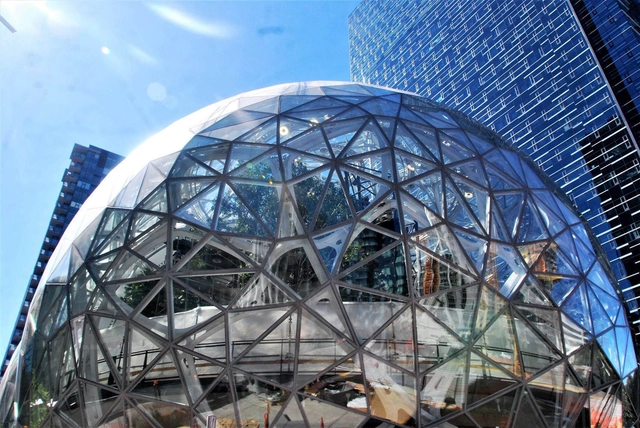
Amazon has selected New York City and Arlington for it's next headquarters, set to become two of the biggest economic development projects in the United States. Instead of choosing one site, Amazon will spread over $5 billion in construction and investments across the two locations. The tech giant will house at least 25,000 employees in each city, and could receive more than $2 billion in tax incentives. The new announcement ends a 14-month competition among cities across the country.
This article was originally published on November 5, 2014. To read the stories behind other celebrated architecture projects, visit our AD Classics section.
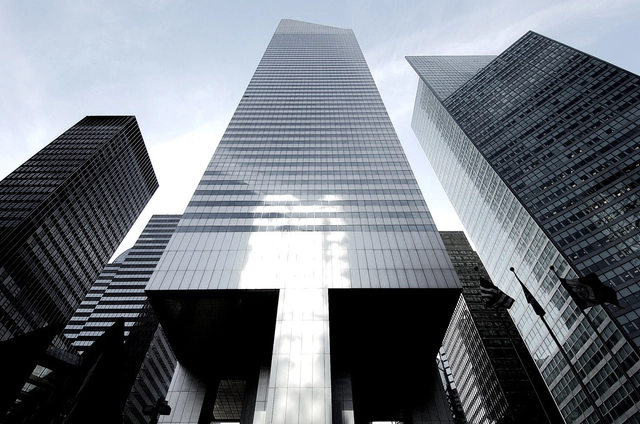
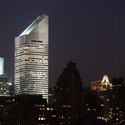
In a city of skyscrapers of nearly every shape and size, the Citigroup Center on Lexington Avenue is one of New York’s most unique. Resting on four stilts perfectly centered on each side, it cantilevers seventy-two feet over the sidewalk and features a trademark 45-degree sloping crown at its summit. The original structure responsible for these striking features also contained a grave oversight that nearly resulted in structural catastrophe, giving the tower the moniker of “the greatest disaster never told” when the story finally was told in 1995. The incredible tale—now legendary among structural engineers—adds a fascinating back-story to one of the most iconic fixtures of the Manhattan skyline.
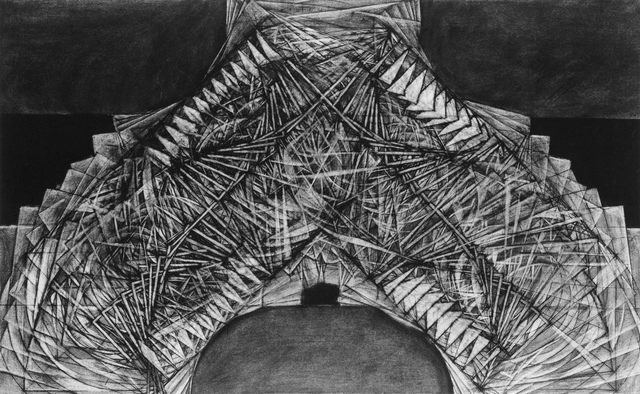
Author: Christian Dickson. Project Title: The Mark of Cain and Cain’s Mark. Course/AY: Thesis, 1991-92. Professors: John Hejduk, Roderick Knox, Sean Sculley, Regi Weile. Image Courtesy of The Irwin S. Chanin School of Architecture Archive, The Cooper Union
Drawing together the works of Elizabeth Diller,Laurie Hawkinson, Daniel Libeskind, and others, the exhibition titled “Archive and Artifact: The Virtual and the Physical” presents hand-drawn, digital, and three-dimensional works.
This article was originally published on May 25, 2015. To read the stories behind other celebrated architecture projects, visit our AD Classics section.
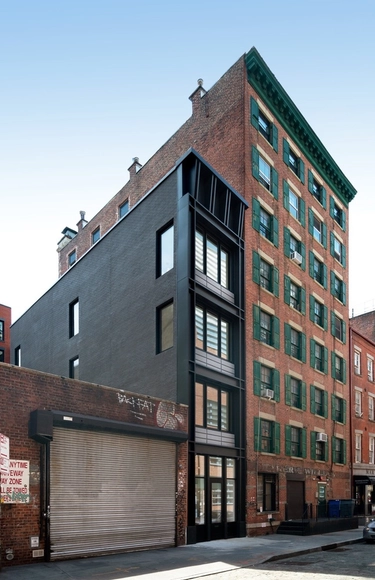
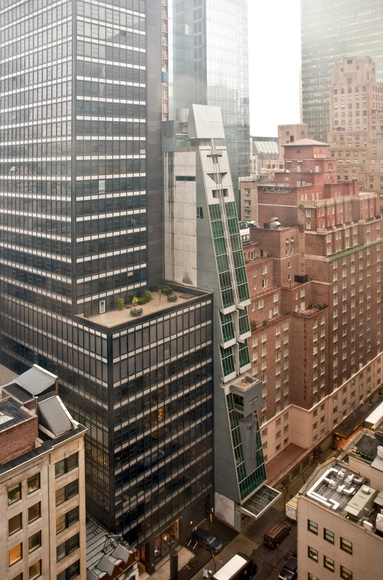
Before the impossibly “super-thin” tower became ubiquitous on the Midtown Manhattan skyline, Raimund Abraham’s Austrian Cultural Forum challenged the limits of what could be built on the slenderest of urban lots. Working with a footprint no bigger than a townhouse (indeed, one occupied the site before the present tower), Abraham erected a daring twenty-four story high-rise only twenty-five feet across. Instantly recognizable by its profile, a symmetrical, blade-like curtain wall cascading violently toward the sidewalk, ACFNY was heralded by Kenneth Frampton as “the most significant modern piece of architecture to be realized in Manhattan since the Seagram Building and the Guggenheim Museum of 1959.” [1]
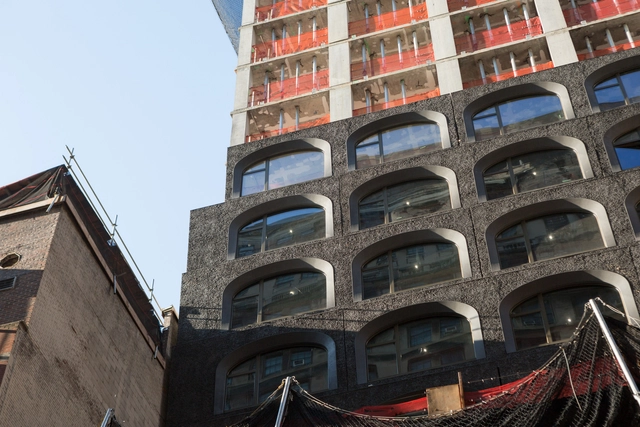
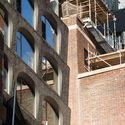
Adjaye Associates‘ 130 William Street residential tower in Lower Manhattan has begun installation of the building facade. As New York YIMBY reports, last week the hand-cast concrete arches started getting installed. Made to recall New York City’s historic fabric from the 19th and early 20th centuries, the facade was designed around an eclectic material and color palette. Once finished, the tower will include 244 new luxury condominiums in the Financial District.
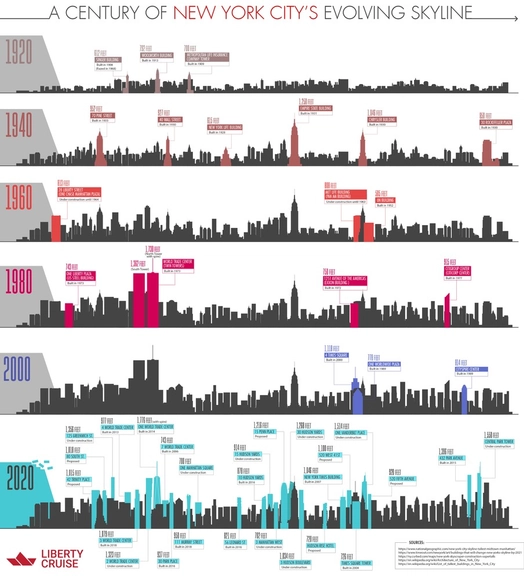
Manhattan is known for its iconic skyline, brimming with skyscrapers, high rises, and some of the most impressive architecture in the world. But it wasn’t always that way; it took hundreds of years for New York City to become the structurally diverse, world-famous city that it is today.
https://www.archdaily.com/904180/100-years-of-change-in-new-yorks-skyline-1920-2020AD Editorial Team
This article was originally published on July 22, 2016. To read the stories behind other celebrated architecture projects, visit our AD Classics section.
The New Museum is the product of a daring vision to establish a radical, politicized center for contemporary art in New York City. With the aim of distinguishing itself from the city’s existing art institutions through a focus on emerging artists, the museum’s name embodies its pioneering spirit. Over the two decades following its foundation in 1977, it gained a strong reputation for its bold artistic program, and eventually outgrew its inconspicuous home in a SoHo loft. Keen to establish a visual presence and to reach a wider audience, in 2003 the Japanese architectural firm SANAA was commissioned to design a dedicated home for the museum. The resulting structure, a stack of rectilinear boxes which tower over the Bowery, would be the first and, thus far, the only purpose-built contemporary art museum in New York City.[1]
This article was originally published on February 11, 2014. To read the stories behind other celebrated architecture projects, visit our AD Classics section.
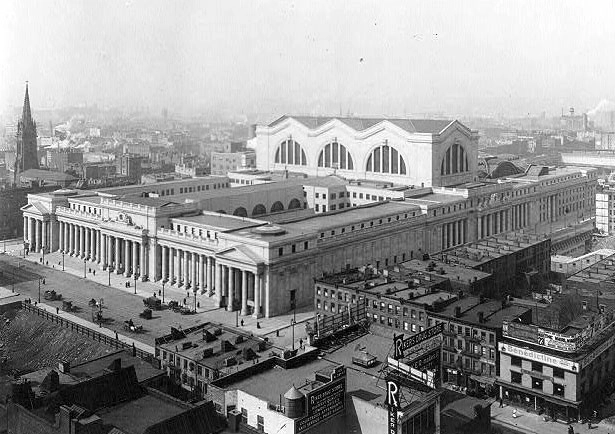
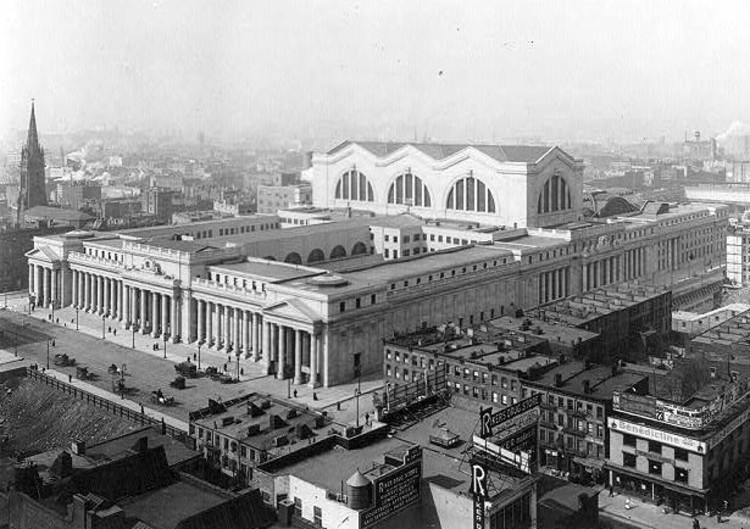
New York City’s original Pennsylvania Station was a monument to movement and an expression of American economic power. In 1902, the noted firm McKim, Mead and White was selected by the President of the Pennsylvania Railroad to design its Manhattan terminal. Completed in 1910, the gigantic steel and stone building covered four city blocks until its demolition in 1963, when it ceded to economic strains hardly fifty years after opening.











.jpg?1413872412 "© Flickr user Steven Severing-Haus")







_Eric_Laignel.jpg?1535583348&format=webp&width=640&height=580)
_Eric_Laignel.jpg?1535583459 "© Eric Laignel")
_Eric_Laignel.jpg?1535583538 "© Eric Laignel")
_Eric_Laignel.jpg?1535583437 "© Eric Laignel")
_Eric_Laignel.jpg?1535583320 "© Eric Laignel")
_Eric_Laignel.jpg?1535583348)










.jpg?1431981450 "The director's office that occupies the box-like protrusion on the southern facade. Image © Photo by David Plakke, davidplakke.com; Courtesy of Austrian Cultural Forum New York")









.jpg?1463595741&format=webp&width=640&height=580)
.jpg?1463596013 "© Laurian Ghinitoiu")
.jpg?1463595919 "© Laurian Ghinitoiu")
.jpg?1463596094 "© Laurian Ghinitoiu")
.jpg?1463595878 "© Laurian Ghinitoiu")
.jpg?1463595741)