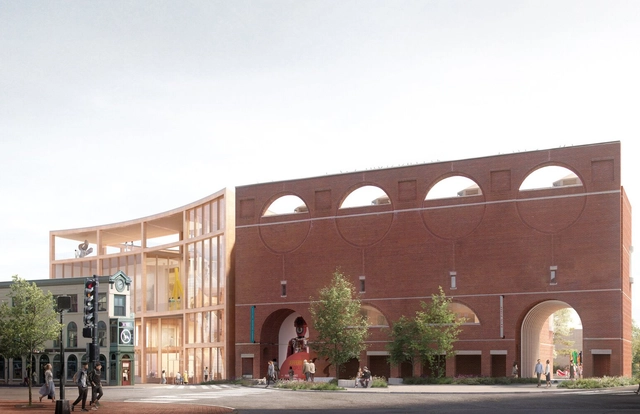
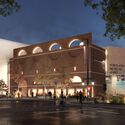
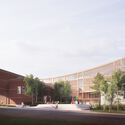
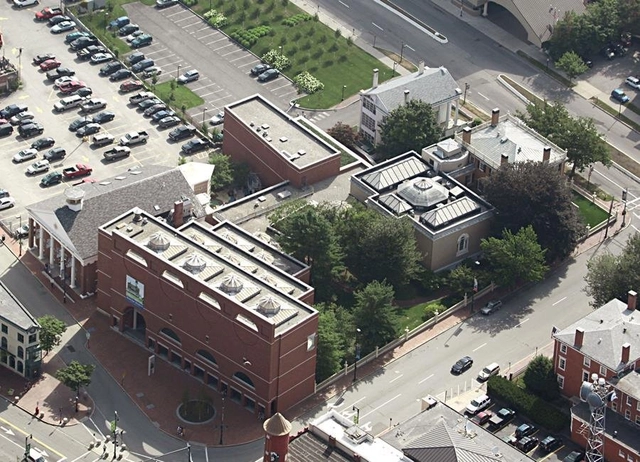
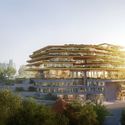
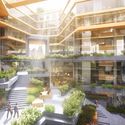
Four teams have been declared the finalists in the competition to design the Portland Museum of Art campus expansion located in Portland, Maine. The finalist teams are led by Adjaye Associates, Lever Architecture, MVRDV and Toshiko Mori Architect + Johnston Marklee + Preston Scott Cohen. The project includes a 60,000 square feet expansion in the form of a six or seven-story structure planned to accommodate an increase in the number of visits and a growing collection of art. The museum is now asking for public feedback on the designs, as the projects are on view at PMA until December 11th.
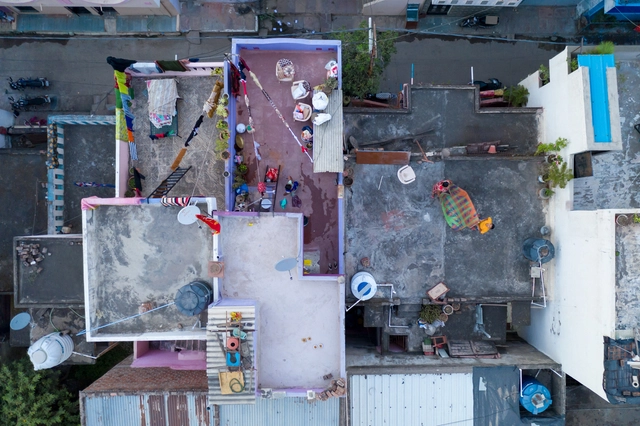
Aranya Community Housing / Vastu-Shilpa Consultants . Image Courtesy of Vitra Design Museum
In almost every Indian language, a colloquial term for “family” - ghar wale in Hindi, for example - literally translates to “the ones in (my) house”. Traditionally, Indian homes would shelter generations of a family together under one roof, forming close-knit neighborhoods of relatives and friends. The residential architecture was therefore influenced by the needs of the joint family system. Spaces for social interaction are pivotal in collective housing, apart from structures that adapt to the changing needs of each family. The nuanced relationship between culture, traditions, and architecture beautifully manifests in the spatial syntax of Indian housing.
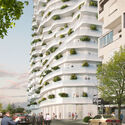
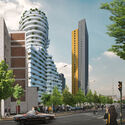
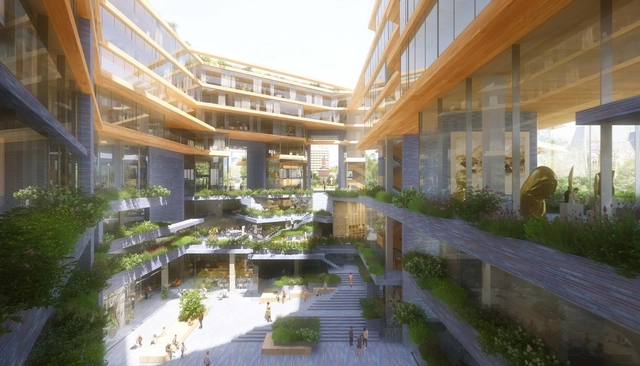
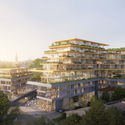
MVRDV has won a competition to design a mixed-use residential and commercial complex on the edge of Jiangbei New Area’s Financial District in Nanjing, China. Dubbed "Oasis Towers", the two 150-metre-tall towers are surrounded by lush landscapes, and will provide residents a green haven within a dense and rapidly developing part of the city.
The PortlandMuseum of Art, along with architects from Dovetail Design Strategists have announced four renowned architecture firms shortlisted for the unification and expansion of Portland Museum of Art’s new campus in the heart of Downtown Portland, Maine. Under the theme of "Art for All", PMA’s mission, vision, and commitment to Sustainability and Diversity, Equity, Accessibility, and Inclusivity were the basis of the value proposition guiding the museum unification and expansion, with a goal to "reflect a challenge to museums and cultural institutions to do more to create centers of belonging and foster social change".
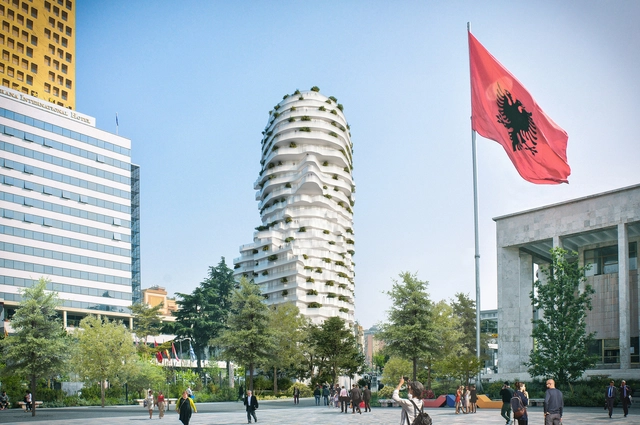
MVRDV has begun construction on Skanderbeg Building, officially known as Tirana’s Rock, a mixed-use project that is sculpted into the shape of Albania’s national hero. The building is wrapped in curved balconies that form the shape of Skanderbeg's head, serving as an iconic landmark at the Skanderbeg Square in the center of Tirana. Once complete, the project will be one the world’s largest buildings that doubles as a figurative sculpture, celebrating the country’s cultural history while giving the Albanian capital a unique identity.
UNStudio has been announced as the winner of the international competition "Un Iași pentru Viitor" to design a new residential district in the historical center of Iași, Romania. For this competition, organized by Iulius company, four offices have been invited to participate, Foster + Partners, MVRDV, UNStudio, and Zaha Hadid Architects. The main challenge of the competition brief was designing a building well integrated into a complex urban environment marked by historic monuments of different ages, new archeological discoveries, and open public spaces and gardens. The winning proposal, titled „Bridging Time, Bridging Communities,” aims to offer a coherent response to the particularities of the site.
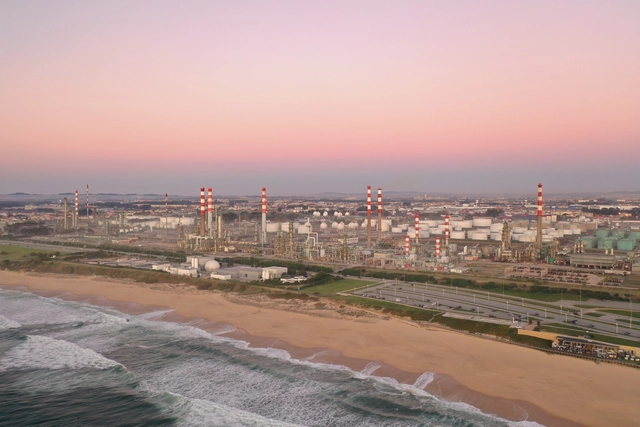
An international consortium led by MVRDV and OODA, in close collaboration with LOLA, Thornton Tomasetti, A400, and LiveWork, was selected to design an eco-city within the city of Matosinhos, Portugal. The project aims to transform a large-scale urban project, turning the former Galp Energia’s refinery into a green and innovative district with housing, a university campus, and a large park, among various facilities. The transformation of Matosinhos will serve as a catalyst for a greener future. The refinery's heritage will promote a sustainable future with projects that attract investments in innovation and education, attracting a new population to the city.
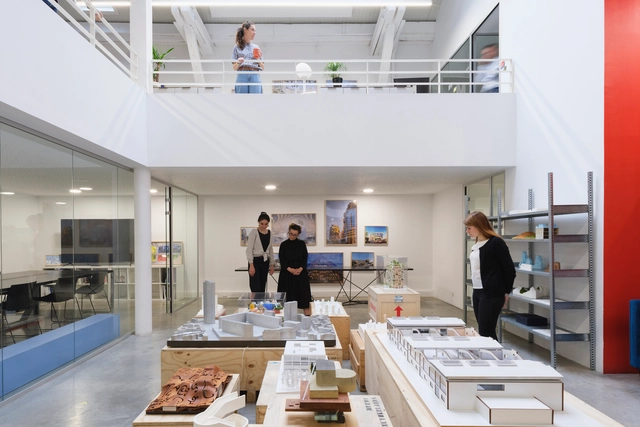
MVRDV and The Why Factory's have collaborated on an exhibition that explores the principles of "architecture and urbanism calls to action”. Titled "Agir", the exhibition is open to the public since June 9th, in the connected spaces of the ArchiLib Gallery and MVRDV’s Paris office. The exhibition takes its name from the French verb meaning “act”, and examines the activist works of MVRDV and The Why Factory, revealing its capacity to address a wide variety of environmental and social challenges.
Designed for an insurance company, The Centraal Beheer building by Herman Hertzberger in Apeldoorn, Netherlands, is widely recognized as one of the high points of the structuralist movement. MVRDV, in consultation with Herman Hertzberger’s office AHH, is transforming the celebrated building, making it the centerpiece of a new sustainable residential neighborhood while preserving its structure and core principles. The project is part of a larger area of development, a three-hectare site near the city’s train station. MVRDV’s design proposal introduces approximately 650-800 homes while keeping the focus on preservation, greening, and innovation.
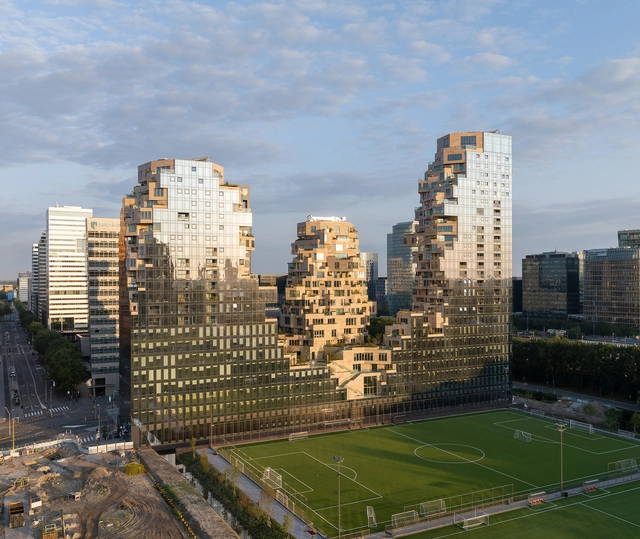
MVRDV has revealed the design for its first project in South America. The Hills is a residential project located on the Guayas riverfront in Guayaquil, Ecuador, comprised of six residential towers displayed atop a mixed-use plinth, creating the image of a valley. The towers range in height from 92 to 143 meters, raising taller the further away they are from the riverfront. The whole composition is inspired by the local landscape that merges the natural and the urban environment.
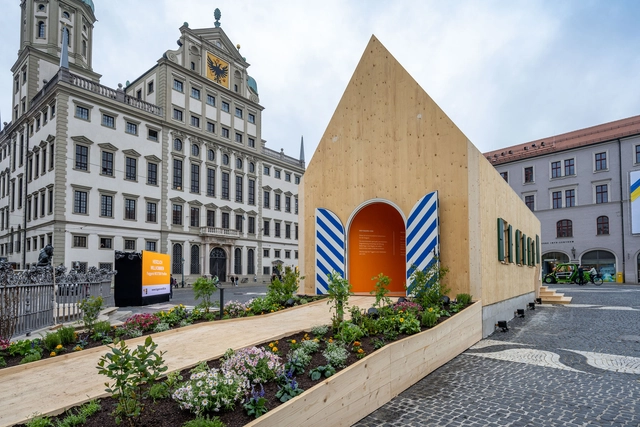
MVRDV and Fugger Foundation are celebrating the 500th anniversary of the Fuggerei social housing project, the world's oldest housing complex, with a ceremonial pavilion and three proposals for “Fuggerei of the Future”. The celebration features a 5-week programme of interdisciplinary discussions and events about social housing and current global challenges. In honor of the occasion, MVRDV designed the 'NEXT500' pavilion, which exhibits an MVRDV study on the “Fuggerei of the Future”, presenting a new Fuggerei code and three proposals for new Fuggerei complexes around the world.
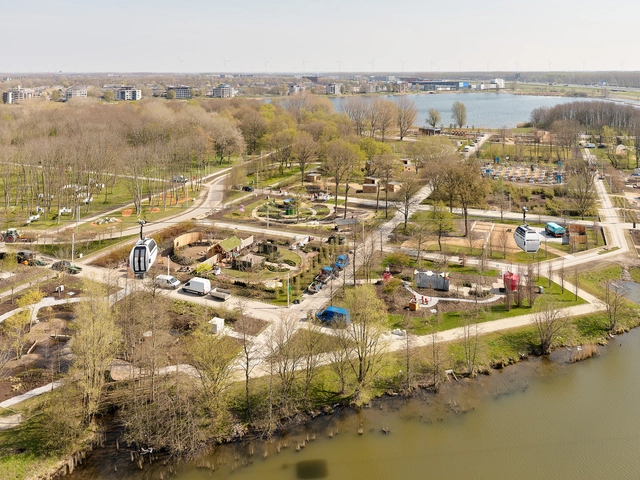
The international horticultural exhibition Floriade Expo 2022 opened to the public yesterday on the site of MVRDV's arboretum masterplan in Almere. The concept features an alphabetical library of trees and plants arranged into lots on a rigorous grid across the 60-hectare site. The masterplan was conceived as a framework for the Expo, and at the same time, as a blueprint for a sustainable city district, given that the park will be transformed into a new residential area after the event. Held every ten years and running for six months, the Expo showcases the latest innovations in the field, from nature-inclusive agriculture to a sustainable pilot home made from 93 per cent recycled plastic.
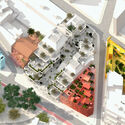
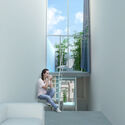
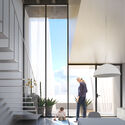
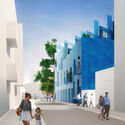
MVRDV, together with Spanish practice GRAS Reynés Arquitectos, is transforming the iconic El Terreno neighbourhood in Palma, Mallorca, into a vibrant residential area, through renovations and new additions. After decades of decline, a series of neighbouring plots in Plaza Gomila are to be redeveloped through a public-private venture, with the aim of restoring the essence of the bohemian neighbourhood. Each executed in a different colour and material, the seven diverse buildings form a recognisable district with a variety of typologies.
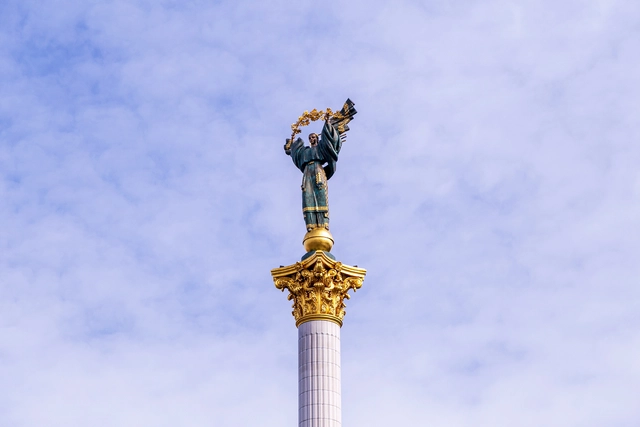
Kiev, Ukraine / Statue of Berehynia on the top of Independence Monument on the Maidan Nezalezhnosti. Image via Shutterstock
On the 24th of February 2022, Russia launched a large-scale invasion of Ukraine. Set to become Europe’s largest refugee crisis and armed conflict in this century, so far, this war has mobilized people across the world in order to exert pressure on authorities and put a stop to the armed hostilities. Individuals, as well as institutions in the architectural field, have taken part in these acts of solidarity, issuing statements, condemning actions, and even halting their work in Russia. From the UIA to MVRDV to Russian Institutions such as Strelka, the architecture world is denouncing the acts of violence and supporting an immediate cease of fire.
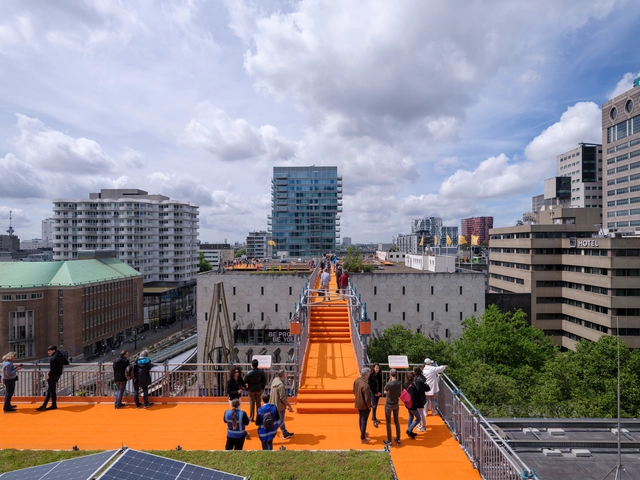
Setting the stage for Rotterdam Architecture Month this upcoming June, MVRDV have designed a temporary rooftop platform on the Het Nieuwe Instituut in Rotterdam. The 600-square-meter event space titled The Podium will be elevated 29 meters and covered with a striking pink color, making it visible to all pedestrians on ground level. The installation will open to the public on June 1st, coinciding with the inauguration of the Rotterdam Architecture Month Festival, and will continue to be used for events until August 17th.
Amsterdam is one of the most beautiful cities in Europe. Its origins lie in the 12th century when fishermen living along the banks of the River Amstel built a bridge across the waterway near the IJ, then a large saltwater inlet. Most of the city’s territory is below sea level and therefore it lies on land that has been reclaimed from the water.
Amsterdam is all about practical urban planning, amazing cycling infrastructure, tulip-lined canal bridges, and old merchant houses that tilt at impossible angles. I visited Amsterdam again last year and discovered some new places.















.jpg?1655725729 "© Juan Jerez")

.jpg?1655725498 "© Juan Jerez")


Certitudo_HR.jpg?1655422317&format=webp&width=640&height=580)


.jpg?1655422503 "Herman Hertzberger - Centraal Beheer offices, Apeldoorn (1968-1972). Image via AHH, used under terms of \"fair use\"")
Certitudo_HR.jpg?1655422317)
.jpg?1653955037&format=webp&width=640&height=580)

.jpg?1653955060 "Courtesy of MVRDV")


.jpg?1653955037)









.jpg?1646212066&format=webp&width=640&height=580)
.jpg?1646212124 "© MVRDV")
.jpg?1646212098 "© MVRDV")
.jpg?1646212076 "© MVRDV")
.jpg?1646212066 "© MVRDV")
.jpg?1646212066)