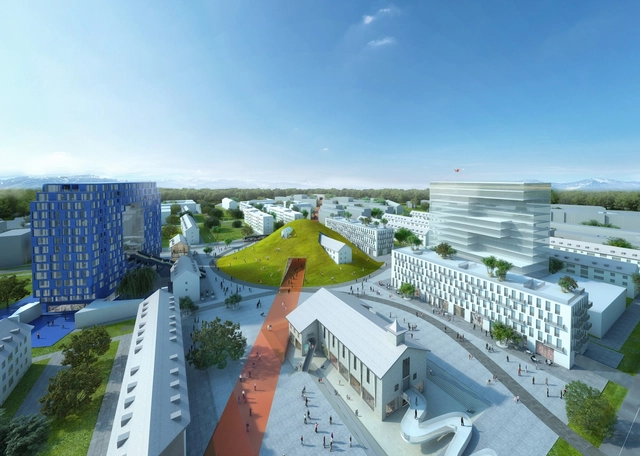
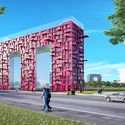
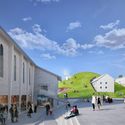
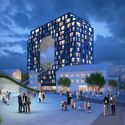
MVRDV has released plans for a major revitalization of a former US army barracks in the Franklin Mitte neighborhood of Mannheim, Germany. The 41-hectare site will feature a slate of mixed-typology developments organized around a central green hill made from demolished barrack buildings and offering panoramic views of the new developments. Of those new buildings, four residential towers spelling out the word H-O-M-E will create a vibrant community of professionals and young local families.
The Glasgow City Council has selected a multidisciplinary team lead by MVRDV and Glasgow-based Austin-Smith:Lord to transform downtown Glasgow into a “more livable, attractive, competitive and sustainable center.” Titled (Y)our City Center, the strategy calls for a regeneration of the 400 hectare city center that would reorganize circulation and infrastructure while providing new residential options to support Scotland’s economic center.
After two weeks of nominations and voting, last week we announced the 16 winners of the 2017 Building of the Year Awards. In addition to providing inspiration, information, and tools for architecture lovers from around the world, ArchDaily seeks to offer a platform for the many diverse and global voices in the architecture community. In this year's Building of the Year Awards that range of voices was once again on display, with 75,000 voters from around the world offering their selections to ultimately select 16 winners from over 3,000 published projects.
Behind each of those projects are years of research, design, and labor. In the spirit of the world's most democratic architecture award, we share the stories behind the 16 buildings that won over our global readership with their urban interventions, humanitarianism, playfulness, and grandeur.
With two weeks of nominations and voting now complete, we are happy to present the winners of the 2017 ArchDaily Building of the Year Awards. As a peer-based, crowdsourced architecture award, these winners were chosen by the collective intelligence of over 75,000 votes from ArchDaily readers around the world, filtering over 3,000 projects down to the 16 best works featured on ArchDaily in 2016.
In being published on ArchDaily, these 16 exemplary buildings have helped us to continue our mission, bringing inspiration, knowledge, and tools to architects around the world. This award wouldn't be possible without the hundreds of firms that choose to publish their projects with ArchDaily every year, or without those who take part in the voting process to become part of our thousands-strong awards jury. To everyone who took part—either by submitting a project in the past year, or by nominating and voting for candidates in the past weeks—thank you for giving strength to this award. And of course, congratulations to all the winners!
Read on to see the full list of winning projects.
https://www.archdaily.com/804859/winners-of-the-2017-building-of-the-year-awardsAD Editorial Team
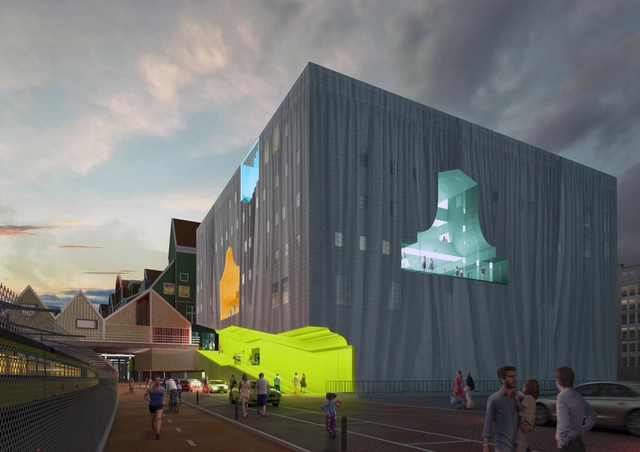
MVRDV has released new renderings and a flythrough of their competition-winning design for a new cultural center in the city of Zaanstad in the Netherlands. Borrowing architectural motifs from the historic Zaan House, the design flips the traditional form inside out to create a new living room for the city. Inside, the building will become the new home of a film house, a library, a performing and visual arts centre, a pop music centre, a music school, a centre for design and a local radio station.
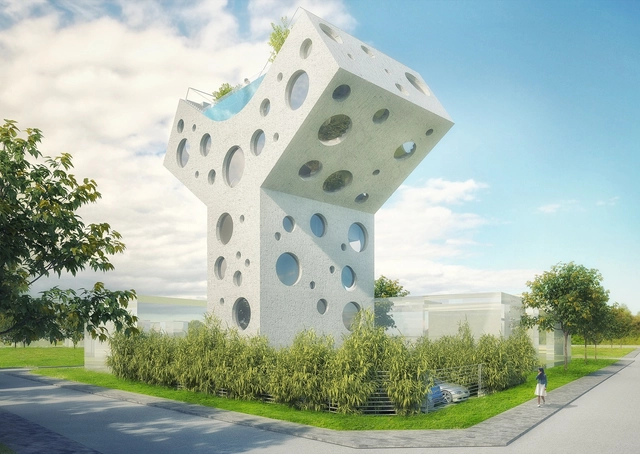
MVRDV, working with co-architects KAI Architects, has designed a new Y-shaped residence in Northeast Tainan, Taiwan. Known appropriately as Y House, the 330 square meter (3,552 square foot) villa will become a standout addition to a new residential development aimed at becoming a weekend retreat for city workers.
The strength of Dutch Design Week (DDW), held annually at the end of October, lies primarily in product design. Although the event has expanded over the past five years to incorporate more fashion, graphics and architecture, small-scale industrial design has retained its preeminence. Many of the designers on show in this year's edition, however, have embraced the challenges of other design disciplines and allowed them to feed into their work. But where does product design meet architecture? Building materials and, most notably at the 2016 event, some really nice bricks. Rotterdam-based architect Alison Killing guides us through her top installations.
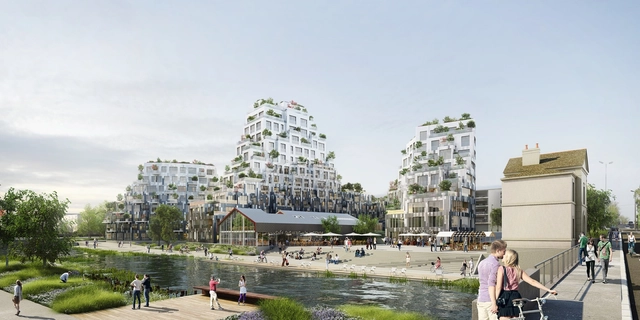
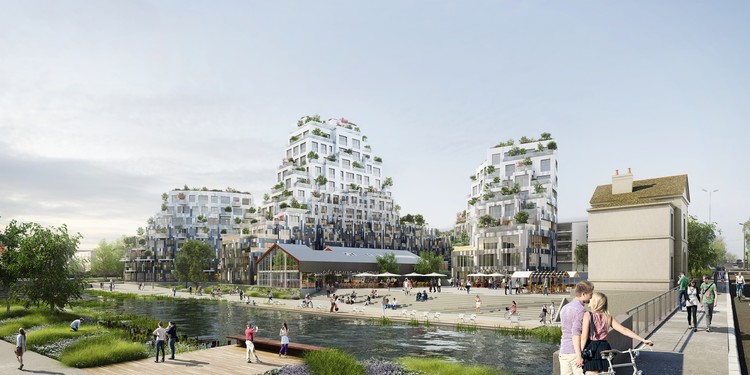
A team consisting of MVRDV, ALL + Giboire has won a competition for the project Ilot de l’Octroi, a new residential redevelopment in the city of Rennes, France that will transform the area into a socially adhesive green community along the Ille et Vilaine rivers.
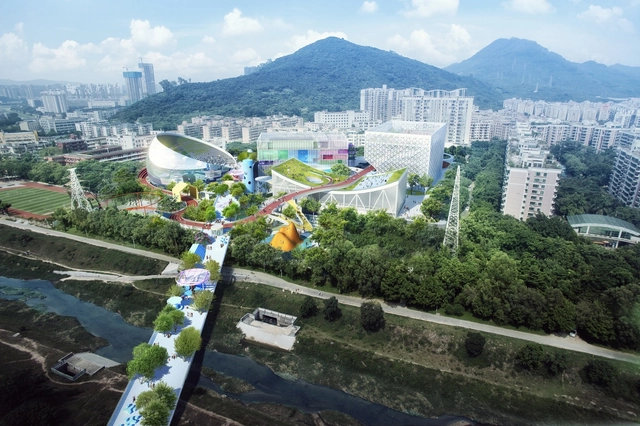
MVRDV and Zhubo Architecture Design have won a competition to design the Xili Sports and Cultural Centre in Shenzhen, China. The new experience center will consist of four distinct volumes housing a theater, a basketball and badminton arena, a multi-function arena and a swimming pool, as it seeks to “transform the lives of the different generations of people living nearby, through offering a more humanistic model for sports and culture.”
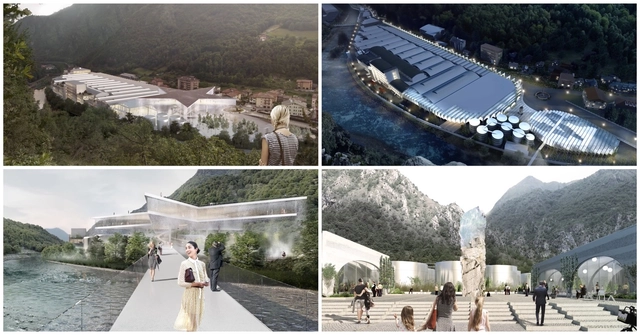
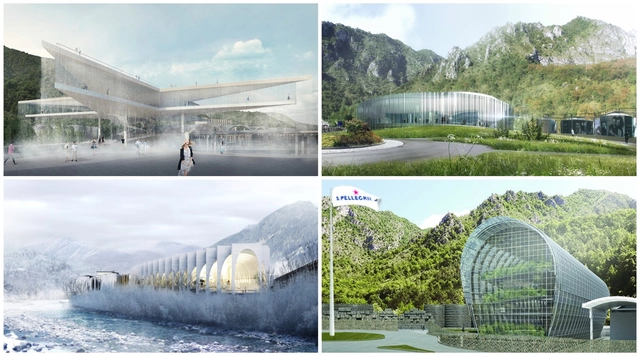
The competition to design a new flagship factory and bottling plant for San Pellegrino has been narrowed down to two firms: BIG and MVRDV. Searching for a “truly innovative project that not only conveys an artistic vision, but also sets new standards in terms of efficiency and compliancy to environmental sustainability,” the jury committee selected the two final proposals from a 4-firm list which also included designs from Snøhetta and aMDL Michele De Lucchi.
“The judging committee were so impressed by the four proposals that they decided to narrow their selection to a shortlist of two and deliberate further before announcing the winning project early next year,” explained San Pellegrino in a press release.
San Pellegrino also released video proposals of the designs, explained by firm founders Bjarke Ingels and Winy Maas.
The competition brief asked architects to renovate and expand the historic home of San Pellegrino, the world’s leading sparkling mineral water company, with a “truly innovative and technologically-advanced design” aimed at integrating into the natural aesthetic of the surrounding terrain, while responding to the iconic identity of the S. Pellegrino brand.
Continue reading to see each proposal along with official descriptions from each firm.
MVRD’s masterplan foresees the development of a vast site of which hotels, conference halls, offices and start-ups, laboratories, research facilities and parking will occupy the site.. Image Courtesy of MVRDV
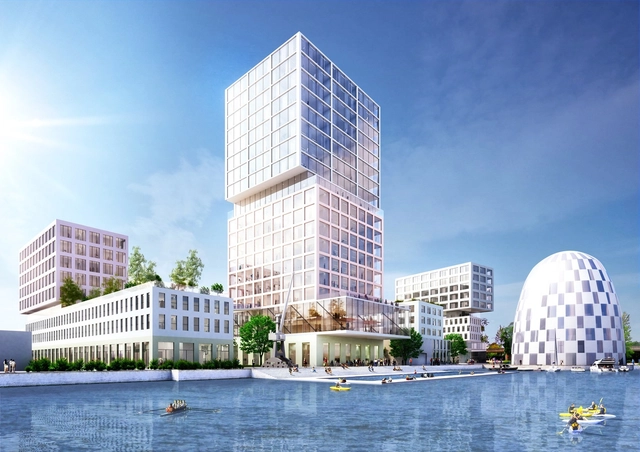
MVRDV with co-architects morePlatz have won a competition to design the masterplan of the Hamburg Innovation Port, a new 70,000 square meter waterfront development that will add to the high-tech hub of Channel Hamburg in Hanse City, Hamburg. The plan for the mixed-use development uses a fusion of existing port typologies and dynamic architectural interventions to create a network of buildings containing hotels, laboratories, research facilities, offices for start-ups and a conference center.
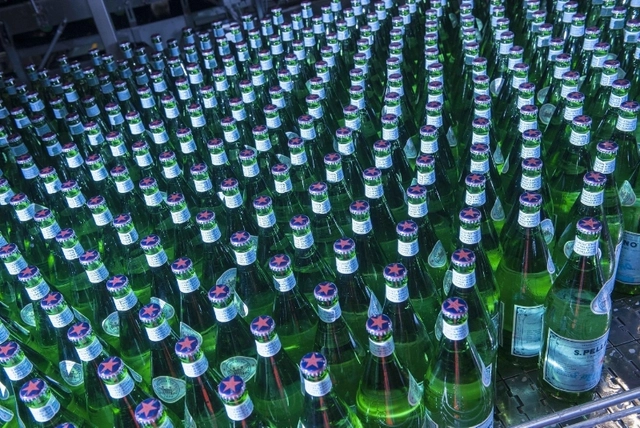
Sparkling Natural Mineral Water company San Pellegrino has announced an international competition between 4 top architecture firms for the redesign of its flagship factory and bottling plant, located at the source of the mineral water, San Pellegrino Terme, Italy.
“This exciting endeavor aims to celebrate the heritage, special source and terroir of S.Pellegrino, while also promoting new standards of efficiency, environmental sustainability and compliance. Further, this project will support the revitalization of the historic region, harkening back to the golden age of San Pellegrino Terme, at the height of the Belle Époque, when the town served as an exclusive destination for European aristocracy,” a spokesperson for San Pellegrino said in a press release.
MVRDV has announced plans for Paradise City, a 9,800 square meter entertainment plaza near Incheon Airport in Seoul, South Korea. Designer in partnership with Gansam Architects, the complex will consist of two monolithic forms housing retail and a nightclub, and new public spaces. The connecting element of the project is a giant golden spot at the public square, which the architects hope will become a beacon visible to tourists as they fly into the city.
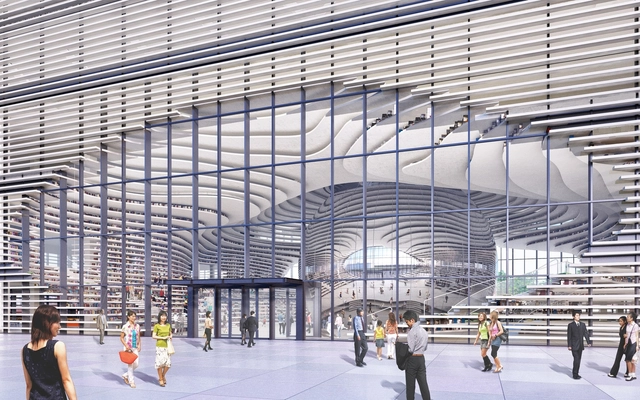
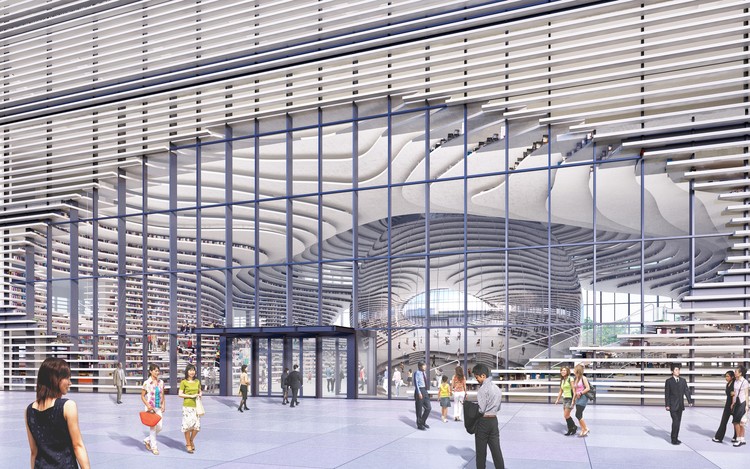
An MVRDV-designed library in Tianjin has topped out as part of the city’s Binhai Cultural Centre. The 34,200 square meter (370,000 square foot) building will join four other cultural institutions designed by Bernard Tschumi Architects, Bing Thom Architects, HH Design, and GMP – creating “cultural corridors” – that are part of a GMP-designed masterplan. The library program includes educational facilities, service spaces, book storage, archives, computer rooms, audio rooms, an auditorium, lounge areas, meeting rooms, offices, general reading areas, and those designed specifically for children and the elderly. Tianjin Binhai Library has been designed by MVRDV in collaboration with the TIanjin Urban Planning and Design Institute (TUPDI).
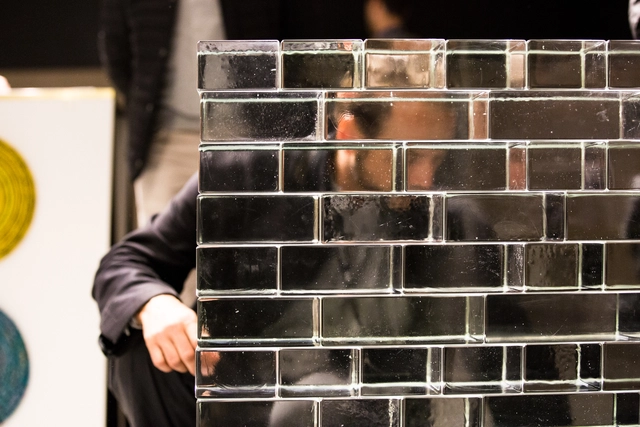
MVRDV has designed a fully transparent kitchen for Kitchen Home Project, a satellite event at this year’s Venice Biennale, focusing on living and the home environment. Kitchen Home Project was initiated by Weng Ling of the Beijing Centre for the Arts (BCA), and also features works by Kengo Kuma and the Hong Kong-based media artist Au Yeung Ying Chai. MVRDV’s proposal, “Infinity Kitchen,” imagines the next stage of kitchen design, creating counters, shelving, cabinets, and faucets entirely out of glass – the metaphor being that a see-through environment will add greater transparency to the food being made in the kitchen, and make inhabitants more aware food choices, cleanliness, and the culinary experience.
In the newest video by architects Wahyu Pratomo and Kris Provoost of YouTube’s #donotsettle, the duo visit MVRDV’s "The Stairs" installed outside Centraal Station in Rotterdam. The project commemorates the 75th anniversary of the city’s reconstruction after World War II by devising the staircase now attached to the Groot Handelsgebouw, a landmark and one of Rotterdam’s first post-war buildings. In the video, Pratomo and Provoost discuss the idea of temporariness, experience-driven architecture, context, and symbolism inspired by MVRDV’s intervention, all the while asking other visitors for their own reactions to the spectacle.
A little over a month since Rotterdam-based practice MVRDV announced a new temporary urban structure—a 180-step staircase, 29 meters tall and 57 meters long—for the heart of city of Rotterdam, the project has been officially opened. Those who ascend the staircase will find a temporary observation deck looking over Rotterdam Centraal, a rooftop bar, and the temporary reopening of the Kriterion cinema that was last active in the 1960s.




our_city_centre_map.jpg?1487608906&format=webp&width=640&height=580)
our_vibrant_Broomielaw.jpg?1487608889 "(Y)our Vibrant Broomielaw. Image Courtesy of MVRDV")
our_river_park_projects.jpg?1487608968 "(Y)our River Park Projects. Image Courtesy of MVRDV")
our_great_streets_and_spaces.jpg?1487609037 "(Y)our Great Streets and Spaces. Image Courtesy of MVRDV")
our_great_buildings.jpg?1487609017 "(Y)our Great Buildings. Image Courtesy of MVRDV")
our_city_centre_map.jpg?1487608906)









.jpg?1473780126 "A total surface of 70,000m2 will transform the waterways of the Channel Hamburg development, the southern high-tech hub of Germany’s northern metropolis.. Image Courtesy of MVRDV")
.jpg?1473780195 "The roofs of some buildings are partly green and partly used for terraces and solar cells.. Image Courtesy of MVRDV")


.jpg?1469022049&format=webp&width=640&height=580)

.jpg?1469022013 "© MVRDV")
.jpg?1469022134 "© MVRDV")
.jpg?1469022182 "© MVRDV")
.jpg?1469022049)


.jpg?1464190381&format=webp&width=640&height=580)
.jpg?1464190570 "© Martin Rijpstra")
.jpg?1464189206 "© Martin Rijpstra")
.jpg?1464189350 "Courtesy of MVRDV")

.jpg?1464190381)
.jpg?1463424218&format=webp&width=640&height=580)