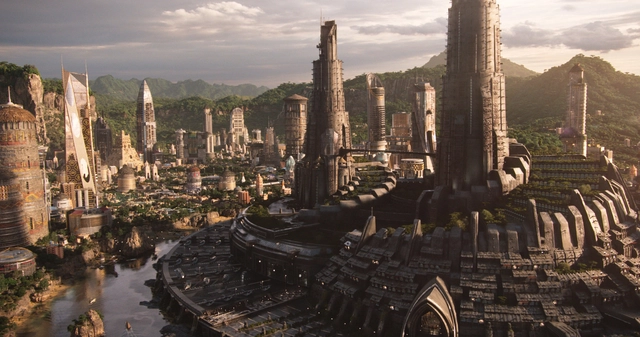
Image by Wilfredo Rafael Rodriguez Hernandez, CC0, via Wikimedia Commons.
A radiant Rio de Janeiro, bathed in sunlight and carried by the ocean breeze. The beach is full of life—children run across the sand, families enjoy their time together, and laughter drifts through the air. This vibrant postcard from the 1970s, depicting a Cidade Maravilhosa exuding freedom and vitality, sets the stage for "I'm Still Here," a Brazilian film that film which recently won the Oscar for Best International Feature, marking a first for Brazilian cinematography. Further recognizing its merits, the film also received Oscar nominations for Best Actress and Best Picture. The film's setting provides a rich backdrop for exploring the urban landscape of Rio during a pivotal period in its history. As the story unfolds, this bright and open setting gives way to the architectural and urban impacts of the fear and uncertainty of the military dictatorship that ruled Brazil for over two decades.
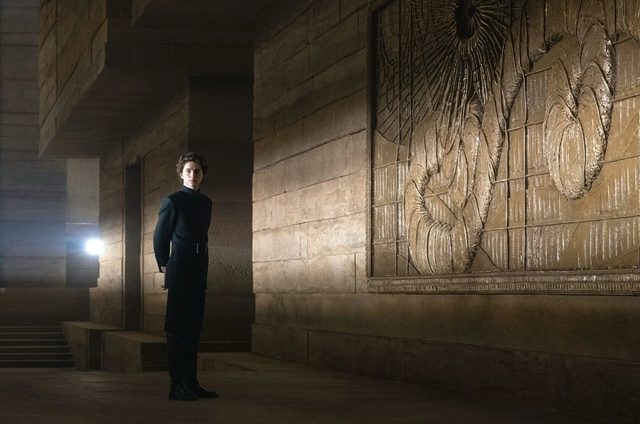
Imagine a world thousands of years into the future, one where humanity has conquered planets from galaxies away, only to default to a neofeudalistic social order in a constant power struggle, all built upon an intricate tapestry of cultures and religions and set in a harsh yet vivid landscape that becomes a character in and of itself. This was the challenge faced by director Denis Villeneuve and production designer Patrice Vermette in creating the cinematic adaptation of Frank Herbert's 1965 novel. The two Dune movies, released in 2021 and 2024, were conceived as a whole and therefore share a coherent style and cinematic expression. Beyond aesthetics, the environment and architecture of Dune present a lived-in, believable world, one that anchors the action and characters, silently offering invaluable insights into the values and mythology of each civilization.
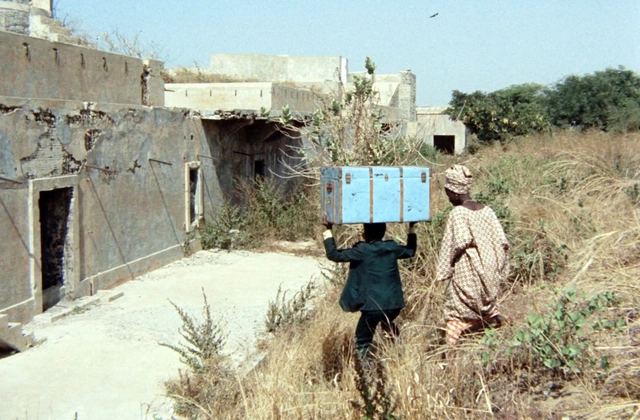
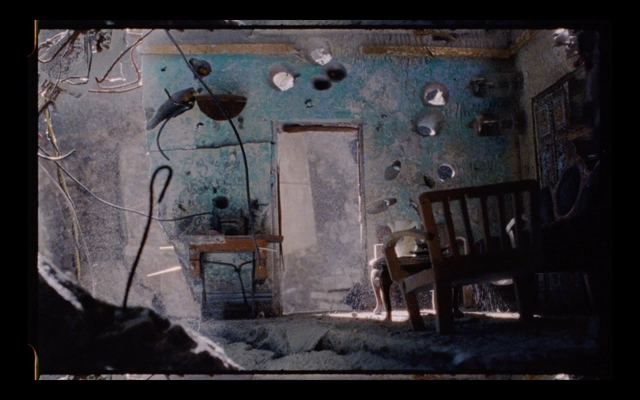
Abandoned house in "Touki Bouki". Image Courtesy of Janus Films
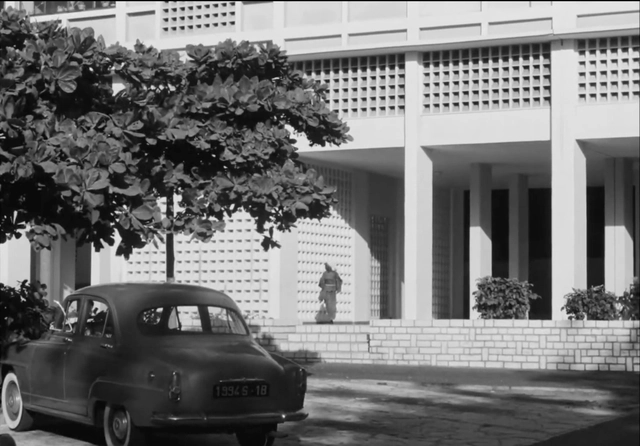
Simultaneously gripping, disconcerting, and chaotic, Djibril Diop Mambéty’s Touki Boukiis an exhilarating cinematic ride. The 1973 drama — the first full-length film by the Senegalese director — is the fantastical narration of a young couple in Dakar, eager to escape the Senegalese capital for the allure of Paris. It’s a character-driven film in many ways, primarily centered on the couple’s adventures, but it is also a subtle visual examination of the urbanism of post-independence Dakar, where the city and its architecture are essential fixtures in a surreal storyline.
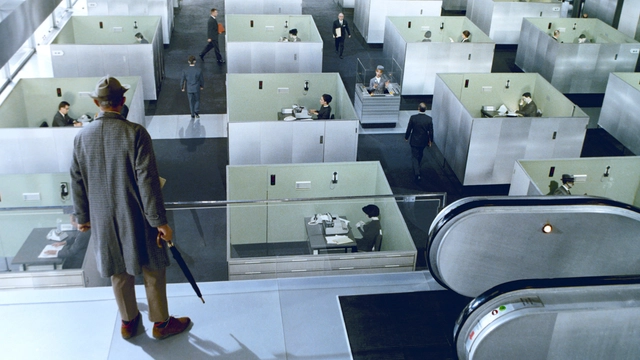
Playtime (Jacques Tati, 1967). Via film screenshot
Of all arts, there is one that is truly capable of embracing architecture, and that is the cinema. The ability to represent spaces, moving in the course of time, brings cinema closer to architecture in a way that goes beyond the limitations of painting, sculpture, music - for a long time considered to be the art closest to ours - and even of dance. Both in cinema and in architecture space is a key subject, and although they deal with it in different ways, they converge by providing a bodily - and not only visual - experience of the built environment.
After Yang is a science fiction film written, directed, and edited by Kogonada - a South Korean-born American filmmaker known for his video essays on audiovisual content analysis. The main plot of the film follows the story of a family trying to repair their damaged artificial intelligence in a post-apocalyptic world connected by technology and nature.
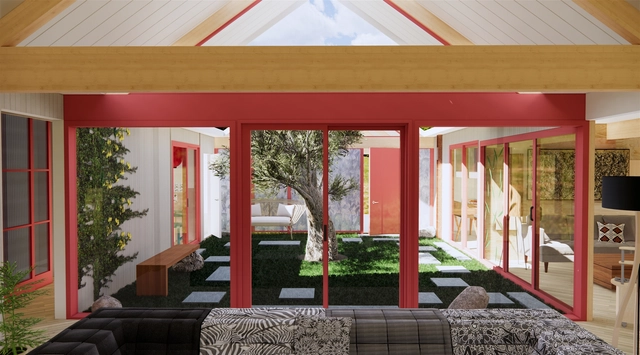
Alexandra Schaller, in charge of production design and the appearance of the sets, imagined a future that translates these considerations: From the family house that recovers the original design by Joseph Eichler of the 1960s, going through the importance of outdoor space and vegetation, to each of the materials that had to be non-disposable, renewable or biodegradable.
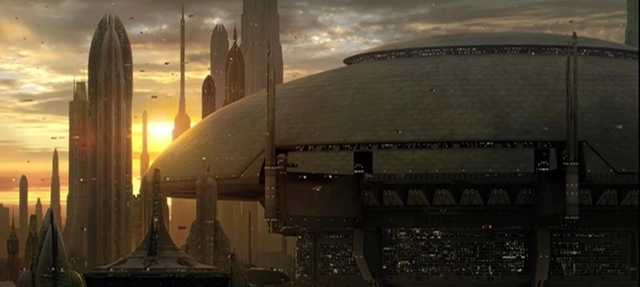
The Senate Building, Coruscant . Image via Star Wars, Revenge of the Sith / George Lucas
Depicting architectural visualizations of the future is no easy feat, so it makes much sense for designers to use aspects of our existing architecture as a foundation for these fictional worlds. Despite recent advancements in terms of animation technologies and CGI, there is still substantial use of existing architecture to provide tangible structural elements in film.
In terms of recycling architectural aesthetics, elements of the past and future are often integrated to create a hybridized style, an amalgamation of Retro, Dystopian, Modernist and Futuristic themes. From the resurgence of ancient pyramids and temples, to skylines reminiscent of the city of New York, visualizations vary depending on different notions of what our future may look like.
Storytelling is undoubtedly one of the oldest informative tools; a universal language that has transcended generations and cultures, and has been adapted into different media such as video games, theater, and film. Regardless of how old the narratives are, the success of these adaptations relies heavily on production - the visual and audible elements - and their ability to allow viewers to fully immerse themselves in the storyline. In this article, we explore the magical and captivating world of Marvel Cinematic Universe, and how architecture played an important role in contributing to the movies’ notorious storylines.
The stage is set in one of the most iconic “end of the world” movie scenes: Citizens of New York City are scrambling on top of taxis, quickly attempting to escape the slow-moving giant tsunami heading their way. In the rear-view mirror of a bus, a giant wave can be seen rushing up the narrow city grid. Searching for higher ground, the main characters, Sam and Laura, run up the famed stairs into the famed New York Public Library, and just as the revolving doors shut behind them, the pressure of the water smashes the windows, and water begins to rise. Without seeing it, we know that New York City and its iconic architecture will soon be destroyed.
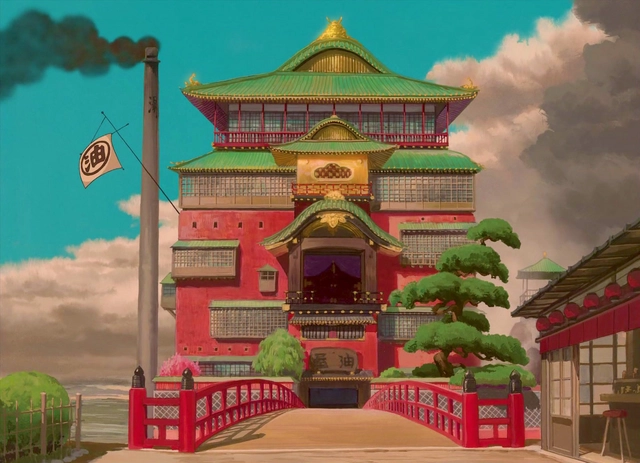
Still from 'Spirited Away' (2001). Image Courtesy of Studio Ghibli
Writers in film and animation, specifically pertaining to the genre of anime, endeavor to incorporate varied architectural backdrops to assist them in telling their stories, with influences ranging from medieval villages to futuristic metropolises. Architecture as a subject includes a wide array of elements to study, with each architectural era further inferring its context and history through its design alone. However, in film and anime, all of the contexts behind a building’s design can be condensed into a single frame, powerful enough to tell a thousand stories.
Videos
Courtesy of A Broken House, The New Yorker Documentary directed by Jimmy Goldblum
“A Broken House” is a documentary directed by Jimmy Goldblum that highlights the story of Mohamad Hafez, a Syrian native that moved to the US on a single-entry visa to study architecture and was not able to return home. Facing his fate, he channeled his homesickness in his artwork, and started producing miniature sculptures of his hometown, in order to build the “Damascus of his memories”.
“If you can’t get home, why don’t you make home”. Telling the story of the human being that lived within, the architectural project gained a political dimension after the eruption of the Syrian civil war, portraying the extent of the destruction suffered by the city, humanizing refugees, and sharing their stories.
Videos
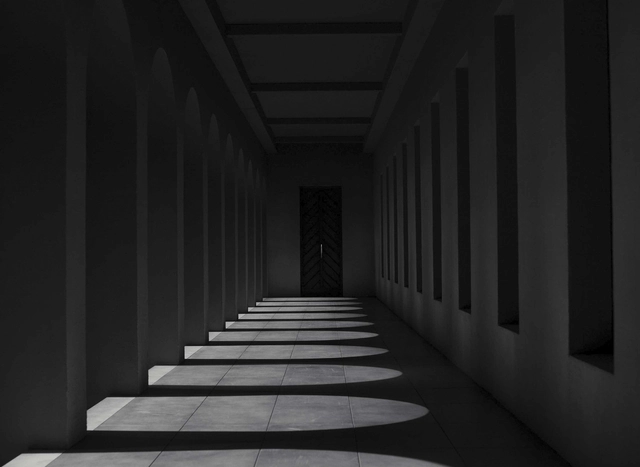
Set Stills. The Tragedy of Macbeth. Image via Stefan Dechant
Stefan Dechant is a production designer with over 25 years of experience in the industry working alongside reputable filmmakers like James Cameron (Avatar), Tim Burton (Alice in Wonderland), and Sam Mendes (Jarhead). Recently, Stefan served as the production designer for the upcoming Apple TV+ film 'The Tragedy of Macbeth' directed by Joel Coen. Why did this interest us immediately? Because he had the task of creating 35 Black & White, Abstract Sets.
In the following interview with Stefan, he tells us all about the inspiration behind the aesthetic, his working process between sketches and digital, and finally the stage of building all of this. Read more below.
When examining the world of African cinema, there are few names more prominent than that of Senegalese director Ousmane Sembène. His films ‘La Noire de…’ and ‘Mandabi’, released in 1966 and 1968 respectively, are films that tell evocative stories on the legacies of colonialism, identity, and immigration. And whilst these two films are relatively slow-spaced, ‘slice-of-life stories, they also offer a valuable spatial critique of the setting where the films are based, providing a helpful framework to understand the intricacies of the post-colonial African city, and the contrast between the African and European metropolises.
If you haven't seen Respect, I highly recommend it. The Liesl Tommy-directed biographical film based on the life of American singer Aretha Franklin visually takes us back to the 1960s through a successful set work. Here, Production Designer, Ina Mayhew had the job of creating a series of locations where color palettes undoubtedly evoke more than emotions: Her suburban home from her childhood in Detroit, the sassy jazz clubs of New York City, her luxurious Upper West Side apartment, and finally her ultramodern home in Los Angeles.
Jacinta Leong is a Production Designer who enjoys the creative and collaborative process of designing environments for narratives. Her work on several movies looks ahead into the future - especially in relation to technology in society. She was recently the Production Designer on the film 2067; Art Director on Alien: Covenant, Mad Max: Fury Road, andPacific Rim: Uprising; Assistant Art Director on Star Wars Episode II-III; and Set Designer inThe Matrix, among others.
We've talked with Leong to get to know her thoughts on the connection between films and architecture. The following interview explores her beginnings and inspirations, as well as her work process in the era of digital tools.
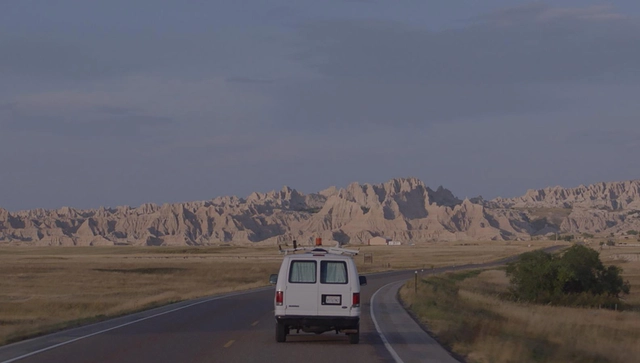
“No, I’m not homeless. I’m just houseless. Not the same thing, right?" Questioning the notion of home and house, Nomadland tells the story of a sixty-year-old woman who loses everything during the great recession, leaving her hometown after the collapse of the sole industry that supported the rural settlement and the death of her husband. She decides consequently to embark on a journey and experience life as a modern-day nomad, setting off in her van through the vast landscape of the American West.
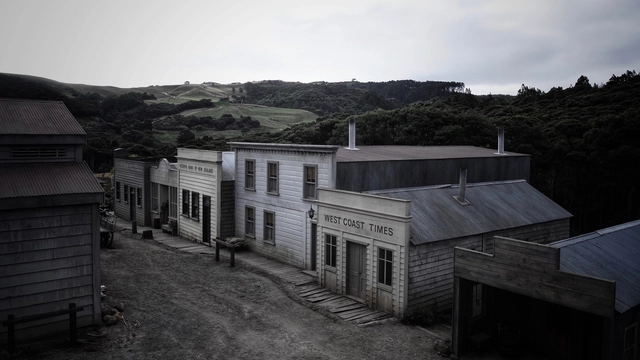
Production designer Felicity Abbott is behind the great staging of The Luminaries, a mini-series that takes place in New Zealand during the 1860s West Coast Gold Rush. In the below interview, she tells us her thoughts on the connection between films and architecture, addressing her work process and the main challenges on this set.
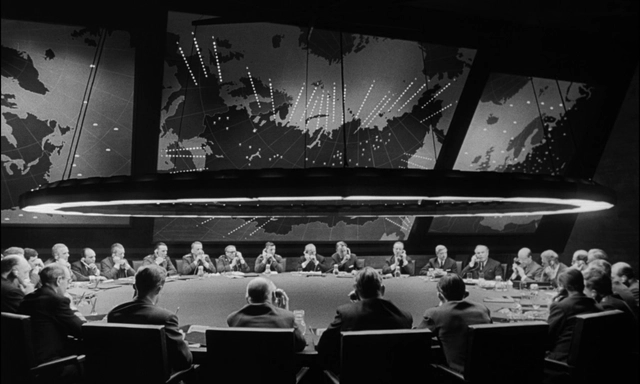
Dr. Strangelove or: How I Learned to Stop Worrying and Love the Bomb is one of those rare movies that not only gets better with time but also presents a new layer of meaning with each viewing. Recently I’ve come to believe that it’s the most important movie about environmentalism ever made, not only because of its warning about nuclear annihilation, which is obvious, but because of its sly critique of the idea of professionalism and the nature of work.
https://www.archdaily.com/944214/dr-strangeloves-strange-environmental-lesson-for-architectsChristopher L. Cosper