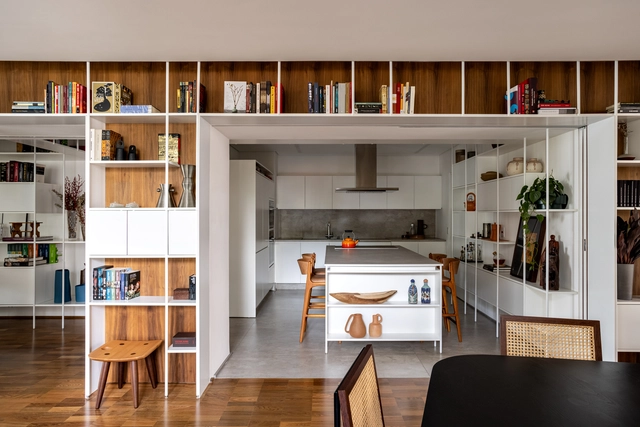
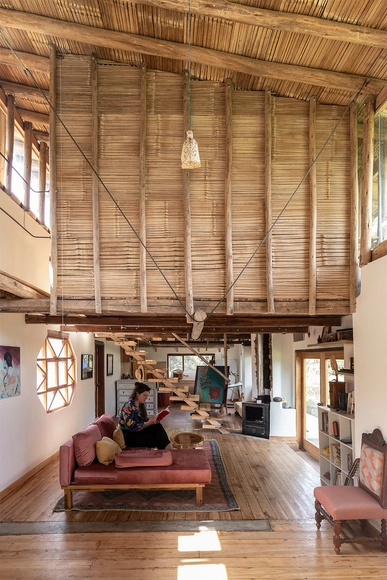
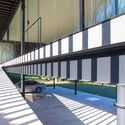
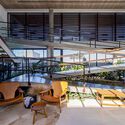
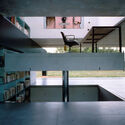
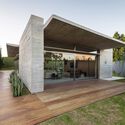
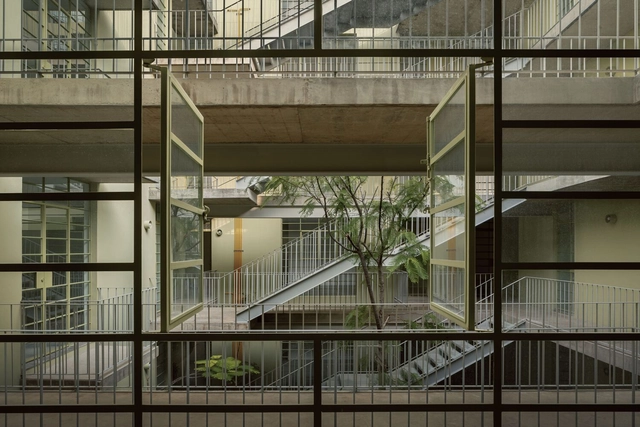
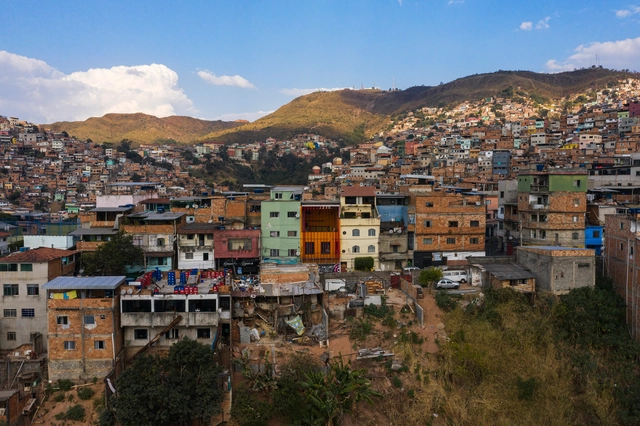
Beyond the wide variety of landscape, environmental, economic, social, and cultural particularities that distinguish each region of Latin America, the renovation of interior spaces that make up domestic life generally focuses on achieving the greatest possible integration of environments along with providing flexibility, spaciousness, and better conditions for ventilation and natural lighting. Seeking to revalue unused spaces and/or give them a second life, renovations aim to transform the ways of living through strategies capable of involving the restoration of materials, the preservation of structures, the maintenance of installations, and more.
Refurbishment is an increasingly common and fundamental practice in contemporary architecture. More than a trend, it represents a crucial strategy for reducing resource consumption and minimizing waste generation, providing clear advantages over brand-new constructions. In the Latin American context, this philosophy stands out for its unique characteristics. It intricately weaves circularity and climate action with local materials, addressing economic challenges while harmonizing Indigenous, colonial, and contemporary influences.
Housing plays a crucial role in this context, where traditional materials and construction techniques define each project's distinctiveness and integrate it into the community's social fabric. Throughout Latin America, regional identities are deeply embedded in refurbishment efforts, ranging from restoring facades and repurposing wood to reimagining the use of demolition waste. The adaptation of spaces in these projects is influenced by their unique identities and geographic conditions, rooted in social and cultural expressions.
https://www.archdaily.com/1019030/housing-refurbishment-in-latin-america-10-projects-that-excel-in-the-use-of-materialsEnrique Tovar
These days, it is common to hear multiple voices addressing the diverse issues of contemporary architecture. The topics are numerous, ranging from sustainability and inclusion to social justice and the crisis in land use. At first glance, there is no common ground where all these concepts can coexist transversally. However, if we look back, we can see that beyond the formal architectural concepts, the true purpose of architecture (probably) lies in the people and the lives that develop within it.
Thus, many would argue that life is likely more important than architecture, which could open up a broad debate. What is certain is that currently, narratives and voices are emerging and consolidating, aimed at renewing architectural tools and languages. This transformation seeks to turn the built environment into a space that promotes a more equitable and optimistic future for all. One of these voices is that of Tatiana Bilbao, recognized for her process-centered approach where life and human interactions play a crucial role in defining habitats.
https://www.archdaily.com/1018888/life-changes-in-seconds-but-architecture-never-changes-in-conversation-with-tatiana-bilbaoEnrique Tovar
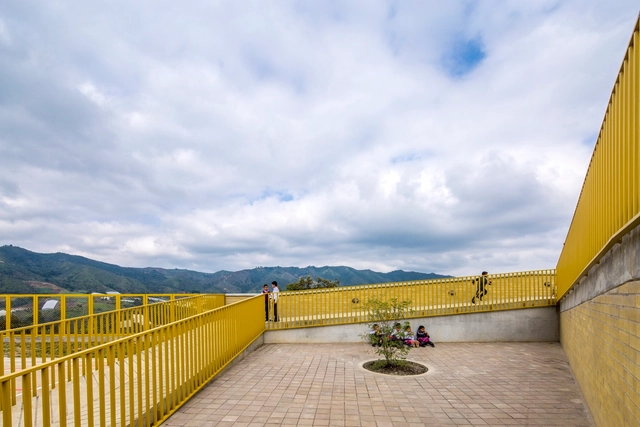
Founded by architects Felipe Mesa and Federico Mesa, the Plan:b arquitectos studio is located in the city of Medellín, Colombia, bringing together building design, participation in academic activities, and the construction of concepts capable of connecting architecture with the urgent realities of everyday life. Understanding the architectural project as a provisional pact, permeable configuration, and positive expression of eco-social constraints, they have constructed a large number of buildings of various scales and programs since 2000, ranging from public, educational, and sports spaces to housing, offices, hotels, and installations.
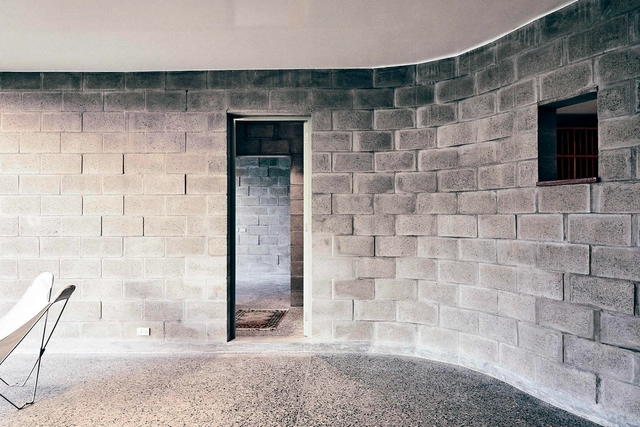
Beyond being a prefabricated material currently produced in large quantities, the use of concrete blocks in architecture continues to evolve to meet the demands and needs of contemporary societies that are constantly changing. Whether in interior or exterior spaces, their use can align with concepts of circular economy, resource efficiency, sustainability, and more, with the goal of creating habitable spaces while also understanding their constructive advantages and disadvantages, their expressive and aesthetic qualities, and so on.
Organizing, shaping, stacking. Transforming raw materials from the soil into architecture. This is a challenge that many Latin American architects embrace, demonstrating that scarcity can be daunting but also a rich opportunity to unleash creativity.
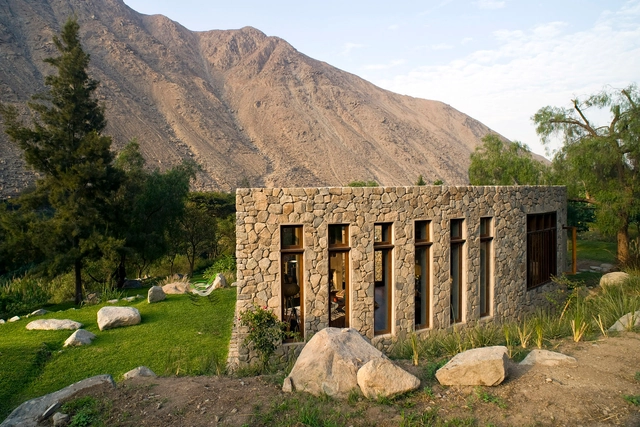
The use of materials extracted from the local soil serves a dual purpose. In regions with limited industrialization, using locally sourced materials makes economic sense because industrial materials such as concrete and steel are expensive and often require long-distance transportation, adding to their cost. Environmentally, choosing locally sourced materials from the start of a project reduces transportation needs and carbon emissions, supporting sustainability efforts.
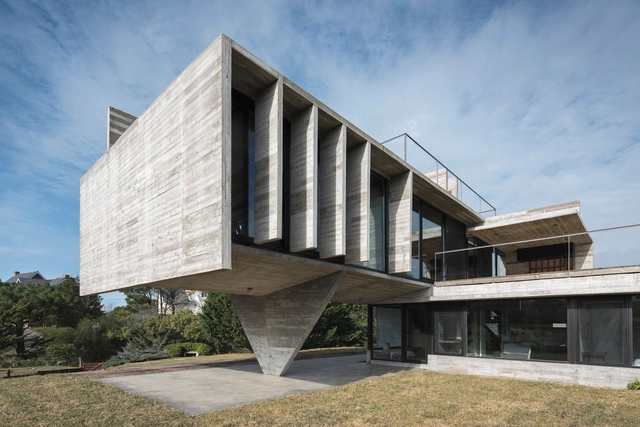
In response to the diverse topographies and natural conditions throughout the Argentine territory, the works of Luciano Kruk propose an architecture that works in harmony with the environment, the landscape, and the nature in which they are situated. Whether immersed in a forest, on sloping terrain, or on a rural plain, among other geographies, his intention is to enhance the relationship between the interior and exterior of the architecture, using concrete as the main material in most of his projects.
In the quest to promote a more sustainable construction where the use of natural materials contributes to the transmission of local traditions and cultures, an increasing number of architecture projects are exploring different resources and techniques to address environmental, economic, or social concerns. Understanding the benefits and qualities of materials such as color or texture influences the final experience of those who inhabit, walkthrough, or visit spaces. Therefore, understanding their technical, constructive, aesthetic, and functional properties should be part of the design process from the beginning.
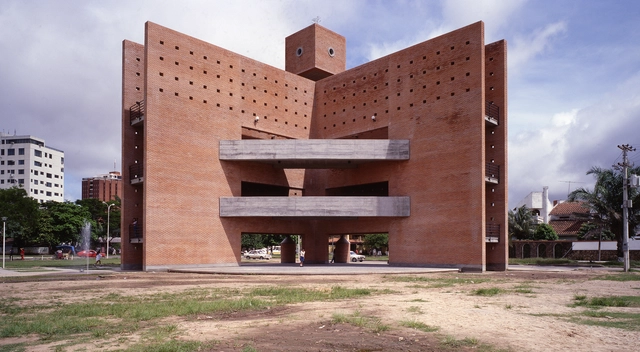
Santa Cruz de la Sierra is located on the eastern plains of Bolivia, on the banks of the Pirai River. Being the most populous city in the country, it reveals an extreme social and cultural complexity surrounded by extensive pampas and plains. Additionally, it represents one of the most developed cities in Bolivia, with a high municipal indicator of sustainable development. Delving into the importance of community architecture, popular appropriation, the character of urbanity, and other concepts, this article explores the history behind the Summit of the Americas Monument through a series of narratives, documentations, drawings, and images captured by Pino Musi.
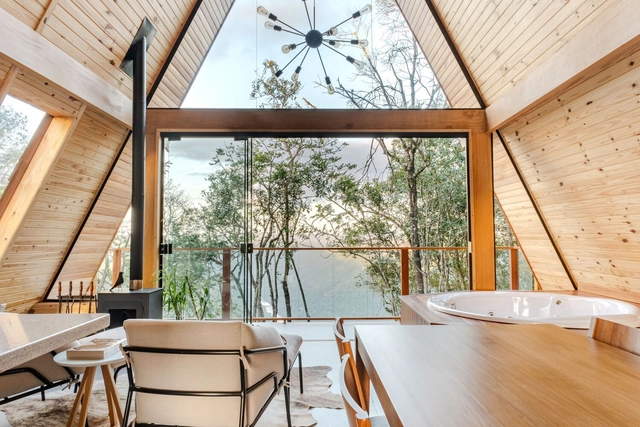
Acquiring diverse expressive possibilities within interior design, the use of wood in regions with a wide range of climates and temperatures such as Mexico, Brazil, Argentina, Uruguay, Chile, Colombia, or Ecuador enables the creation of attractive and captivating spaces that capture the attention of their users by contrasting, blending, or integrating with their surrounding environment. Being a natural element and presenting a negative carbon footprint at the end of its life cycle, wood offers multiple finishes, textures, and tones that can be associated with being outdoors and providing, on some occasions, spaciousness, warmth, and relaxation at the same time.
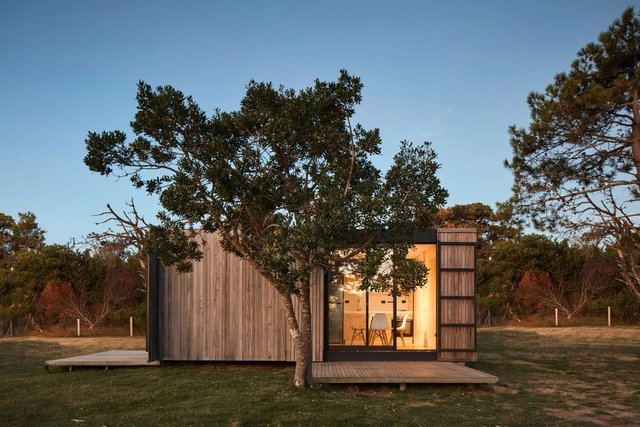
How can industrialization and environmental responsibility go hand in hand? What siting, technological, or constructive strategies can be developed without harming the surrounding landscape? The application of modular design in architecture has been in practice for years, with a history involving the pursuit of standardization and modular coordination among materials, products, and more. Over time, it has been complemented by various environmental, sustainable, ecological, and economic factors to achieve the adaptability and functionality desired by its inhabitants.
In a constant search to find new ways to reduce costs and construction times, modular architecture emerges as an opportunity to implement various methods, technologies, and techniques to design livable spaces using separate repetitive elements such as modules. As Tom Hardiman, executive director of the Modular Building Institute (MBI), maintains, "Modular" is not about a construction product but rather a construction process.
CityMakers, The Global Community of Architects Who Learn from Exemplary Cities and Their Makers, is working with Archdaily to publish a series of articles about Barcelona, Medellin, and Rotterdam. The authors are the architects, urban planners, and/or strategists behind the projects that have transformed these three cities and are studied in the "Schools of Cities" and "Documentary Courses" made by CityMakers. On this occasion, Victor Restrepo, Coordinator of CityMakers in Medellin, presents his article "Medellin: A Case Study".
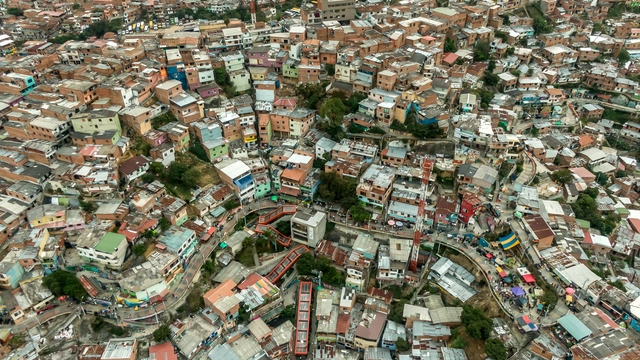
Medellín stands as an inspiring example for many cities worldwide. It is a city that transitioned from deep collective fear to hopeful enthusiasm for urban and social life characterized by quality and coexistence. The city's crisis has always been associated with violence and drug trafficking. However, this crisis is more structural and profound, it responds to many more factors, some of which are associated with the accelerated growth of its population, as in many Latin American cities.
What is symmetry in architecture? Why is it used to design spaces? What advantages and disadvantages does it present compared to other projection tools such as rotation, translation, and/or repetition? Contemporary architecture evolves day by day by implementing different strategies to create habitable spaces where people can carry out their daily activities, meet their needs, and more. Considering symmetry as a possible means of organization, distribution, and movement in the plane, architecture expresses and communicates largely through graphic means (floor plans, volumes, photographs, etc.) in a relationship that seeks coexistence, in most cases, of spaces, proportions, and scales in harmony.
Multifaceted and filled with complexities, the landscape of architecture and urbanism in Latin America unveils specific nuances and challenges in light of the issues faced by various countries, such as social inequality, violence, and rapid urban growth. Within this context, architectural practice assumes a significant role in crafting feasible and appropriate solutions tailored to each reality, emphasizing the importance of reaffirming local references and narratives in this process.
In the face of the established hegemony, particularly by North America and Europe, which often marginalizes Latin American architectural and urban achievements, especially those not even recognized as such, the appreciation of this diversity and complexity becomes imperative for any consideration and intervention in the region. Below, we have selected six interviews that aid in understanding the architecture of Latin America and contribute to a more contextualized and sensitive approach to its needs, potential, and richness.
Architecture, understood as a cultural product, is strongly influenced by diverse stimuli that include historical, geographical, and cultural aspects, among others. Together, these elements form a heritage that may (or may not) endure through time. Although architecture tends to adapt to each culture, modeling its traditional techniques according to its context and shaping the surrounding environment, there is no guarantee that the traditional elements in it will endure or remain unchanged over time. This is largely due to the constant evolution of society and technology, which sometimes tends towards universality and the adoption of a common language, rather than one of their own.
Given this scenario, it is essential to explore an approach where innovation and technology do not replace tradition and artisanal production; instead, they arise as a means of exploration towards emerging routes. Adopting novel techniques and innovative materials that are adapted to specific local needs makes it possible to maintain an authentic expression that responds to the demands of the environment. This approach, which could be termed neo-craft, allows for the preservation of a distinct voice that reflects the authenticity of the local context. At the same time, it contributes to a universal perspective, merging the local with the global.
https://www.archdaily.com/1012790/at-the-intersection-of-innovation-and-tradition-the-talavera-projectEnrique Tovar
In the context of global initiatives to promote energy efficiency and the decarbonization of buildings, Latin America is at the center of the debate. The International Seminar on Sustainable and NetZero Buildings 2023, held in Bogotá and organized by CCCS, IEA, UNIANDES, CAF, and CEELA, aimed primarily to create a space for the exchange of experiences, such as Oliver Schütte's No Footprint House, while simultaneously conducting a review of government policies and the implementation of norms and standards in the region.
Among panels and conferences featuring Clara Camarasa, Nicola Borregaard, Laura Chapa, Paola Valencia, Iván Osuna, Juan Carlos Vega, Angélica Ospina, and Diego Velandia, five main learnings emerged as lessons: from creating more relevance and energy calculations to the development of the timber industry - and certifications.