1. ArchDaily
  2. Lateral Office

Lateral Office: The Latest Architecture and News

Designing with Smoke: The Chimney as Architectural and Environmental Instrument

Subscriber Access | 

Chimneys are among the most quietly persistent elements in architectural history. Yet their presence persists in nearly every cultural and climatic context, serving as a technical feature and a spatial, atmospheric, and symbolic device. It populates dense city skylines and anchors rural horizons alike, its vertical silhouette as ordinary as a window or a doorframe. This apparent ordinariness is deceptive. The chimney is one of the few architectural components that links the intimate scale of interior life with the expansive forces of the environment. For architects and designers, the necessity of the chimney presents a choice: to let it recede quietly into the building's functional fabric or to amplify it as a central, expressive element that shapes a project's identity.

Designing with Smoke: The Chimney as Architectural and Environmental Instrument - Image 1 of 4Designing with Smoke: The Chimney as Architectural and Environmental Instrument - Image 2 of 4Designing with Smoke: The Chimney as Architectural and Environmental Instrument - Image 3 of 4Designing with Smoke: The Chimney as Architectural and Environmental Instrument - Image 4 of 4Designing with Smoke: The Chimney as Architectural and Environmental Instrument - More Images+ 47

Beyond Human-Scale: Designing for Ecosystems, Migration and Machines

The human scale spans both physical dimensions and sensory perception. Designers create spaces and objects like steps, doorways and chairs that are closely aligned to human measurement and how we see the world. But as we look beyond the human scale, new ideas and typologies emerge that help us rethink how we conceptualize architecture and build for the future.

Beyond Human-Scale: Designing for Ecosystems, Migration and Machines - Image 1 of 4Beyond Human-Scale: Designing for Ecosystems, Migration and Machines - Image 2 of 4Beyond Human-Scale: Designing for Ecosystems, Migration and Machines - Image 3 of 4Beyond Human-Scale: Designing for Ecosystems, Migration and Machines - Image 4 of 4Beyond Human-Scale: Designing for Ecosystems, Migration and Machines - More Images+ 8

"Sometimes a Building is Not Enough": Lola Sheppard on Architecture as a Cultural Act

Subscriber Access | 

Architecture is inherently defined by its cultural and environmental context. From the climate crisis and questions of exurbanism to architecture’s role in rural and remote communities, broader conditions shape how we design. Embracing these dynamics, architect Lola Sheppard of Lateral Office has created a body of work that directly responds to the demands of the 21st century. Through critical and deft interventions, she is exploring new typologies made possible by an architecture that brazenly confronts today.

"Sometimes a Building is Not Enough": Lola Sheppard on Architecture as a Cultural Act - Arch Daily Interviews"Sometimes a Building is Not Enough": Lola Sheppard on Architecture as a Cultural Act - Arch Daily Interviews"Sometimes a Building is Not Enough": Lola Sheppard on Architecture as a Cultural Act - Arch Daily Interviews"Sometimes a Building is Not Enough": Lola Sheppard on Architecture as a Cultural Act - Arch Daily InterviewsSometimes a Building is Not Enough: Lola Sheppard on Architecture as a Cultural Act - More Images+ 20

Speculative Architecture: Where are the Contemporary Equivalents of the 60s and 70s Radical Visions?

As the forces shaping our built environment have shifted, engaging technology, networks, and complex systems, architects need to envision more than the physical space but produce narratives on how to best operate within this new societal landscape. In this context, speculative architecture seems to have never been more critical; therefore this article takes a closer look at the mediums that currently question the existing conditions of the built environment and explore new architectural possibilities.

Speculative Architecture: Where are the Contemporary Equivalents of the 60s and 70s Radical Visions? - Films & ArchitectureSpeculative Architecture: Where are the Contemporary Equivalents of the 60s and 70s Radical Visions? - Films & ArchitectureSpeculative Architecture: Where are the Contemporary Equivalents of the 60s and 70s Radical Visions? - Films & ArchitectureSpeculative Architecture: Where are the Contemporary Equivalents of the 60s and 70s Radical Visions? - Films & ArchitectureSpeculative Architecture: Where are the Contemporary Equivalents of the 60s and 70s Radical Visions? - More Images+ 3

Nomadic Architecture: A New Way Of Living on the Go

Subscriber Access | 

The romantic notion of wanderlust, and having the ability to freely move away from the familiar with minimal possessions is a desire that almost everyone has experienced at some point in their lives. The nomadic lifestyle is so appealing because it represents the possibility of rebelling against symbols of stability and permanence in favor of exploring the natural environment and having the ability to adapt to a variety of living conditions with ease. This desire has given rise to movable structures for the urban vagabond that can transform into a temporary office, home, or even an entire community. 

Playful Urban Design Intervention by Lateral Office and CS Design Takes Over New York City's Garment District

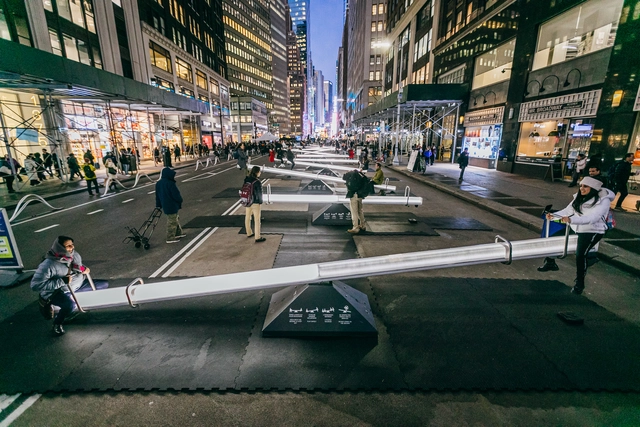
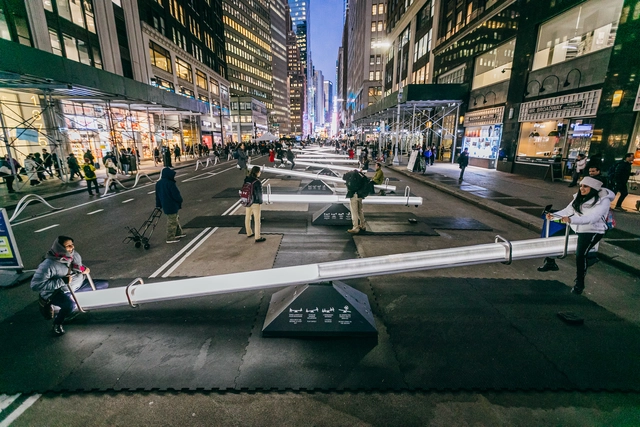
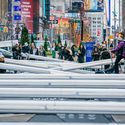
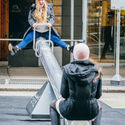
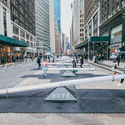
Lateral Office, the Canadian experimental design practice that operates at the intersection of architecture, landscape, and urbanism, in partnership with CS Design, installed 12 seesaws in New York City's Garment District. The urban intervention will stay on display until the 31st of January 2020.

Playful Urban Design Intervention by Lateral Office and CS Design Takes Over New York City's Garment District - Image 1 of 4Playful Urban Design Intervention by Lateral Office and CS Design Takes Over New York City's Garment District - Image 2 of 4Playful Urban Design Intervention by Lateral Office and CS Design Takes Over New York City's Garment District - Image 3 of 4Playful Urban Design Intervention by Lateral Office and CS Design Takes Over New York City's Garment District - Image 4 of 4Playful Urban Design Intervention by Lateral Office and CS Design Takes Over New York City's Garment District - More Images+ 8

AD Interviews: Lateral Office at the Chicago Architecture Biennial

Subscriber Access | 

Lateral Office’s work follows its namesake, looking horizontally at problems and solutions across various fields. Exploring the intersections of systems, environment and architecture, the Canadian firm often situates its projects in unusual climatic and topographic conditions, finding ways to consolidate multi-disciplinary problems with multi-disciplinary solutions.

Lateral Office’s exhibit at the Chicago Architecture Biennial, “Making Camp” looks at strategies of city planning and adapts them to the wilderness, forming new typologies of the traditional campsite. Like their previous project, Arctic Adaptations (special mention at the Venice Biennale), “Making Camp” explores the way architecture can respond to, and take advantage of nature, simultaneously preserving and using the natural environment.

“Impulse” Installation Turns Montreal into a Musical Playground

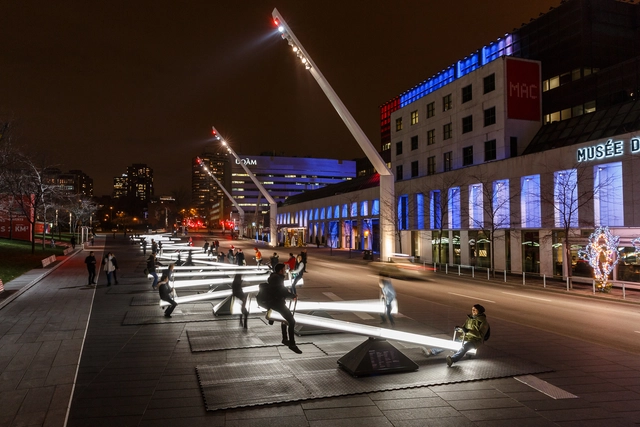
The product of Toronto-based Lateral Office and Montreal-based CS Design, in collaboration with EGP Group, Mitchell Akiyama, Maotik and Iregular, “Impulse” is a winter installation in the city of Montreal. Thirty giant seesaws and a series of video-projections on surrounding building facades, all with accompanying music, transform the Place des Festivals into an “illuminated playground.” The project was selected as the winner of an open competition this past summer, for the sixth annual Luminothérapie event. Read more about this interactive installation after the break.

Lateral Office's 2014 Venice Biennale 'Arctic Adaptations' Exhibition To Tour Canada

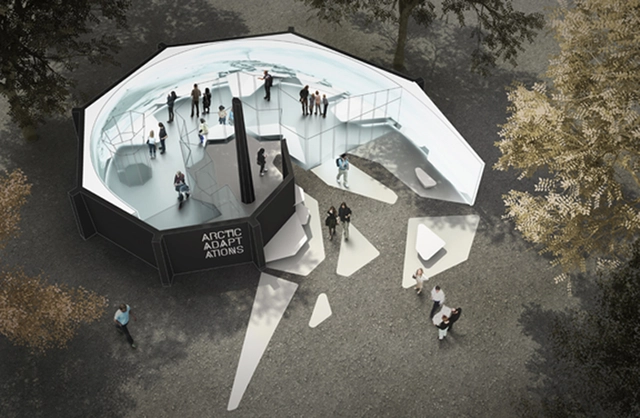
Lateral Office's Arctic Adaptations exhibition, which was recognised with a Special Mention at the 2014 Venice Biennale, will travel make its debut in Canada at the Winnipeg Art Gallery this week before heading to Whitehouse, Vancouver, and Calgary. The exhibition "surveys a century of Arctic architecture, an urbanising present, and a projective near future of adaptive architecture in Nunavut" though interactive models, photography, and topographical maps of the twenty five communities of the area, as well as Inuit carvers’ scale models of some of the most recognised buildings in the territory. In addition, it proposes a future of adaptive and responsive architecture for Canada's northern territories.

The Extreme Architecture of the Arctic Regions

In the cities of the Arctic Circle, dramatic change is afoot. The region faces challenges most obviously from environmental change, but economic and cultural challenges also lie ahead, thanks to factors such as the decline of the mining and fishing industries that supported many of the Arctic's settlements, and the rapid modernization among Northern indigenous communities. In an interesting article for Metropolis Magazine, Samuel Medina takes a long look at the architects and urbanists who are making a difference in a context where "Architecture can’t really survive" - from the SALT Festival which celebrates the culture of the Arctic communities, to the plan to move the entire city of Kiruna two miles to the East, the article is a fascinating look at the extreme architecture of this hostile region. Read the article in full here.

Inside "Arctic Adaptations" - Special Mention Winner at the Venice Biennale 2014

UPDATE: Our interview with Lateral Office is now up!

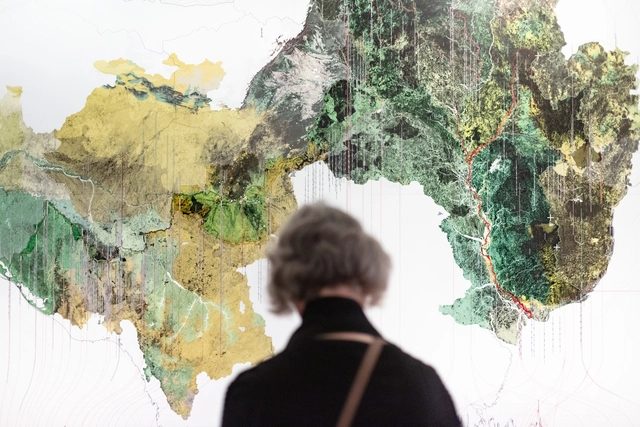
For this year's Venice Biennale, the Canadian Pavilion explored the ways modernity was absorbed in the extreme environment of Nunavut, Canada. As Nunavut is the newest, northernmost, and largest territory (with an area of over 2 million square kilometers) in Canada, Lateral Office hoped to shed on light on what Mason White called "modernity at an edge." Wowing the jury with their research and design, Arctic Adaptaptions: Nunavut at 15 garnered Mason White, Lola Sheppard, Matthew Spremulli, and their team a Special Mention during Saturday's awards ceremony.

The geographic and cultural "edgeness" of Nunavut is examined over different parts of the exhibition in three mediums: a recent past, a current present and a near future. Matthew Spremulli explained that Arctic Adaptions sought to "look beyond standards" to see how the fundamentals of architecture are impacted in an area like Nunavut. Given the specific and acutely unique challenges to building and designing in an environment that, understandably, resists being colonized by southern models, the curators presented a case for adaptation.

Inside "Arctic Adaptations" - Special Mention Winner at the Venice Biennale 2014 - Image 1 of 4Inside "Arctic Adaptations" - Special Mention Winner at the Venice Biennale 2014 - Image 2 of 4Inside "Arctic Adaptations" - Special Mention Winner at the Venice Biennale 2014 - Image 3 of 4Inside "Arctic Adaptations" - Special Mention Winner at the Venice Biennale 2014 - Image 4 of 4Inside Arctic Adaptations - Special Mention Winner at the Venice Biennale 2014 - More Images+ 20

Venice Biennale 2014: Lateral Office to Represent Canada with Nunavut Exhibition

The Canada Council for the Arts and the Royal Architectural Institute of Canada (RAIC) has announced "Arctic Adaptations: Nunavut at 15" as winner of a national juried competition to represent Canada at the 2014 Venice Biennale in Architecture. Lateral Office of Toronto will organize and curate an exhibition designed to celebrate the 15th anniversary of Canada's largest but least populated northern territories, known for its pristine arctic wilderness and Inuit lifestyle.

Read more about Canada's contribution to the Biennale after the break.