1. ArchDaily
  2. Lars Müller Publishers

Lars Müller Publishers: The Latest Architecture and News

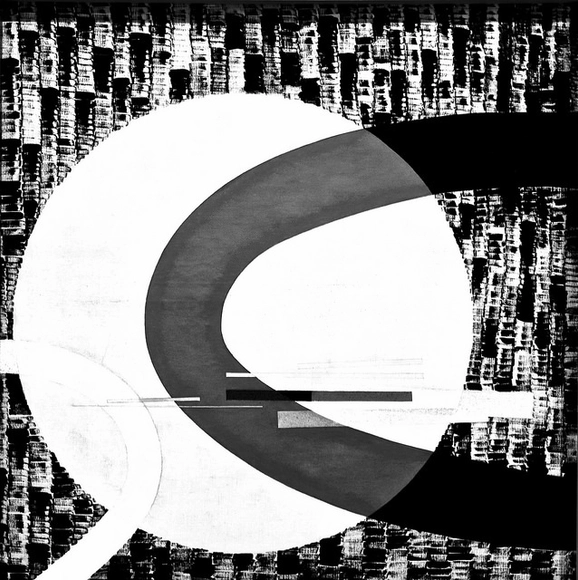
The Aesthetics of Power: Soviet Modernism Meets Uzbek Tradition in Tashkent’s Palace of Peoples’ Friendship

Subscriber Access | 

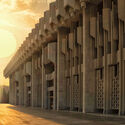
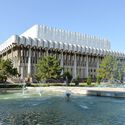
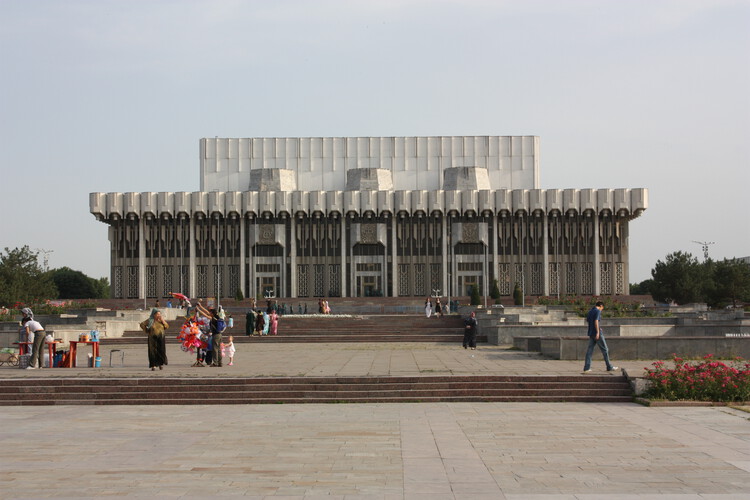
Tashkent, the capital of Uzbekistan and one of the oldest cities in Central Asia, has long been shaped by a hybrid culture. Located at a strategic point along the Silk Road, the city developed an architectural tradition defined by inner courtyards, domes, decorative ceramics, and Islamic geometric patterns. The annexation by the Russian Empire in the 19th century introduced administrative buildings, orthogonal squares, and straight avenues, creating a dual urban fabric — between the “old” Eastern city and the “new” European one — in which contrasts and overlaps became the norm.

During the Soviet period, when Tashkent became the capital of the Uzbek Soviet Socialist Republic and received intense migration from across the union, the city was transformed into a modernist showcase. The coexistence between Islamic heritage and the ideology of socialist progress found a new inflection point with the 1966 earthquake, whose destruction triggered a large-scale reconstruction effort involving architects from across the USSR. Massive housing complexes, cultural institutions, and monumental buildings emerged, reinterpreting local motifs through ideological and technological language. It was in this context that the Palace of Peoples’ Friendship took shape.

The Aesthetics of Power: Soviet Modernism Meets Uzbek Tradition in Tashkent’s Palace of Peoples’ Friendship - Image 1 of 4The Aesthetics of Power: Soviet Modernism Meets Uzbek Tradition in Tashkent’s Palace of Peoples’ Friendship - Image 2 of 4The Aesthetics of Power: Soviet Modernism Meets Uzbek Tradition in Tashkent’s Palace of Peoples’ Friendship - Image 3 of 4The Aesthetics of Power: Soviet Modernism Meets Uzbek Tradition in Tashkent’s Palace of Peoples’ Friendship - Image 4 of 4The Aesthetics of Power: Soviet Modernism Meets Uzbek Tradition in Tashkent’s Palace of Peoples’ Friendship - More Images+ 3

Six of the Best Spatial Installations at Salone del Mobile 2017

With the 2017 Salone del Mobile now behind us, photographer Laurian Ghinitoiu has shared a collection of photographs from Milan Design Week. From housing prototypes to immersive "digital installations", the annual design show—which is often touted to be the fourth largest of any kind in the world—this year brought together a wide range of practitioners and design companies. In Milan, unusual collaborations are the order of the day.

Six of the Best Spatial Installations at Salone del Mobile 2017 - Image 1 of 4Six of the Best Spatial Installations at Salone del Mobile 2017 - Image 2 of 4Six of the Best Spatial Installations at Salone del Mobile 2017 - Image 3 of 4Six of the Best Spatial Installations at Salone del Mobile 2017 - Image 4 of 4Six of the Best Spatial Installations at Salone del Mobile 2017 - More Images+ 53

Nomadic Bookstore in Milan / AA Museum Lab & Lars Müller Publishers

Nomadic Bookstore in Milan / AA Museum Lab & Lars Müller Publishers - Temporary Stores, Beam, Column, HandrailNomadic Bookstore in Milan / AA Museum Lab & Lars Müller Publishers - Temporary Stores, ChairNomadic Bookstore in Milan / AA Museum Lab & Lars Müller Publishers - Temporary Stores, Table, BenchNomadic Bookstore in Milan / AA Museum Lab & Lars Müller Publishers - Temporary Stores, Facade, ArchNomadic Bookstore in Milan / AA Museum Lab & Lars Müller Publishers - More Images+ 11

Venice Biennale 2012: “Lars Müller Publishers - Book Fever”

Subscriber Access | 
Venice Biennale 2012: “Lars Müller Publishers - Book Fever” - Image 1 of 4
Courtesy of Lars Müller Publishers

Join the authors and editors of Lars Müller Publishers for a rare book signing opportunity with architects Wang Shu, Sou Fujimoto, and Steven Holl on August 28th at the 2012 Venice Architecture Biennale! This event will kick off the exhibition Lars Müller Publishers – Book Fever, which will feature sixty publications – new releases, bestsellers, milestones from the past, and rare treasures – for the public to explore.

Founded thirty years ago, Lars Müller Publishers’ carefully edited and designed publications on architecture, design, and contemporary art has lead them to become a renowned international publisher. One milestone you may remember was their release of Peter Zumthor’s Works (1998), which was the first survey of the oeuvre of the architect now known worldwide that set new standards for the monograph as a book genre.

Continue after the break for more details on the book signing and exhibition.