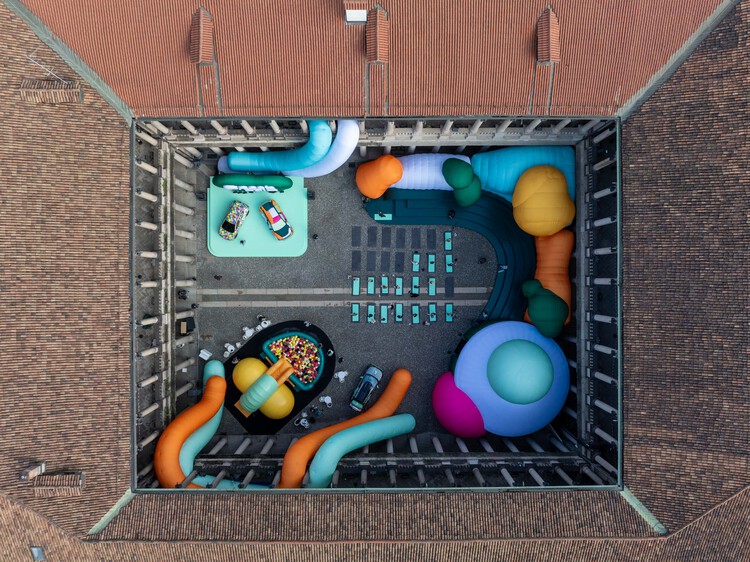
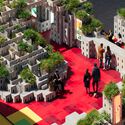
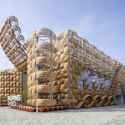
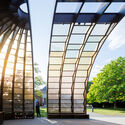
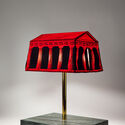
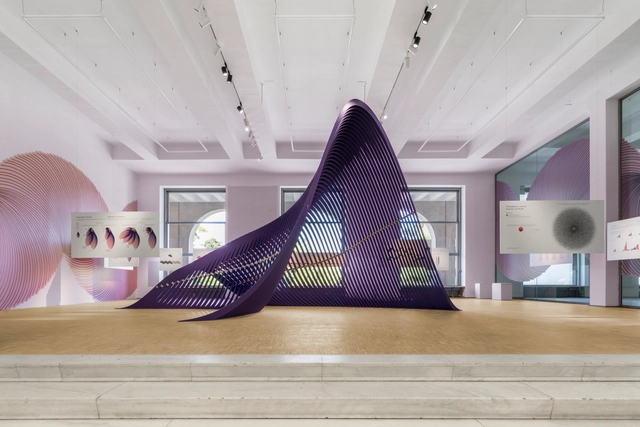
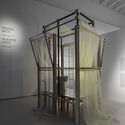
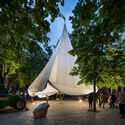
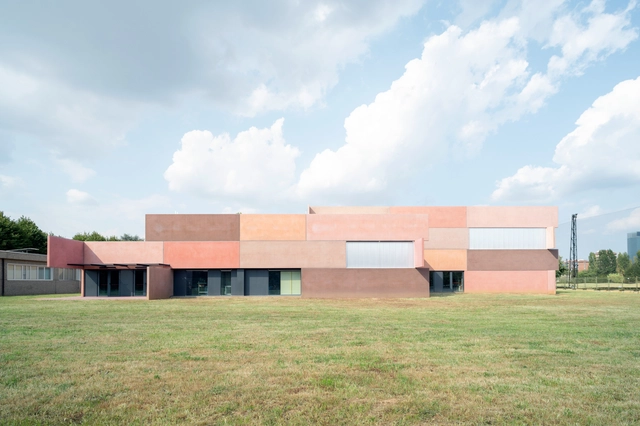
Ooooh, that's EpiQ! By Ricardo Orts Ulises, Milan Design Week 2026. Image Courtesy of Skoda
Bringing together a week of exhibitions, installations, and industry exchange, Milan Design Week 2026 and the 64th edition of Salone del Mobile.Milano concluded on April 26, following six days of programming across the fairgrounds and the city. Held from April 20 to 26, this year's events reaffirmed Milan's central role within the global design calendar. The Salone itself drew over 316,000 visitors from 167 countries. With 1,900 brands represented and a strong international presence, the week once again operated as both a cultural platform and an economic engine, navigating a context marked by market uncertainty while maintaining its capacity to convene designers, institutions, and industry leaders at a global scale.


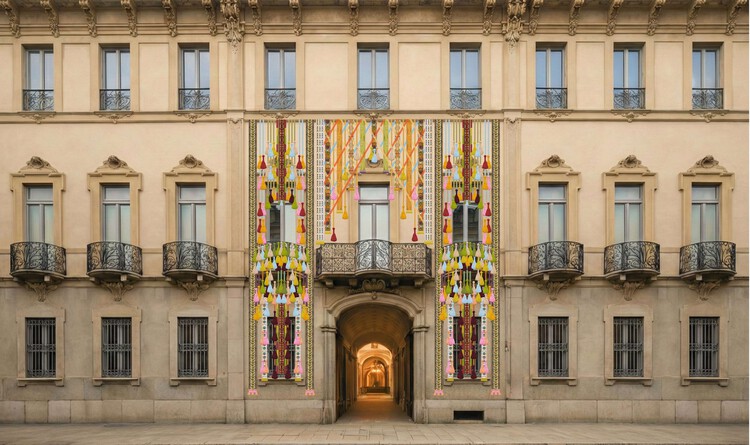
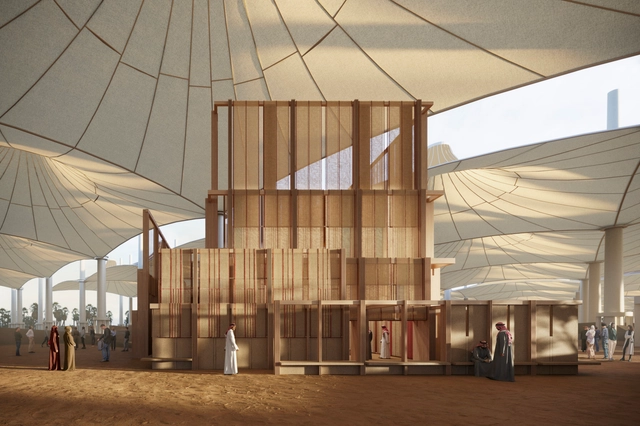
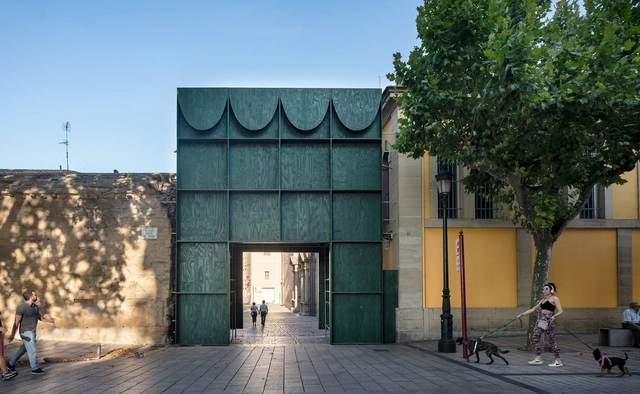
Entrance to Palazzo Citterio, indicative render. Image Courtesy of ACDF and Bethan Laura Wood Studio
From April 20 to 26, Milan Design Week 2026 returns as a citywide platform where design operates as both a cultural practice and a form of exploration. Framed by the Fuorisalone theme "Be the Project," this year's edition shifts the focus from outcome to process, positioning design as a dynamic, human-centered act shaped by intuition, responsibility, and transformation. Installations and exhibitions across the city foreground making as an open-ended condition, one that embraces error, temporality, and experimentation as integral to creative production. Within this context, design becomes a space of exchange between disciplines, materials, and intelligences, reflecting broader conversations around sustainability, emerging technologies, and the evolving relationship between the physical and the digital.
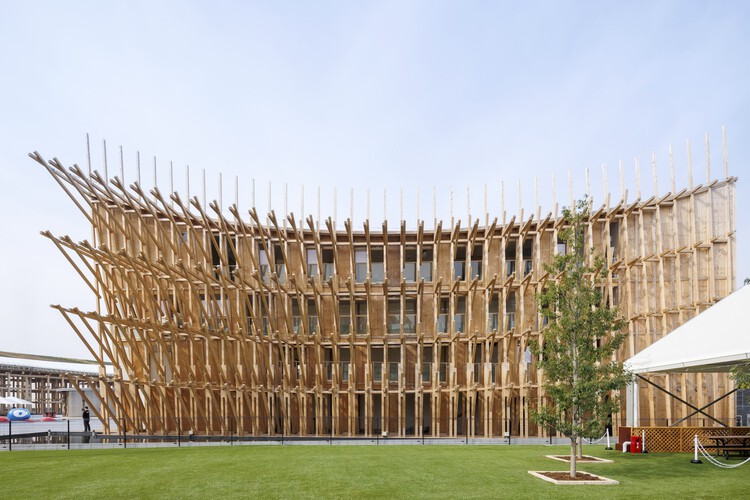
In a global landscape marked by accelerated change, 2025 emerged as a decisive year for architecture—not only because of the major events that animated the international circuit, but above all because of the voices that stood out within them. From the Venice Architecture Biennale to Expo Osaka, pavilions and installations from the Global South ceased to function as mere exhibition gestures and instead asserted themselves as territories of memory, resistance, and imagination, articulating narratives that expand the horizons of contemporary architectural debate.
Across these works, tradition and future move side by side: ancestral materials reappear in reimagined forms, historical wounds are given sensitive expression, and social urgency is translated into proposals that challenge established ways of building and inhabiting the world.
Architecture has never been confined to the act of building. It constantly negotiates between material practice and intellectual reflection, yet throughout the twentieth and twenty-first centuries, many architects felt that the built project alone was insufficient to address the full range of questions facing the discipline. Economic pressures, political contexts, and programmatic demands often narrowed the scope of practice.
Exhibitions and curatorial platforms, by contrast, created spaces of experimentation and critique, opening arenas where architecture could interrogate itself, where its past could be reinterpreted, its present challenged, and its future projected. In this tension, the figure of the architect-curator emerged, treating curating itself as a form of design — not of walls or facades, but of discourse, narratives, and frameworks of meaning.
Following two International Exhibitions — Broken Nature: Design Takes on Human Survival (2019), which explored the human relationship with natural phenomena, and Unknown Unknowns (2022), which examined the limits of scientific understanding — Triennale Milano now calls on the global cultural, scientific, and artistic communities to confront the pressing issue of inequality.
In an epoch when the risk of species extinction, war and ever-growing geopoliticaI imbalance loom over our future, lnequalities proposes to look again at the sphere of human relations and the increasing inequalities running through it.
The 24th International Exhibition of Triennale Milano opened to the public on May 13, 2025, at the historic Palazzo dell'Arte. Running until November 9, this edition explores the theme of "Inequalities", continuing Triennale Milano's tradition of addressing urgent global issues through the lenses of art, architecture, and design. The exhibition is formed by two main sections: one that presents a curated selection of exhibitions and installations by individual artists and teams, and another that features international participations, including national pavilions and their contributions. At the opening ceremony on May 12th, the Bee Awards were presented to recognize selected contributions across the exhibition. From both the exhibitions and the international participations, the jury awarded one winner and one honorable mention each.
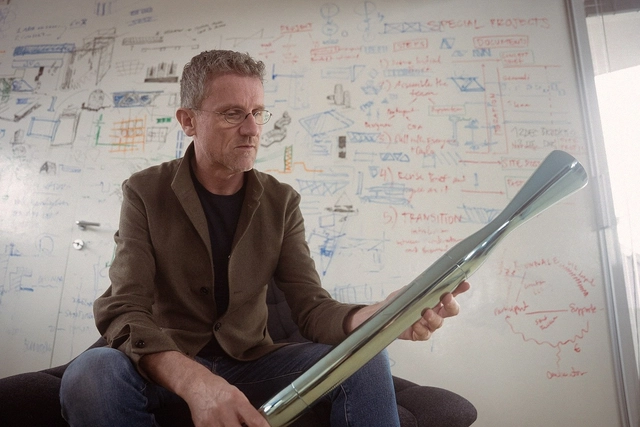
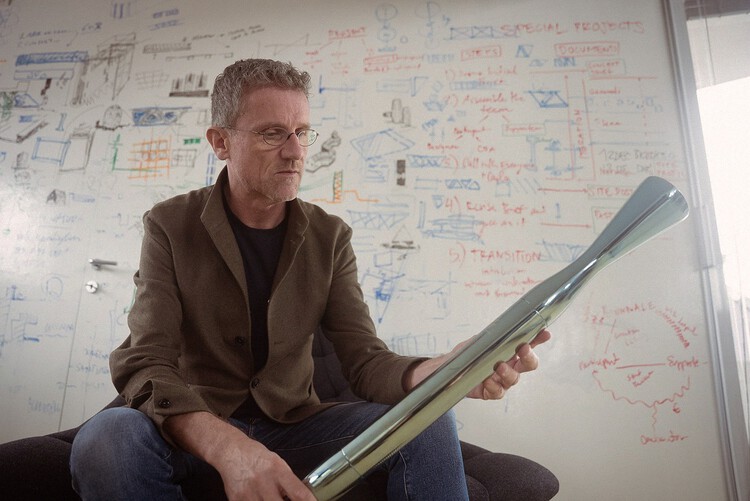
Carlo Ratti, the designer of the Olympic and Paralympic Winter Games Milano Cortina 2026 torch. Image Courtesy of Milano Cortina 2026
The official torches, named Essential, for the Milano Cortina 2026: Winter Olympics and Paralympics, were unveiled in parallel events at the Triennale di Milano and Expo 2025 in Osaka. Designed by Carlo Ratti Associati in collaboration with Eni and its subsidiary Versalis, Essential takes a minimalist approach that foregrounds the flame as the central element. The project blends Italian design with engineering precision, resulting in a torch that serves as both a symbolic and technical object. Its open structure, uncommon in torch design, allows viewers to see how the flame is produced, revealing the typically hidden mechanisms at work.
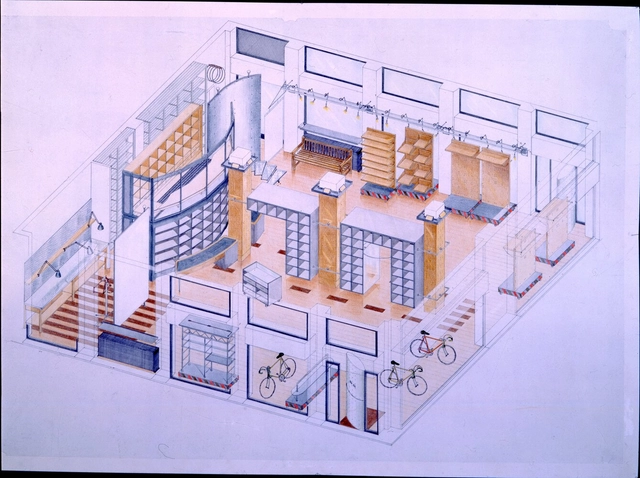
Axonometric drawing of the Granciclismo showroom (with Daniela Puppa), 1988. Image Courtesy of Archivio Franco Raggi
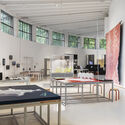
"Franco Raggi. Unstable Thoughts" (Franco Raggi. Pensieri Instabili) offers an in-depth exploration of the work of Italian architect, designer, and intellectual Franco Raggi. Curated by Marco Sammicheli and Francesca Pellicciari, the exhibition provides visitors with an experimental and immersive experience that traces Raggi's creative journey. Designed by the architecture studio Piovenefabi, the installation is hosted in the Design Platform space at the Museo del Design Italiano in Milan, a museum dedicated to key themes and figures in contemporary design. Held from February to April, the event is part of the prelude to the 24th edition of the Milan Triennale International Exhibition, titled Inequalities, which will run from May to November 2025.
2025 promises to be a landmark in architecture, heralding a vibrant renaissance of creativity and exploration. As societies confront challenges such as climate change, rapid urbanization, and technological evolution, architecture is both a mirror to these dynamics and a compass pointing toward a sustainable and inclusive future. This year's architectural calendar offers abundant opportunities to celebrate the discipline's transformative power — from boundary-pushing festivals to thought-provoking exhibitions that explore pressing cultural and environmental narratives.
From well-established biennials to inaugural gatherings, including the World Architecture Festival 2025, Desert X Al Ula, and the COP Climate Conference, the 2025 calendar highlights themes such as sustainability, heritage, and community. These events underscore architecture's unique ability to shape a better future, addressing global challenges while honoring cultural diversity and design ingenuity.
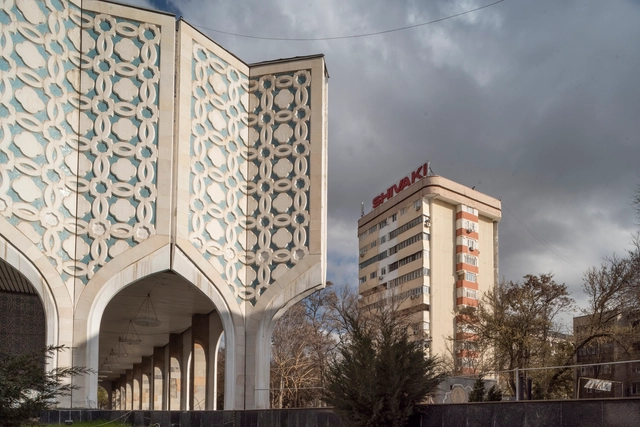
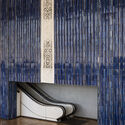
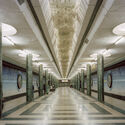
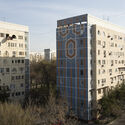
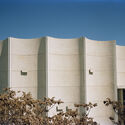
Exhibition Hall of the Union of Artists, Tashkent, Uzbekistan, 2022. Image Courtesy of Armin Linke
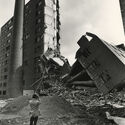
Tashkent, the capital city of Uzbekistan, stands as one of the most populous cities in Central Asia. Situated in the northeastern part of the country, near the border with Kazakhstan, Tashkent has been profoundly shaped and influenced by diverse cultures throughout its history. The most significant transformation of its urban landscape occurred during the Soviet era when the city was rebuilt as a model Soviet city, following the 1966 earthquake that caused substantial damage. During this reconstruction, architects from various regions of the Soviet Union collaborated with local experts, resulting in a unique form of architectural modernism that harmoniously integrated elements of Islamic architecture, indigenous creativity, and cutting-edge engineering achievements of that era. At that time, Tashkent held the esteemed status of a prominent international city in the East.
Architecture studio ELASTICOFarm, led by Stefano Pujatti, has been awarded the Premio Italiano di Architettura (Italian Architecture Prize), promoted by the Triennale di Milano and MAXXI. The award, now in its fourth edition, is received in recognition of their S-LAB project, a new building in Turin, Italy, for the Istituto Nazionale di Fisica Nucleare (INFN). The prize highlights works of architecture with high design quality and an attentive approach to innovation and the social role of architecture.
After two years of disrupted cycles of architecture events, due to the pandemic, 2022 has been witnessing a resurgence: biennials, triennials, design weeks, and festivals are back in the picture, with bigger interrogations and larger thematic approaches, aligned with the challenges of the world.
Relevant today more than ever, these happenings scattered around the globe are tackling climate-related issues, urban problems, as well as concerns engendered by covid-19 such as resilience, models of living, future of design, and the unknown.
The 23rd Triennale Milano International Exhibition has officially opened its doors to the public today. Titled Unknown Unknowns. An Introduction to Mysteries, the Triennale is displaying a selection of artwork and installations designed by 400 international architects and designers, questioning "what we don’t know we don’t know". Celebrating 100 years since its foundation, this year's exhibition presents a new way of looking at the mysteries of the world, seeing it as an opportunity to investigate subjects such as the furthest universe to dark matter and the origin of our conscience.
Under the theme Unknown Unknowns. An Introduction to Mysteries, the 23rd Triennale Milano International Exhibition will open to the public on July 15th until December 11th, 2022, with installations, interventions, and special projects that "question what we don’t know we don’t know". This year's exhibition will display an array of artwork and installations designed by notable architects and designers hailing from 40 countries, such as Francis Kéré, winner of the 2022 Pritzker Architecture Prize, who will design an installation that brings together the voices of Africa and its diaspora.
Kiev, Ukraine / Statue of Berehynia on the top of Independence Monument on the Maidan Nezalezhnosti. Image via Shutterstock
On the 24th of February 2022, Russia launched a large-scale invasion of Ukraine. Set to become Europe’s largest refugee crisis and armed conflict in this century, so far, this war has mobilized people across the world in order to exert pressure on authorities and put a stop to the armed hostilities. Individuals, as well as institutions in the architectural field, have taken part in these acts of solidarity, issuing statements, condemning actions, and even halting their work in Russia. From the UIA to MVRDV to Russian Institutions such as Strelka, the architecture world is denouncing the acts of violence and supporting an immediate cease of fire.
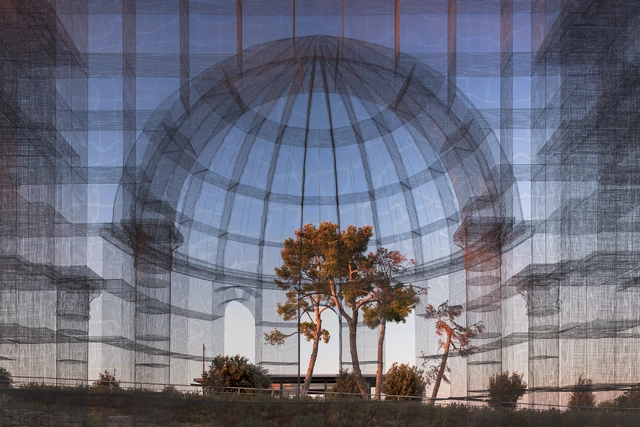
The Basilica di Siponto by Edoardo Tresoldi has been awarded the “Gold Medal for Italian Architecture – Special Prize to Commission,” considered the most prestigious award in Italian architecture.
The wire mesh sculpture reinterprets the volumes of an Early Christian basilica which formerly sat on the site of the sculpture, adjacent to an existing Romanesque church. The scheme serves as a “bridge towards the memory of the place” allowing the public to contemplate time and history.
The video was produced for La Triennale di Milano’s exhibition, “Paulo Mendes da Rocha – Technique and Imagination," and captures - through impeccable shots - the work that went into constructing the enormous cultural complex.